
Mountain Bike · Buying specs
Questions about Mountain Bike specs
Straight answers on the specs that matter when you buy — each question covers one dimension or option so you know what to look for.
Open Mountain Bike guide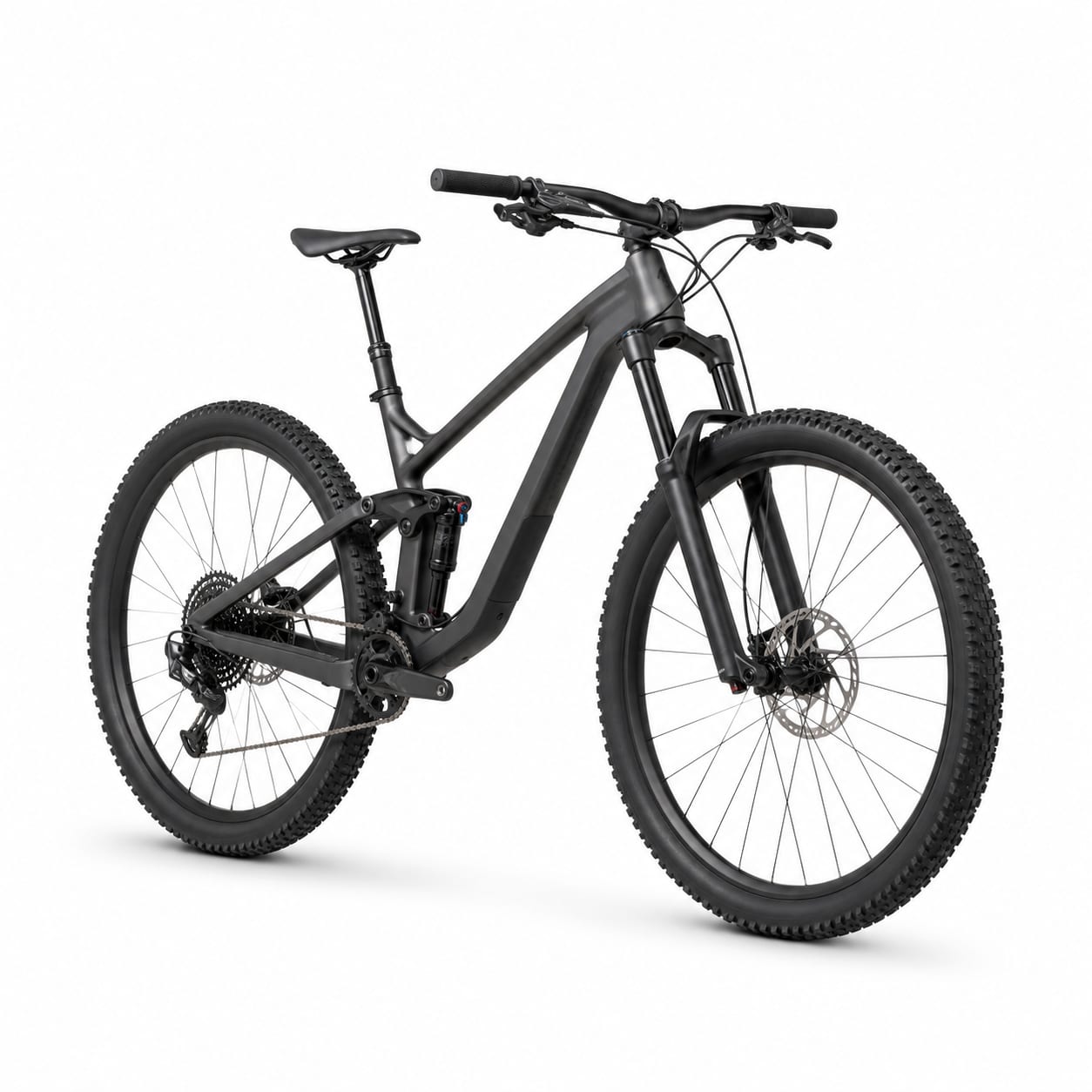
34 questions
Browse by spec group
Questions are organized the same way as the buying specs on the main equipment page.
Category & Configuration
Fundamental classification and setup choices that define the bike's intended use and basic architecture.
When should I choose a cross country mountain bike over a trail or enduro bike?
A cross country (XC) mountain bike is the right pick if you prioritize speed, climbing efficiency, and covering distance quickly. These bikes are the lightest in the MTB family, with steeper frame geometry and shorter suspension travel—usually 100-120mm—making them rocket ships on climbs and rolling terrain. XC bikes shine for racing, fast singletrack, and fitness-focused rides where you want to get to the top first and maintain momentum on flatter trails. If your local trails are relatively smooth with moderate descents, an XC bike will feel snappy and efficient. The trade-off is capability on steep, rough descents. The shorter travel and steeper geometry mean less confidence when things get genuinely technical. If your trails feature big drops, rock gardens, or you enjoy charging downhill more than climbing, a trail or enduro bike will serve you better. Choose XC when going fast uphill matters most to you.
Read answer →Bike Category / Discipline · TrailIs a Trail mountain bike the right choice if I ride a mix of terrain and don't want to specialize?
A Trail bike is probably your best bet. These bikes are designed to be the most versatile option in the mountain bike lineup, balancing climbing efficiency with confident descending capability. They handle everything from flowing singletrack to chunky descents without feeling out of their element on either end. Trail bikes shine for general trail riding, all-day epics, and varied terrain where you're climbing and descending roughly equally. The geometry is neutral enough to feel comfortable on long rides but still capable when the trail gets rowdy. Most riders—especially those who explore different trail systems—will find a Trail bike covers 80-90% of what they want to do. The main reason to look beyond a Trail bike is if you have a very specific focus. If you're racing or obsessed with Strava times, an XC bike will feel faster on climbs. If you spend most of your time on steep, technical descents or at bike parks, an Enduro bike adds capability there. But for one bike that does it all well, Trail is hard to beat.
Read answer →Bike Category / Discipline · Enduro / All-MountainShould I get an enduro bike if I ride mostly technical descents but still pedal uphill?
An enduro (or all-mountain) bike is built exactly for that scenario—aggressive descending with self-powered climbing. These bikes come with longer suspension travel and slacker geometry than trail bikes, giving you confidence and control on steep, rough descents, rock gardens, and drops. The trade-off is weight and climbing efficiency. Enduro bikes are heavier and their slacker angles make climbing feel less snappy compared to trail or XC bikes. You'll still get to the top under your own power, just not as quickly. If you spend more than 70% of your ride time descending technical terrain or racing enduro, that's a worthwhile trade. If your local trails are mellow or you prioritize fitness and speed on climbs, a trail bike is probably the better all-around choice. But if you're seeking out steep, gnarly descents and want a bike that thrives there while still climbing to access them, enduro is your category.
Read answer →Bike Category / Discipline · Downhill (DH)I ride at bike parks a lot — should I get a downhill bike?
A downhill (DH) bike is purpose-built for one thing: bombing down steep, rough terrain at speed. With maximum suspension travel and slack, confidence-inspiring geometry, these bikes eat up rock gardens, big drops, and jumps that would overwhelm other mountain bike categories. If you're spending most of your riding time at lift-served bike parks or downhill racing courses, a DH bike is exactly what you need. The trade-off is that DH bikes are not designed for climbing. They're heavy, typically have only a single chainring up front, and the long-travel suspension bobs under pedaling effort. You won't be riding to the top under your own power — these bikes are meant for chairlift or shuttle access. A DH bike makes sense if you're a regular bike park rider or getting into downhill racing. But if you only visit parks occasionally or want the option to pedal uphill, an enduro bike gives you far more versatility while still handling aggressive descents capably.
Read answer →Bike Category / Discipline · Fat BikeWhen should I consider getting a fat bike instead of a regular mountain bike?
Fat bikes are purpose-built for soft, loose surfaces where normal mountain bike tires would sink and struggle. If you regularly ride on snow, deep sand, or ultra-loose terrain, a fat bike's massive 3.7-inch-plus tires provide flotation and traction that nothing else can match. For most riders on typical dirt trails, a fat bike is overkill. They're noticeably heavier and slower on hardpack and rolling terrain compared to trail or XC bikes. The wide tires create more rolling resistance, so you'll work harder on regular trails and paved connectors. Consider a fat bike if you live somewhere with long winters and want to ride year-round on snow, if you have access to sandy desert terrain, or if you're planning an expedition-style tour over unpredictable surfaces. Some riders do enjoy fat bikes as a fun alternative on regular trails—the traction and stability feel unique—but if your local trails are mostly packed dirt, you'll likely be happier with a trail bike.
Read answer →Suspension Type · HardtailWhen should I choose a hardtail mountain bike over full suspension?
A hardtail mountain bike is a great choice if you primarily ride smoother trails, fire roads, or cross-country routes. With suspension only in the front fork, hardtails are lighter, pedal more efficiently on climbs, and cost less to maintain since there are fewer moving parts. They're also popular for bikepacking because you can easily mount gear on the rigid rear frame. Hardtails shine for XC racing and riders on a budget who still want capable off-road performance. However, on rough, rocky terrain with extended descents, you'll feel more fatigue and have less traction compared to a full suspension bike. The rear wheel can bounce over obstacles rather than track the ground. Don't assume hardtails are just for beginners—many experienced riders prefer them for their simplicity and efficiency. Just be realistic: if your local trails are full of chunky rocks and root sections, a full suspension bike will likely be more comfortable and confident.
Read answer →Suspension Type · Full Suspension (Full Squish)When does it make sense to choose a full suspension mountain bike over a hardtail?
A full suspension mountain bike (often called a 'full squish') is the right choice when you're riding rough, technical terrain with lots of rocks, roots, and steep descents. The rear shock keeps your wheels tracking the ground, giving you significantly better traction and control compared to a hardtail. If you're hitting enduro trails, bike parks, or long descents with chunky features, full suspension will keep you more comfortable and confident. The trade-off is that full suspension bikes are heavier, cost more, and require more maintenance with additional pivots and a rear shock to service. However, modern designs have come a long way—pedaling efficiency on climbs is much better than it used to be, so you're not sacrificing as much climbing performance as you might think. If your local trails are smooth and flowy, a hardtail could serve you just fine. But if you're spending hours in rough terrain or want maximum comfort on long rides, full suspension is worth the investment.
Read answer →Wheel Size · 27.5" (650B)Is a 27.5-inch mountain bike still a good choice, or should I just go with 29er wheels?
27.5-inch wheels (also called 650B) are absolutely still a great choice for the right rider and terrain. They shine when you want a bike that feels snappy and playful — the smaller diameter means quicker acceleration and easier maneuvering through tight, technical sections. If you love popping off trail features, jumping, or riding twisty singletrack, 27.5" wheels deliver a more responsive, fun feel. They're also worth considering if you're a smaller rider, though don't assume 29ers won't fit you — modern 29er frames now accommodate riders down to about 5'2". The main tradeoff is that 27.5" wheels don't roll over obstacles quite as smoothly as 29ers, so you'll feel roots and rocks a bit more on chunky terrain. If playful handling matters more to you than maximum rollover efficiency, 27.5" is a solid pick.
Read answer →Wheel Size · 29" (29er)Should I get a 29er mountain bike, and what kind of riding is it best for?
A 29er mountain bike features larger-diameter wheels that excel at rolling over rocks, roots, and rough terrain with less effort. The bigger wheel hits obstacles at a shallower angle, so you maintain momentum instead of getting bogged down—this is called "rollover ability," and it's the 29er's biggest advantage. These bikes also hold speed better on flat and rolling terrain, making them popular for cross-country racing and long endurance rides. The trade-off is that 29-inch wheels are slightly slower to accelerate and can feel less flickable in tight, twisty trails compared to smaller 27.5-inch wheels. However, modern frame design has largely solved fit concerns—riders as short as about 5'2" can comfortably ride a 29er today. A 29er is a great choice if you ride fast, open trails, prioritize efficiency and speed, or spend long hours in the saddle. If you prefer playful, jumpy riding on tight technical terrain, you might lean toward 27.5" instead.
Read answer →Wheel Size · Mullet (29" front / 27.5" rear)What is a mullet wheel setup on a mountain bike, and who is it really for?
A mullet setup pairs a 29-inch front wheel with a 27.5-inch rear wheel on the same bike. The idea is to give you the best of both worlds: the larger front wheel rolls over rocks and roots more easily and holds momentum on rough descents, while the smaller rear wheel makes the bike feel more playful and easier to maneuver in tight corners or off jumps. This configuration has become especially popular in enduro racing and aggressive trail riding, where you want front-end stability at speed but still need quick, snappy handling when the trail gets technical. The smaller rear wheel also allows designers to use shorter chainstays, which makes the bike feel more responsive and easier to manual or whip. One important catch: you can't just swap wheels on any bike. Mullet setups require a frame specifically designed for mixed wheel sizes, so if this appeals to you, look for a mullet-specific model from the start.
Read answer →Suspension
Suspension travel and characteristics that determine terrain capability and ride quality.
How much front suspension travel do I need on a mountain bike?
Front suspension travel is how far the fork can compress to absorb impacts, measured in millimeters. More travel means the bike can handle bigger hits and rougher terrain, but it also adds weight and can make the bike feel sluggish on smoother trails. The right amount depends on where and how you ride. Cross-country riders typically want 100–120mm for efficiency on climbs and rolling terrain. Trail riders usually go with 130–150mm for a balance of climbing ability and descending confidence. Enduro riders need 150–170mm to handle aggressive descents and big drops. Downhill bikes run 180–200mm for maximum impact absorption on the gnarliest tracks. A common mistake is assuming more travel is always better. If you mostly ride flowy singletrack or fire roads, a 160mm fork will feel heavy and unresponsive compared to a 120mm fork. Also, never swap in a fork with significantly more travel than your frame was designed for—it changes the geometry and can make handling unpredictable.
Read answer →Rear TravelHow much rear suspension travel do I need on a mountain bike?
Rear suspension travel is the maximum distance the rear wheel can move vertically to absorb impacts, measured in millimeters. The right amount depends on the terrain you ride most. For cross-country and smoother trails, 100–120mm keeps the bike efficient and lightweight. Trail riders tackling rougher terrain typically want 120–140mm for a good balance of climbing ability and descending confidence. If you're hitting aggressive enduro courses with big drops and rocks, look for 150–170mm. Downhill park riders need the full 180–210mm. Keep in mind that raw travel numbers don't tell the whole story. Suspension linkage design and shock quality matter just as much for how a bike actually performs on the trail. Also, rear travel is usually slightly less than front travel on full-suspension bikes, and that's perfectly normal. Focus on matching your travel to your typical terrain and riding style rather than chasing the biggest number—more travel adds weight and can make the bike feel sluggish on mellow trails.
Read answer →Frame & Construction
Material and weight attributes that define the bike's build quality and character.
Is an aluminum frame good enough for a mountain bike, or do I need to spend more for carbon?
Aluminum is the most popular mountain bike frame material for good reason—it delivers excellent strength and durability at a reasonable price. For the vast majority of riders, aluminum is genuinely the best choice, whether you're hitting local trails on weekends or pushing hard on all-day epics. Modern aluminum frames use advanced shaping and butting (varying tube wall thickness) to tune ride quality, so they're far from the harsh, cheap-feeling bikes of years past. The main trade-off is a slightly stiffer ride compared to carbon, and a bit more weight—but the weight gap narrows significantly when you look at complete bikes rather than frames alone. Aluminum really shines if you're budget-conscious, ride aggressively, or simply want a bike you won't baby. It handles impacts well and is more affordable to replace if damaged. Save the carbon premium for racing or if you're counting every gram—otherwise, aluminum gives you more bike for your money.
Read answer →Frame Material · Carbon Fiber (Composite)Is a carbon fiber mountain bike frame worth the extra cost, or should I stick with aluminum?
Carbon fiber frames are worth the premium if you're a competitive rider or seriously weight-conscious. They're the lightest option available, and engineers can tune the carbon layup to be stiff where you need power transfer (like the bottom bracket) while still absorbing trail chatter for a smoother ride. That kind of tunability is something aluminum simply can't match. Don't let old myths about carbon being fragile scare you off—modern carbon mountain bike frames are thoroughly tested and extremely durable for normal riding. The real vulnerability is sharp impacts from crashes or rock strikes, which can cause damage that requires inspection. Carbon makes the most sense for XC racing, trail riding, and enduro where every gram matters and you want that tuned ride feel. If you're a casual rider or on a tight budget, aluminum delivers excellent performance at a much lower price. But if you can afford it and want top-tier performance, carbon delivers.
Read answer →Frame Material · Steel (Chromoly)Is a steel mountain bike frame still a good choice, or is it outdated?
Steel (chromoly) frames are absolutely still relevant for mountain biking, and they offer some unique advantages. The biggest selling point is ride quality—steel has a natural springiness that absorbs trail chatter and vibrations better than aluminum, giving you a smoother, more comfortable ride over long distances. Steel is also incredibly durable and, unlike carbon fiber, can be repaired by a skilled welder if you ever crack or dent it. The trade-off is weight. Steel is the heaviest common frame material, which matters more if you're racing or climbing steep terrain. It's also prone to rust if the paint gets chipped and the frame isn't treated internally, though modern steel frames often have anti-corrosion coatings inside. Steel makes the most sense for hardtail trail bikes, bikepacking rigs, and dirt jumpers where durability and ride comfort outweigh the weight penalty. If you want a bike that lasts decades and feels great on long rides, steel is a solid choice.
Read answer →Frame Material · TitaniumWhen is a titanium frame worth it for a mountain bike?
Titanium frames make the most sense if you're looking for a lifetime investment bike. The material combines the lighter weight of aluminum with a smooth, forgiving ride quality that rivals steel—so you get less trail chatter and fatigue on long rides without feeling like you're dragging extra pounds up the climbs. It's also completely corrosion-proof, meaning a ti frame can literally outlast you with basic care. The catch is price. Titanium frames sit at the top of the cost ladder, often exceeding even carbon fiber. You're paying for that unique blend of properties and the craftsmanship that goes into building with it. Also, titanium is mostly found on hardtails and custom builds—full suspension options are very limited because the material is harder to work with for complex frame designs. If you ride primarily hardtail trails, bikepack, or simply want one frame that could last decades, titanium is a compelling choice. For most riders on a budget or those wanting full suspension, aluminum or carbon will serve you better at a fraction of the cost.
Read answer →WeightHow much should my mountain bike weigh, and does lighter always mean better?
Mountain bike weight typically ranges from about 9kg for featherweight XC race bikes up to 18kg for burly downhill rigs. Trail bikes usually land between 12–14kg, while enduro bikes sit around 13–15.5kg. The right weight depends on your riding style—lighter bikes climb and accelerate faster, but heavier bikes often feel more planted and stable on rough descents. Don't fall into the trap of chasing the lightest bike possible. Saving a few hundred grams won't matter much if the frame is too flexy or the components can't handle your terrain. Rotating weight (your wheels and tires) impacts ride feel more than frame weight, so upgrading tires often makes a bigger difference than shaving grams elsewhere. For most riders, fitness matters far more than bike weight. Focus on getting a bike that's reliable and suited to your trails rather than obsessing over the scale. A capable, slightly heavier bike you're confident on will always be faster than a fragile featherweight you're afraid to push hard.
Read answer →Geometry
Key frame geometry measurements that determine handling characteristics, stability, and rider position.
What does head tube angle mean on a mountain bike, and how do I know which is right for me?
Head tube angle is the angle of the front of the frame relative to the ground, and it has a big impact on how your bike steers and handles. A "slack" angle (lower number, like 63–65°) makes the bike more stable at high speeds and on steep descents—great for aggressive riding. A "steeper" angle (higher number, like 67–69°) gives you quicker, more responsive steering, which is ideal for climbing and tighter trails. The right angle depends on your riding style. Cross-country bikes typically run 67–69° for efficient climbing, trail bikes sit around 65–67.5° for a balanced feel, enduro bikes range from 63.5–65.5° for descending confidence, and downhill bikes go as slack as 62–64°. Even a half-degree shift is noticeable. Don't assume slacker is always better—a bike that's too slack will feel vague and hard to steer on climbs and flat trails. Think about where you actually ride most, not just the gnarliest descent you might encounter.
Read answer →ReachWhat does 'reach' mean on a mountain bike, and how do I know if I'm choosing the right one?
Reach measures the horizontal distance from the bottom bracket to the top of the head tube—basically, how far you'll reach forward when standing on the pedals. It's the most important sizing metric for modern mountain bikes because it determines your core riding position, far more than the traditional seat tube measurement that older sizing relied on. Typical reach ranges by size run roughly: Small (410–425mm), Medium (435–455mm), Large (460–480mm), and XL (485–510mm). A longer reach gives you more stability at speed and room to move around on the bike, which aggressive riders love. A shorter reach feels more nimble and playful on tight trails. Choose based on your riding style: if you ride fast, technical terrain and want confidence at speed, lean toward the longer end of your size range. If you prefer snappy handling and quick moves, a slightly shorter reach may suit you better. Just remember that stem length and handlebar width also affect your overall fit, so factor those in too.
Read answer →StackWhat does stack height mean on a mountain bike, and how do I know what's right for me?
Stack height measures the vertical distance from the center of your bottom bracket to the top of the head tube—essentially, it determines how tall the front end of the bike feels. A higher stack puts you in a more upright, comfortable position, which is great for long rides or riders with less flexibility. A lower stack gives you a more aggressive, leaned-forward position for better control on steep descents and faster riding. When choosing, think about your riding style and body. Trail bikes typically have a stack-to-reach ratio around 1.4–1.5. If you struggle with back or neck discomfort, lean toward a higher stack. If you're chasing speed and have good flexibility, a lower stack might suit you better. Keep in mind you can fine-tune your stack with spacers under the stem or by changing stem angle, so you're not locked into exactly one position. Just don't ignore stack entirely when comparing bikes—two frames with similar reach can feel very different if their stack heights differ significantly.
Read answer →Chainstay LengthWhat does chainstay length mean on a mountain bike, and should I look for short or long stays?
Chainstay length is the distance from the center of your bottom bracket (where the cranks attach) to the center of the rear wheel axle. It’s measured in millimeters and plays a major role in how your mountain bike handles on the trail. Shorter chainstays (roughly 415-435mm) make the bike feel more playful and nimble. They make it easier to lift the front wheel for manuals or wheelies and help you navigate tight, twisty corners. On the flip side, longer chainstays (440-460mm) keep your weight more balanced, which improves climbing traction and adds stability when you're charging at high speeds. When choosing, think about your riding style. If you love popping off roots and manualing through rollers, lean toward shorter stays. If you prefer blasting down steep, fast descents or need better grip on technical climbs, longer stays might be your best bet. Most trail bikes strike a middle ground around 430-445mm.
Read answer →Effective Seat Tube AngleWhat does seat tube angle mean on a mountain bike, and how do I know what's right for me?
Seat tube angle measures how far the seat tube tilts back from horizontal, usually ranging from 73° to 80° on mountain bikes. A steeper angle (76° or higher) positions you more directly over the pedals, which improves power transfer and keeps your front wheel grounded on steep climbs. A slacker angle shifts your weight back, feeling more relaxed on flat terrain but hurting climbing efficiency. Most modern mountain bikes use steeper angles between 75° and 78° because climbing performance matters more than ever. If you regularly tackle steep, technical climbs, look for 76° or steeper. One important catch: the "effective" angle changes as you raise your saddle. On many frames, taller riders running higher saddles experience a slacker effective angle than the published number suggests. Always check whether the listed angle is measured at a specific saddle height, not just the frame's actual tube angle—this distinction can significantly impact how the bike climbs for your height.
Read answer →Drivetrain & Brakes
Gearing and braking specifications that affect performance, control, and safety.
What does 12-speed mean on a mountain bike, and should I look for it when shopping?
A 12-speed mountain bike drivetrain has 12 rear cogs in the cassette, giving you 12 gear ratios to choose from. It's the current industry standard found on all modern mountain bikes from mid-range to high-end, and it uses a single front chainring (called a 1x setup) to keep shifting simple and reduce dropped chains. The big advantage of 12-speed is the wide gear range—typically 10-52 teeth on the cassette—which means you get both easy climbing gears and fast descending gears without needing multiple chainrings up front. The steps between gears are also tighter, so you can fine-tune your pedaling cadence more easily. If you're buying a new mountain bike, 12-speed is what you'll find on most models, and it's the best choice for parts availability and future upgrades. It's worth prioritizing if you ride varied terrain and want the simplest, most capable setup.
Read answer →Drivetrain Speed · 11-SpeedIs 11-speed still okay for a mountain bike, or do I need 12-speed?
An 11-speed drivetrain is still perfectly capable for most mountain biking. You get 11 rear cogs with a wide enough gear range to handle steep climbs and fast descents, and many riders won't notice the difference from 12-speed in everyday trail riding. Where 11-speed makes the most sense is on budget-friendly bikes or quality used models. You can often find great deals on 11-speed bikes since the industry has shifted to 12-speed as the new standard. If you're newer to the sport or riding a few times a month, 11-speed gives you reliable performance without paying for the latest tech. The main downside is that high-end 11-speed parts are becoming harder to find as manufacturers focus on 12-speed. Replacement cassettes and chains are still available, but your upgrade options down the road are limited. If you think you'll want to upgrade to 12-speed later, it's usually cheaper to buy a 12-speed bike upfront rather than converting, since it requires new shifters, derailleur, cassette, and chain.
Read answer →Drivetrain Speed · 10-SpeedI found a good deal on a 10-speed mountain bike. Is it still worth considering, or should I hold out for 12-speed?
A 10-speed mountain bike can still work fine if you're on a tight budget or just getting into the sport. You'll typically find these on entry-level and older models, and they often come with two or three chainrings up front (called 2x or 3x setups) rather than the single chainring that's now standard on modern 12-speed bikes. The trade-offs are real, though. You'll get a narrower overall gear range, meaning fewer options for steep climbs and fast descents. The front derailleur adds weight and shifting complexity, and the budget-level components on most 10-speed bikes tend to be less durable over time. Also, don't count on upgrading later—moving from 10-speed to 12-speed isn't a simple swap. It usually requires replacing the entire drivetrain, rear wheel hub, and sometimes more. If you're riding milder trails casually, a 10-speed will get you out there. Just go in knowing that upgrade paths are limited.
Read answer →Brake Type · Hydraulic Disc (2-Piston)Are 2-piston hydraulic disc brakes enough for mountain biking, or do I need 4-piston?
Two-piston hydraulic disc brakes are a solid choice for many mountain bikers—they offer smooth, controllable stopping power (called modulation) that's more than adequate for XC racing, light trail riding, and moderate terrain. If you're a lighter rider or mostly ride rolling trails without long, steep descents, 2-piston calipers will serve you well. Where 2-piston brakes fall short is on aggressive terrain. If you're hitting steep, sustained descents, riding enduro or downhill, or you're a heavier rider, the extra clamping power and heat dissipation of 4-piston calipers make a real difference in consistent braking performance. The bottom line: if your riding stays on the milder side of mountain biking, 2-piston hydraulics keep your bike lighter and simpler while still giving you reliable, low-maintenance stopping power. But if you're pushing into aggressive trail or big descents, step up to 4-piston for the safety margin.
Read answer →Brake Type · Hydraulic Disc (4-Piston)Do I really need 4-piston hydraulic disc brakes on a mountain bike, or will 2-piston brakes do the job?
4-piston hydraulic disc brakes use four pistons per caliper instead of two, giving you significantly more stopping power and better heat management on long descents. If you're riding steep, sustained downhills, hitting enduro or downhill trails, or you're a heavier rider, 4-piston calipers are worth the investment—they provide the confidence and control you need when braking hard repeatedly. For cross-country racing and light trail riding on rolling terrain, 2-piston hydraulic brakes are usually sufficient. They offer good modulation and enough power for moderate terrain while saving a bit of weight. The trade-off with 4-piston brakes is a small weight penalty and slightly higher cost. But if your riding involves aggressive descents, technical terrain, or you just want maximum stopping confidence, 4-piston is the way to go. Don't forget that rotor size matters too—pairing 4-piston calipers with larger rotors maximizes your braking performance.
Read answer →Brake Type · Mechanical Disc (Cable)Are mechanical disc brakes okay for a mountain bike, or do I really need hydraulic?
Mechanical disc brakes use a cable to squeeze the brake caliper, similar to traditional rim brakes. They're typically found on budget mountain bikes and cost less to buy and maintain. If you're a casual rider sticking to relatively smooth trails, gravel paths, or fire roads, mechanical discs can get the job done. The trade-off is stopping power and feel. Mechanical brakes require more finger effort at the lever and don't offer the same smooth, progressive modulation as hydraulic systems. On steep or technical descents where precise speed control matters, that difference becomes noticeable—and potentially a safety concern. They also need more frequent cable adjustments to stay sharp. Where mechanical discs shine is simplicity. No fluid to bleed, no specialized tools required, and field repairs are straightforward—just carry a spare cable. That makes them popular with bikepackers and riders who prioritize easy maintenance over maximum performance. If your budget is tight or you're riding milder terrain, they're a reasonable starting point, but plan to upgrade to hydraulic if you get into more aggressive riding.
Read answer →Brake Rotor Size · 160mmAre 160mm brake rotors enough for mountain biking, or should I go bigger?
160mm rotors are the smallest common size and they work fine in the right situations. If you're a lighter rider tackling cross-country trails or mostly flat terrain, 160mm provides adequate stopping power while keeping weight down—which is why XC racers often prefer them. However, 160mm rotors can struggle on steep or sustained descents because they have less surface area to dissipate heat. Heavier riders or anyone riding aggressive trail terrain will likely experience brake fade and reduced stopping power. That's why many trail bikes use 160mm only on the rear, paired with a larger 180mm up front where most braking force happens. If you ride anything beyond moderate terrain or weigh over 160 pounds, consider upsizing. Also, check your fork and frame compatibility before switching—some won't accept larger rotors without an adapter.
Read answer →Brake Rotor Size · 180mmIs a 180mm brake rotor the right size for my mountain bike, or should I go bigger?
For most trail and all-around mountain biking, 180mm rotors hit the sweet spot. They deliver solid stopping power and manage heat well on moderate to steep descents, without adding unnecessary weight to your bike. That's why 180mm is the most common front rotor size you'll see on trail bikes straight from the factory. If you're a lighter rider or mostly ride cross-country on rolling terrain, 180mm front and 160mm rear is a very common and effective setup. Heavier riders or those tackling long, steep descents may want to step up to 200mm up front for extra bite and heat dissipation. The good news: 180mm is compatible with most forks and frames without adapters, and upsizing later is one of the cheapest brake upgrades you can make. Just verify your fork and frame can accept larger rotors before making the switch.
Read answer →Brake Rotor Size · 200mm / 203mmDo I need 200mm brake rotors on my mountain bike, or is that overkill for trail riding?
For most trail riding, 200mm rotors are more than you need—180mm front is the sweet spot there. But if you're riding steep, sustained descents on an enduro bike or you're a heavier rider (over 180-200 lbs), 200mm rotors up front are a smart choice, not overkill. The larger surface area gives you more stopping power and dissipates heat better on long downhills, which means less brake fade when you're on the brakes hard for extended periods. A common setup for aggressive riding is 200mm front and 180mm rear, since your front brake does the majority of the stopping work. Just keep in mind that upsizing to 200mm requires a compatible fork mount, so check that before making the switch. It's one of the most cost-effective braking upgrades you can make if your riding actually calls for it.
Read answer →Brake Rotor Size · 220mm / 223mmDo I need 220mm rotors on my mountain bike, or is that overkill for most riders?
For most mountain bikers, 220mm rotors are overkill. These massive rotors are designed specifically for downhill racing and extreme terrain where you're bombing long, steep descents that demand heavy, sustained braking. They deliver maximum stopping power and the best heat dissipation available, which helps prevent brake fade on punishing runs. The trade-offs are real, though. 220mm rotors add noticeable weight to your wheel, and they require compatible fork and frame mounts—not all bikes can even fit them. Most trail and enduro riders are well-served by 200mm front and 180mm rear rotors, which offer excellent power without the weight penalty. Consider 220mm rotors if you're a heavier rider tackling steep, sustained descents, or if you're racing downhill competitively and need every bit of braking performance. For typical trail riding or cross-country, smaller rotor sizes will serve you just fine.
Read answer →Contact Points & Tires
Components at the rider-terrain interface affecting traction, comfort, and control.
How do I know what tire width I need on a mountain bike?
Mountain bike tire width typically ranges from about 2.0 to 5.0 inches, and the right choice depends on where and how you ride. For cross-country racing and smooth trails, 2.0–2.3" tires keep weight low and rolling speed high. Trail riders usually prefer 2.3–2.5" for a balance of grip and efficiency, while enduro riders tackling rough, steep terrain often go with 2.4–2.6" for maximum control. Plus-size (2.8–3.0") and fat tires (3.5–5.0") are for loose sand, snow, or riders wanting maximum cushioning. Wider tires give you more traction and absorb bumps better, but they also add weight and rolling resistance, so you don't want to go wider than your terrain demands. Many riders run a slightly wider tire up front for cornering grip and a narrower rear for speed. Before upsizing, always check your frame and fork clearance—tires that are too wide won't fit safely. And remember that different widths require different tire pressures, so don't run the same PSI across different sizes.
Read answer →Dropper Post TravelHow much dropper post travel do I need on my mountain bike?
Dropper post travel is how far your seatpost can drop the saddle out of your way on descents — typically ranging from 60mm to 230mm. More travel is almost always better for technical riding because it gives you more room to shift your weight around the bike, so the goal is to get the maximum travel your frame can accommodate. The right amount depends mainly on your frame size and seat tube length. As a general guide: small and medium frames usually fit 100–125mm of travel, medium to large frames handle 150–170mm, and large to extra-large frames can fit 175–210mm. Before buying, check two things: that the post can be fully inserted into your frame (watch for water bottle mounts, suspension pivots, or bends in the seat tube that could block it), and that the total extended height still allows full leg extension for efficient pedaling. The overall stack height matters, not just the travel number itself.
Read answer →