
Ski Goggles · Buying specs
Questions about Ski Goggles specs
Straight answers on the specs that matter when you buy — each question covers one dimension or option so you know what to look for.
Open Ski Goggles guide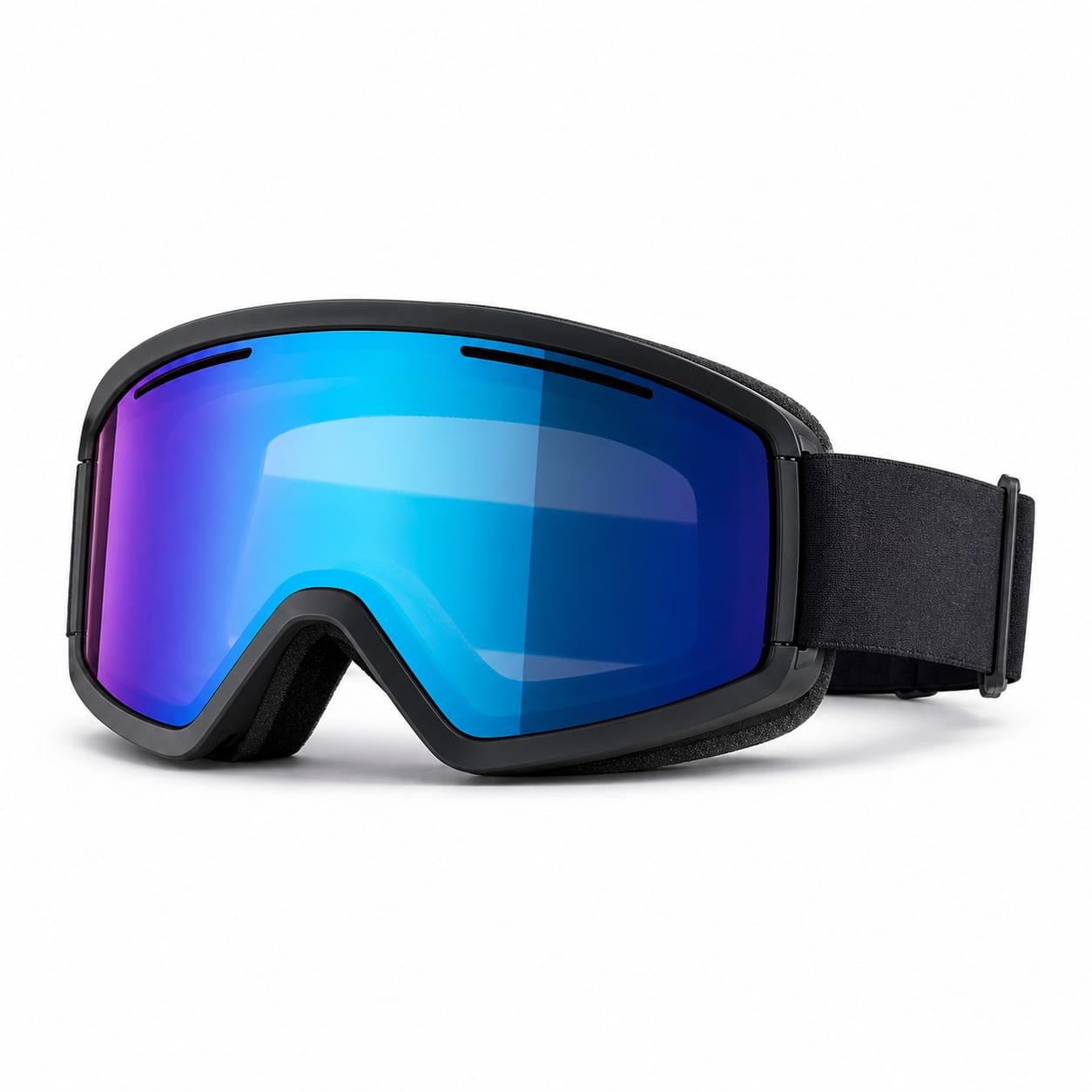
49 questions
Browse by spec group
Questions are organized the same way as the buying specs on the main equipment page.
Lens Optics
Core optical properties that determine what and how you see through the goggle lens.
What's the benefit of spherical lenses on ski goggles, and are they worth the extra cost?
Spherical lenses curve both horizontally and vertically, mimicking the natural shape of your eye. This design minimizes optical distortion—especially at the edges of your vision—so what you see looks more natural and true. It also gives you the widest possible field of view and better peripheral awareness, which is a real advantage when you're navigating trees, merging onto busy trails, or charging steep terrain. These lenses also reduce glare better than flatter lens shapes, since the curved surface deflects sunlight at angles that don't hit your eyes directly. For all-mountain skiers, freeriders, racers, or anyone who prioritizes optical clarity, spherical lenses are absolutely worth the investment. That said, if you're a casual skier who sticks to groomers on fair-weather days and is watching the budget, a cylindrical lens will serve you just fine. Spherical lenses shine most in variable conditions and high-performance situations where every visual detail counts.
Read answer →Lens Shape · CylindricalAre cylindrical lens goggles good enough, or do I really need to spend more for spherical?
Cylindrical lenses curve horizontally but are flat vertically, giving you that classic goggle look at a lower price. They're a solid choice if you're skiing mostly in good conditions or just getting out a few times a season. You'll get clear vision straight ahead, which is where you're looking most of the time anyway. The trade-off is slight distortion around the edges and more glare compared to spherical lenses. For park riders and casual skiers, this rarely matters much. But if you're charging steep, varied terrain or skiing in flat light often, that peripheral distortion can affect depth perception when you need it most. If budget is a concern or you're not pushing hard all over the mountain, cylindrical goggles are perfectly fine. Save the money for lift tickets and upgrade later if you find yourself wanting better edge-to-edge clarity.
Read answer →Lens Shape · ToricI keep seeing toric lenses on goggles—what exactly are they, and are they worth considering over spherical or cylindrical?
Toric lenses are a newer shape that blends cylindrical and spherical curves into one lens. They curve horizontally like a cylindrical lens but also have some vertical curvature like a spherical lens, creating an asymmetric profile. This design gives you a wider horizontal field of view than a standard cylindrical lens while keeping edge distortion lower. The big draw for toric lenses is that you get much of the optical performance of a spherical lens but with a distinctive, modern look that stands out from traditional goggle shapes. They're a great middle ground if you want better peripheral vision than cylindrical offers but don't want to pay top dollar for full spherical lenses. Toric lenses make the most sense if you're an all-mountain or freeride rider who values both performance and style. If you mostly stick to the park or ski just a few days a year, cylindrical will still serve you fine for less money.
Read answer →VLT (%)What does VLT mean on ski goggles, and how do I pick the right one?
VLT stands for Visible Light Transmission — it's the percentage of light that actually passes through the lens. A lower VLT means a darker lens that blocks more light, while a higher VLT lets more light in. This is the single most important spec for matching your goggles to the conditions you'll be skiing or riding in. For bright, sunny days, go with a low VLT (3–18%) to cut glare and protect your eyes. For variable or partly cloudy weather, a medium VLT (19–45%) gives you solid versatility. If you're riding in overcast skies, heavy snow, or at night, you'll want a high VLT (46–90%) so you can read the terrain and see moguls or ice patches before you hit them. The biggest mistake is assuming one lens handles every condition. If you ski in changing weather, look for goggles with swappable lenses — or own two pairs — so you're never stuck squinting or skiing blind.
Read answer →Lens Tint/Color · Rose/Copper/AmberI see a lot of ski goggles with rose, copper, or amber lenses. What conditions are these best for, and should I choose them as my main goggle?
Rose, copper, and amber lenses are warm-tinted lenses designed to dramatically enhance contrast and depth perception. They are incredibly popular because they make the subtle bumps and textures of the snow pop, especially when the lighting is less than ideal. These tints are your best friend on overcast days, during snowstorms, or when skiing in shadows where flat light makes the terrain look like a blank white canvas. By filtering light in a specific way, they reveal hidden terrain features that darker lenses would completely wash out. Because most skiers and snowboarders encounter variable weather rather than endless sunny days, rose, copper, and amber is widely considered the most versatile tint category. If you are only buying one pair of goggles for the season, a contrast-enhancing warm tint is usually your best all-around choice.
Read answer →Lens Tint/Color · Gray/Black/Dark SmokeWhen should I choose gray or dark smoke lenses for my ski goggles?
Gray, black, and dark smoke tints are purpose-built for bright, sunny days on the mountain. They reduce overall brightness without distorting colors, so you see the snow and terrain exactly as they appear. This makes them a great choice for bluebird days, spring skiing in intense sun, or high-altitude glacier skiing where UV exposure is extreme. The big advantage of neutral tints is true color reproduction and reduced eye fatigue during long days in harsh sun. However, they offer very little contrast enhancement, which means they struggle in flat light or overcast conditions. If you're skiing on a cloudy day with gray lenses, terrain features can become nearly invisible. If you mostly ski sunny destinations or want a dedicated bright-condition lens to swap into, gray or dark smoke is an excellent choice. Just don't rely on it as your only lens if you regularly encounter variable weather.
Read answer →Lens Tint/Color · Yellow/GoldWhen should I choose yellow or gold lenses for my ski goggles?
Yellow and gold lenses are your best friend in low-light conditions on the mountain. They brighten your entire field of view and sharpen definition, making terrain features pop when visibility is poor. Reach for them during night skiing, heavy fog, blizzards, or those flat overcast days where everything blends together. The catch is that these tints become overwhelming in bright sun. They let so much light through that on a sunny day, your eyes will fatigue quickly and you'll actually see worse, not better. If you primarily ski bluebird days, yellow or gold is the wrong choice. For skiers who regularly deal with stormy weather or night sessions, yellow or gold lenses are absolutely worth having. A smart approach is keeping them as a swap-in second lens—when the clouds roll in and the light goes flat, swapping to yellow or gold can be the difference between reading the terrain and guessing where the snow ends.
Read answer →Lens Tint/Color · Blue/Green/MirrorWhen should I choose blue or green mirror lenses for my ski goggles?
Blue and green mirror lenses are a great pick for sunny to partly cloudy days, especially during spring skiing when the sun is intense and glare bouncing off the snow becomes a real issue. The cool tint reduces brightness while still offering moderate contrast, so you can read terrain features without feeling like you're wearing overly dark shades. The mirror coating on these lenses does more than look sleek—it actively reflects additional light away from your eyes, cutting down on harsh glare from snow and ice. This makes them noticeably more comfortable on bright days when the sun is reflecting off every surface around you. However, these lenses aren't your best bet for flat light, overcast days, or storms. If you mostly ski in variable or low-light conditions, a rose or copper tint will serve you far better. Think of blue/green mirror lenses as your dedicated bluebird-day option when glare protection is the priority.
Read answer →Lens Tint/Color · ClearShould I get clear lens ski goggles, and when would I actually use them?
Clear lenses are designed specifically for night skiing. Since they have no tint at all, they let in maximum light without altering colors, giving you the clearest possible vision under floodlights or lampposts. If you regularly ski at night, they're essential—any tint would darken your view when you need all the light you can get. For daytime skiing, clear lenses aren't a good choice. They don't reduce brightness, enhance contrast, or cut glare, so you'd be squinting and struggling to read terrain in sunlight. They also won't help in flat light or overcast daytime conditions the way a rose or amber tint would. If you only ski during the day, skip clear lenses entirely. But if you're a night skier, they're worth having—either as a dedicated night goggle or as a spare lens you can swap in when the lights come on. Some goggles come with interchangeable lens systems that make this switch quick and easy.
Read answer →Lens Tint/Color · Photochromic/TransitionAre photochromic ski goggles worth it, or should I just get goggles with interchangeable lenses?
Photochromic lenses automatically adjust their tint based on UV exposure—darkening in bright sun and lightening when clouds roll in. They're ideal if you ski full days in variable weather and don't want to stop and swap lenses when conditions shift. Think stormy mountain days where it's sunny one run and socked in the next. The main trade-off is that the transition isn't instant. There's a slight lag as the lens reacts, so you may notice a brief period where the tint hasn't quite caught up to the light around you. Also, in very cold temperatures, photochromic lenses may not darken as fully as you'd like, which can leave you squinting on bright, frigid days. If you mostly ski in predictable conditions or don't mind carrying a spare lens, interchangeable lenses give you more precise control. But for convenience and adaptability across changing mountain weather, photochromic goggles are a solid one-lens solution—just expect to pay a premium for the technology.
Read answer →PolarizedShould I get polarized ski goggles, or is non-polarized better?
Polarized lenses reduce glare from sunlight reflecting off snow and ice, which can make a big difference on bright days—especially at higher elevations where glare is intense. If you're sensitive to bright light or ski mostly in sunny conditions, polarization can ease eye strain and improve comfort. However, polarization has a real trade-off for skiers and snowboarders: it can make it harder to spot icy patches because it flattens out the visual contrast between ice and snow. If you ski in areas where ice is common, non-polarized lenses with contrast-enhancing tints may actually serve you better. Polarization can also make LCD screens (like your phone or electronic lift passes) harder to read. Think about where and when you typically ride. For mostly sunny, high-glare days, polarized goggles are great. For variable conditions or ice-prone areas, consider non-polarized contrast lenses or photochromic options instead.
Read answer →Mirror Coating · Full MirrorWhen should I choose full mirror goggles over other coating options?
Full mirror goggles have a highly reflective outer coating that bounces significant light away, making them ideal for bright, sunny days on the mountain. If you primarily ski or ride in bluebird conditions, the extra glare reduction beyond what the base tint provides can be a real game-changer for comfort and visibility. The coating reduces visible light transmission (VLT) by an additional 5-15%, meaning your eyes deal with less squint-inducing glare bouncing off snow. It also hides your eyes from the outside—a style preference many riders appreciate. One important caveat: that mirror coating is the most scratch-prone part of your lens. Always clean with a soft microfiber cloth, never wipe when dry, and store them carefully. Scratches show up much more visibly on full mirror lenses than on partial mirror or non-mirror options, so a little extra care goes a long way.
Read answer →Mirror Coating · Partial/Flash MirrorWhat does a partial or flash mirror coating actually do on ski goggles, and when should I choose it?
A partial (or flash) mirror coating adds a lighter reflective layer to the outside of your goggle lens. It cuts some glare and gives a subtle mirror look, but it doesn't block as much light as a full mirror coating. Think of it as the middle-ground option. This makes partial mirror goggles ideal for variable conditions—those days when the sun comes and goes, or when you're skiing in moderate brightness. The coating only reduces visible light transmission (VLT) a small amount, so you still see well when clouds roll in or light goes flat. It's a versatile choice if you want some glare help without committing to a full sunny-day lens. Partial mirror coatings are also more forgiving than full mirrors when it comes to scratches and daily wear. You still need to clean them carefully—never wipe with a dry glove or rough cloth—but minor scuffs won't stand out as much as they would on a highly reflective surface.
Read answer →Mirror Coating · No MirrorShould I get ski goggles with no mirror coating, or do I need that reflective look?
No mirror goggles are actually the best choice if you primarily ski in low light, overcast conditions, or at night. Without that reflective coating, the lens lets in maximum light, which helps you see terrain details and shadows when visibility is already tough. Mirror coatings bounce light away, so they can make dark conditions even harder to read. The tradeoff is that your eyes will be visible from outside the lens, and you won't get any extra glare reduction beyond what the base tint provides. For sunny days, that missing glare protection can be noticeable. But for storm skiing, tree runs on gray days, or night sessions under the lights, no mirror is the way to go. One practical bonus: without a mirror coating, the lens is generally more forgiving with cleaning and less prone to showing scratches. If you're on a budget or tend to be rough on your gear, no mirror goggles are a durable, functional choice for anything except bright sun.
Read answer →UV Protection · UV400 (100% UVA/UVB)Do I really need UV400 protection in my ski goggles, or is any UV protection fine?
UV400 should be non-negotiable for any ski goggle purchase. It blocks 100% of UVA and UVB radiation up to 400nm wavelength, which is the full spectrum of harmful UV that reaches the earth's surface. At mountain altitudes, UV radiation is 30-40% stronger than at sea level, and snow reflects up to 80% of it back at you—essentially double-exposing your eyes. Lower UV ratings like UV380 or basic UV coatings leave gaps in protection, particularly at the higher end of the UVA range. That might be okay for a quick afternoon at a small hill, but it's not worth the risk for a full day in the mountains. Basic UV coatings can also wear off over time, leaving you unprotected without realizing it. The biggest myth is that dark lenses mean better UV protection—they don't. UV is invisible, and a clear UV400 lens protects far better than a dark lens without proper UV filtering. Always check for the UV400 label specifically.
Read answer →UV Protection · UV380 (99-100% UVB, 95%+ UVA)I found some budget ski goggles with UV380 protection instead of UV400. Is that good enough for skiing?
UV380 goggles block most UV radiation—nearly 100% of UVB rays and 95% or more of UVA rays. For occasional skiing at lower-altitude resorts, they provide adequate protection and can be a reasonable choice if you're on a tight budget. The catch is that UV380 allows some UVA rays in the 380-400nm wavelength range to pass through. At higher altitudes, UV radiation is 30-40% stronger, and snow reflects up to 80% of it back at you. That small gap in coverage becomes more meaningful on bright days at elevation, where your eyes face intense UV exposure from above and below. If you ski mostly at lower mountains, go out just a few times a season, or are buying for a growing kid who'll need new goggles soon, UV380 can work. But if you ski regularly, at high-altitude resorts, or on sunny spring days, UV400 is the safer investment. Never assume a dark lens compensates—UV is invisible, and tint has nothing to do with protection.
Read answer →UV Protection · Basic UV CoatingI found some budget ski goggles with 'Basic UV Coating' — is that good enough for a few days on the mountain?
Basic UV coating means the protection is applied as a surface layer rather than being built into the lens material itself. The catch is that these coatings can wear down over time with scratching, cleaning, and general use — so the UV protection you start with may not be what you have midway through the season. For a single weekend trip at lower elevations, basic UV coating will offer some protection, but it's still a gamble. UV radiation is 30-40% stronger at altitude, and snow reflects up to 80% of it back at you. That's a serious amount of exposure if your coating has started to degrade. If you ski even a few days a year, it's worth spending a little more for UV400 (100% UVA/UVB) protection — it's built into the lens and won't fade over time. Think of it like sunscreen: basic coating is the equivalent of that old bottle sitting in your beach bag, while UV400 is fresh SPF 50 you can count on.
Read answer →Fog Management
Systems and technologies that prevent lens fogging in varying conditions and exertion levels.
Do I really need the premium anti-fog coating, or is the standard dual lens good enough?
The premium anti-fog coating makes a real difference if you're pushing hard on the mountain. It adds a hydrophilic (water-absorbing) layer to the inner lens that actively pulls moisture away, keeping your vision clear even when you're working up a sweat skinning up a backcountry ridge or skiing hard on warm, wet storm days. For casual resort laps in normal conditions, the standard dual-lens setup handles fogging just fine for most people. You'll notice the premium coating earning its keep during high-exertion touring, humid conditions, or those tricky in-between temperatures where fogging is most stubborn. One important catch: that premium coating is delicate. Never touch or wipe the inside of your lens, or you'll strip the coating and defeat the whole purpose. Always let your goggles air dry after use—storing them damp degrades the coating faster.
Read answer →Anti-Fog System · Dual Lens + Standard Anti-Fog CoatingIs the standard anti-fog coating on dual-lens goggles good enough, or do I need to upgrade to premium?
For most resort skiers and snowboarders, dual-lens goggles with a standard anti-fog coating work just fine. The double-pane construction creates a thermal barrier that prevents most fogging, and the basic anti-fog treatment adds an extra layer of defense for typical days on the mountain. Where you might run into trouble is during high-exertion activities—like hiking to fresh lines or skiing hard on warm, stormy days. The standard coating can struggle when you're sweating heavily or dealing with wet, humid snow. If you're a backcountry tourer or someone who skis in all conditions, the premium coating is worth the upgrade. One important tip: never wipe the inside of your goggles, regardless of which coating you have. Doing so can damage the anti-fog treatment and leave you with foggy lenses for the rest of the season.
Read answer →Anti-Fog System · Dual Lens OnlyAre budget goggles with dual lenses but no anti-fog coating good enough for casual skiing?
Dual-lens goggles without anti-fog coating rely on the thermal barrier between the two lens layers to reduce fogging. This double-pane construction creates an insulating air pocket that helps, but it's the most basic level of fog protection available. These goggles work fine if you're sticking to resort skiing on dry, cold days and you're not working up too much of a sweat. They're a reasonable choice for casual riders who ski a few times a season in favorable conditions. However, they struggle in humid or wet weather, and they'll likely fog up if you're hiking for turns, skiing hard on warm spring days, or caught in a storm. If you ski regularly or venture into variable conditions, spending a bit more for anti-fog coating is worth it. Just remember—never wipe the inside of any goggle lens, coated or not, as it damages the surface and makes fogging worse.
Read answer →Anti-Fog System · Single LensI found some cheap single-lens ski goggles. Are they okay to use on the mountain?
Single-lens goggles are best avoided for skiing and snowboarding. Without dual-pane construction, there's no thermal barrier between the cold outside air and the warm, moist air near your face. This means they fog up almost instantly on the slopes—and once fogged, your visibility is gone, which is a genuine safety risk when you're moving downhill. You'll typically only find single-lens goggles in the cheapest budget models or rental packages. They might get you through a single dry, cold afternoon, but in any humidity, precipitation, or during exertion like hiking to a line, they'll fog relentlessly. They also provide poor insulation against wind and cold. If you're on a tight budget, look for goggles with at least dual-lens construction and a standard anti-fog coating. They're still very affordable and perform dramatically better. The small price difference is absolutely worth it for clear vision and a safe, comfortable day on snow.
Read answer →Ventilation Design · Active Ventilation (Battery/Powered)Do I really need ski goggles with a battery-powered fan, or is that overkill?
Active ventilation goggles have a small built-in fan that constantly circulates air to prevent fogging. For most resort skiers, this is more than you need—enhanced passive ventilation does a great job without the extra cost and weight. However, active ventilation is genuinely worth it if you're a heavy sweater, wear prescription glasses under your goggles, or spend long days skinning up in the backcountry where exertion and humidity are high. It's also a lifesaver in extremely wet, coastal snow climates where fog is relentless. The trade-offs are real: these goggles cost more, weigh a bit more, and you'll need to keep the battery charged. If the fan dies mid-day, you're stuck with standard airflow until you can recharge. But if fogging has been a chronic problem for you, powered ventilation is the most effective solution available.
Read answer →Ventilation Design · Enhanced Passive VentilationWhat does enhanced passive ventilation mean on ski goggles, and who is it best for?
Enhanced passive ventilation means the goggle frame has larger or more numerous vents with specially designed airflow channels. This setup encourages superior natural air circulation through the goggle without needing a battery-powered fan. It's the sweet spot for most serious skiers and riders because it offers excellent fog prevention while keeping things simple and lightweight. This design is ideal if you ski in variable conditions or work up a sweat, as the increased airflow clears moisture before it can fog your lens. You won't have to worry about charging batteries or managing extra weight on your face. The main trade-off is that the larger vents might let in a tiny bit of wind at very high speeds, but for most people, the fog-free vision is well worth it. Just make sure your helmet or beanie doesn't accidentally block those vents, or the system won't work properly.
Read answer →Ventilation Design · Standard Passive VentilationI see 'standard passive ventilation' on mid-range goggles — is that good enough for regular resort skiing?
Standard passive ventilation uses basic frame cutouts to let air flow naturally through your goggles. It's the most common setup on mid-range models and works by allowing fresh air in while letting warm, moist air escape — no fans or fancy airflow channels involved. For typical resort days with moderate exertion, standard passive ventilation does the job just fine. If you're cruising groomers, taking lift rides between runs, and not working up a heavy sweat, these goggles should keep your lenses clear without issue. The limitation shows up when you push harder. Hiking for fresh lines, skiing in wet snow, or running hot can overwhelm standard vents, leading to fogging. If you tend to sweat heavily, wear prescription glasses underneath, or venture into backcountry terrain, you'll likely want enhanced passive or active ventilation instead.
Read answer →Ventilation Design · Minimal VentilationI found some sleek ski goggles with barely any vents — is minimal ventilation ever a good choice?
Goggles with minimal ventilation prioritize wind protection and a tight seal over airflow, which can actually be nice if you're cruising groomers on cold, dry days and don't work up much of a sweat. They block wind effectively at speed and are often found on budget-friendly or fashion-focused models. The trade-off is fog. With limited airflow, moisture from your face has nowhere to escape, so these goggles fog up quickly once you start skiing hard, hiking for turns, or dealing with wet snow. If you run hot or ski in variable conditions, minimal ventilation will likely leave you frustrated. They're best suited for casual resort skiers who stick to cold, dry weather and prefer a windproof feel. For most riders, stepping up to at least standard passive ventilation is worth it for the fog relief alone.
Read answer →Fit & Comfort
Dimensions affecting how the goggle fits your face, helmet, and comfort during extended wear.
I have a smaller face — should I go with small frame ski goggles, or will I be missing out on too much visibility?
Small frame goggles are the right call if you have a smaller face, and you won't be missing out as much as you might think. While it's true that small frames have a narrower lens surface and slightly reduced field of view compared to medium or large options, the tradeoff is more than worth it for the right fit. Goggles that are too big for your face leave gaps around the nose and cheeks, letting cold air in and causing fogging — which ruins visibility far more than a slightly smaller lens ever would. A proper seal is the most important factor in goggle performance, especially in harsh weather. Small frames are designed for children, teens, and small-faced adults, so if that's you, they'll sit correctly on your face and stay fog-free. The key is always trying them on with your helmet to confirm there are no gaps between the goggle frame and your helmet, since that gap can let in wind and snow.
Read answer →Frame Size · MediumIs a medium frame size the right choice for most skiers and snowboarders?
Yes, medium is the most popular ski goggle frame size because it fits the majority of adult faces comfortably. If you're an adult man or woman with an average-sized face, medium is likely your best bet. It delivers a solid field of view without feeling bulky or overwhelming your face. The big advantage of medium frames is versatility. They pair well with most helmets on the market, and you'll find way more style and lens options in medium than any other size. The field of view is broad enough for all-mountain skiing and riding without the fit issues that can come with oversized frames. That said, if you have a notably small or large face, medium might not be ideal. Goggles that are too big leave gaps that let in cold air and cause fogging, while goggles that are too small can pinch and restrict your peripheral vision. Always try them on with your helmet to confirm the seal and comfort before committing.
Read answer →Frame Size · Large / OversizedAre oversized ski goggles worth it for the wider view, or will they be too big for my face?
Large or oversized ski goggles give you the maximum field of view available, which is a real advantage when you're charging through trees, navigating tight chutes, or just want better peripheral vision without turning your head. The bigger lens surface can genuinely improve your reaction time and situational awareness on the mountain, which is why many freeride skiers gravitate toward them. That said, bigger isn't always better if it doesn't fit your face. Oversized goggles on a smaller face will leave gaps—especially around the nose and cheeks—which lets cold air in and leads to fogging. They may also not sit properly in your helmet's goggle strap slot. These are best suited for riders with larger faces who naturally fill out the frame. Always try them on with your helmet before buying. If they seal comfortably without gaps or pinching, the expanded view can be a game-changer.
Read answer →Frame Size · Asian Fit / Low Bridge FitI keep getting fogging and a gap at the nose bridge on my goggles — would an Asian Fit or Low Bridge Fit help?
Asian Fit (also called Low Bridge Fit) goggles have a specially adjusted nose bridge and foam padding designed for faces with lower nose bridges and higher cheekbones. If your current goggles leave a gap at the nose where air and moisture sneak in, this fit is likely the solution. That gap isn't just annoying — it's the number one cause of fogging for riders with this face shape. A proper seal keeps warm breath and moisture out, so your lenses stay clear all day. The adjusted fit also prevents goggles from sitting too low on your cheeks or pressing uncomfortably. You don't need to have Asian heritage to benefit — it's purely about face shape. If standard goggles just don't sit right on your nose, try a Low Bridge Fit. Always test them with your helmet on to confirm the seal and comfort before buying.
Read answer →Over-the-Glasses (OTG) CompatibleI wear prescription glasses — do I need special ski goggles, or will any pair fit over them?
If you wear glasses on the slopes, you'll want goggles specifically labeled as OTG (Over-the-Glasses) compatible. Regular goggles — even large ones — often don't have the internal space or design features to accommodate frames comfortably. OTG goggles are built with deeper frame channels and notched temples that give your glasses arms a place to sit without pressing into your head. The bigger challenge with wearing glasses under goggles is fogging. You're essentially wearing two lenses, so warm moisture gets trapped easily. Quality OTG goggles address this with enhanced ventilation systems that keep air moving across both your glasses and the goggle lens. Look for anti-fog coatings on both surfaces. If fogging remains a problem or you want a cleaner setup, consider prescription goggle inserts. These clip inside the goggle frame, giving you corrected vision without the hassle of wearing two separate pieces of eyewear. They're especially popular with riders who find glasses uncomfortable under a helmet.
Read answer →Face Foam · Triple Layer + Moisture WickingI see some goggles have triple-layer foam with moisture wicking—do I really need that, or is standard foam fine?
Triple-layer foam with moisture wicking is the premium option, and it's worth considering if you ski or ride all day or tend to work up a sweat. The three layers work together: a firm base against the frame for structure, a medium mid-layer for cushioning, and a soft top layer with moisture-wicking treatment that pulls sweat away from your skin. This matters most on high-exertion days—think hiking for turns in the backcountry, warm spring skiing, or long resort days where you're constantly moving. The moisture-wicking layer keeps sweat from dripping into your eyes or fogging up your lens, and the multi-density construction maintains a better seal against your face over time. If you're a casual skier hitting the slopes occasionally, standard dual or triple-layer foam will probably serve you fine. But for regular riders, that moisture-wicking upgrade genuinely improves comfort and helps your goggles last longer before the foam compresses and loses its shape.
Read answer →Face Foam · Triple Layer StandardIs triple layer standard foam good enough for regular resort skiing, or do I need the moisture-wicking version?
Triple layer standard foam is a solid choice for most resort skiers. It uses three densities of foam—a soft layer against your face, a medium mid-layer for cushioning, and a firm base that holds its shape—so you get a comfortable, consistent seal without the premium price tag. For typical day trips and moderate exertion, the standard triple layer handles moisture just fine. You'll notice the difference mainly if you're someone who really sweats on long, high-intensity runs or skis all day in warm spring conditions. In those cases, the moisture-wicking upgrade helps pull sweat away from your skin and keeps the foam drier longer. If you're skiing mostly half-days or regular resort laps and don't tend to overheat, triple layer standard foam hits the sweet spot between comfort and value. Just keep in mind that all foam compresses over time, so replace your goggles when the seal starts to feel loose.
Read answer →Face Foam · Dual LayerIs dual-layer foam on ski goggles good enough, or do I really need to step up to triple-layer?
Dual-layer foam is a solid choice if you're a casual to regular skier who spends a few days on the mountain each season. It uses two densities of foam to balance comfort with affordability, and it'll keep a decent seal against your face without the premium price tag. The main trade-off is long-term durability and moisture management. Dual-layer foam tends to compress over time faster than triple-layer options, and it doesn't handle sweat as effectively. If you ski hard all day or tend to run hot, you might find it gets damp and less comfortable during longer sessions. For weekend warriors and budget-conscious skiers, dual-layer foam gets the job done. Just know you may need to replace your goggles sooner as the foam wears, and always avoid storing them in hot cars—that speeds up foam breakdown significantly.
Read answer →Face Foam · Single LayerAre single-layer foam ski goggles fine if I only ski a couple times a year?
If you're truly only hitting the slopes once or twice a season, single-layer foam goggles can get the job done on a budget. They'll provide basic protection from wind and snow, which is better than nothing. Just know what you're signing up for: the foam compresses quickly, doesn't manage sweat, and may not create a great seal against your face. The real downside is comfort on longer days. Without multiple foam densities to cushion and distribute pressure, you're more likely to feel discomfort or even pressure points after a few hours. The seal also tends to be weaker, meaning cold air and moisture can sneak in around the edges. If you can stretch your budget even slightly, dual-layer foam is a meaningful step up in comfort and durability. But for occasional use, single-layer goggles are a reasonable choice—just don't expect them to last multiple seasons or feel great on an all-day mountain session.
Read answer →Helmet Compatibility · Seamless Integration (Brand-Matched)Is it worth buying a goggle and helmet from the same brand for that seamless integration?
Brand-matched goggles and helmets are designed to pair together, eliminating the dreaded "gaper gap"—that cold strip of exposed forehead between your goggles and helmet. When brands engineer these as a set, the goggle frame curves to match the helmet's brim, the strap aligns perfectly, and you get a gap-free seal that keeps out cold air and helps prevent fogging. This makes the most sense if you're buying both pieces at the same time or building your kit from scratch. The comfort difference is real on long days—no fiddling with strap placement or dealing with pressure points from a mismatched fit. The trade-off is choice. Sticking to one brand limits your options for lens tech, style, and price. If you already have a helmet you love, a universally compatible goggle from another brand will likely work just fine with only minor adjustments. But if you're starting fresh and want the simplest, most comfortable setup, a matched pair is hard to beat.
Read answer →Helmet Compatibility · Universal CompatibleI already have a helmet from one brand — do I need to buy the same brand's goggles, or will universal compatible ones work fine?
Universal compatible goggles are designed specifically for riders like you who want to mix and match brands. They use standard proportions and adjustable straps to fit most helmet models well, so you're not locked into one brand's ecosystem. The fit won't always be quite as seamless as a brand-matched set — you might notice a small gap between the goggle and helmet with some combinations. But for most riders, this is minor and manageable. Just check that the strap sits securely on your helmet and there's no noticeable "gaper gap" (that cold space between goggle and helmet) before you commit. The key step: always try the goggle on with your specific helmet if you can. Even universal fits vary slightly depending on your helmet's shape and size. A quick test tells you more than any label will.
Read answer →Helmet Compatibility · Limited CompatibilityI found some ski goggles I love, but they're labeled as limited helmet compatibility. Should I be worried?
Limited compatibility means the goggles have an unusual shape or strap design that doesn't play nicely with many helmets. You might end up with a "gaper gap"—that cold strip of exposed forehead between your goggles and helmet—which isn't just uncomfortable, it can also cause fogging. The strap may slip, and you could feel awkward pressure points on your face. These goggles tend to be fashion-focused or built for very specific setups. If you happen to have a helmet that matches their unusual shape, they could work fine. But for most riders mixing and matching brands, they're risky. If you're set on them, try them on with your exact helmet before buying. If there's any gap or the strap won't stay put, keep shopping—cold foreheads and fogged lenses will ruin your day on the mountain faster than you'd think.
Read answer →Adaptability
Features that allow the goggle to adapt to changing conditions or vision needs.
Are magnetic quick-swap lenses on ski goggles really worth the extra cost?
Magnetic quick-swap systems let you pop a lens off and snap a new one on in seconds—no tools, no fumbling, and you can even do it with gloves on. If you've ever struggled to see when clouds roll in or the sun breaks out mid-day, this feature is a game-changer because you can adapt instantly instead of squinting through the wrong tint. These systems use a ring of magnets around the lens edge that hold it securely while riding but release easily when you pull deliberately. They're ideal if you ski or ride in variable mountain weather and actually carry a spare lens in your pocket. The trade-off is price—magnetic goggles typically sit at the premium end of the market. If you mostly ski in consistent conditions or don't mind swapping lenses in the lodge before heading out, a mechanical quick-swap or traditional frame system can save you money. But for riders who want on-the-fly adaptability without the hassle, magnetic is hard to beat.
Read answer →Lens Interchangeability · Mechanical Quick-Swap (Slider/Clip)How do slider or clip lens swap systems work on ski goggles, and are they a good alternative to magnetic ones?
Mechanical quick-swap systems use clips, sliders, or levers to lock the lens in place, letting you swap lenses without any tools. They're a solid middle-ground option — faster and easier than traditional frame swaps, but typically more affordable than magnetic systems. The trade-off is that they require a bit more dexterity than magnetic lenses. You'll need to manually release clips or slide levers, which can be slightly fiddly with gloved hands or numb fingers on a cold day. That said, most riders find them perfectly manageable once they've practiced a few times. One real advantage is lens retention — that physical lock means your lens stays securely in place even during hard crashes. If you want the flexibility to adapt to changing light conditions without paying premium magnetic prices, a slider or clip system is a smart choice. Just practice swapping at home before trying it on the mountain.
Read answer →Lens Interchangeability · Traditional Frame SwapAre traditional frame swap goggles worth it if I'm on a budget, or should I just save up for magnetic ones?
Traditional frame swap goggles can make sense if you're budget-conscious and willing to swap lenses at home before heading out, not on the mountain. You simply flex the lens in and out of the frame, but it takes patience and careful handling to avoid scratching or damaging the lens—especially with cold, stiff hands. The big trade-off is convenience. Unlike magnetic or clip systems that let you swap lenses on the lift in seconds, traditional frame swaps are slow and frustrating mid-day. If the weather shifts from sunny to flat light, you're stuck with what you have unless you head back to the car or lodge. If you mostly ski in consistent conditions and just want a spare lens for storm days, this system works fine—just change lenses before you leave. But if you regularly deal with variable light and want on-the-fly adaptability, save up for a quick-swap system. It's also smarter to buy one goggle with an excellent all-around lens than a cheap interchangeable pair you'll never actually swap.
Read answer →Lens Interchangeability · Fixed/Non-InterchangeableDo I really need interchangeable lenses, or are fixed-lens ski goggles fine?
Fixed-lens goggles have a lens that's permanently attached, so you can't swap it out when conditions change. They're typically the most affordable option and work well if you ski or ride in fairly consistent weather—like sunny resort days or predictable spring conditions. The downside is zero adaptability. If a bluebird morning turns into a flat-light storm afternoon, you're stuck with whatever lens you started with. That can mean squinting through glare or struggling to read terrain in low visibility. Some riders solve this by owning two pairs with different lens tints, but that can cost more than one interchangeable goggle. Fixed goggles make the most sense for budget-conscious riders who stick to predictable conditions or only get out a few times a season. Just make sure to pick a lens tint that matches your most common weather—usually a versatile all-around tint rather than something extreme.
Read answer →Prescription Lens Compatible · Rx Insert IncludedWhat does it mean when ski goggles say 'Rx Insert Included,' and is that better than wearing my regular glasses underneath?
When goggles list 'Rx Insert Included,' it means they come with a prescription lens frame that snaps in behind the goggle's main lens. You take this insert to your optometrist to have your custom prescription fitted to it, so you get clear vision without wearing your regular glasses underneath. This is a big upgrade over OTG (Over-The-Glasses) goggles for a couple reasons. First, it eliminates the double-fog problem—when you wear glasses inside goggles, moisture gets trapped between the two lenses and fogs up fast. Second, the insert sits closer to your face, giving you better peripheral vision and a more comfortable, secure fit. The only trade-off is that the insert takes up a small amount of interior volume, so it can feel slightly snugger against your nose and cheeks. If you wear glasses daily and want the most hassle-free vision solution on the mountain, goggles with an included Rx insert are a smart choice. Just remember you'll still pay your optometrist to fill the prescription—the insert itself is simply included in the box.
Read answer →Prescription Lens Compatible · Rx Insert Compatible (Sold Separately)What does it mean if goggles are Rx insert compatible but the insert is sold separately?
This means the goggle frame is designed to accept a prescription lens insert, but you'll need to purchase that insert as an add-on accessory. The insert is a small frame that clips inside the goggle behind the main lens, and you take it to your optometrist to have your prescription filled. This option is great if you want flexibility—you can start with the goggles and add the Rx insert later if contacts or an OTG (over-the-glasses) setup aren't working out. Once installed, it delivers the same fog-free, clear vision as goggles that come with an insert included. Just factor in the extra cost: the insert itself plus your prescription lenses can add $50–$150 on top of the goggle price. If you already know you need vision correction on the slopes, compare the total cost against goggles that include the insert or offer direct Rx lenses—it might be more economical to go with one of those options instead.
Read answer →Prescription Lens Compatible · Direct Rx Lens AvailableWhat does 'Direct Rx Lens Available' mean for ski goggles, and is it worth the extra cost?
Direct Rx Lens Available means the goggle lens itself can be custom-made with your prescription correction by the manufacturer or a partner lab—no separate insert needed behind the main lens. This is the cleanest prescription solution because you're looking through one lens with your correction built right in, rather than a goggle lens plus an insert behind it. The big advantage is optical quality. Without an inner insert, you get better peripheral vision and no risk of the insert shifting or fogging between layers. It's also the most comfortable option since nothing extra sits inside the goggle frame. The trade-off is cost and availability. Direct Rx lenses typically come at a premium price, and only certain goggle models offer this option. You'll also need to order through specific channels—often directly from the manufacturer or an authorized lab. If you want the simplest, highest-quality prescription goggle experience and don't mind the price, direct Rx is tough to beat.
Read answer →Prescription Lens Compatible · Not Rx CompatibleI wear glasses — should I avoid ski goggles that aren't Rx compatible?
Goggles marked "Not Rx Compatible" don't offer any built-in prescription solution — no Rx inserts, no custom lenses. If you wear glasses, you'll need to rely on other options to see clearly on the mountain. Your two alternatives are OTG (Over-The-Glasses) goggles, which have extra room to fit your frames underneath, or wearing contact lenses with any standard goggle. OTG goggles work for casual riders but can fog more easily and feel bulkier. Contacts give you the most goggle choices and eliminate double-fog issues between lenses. If you have strong vision correction needs and dislike contacts, it's worth seeking out Rx-compatible goggles instead. But if you're already a contact lens wearer or your prescription is mild, non-Rx goggles open up a wider selection at lower prices — just plan your vision strategy before you buy.
Read answer →Construction
Physical build and material properties of the goggle frame and structure.
I keep seeing 'TPU frame' on ski goggles. What does that mean, and is it actually important?
TPU stands for Thermoplastic Polyurethane, and it's the industry standard material for quality ski goggle frames. The big advantage is that it stays soft and flexible even in bitter cold, so your goggles conform comfortably to your face all day on the mountain instead of feeling stiff or creating pressure points. Unlike rigid plastic frames—which can become brittle and even crack in extreme cold—TPU bends without breaking. That flexibility also matters if you swap lenses for different conditions, since the frame needs to give slightly to release and secure the lens properly. You'll find TPU frames across all price ranges from reputable brands, so you don't need to splurge to get this feature. It's really a baseline expectation for any goggle worth buying. If you come across goggles without TPU, they're likely budget models with rigid plastic that won't hold up or feel comfortable in real winter conditions.
Read answer →Frame Material · TPE CompoundI'm looking at mid-range goggles with TPE frames. Is that material good enough, or should I hold out for TPU?
TPE (thermoplastic elastomer) is a solid mid-range frame material that offers good flexibility at a more affordable price point than TPU. For most skiers hitting resort slopes in normal winter conditions, TPE frames work just fine—they'll flex enough to conform to your face and feel comfortable under a helmet. The main trade-off is that TPE can stiffen up a bit in extreme cold, typically below single-digit temperatures. If you regularly ski in bitter conditions or on windy summit days, that slight loss of flexibility might be noticeable compared to TPU, which stays pliable even in the coldest weather. For casual to regular skiers who aren't pushing into extreme cold regularly, TPE frames offer a perfectly acceptable balance of comfort and value. Just avoid the rigid plastic frames found on budget goggles—those can crack and create painful pressure points when the temperature drops.
Read answer →Frame Material · Rigid PlasticI found some really cheap ski goggles with rigid plastic frames — are they worth buying to save money?
Honestly, rigid plastic frames are one place you don't want to cut corners. Unlike flexible TPU frames (the industry standard), rigid plastic doesn't conform to your face, which means uncomfortable pressure points and gaps that let cold air and snow in. The bigger issue is safety: rigid plastic becomes brittle in extreme cold and can actually crack on impact — not what you want protecting your eyes on the mountain. Rigid frames also make lens swaps nearly impossible since there's no flex to pop lenses in and out. You'll mostly find this material on ultra-budget or rental goggles, and it's easy to see why resorts replace them frequently. If budget is tight, look for TPU frames instead — they're standard even on affordable goggles from reputable brands and will stay flexible, comfortable, and durable all season. The small savings on rigid plastic isn't worth the discomfort or risk of a cracked frame in cold weather.
Read answer →