
Ski Socks · Buying specs
Questions about Ski Socks specs
Straight answers on the specs that matter when you buy — each question covers one dimension or option so you know what to look for.
Open Ski Socks guide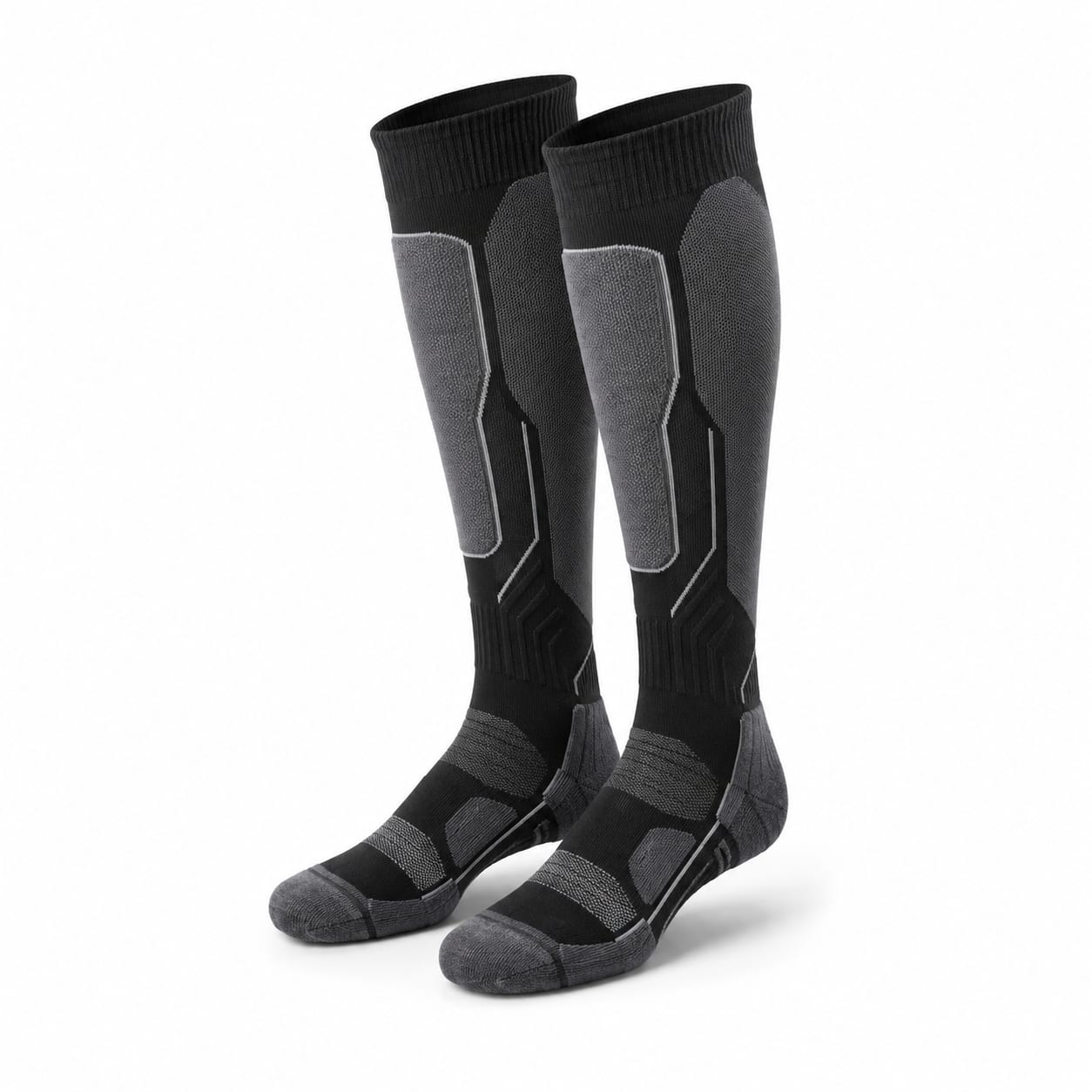
52 questions
Browse by spec group
Questions are organized the same way as the buying specs on the main equipment page.
Fit & Sizing
Dimensions that determine how the sock fits your foot and leg, critical for comfort inside a ski boot.
Why do most skiers recommend over-the-calf socks instead of shorter ones?
Over-the-calf (OTC) ski socks are the standard for a simple reason: they extend above your calf muscle, keeping the sock cuff above the top of your ski boot shell. Without that coverage, the stiff plastic boot cuff rubs directly against your bare skin, which can cause painful chafing and bruising over a full day on the mountain. OTC socks also stay up reliably without sagging down into your boot, so you avoid the annoying bunching that shorter socks tend to create. The full lower-leg coverage provides consistent warmth and light compression, which helps reduce fatigue during long resort days. For most skiers—whether you're cruising groomers or exploring all-mountain terrain—OTC is the right choice. Shorter styles like crew or mid-calf simply can't protect you from boot contact and aren't suitable for skiing. Knee-high options exist for racing or extreme cold, but they can feel restrictive behind the knee for everyday use.
Read answer →Height · Mid-CalfCan I get away with mid-calf ski socks, or do I really need over-the-calf?
Mid-calf socks sit in the middle of your calf, roughly 8 to 11 inches from the heel. They're tempting because they feel less bulky, but they create a real problem for skiing: your ski boot shell will likely ride above the sock's cuff and rub directly against your bare skin. That contact leads to chafing and discomfort that can cut your day short. There are a couple of scenarios where mid-calf can work fine. If you're spring skiing on warm days and your boots fit loosely, or if you're wearing them for après-ski and casual winter activities rather than actual skiing, the shorter height isn't a dealbreaker. Some skiers also prefer them for short, mellow sessions. For most resort skiing, though, over-the-calf is the way to go. It fully covers the area where the boot cuff meets your leg, stays up without sagging, and gives you better warmth and compression. Think of mid-calf as a niche choice, not your everyday ski sock.
Read answer →Height · CrewCan I just wear my regular crew socks for skiing?
We get it—crew socks are comfortable and you probably already own a drawer full. But for skiing, they're a recipe for painful chafing and a miserable day on the mountain. Ski boots have a rigid plastic shell that wraps around your lower calf, and crew socks only reach about 6–8 inches above your heel. That leaves a band of bare skin right where the boot cuff presses against your leg. The result is severe rubbing and discomfort within just a few runs. Even if you think you can tough it out, the constant friction can break the skin and ruin your entire ski trip. Over-the-calf socks exist specifically to prevent this problem by covering all the skin that contacts the boot. Save your crew socks for hiking and everyday wear. For skiing, always go with over-the-calf height—it's the one choice that keeps your lower leg protected and comfortable all day long.
Read answer →Height · Knee-HighShould I consider knee-high ski socks, or is over-the-calf tall enough?
For most skiers, over-the-calf socks are plenty tall and are the go-to choice. But knee-high ski socks—reaching just below the knee at 16 to 20 inches from the heel—do have a place for certain situations and riders. Knee-high socks are popular with ski racers who want full compression coverage along the entire lower leg, which can help with blood flow and reduce fatigue during high-intensity runs. They're also a great option if you run cold or ski in extreme conditions, since the extra coverage traps more warmth. Some backcountry skiers prefer them for long tours in bitter temperatures. The trade-off is that the taller cuff can feel restrictive or bunch up behind the knee, creating pressure points. If you go with knee-highs, make sure they fit snugly and don't sag or wrinkle. For typical resort skiing, over-the-calf is usually the more comfortable and practical choice.
Read answer →SizeWhat size ski socks do I need, and should I size up for extra warmth?
Your ski sock size should match your regular shoe size — don't size up thinking bigger means warmer. A sock that's too large will bunch up inside your ski boot, creating painful pressure points and wrinkles. One that's too small pulls tight and restricts circulation, which actually makes your feet colder. If you fall between sizes on a brand's chart, size down rather than up. A slightly snugger fit stays smooth against your foot and works much better inside a snug ski boot. Also, remember that women's sizing typically runs 1.5 to 2 sizes smaller than men's for the same foot length, so double-check you're looking at the right chart. One last tip: size ranges vary a lot between manufacturers, so always check the specific brand's size chart rather than assuming your usual size will translate directly.
Read answer →Gender Fit · Men'sDo I really need men's-specific ski socks, or are unisex ones just as good?
Men's-specific ski socks are built with a wider heel pocket, lower arch, and larger calf circumference to match typical male foot proportions. If you have average to broader feet, this tailored fit means less bunching inside your ski boot and fewer hot spots during a full day on the mountain. Unisex socks can work, but they're a compromise. You might notice heel slippage or excess fabric around the calf, which can lead to blisters or cold spots. That becomes more noticeable the longer you ride. Men's socks also use men's shoe sizing, so finding your size is more straightforward. That said, if you have narrower feet, a women's-specific sock might actually give you a better, snugger fit inside your boot. The goal is eliminating slack and slippage. For most men, though, men's-specific ski socks are the easiest path to all-day comfort and performance.
Read answer →Gender Fit · Women'sDo I really need women's-specific ski socks, or are unisex socks fine?
Women's-specific ski socks are worth seeking out if you have narrower feet or calves. They're built with a narrower heel pocket to prevent slippage, a higher arch for better support, and a smaller calf circumference so the sock doesn't bunch up inside your boot. These differences might sound minor, but inside a rigid ski boot, even small amounts of excess fabric or heel movement can lead to blisters, cold spots, and fatigue over a full day on the mountain. If you've ever felt your heel lift inside your sock or noticed material wrinkling around your ankle or calf, a women's-specific fit could solve that. The locked-in feel is especially important for control and responsiveness while skiing. Men with narrower feet may also prefer women's sizing. Unisex socks can work in a pinch, but they're a compromise that won't give you the same precision fit.
Read answer →Gender Fit · UnisexAre unisex ski socks fine, or do I really need a gender-specific pair?
Unisex ski socks are designed with generic proportions to fit a range of foot shapes, making them a perfectly fine choice for casual or occasional skiers who want a budget-friendly option. They work adequately for most people and are great if multiple people in your household share socks or you just need a backup pair. The trade-off is that unisex socks don't optimize for anyone's specific foot shape. Women may notice heel slippage or excess material around the calf, since unisex socks tend to be built with broader heels and larger calf circumferences. Men with narrower feet might find them a bit loose as well. In a snug ski boot, even small amounts of bunching or slippage can lead to blisters, pressure points, or cold spots over a full day on the mountain. If you ski frequently or have hard-to-fit feet, investing in a gender-specific sock is worth it. But for a single trip or mellow resort days, unisex socks will get the job done.
Read answer →Gender Fit · Youth/JuniorCan my kid just wear my old adult ski socks, or do they really need youth-specific ones?
Youth-specific ski socks are absolutely worth it for kids. Adult socks—even sized down—are proportioned for grown-up feet and calves, which means excess fabric will bunch up inside a child's ski boot. That bunching creates pressure points, cold spots, and blisters that can cut a ski day short and make kids miserable. Youth socks are scaled down in every dimension: foot length, heel pocket width, arch placement, and calf circumference. This means the cushioning zones actually land where they should, and there's no extra material to wrinkle or fold inside the boot. A proper-fitting sock also helps the junior ski boot perform as designed, giving your child better control and comfort. If you're tempted to size up so they "grow into them," resist—just like with boots, a too-big sock causes the same bunching problems. Buy the right size for now and replace as they grow.
Read answer →Left/Right Specific · Left/Right AnatomicalWhat's the benefit of left/right specific ski socks, and do I really need them?
Left/right anatomical ski socks are shaped specifically for each foot, with contouring that follows the natural curves of your toes, arch, and heel. They're marked with L and R so you always get the right sock on the right foot. The main benefit is eliminating excess material that can bunch up or wrinkle inside your ski boot. This matters most if you ski in tight-fitting boots or do performance skiing where any bunching creates pressure points and hot spots. Racers and aggressive skiers will notice the difference—less friction, better contour around the foot, and a more precise feel inside the boot. If you're a casual skier with roomier boots, universal fit socks work just fine. But if you've ever felt annoying sock wrinkles mid-run or deal with pressure points, anatomical construction is worth seeking out. Just double-check those L and R markings before pulling them on—wearing them on the wrong feet defeats the whole purpose!
Read answer →Left/Right Specific · Universal FitDo I really need left/right specific ski socks, or is universal fit fine?
Universal fit ski socks work perfectly well for most casual and intermediate skiers. These socks have the same construction for both feet—they're slightly shaped for comfort but aren't designed specifically for your left or right foot. The main advantage is simplicity: they're easier to pair after washing and often come at a friendlier price point. The trade-off is that universal socks may have a tiny bit of excess material on one side of your foot, which can cause slight bunching inside your boot. If you ski in a relaxed style with a comfortable boot fit, you probably won't notice this at all. However, if you ski in tight-fitting performance boots or are sensitive to pressure points, that small amount of bunching can become uncomfortable over a full day on the mountain. In that case, anatomical left/right socks are worth the upgrade. But don't assume universal means low quality—many premium ski sock brands use universal construction and still deliver excellent moisture-wicking, cushioning, and warmth.
Read answer →Thickness · UltralightAre ultralight ski socks too thin to actually keep my feet warm?
Ultralight ski socks are intentionally thin—they're built for maximum feel and responsiveness, not warmth. With almost sheer construction, they put minimal material between your foot and the boot, giving you the most direct connection to your skis. That's why racers and aggressive skiers with very tight-fitting boots love them. These socks shine in warm conditions or spring skiing when breathability matters more than insulation. They're also ideal if your boots fit snugly and adding any bulk creates discomfort or pressure points. You'll feel every edge transition more clearly. However, if you run cold or ski in bitter temperatures, ultralight won't provide enough warmth on their own. They're a specialized choice—great for precision skiing, but most recreational skiers will be happier with lightweight or midweight options that balance feel with cushioning and insulation.
Read answer →Thickness · LightweightWhen should I choose lightweight ski socks over midweight or thicker ones?
Lightweight ski socks are ideal if you have a snug-fitting boot or prioritize performance and responsiveness on the slopes. They're thin enough to let you feel every nuance of your ski's response, with just a touch of strategic padding in high-impact areas like the shin and heel to prevent bruising without adding bulk. They shine in moderate temperatures and for all-mountain skiing where you want a connected, precise feel. Many performance-oriented skiers prefer them because thicker socks can dull that boot-to-ski connection and even create pressure points if the boot is already fitted close. The key is boot fit—if your boots are properly sized and snug, lightweight socks complement that fit perfectly. If your boots feel loose, resist the temptation to bulk up with thicker socks; instead, address the fit directly with a bootfitter or better footbed. Lightweight socks reward a good boot fit with better control and comfort all day.
Read answer →Thickness · MidweightWhat does midweight thickness mean for ski socks, and is that the right choice for me?
Midweight ski socks hit the sweet spot between thin performance socks and thick winter socks. They have enough cushioning to keep your feet comfortable all day without adding so much bulk that you lose the feel of your ski boot. That's why they're the most popular choice for everyday resort skiing. If you're skiing in variable conditions—cold mornings that warm up by afternoon, or trips where the weather shifts—midweight socks give you solid warmth without the risk of overheating. They work well with most boot fits, so if your boots feel pretty good already, midweight is a safe bet. The one tradeoff is slightly less boot feel compared to lightweight socks, so racers and aggressive skiers who want maximum precision might prefer going thinner. But for most recreational skiers, midweight is the versatile do-it-all option that keeps feet happy from first chair to last run.
Read answer →Thickness · HeavyweightWhen should I choose heavyweight ski socks?
Heavyweight ski socks are your warmest option, built with thick, substantial material that adds maximum insulation. They're the right call if you're skiing in extremely cold conditions, run cold naturally, or are a beginner spending a lot of time standing around. The extra bulk can also take up volume in boots that fit a bit loose. The trade-off is feel. That thick material dampens your connection to the boot, so you'll notice less precision and responsiveness when making turns. On mild days, heavyweight socks can actually cause overheating and sweaty feet—which can then make you colder. One common mistake: don't buy heavyweight socks just to fill up a sloppy boot fit. You're better off addressing the boot itself with a proper footbed or getting boots that actually fit. Heavyweight socks should be about warmth, not compensating for poor fit.
Read answer →Material & Construction
Dimensions related to the sock's fiber composition and build quality, affecting performance, durability, and care.
Why is merino wool always recommended for ski socks — is it really that much better than synthetic?
Merino wool earns its gold-standard reputation for ski socks because it handles moisture, temperature, and odor better than any synthetic alone. It can absorb up to 30% of its weight in moisture before your feet feel wet, which keeps you drier and more comfortable all day. Unlike synthetics, merino also stays warm when damp—so if you work up a sweat or ski in variable conditions, your feet won't turn cold and clammy. Another major advantage is natural odor resistance. Merino fights bacteria on its own, meaning you can wear the same pair for multiple ski days without offending your crew at après. It's also far softer than traditional wool, so no itch factor. The one downside? Pure merino isn't quite as durable as synthetic materials and can wear out faster in high-friction areas. If longevity is a concern, consider a merino-synthetic blend, which adds toughness while keeping most of merino's benefits. But for pure on-mountain comfort across all skiing applications, merino wool is tough to beat.
Read answer →Material · Synthetic BlendShould I consider synthetic blend ski socks, or is merino wool always the better choice?
Synthetic blend ski socks aren't necessarily a downgrade from merino — they just serve a different purpose. Made primarily from nylon, polyester, or acrylic with some stretch fibers, synthetics excel at durability and fast drying. If you're hard on your gear, ski frequently, or need a more budget-friendly option, synthetic blends are a solid pick. They're also the go-to if you have a wool allergy. The trade-off is odor control and temperature regulation. Synthetic fibers don't absorb moisture the way merino does, so sweat sits on the surface and can feel clammy against your skin. They also tend to hold odors faster, which matters if you're skiing multiple days without washing. For resort skiers who wash gear regularly and want something tough that lasts season after season, synthetic blends get the job done. But if you run cold, sweat heavily, or multi-day trips are your norm, merino or a merino-synthetic blend will likely keep your feet happier.
Read answer →Material · Merino-Synthetic BlendI see a lot of ski socks are merino-synthetic blends. Why not just go with 100% merino wool?
A merino-synthetic blend gives you the best of both worlds for skiing. The merino wool handles moisture management, temperature regulation, and odor resistance — the stuff that keeps your feet comfortable all day on the mountain. The synthetic fibers (usually nylon or polyester with a bit of spandex) add durability and help the sock keep its shape over many washes and seasons. Pure merino is great, but it can wear out faster, especially in high-friction areas like the heel and toe where your ski boot rubs. The synthetic reinforcement in a blend means your socks last longer without sacrificing that soft, itch-free feel merino is known for. Most premium ski socks use a 40-70% merino blend, and that range hits the sweet spot for most skiers. You get the natural performance of wool where it matters most, with enough synthetic content to keep the sock fitting snug and holding up season after season.
Read answer →Material · Silk BlendI noticed some ski socks use silk blends — what's the advantage, and are they worth it for regular skiing?
Silk blend ski socks are a niche but excellent choice for specific situations. They combine silk with wool or synthetics to create an extremely smooth, thin sock that feels luxurious against your skin. The standout benefit is reduced friction — if you're prone to blisters or hot spots in tight-fitting boots, silk's smooth surface helps your foot glide rather than rub. These socks really shine in racing and performance applications where you want minimal bulk between your foot and boot for maximum responsiveness and feel. They're also popular for layering under another sock on extremely cold days. However, silk blends are less durable than merino or full synthetic options, and they typically come with a premium price tag. For most resort skiers, a merino-synthetic blend is still the better everyday choice — it offers more cushioning, better durability, and stronger odor resistance. But if you're a racer chasing precise boot response, or you struggle with foot friction, silk blend socks are a worthwhile investment.
Read answer →Material · Cotton BlendI found some affordable cotton blend socks marketed for skiing. Are they okay to use on the slopes?
Cotton blend socks are one of the biggest mistakes you can make for skiing. Cotton absorbs sweat and holds onto it, leaving your feet damp and cold all day. Since ski boots trap moisture, that wetness has nowhere to go, creating a recipe for blisters and freezing toes. The problem is that cotton dries incredibly slowly, so once your feet get wet, they stay wet. This is the opposite of what you want in a ski sock, where moisture management is critical for warmth and comfort. Instead, look for merino wool or merino-synthetic blend socks. Merino naturally wicks moisture, resists odor, and stays warm even if it does get damp. A merino-synthetic blend gives you those benefits plus added durability. Save the cotton socks for après-ski lounging, not the mountain.
Read answer →Merino %What merino wool percentage should I look for in ski socks?
Most quality ski socks fall in the 40–70% merino range, which hits the sweet spot between natural performance and long-term durability. Merino wool regulates temperature, wicks moisture, and fights odor — but it needs help from other fibers to hold up inside a stiff ski boot. Below 30% merino, you start losing those natural benefits, and the sock behaves more like a synthetic. Above 70%, the sock may feel great initially but can wear out faster and lose its shape over time, since pure wool lacks the stretch and resilience needed for a snug boot fit. The remaining content is typically nylon (adds durability and abrasion resistance) and a small percentage of elastane or spandex (provides stretch so the sock stays up and retains its shape). When comparing socks, don't just look for "merino" on the label — check the actual percentage so you know what you're getting.
Read answer →Toe Seam Type · Seamless / Seamless ToeWhy should I look for seamless toe ski socks? Is the toe seam really that big a deal?
In a ski boot, your foot is locked in tight with constant pressure, and even a small raised seam across your toes can become a major friction point over the course of a day. Seamless toe construction eliminates that seam entirely, closing the toe area without any raised stitching that could rub or press against your skin. This matters more in ski socks than everyday socks because ski boots don't give your toes any room to shift away from irritation. If you've ever ended a ski day with sore, blistered toes, a raised seam is often the culprit. Seamless toes are especially worth seeking out if you're prone to blisters, have sensitive feet, or spend long days in performance-fitted boots. Most premium ski socks feature seamless toe construction, and it's a small detail that can make a surprising difference in all-day comfort on the mountain.
Read answer →Toe Seam Type · Flat-Knit SeamIs a flat-knit toe seam on ski socks comfortable enough, or do I really need seamless?
A flat-knit toe seam is a solid middle-ground option that works well for most skiers. The seam is pressed flat during knitting so it sits close to the fabric, making it far less noticeable than a traditional raised seam. Inside a ski boot, that low-profile design keeps bulk and friction to a minimum for the average foot. That said, if you have sensitive feet or are prone to blisters, a flat-knit seam can still create a slight friction point over a long day on the mountain. Seamless or hand-linked toes are smoother still and eliminate that risk entirely. But for general resort skiing with no history of toe-area hot spots, flat-knit is perfectly comfortable for most people. Flat-knit seams are commonly found on mid-range ski socks, so they're a great choice if you want reliable comfort without paying premium prices. Just avoid any sock with a traditional raised toe seam—that's where the real blister trouble starts inside a tight ski boot.
Read answer →Toe Seam Type · Hand-Linked ToeWhat does hand-linked toe mean on ski socks, and is it worth paying more for?
A hand-linked toe is a premium construction method where the toe seam is stitched together stitch-by-stitch, creating an extremely smooth, nearly invisible closure. Unlike a standard seam that can feel like a raised ridge across your toes, a hand-linked seam is virtually undetectable to the touch. This matters a lot in ski boots because your foot is locked in a tight, rigid shell for hours. Even a small ridge across your toes can become a hot spot or blister after a full day on the mountain. If you've ever ended a ski day with sore, rubbed toes, the seam might be the culprit. Hand-linked toes are typically found on premium ski socks and are worth the upgrade if you have sensitive feet, are prone to blisters, or simply want the most comfortable option available. For most skiers, a seamless toe will also do the trick, but hand-linked is the gold standard for that barely-there feel.
Read answer →Reinforced Areas · Heel ReinforcementWhy do ski socks need heel reinforcement? Can't I just use regular winter socks?
The heel takes a beating in ski socks like nowhere else. Every time you flex forward in your boots, the stiff liner grinds against the back of your heel with significant pressure. This friction is far harsher than what regular socks experience in everyday footwear, which is why even thick winter socks can develop holes at the heel after just a few days on the mountain. Heel reinforcement uses a denser, more durable knit in that high-friction zone to resist thinning and prevent holes from forming. It essentially adds armor right where your boot liner rubs the most, and it can dramatically extend the life of your ski socks — sometimes by an entire season or more. The good news is that nearly all quality ski socks include heel reinforcement as a standard feature. If you're looking at a pair that doesn't specify it, that's a red flag. Think of heel reinforcement as the bare minimum for durability — without it, you'll be shopping for replacements far too soon.
Read answer →Reinforced Areas · Toe ReinforcementDo I really need toe reinforcement in ski socks, or is that just a marketing thing?
Toe reinforcement isn't just hype—it's a practical feature that can significantly extend the life of your ski socks. The top of your toe takes a beating from ski boot liner pressure, and that constant friction can wear through regular sock material surprisingly fast. If you ski frequently or tend to wear through socks quickly, toe reinforcement is absolutely worth having. It adds extra-durable knitting right where the boot liner presses hardest, preventing those annoying holes that seem to appear after just a season or two. That said, if you only ski a few days a year, you might not notice the difference as much. But for regular skiers, reinforced toes—along with reinforced heels—are the two zones that matter most for durability. Most quality ski socks include both, so you rarely have to choose between them.
Read answer →Reinforced Areas · Shin ReinforcementDo I need shin reinforcement in my ski socks?
Shin reinforcement adds extra-durable knitting over the front of your shin, where your boot tongue presses and rubs throughout the day. It's not essential for everyone, but it makes a real difference if you ski aggressively or have heavy boot contact. The main benefit is that it keeps the shin cushioning from packing out prematurely. Without reinforcement, the padded area over your shin can compress and thin after repeated use, leaving you with less protection against boot pressure. Reinforced construction helps that cushioning last longer. Shin reinforcement is especially worth seeking out if you're prone to "shin bang" — that bruised, painful feeling from leaning hard into your boots all day. Park skiers, racers, and anyone who drives their shins into the boot tongue will notice the difference. For casual resort skiers who don't experience shin discomfort, heel and toe reinforcement matter more.
Read answer →Reinforced Areas · Sole/Underfoot ReinforcementDo I really need sole reinforcement on my ski socks, or is that overkill?
Sole reinforcement adds extra-durable knitting to the bottom of the foot, where abrasion from your boot's footbed can wear through socks surprisingly fast. It's not essential for everyone, but it makes a real difference if you're logging lots of days on the mountain. This feature is especially worth considering if you're a high-mileage skier out several days a week, or if you do a lot of walking in your boots—like hiking to lift lines or navigating base lodges. It's also handy during the boot-fitting process, when you're repeatedly sliding your foot in and out as adjustments are made. Beyond durability, sole reinforcement adds a touch of cushioning underfoot, which can take the edge off hard landings or long groomer runs. If you've ever worn through the bottom of a ski sock mid-season, this is the feature that prevents that.
Read answer →Odor Control · TreatedDo I need antimicrobial treatment on my ski socks, or is it just a gimmick?
Antimicrobial treatments like silver ions or Polygiene are applied to ski socks to fight odor-causing bacteria, extending how long you can wear them before they get funky. They're genuinely useful if you're heading out on multi-day ski trips where washing isn't an option, or if you tend to re-wear socks between uses. That said, if your socks are made with merino wool, you're already getting excellent natural odor resistance — merino fibers naturally inhibit bacterial growth. An added treatment is a nice bonus but not a must-have. It becomes more relevant for synthetic socks, which are more prone to holding onto smells without any treatment. Just keep in mind that antimicrobial treatments can fade over time with repeated washing, so don't pay a huge premium for this feature. And no, treated doesn't mean you never have to wash them — your feet (and cabin mates) will thank you for regular laundry days.
Read answer →Odor Control · Not TreatedDo I need antimicrobial treatment on my ski socks, or are untreated socks fine?
For most skiers, untreated ski socks work perfectly well — especially if they're made with merino wool. Merino naturally fights odor-causing bacteria, so you'll stay fresh through a full day on the slopes without any added treatment. Just wash them between uses like you normally would. The main time to consider antimicrobial treatment is if you're heading out on a multi-day ski trip where you won't have access to laundry, or if you're looking at synthetic socks (which tend to hold onto odor faster than merino). For regular resort skiing with daily washing, untreated socks are completely adequate. Don't pay a big premium for antimicrobial treatment if you're already buying merino wool — you'd be paying for something the fiber already does naturally. Save that money for a better sock overall.
Read answer →Cushioning & Protection
Dimensions related to padding and impact protection, which affect comfort, warmth, and boot fit.
I have tight performance ski boots—should I go with ultralight cushion socks, or will my feet freeze?
Ultralight cushion socks are actually the ideal match for tight performance boots. With minimal padding, they give you the closest contact with your boot, which translates to maximum responsiveness and control—exactly what you want when you're carving hard turns or skiing aggressively. The trade-off is warmth. Ultralight socks offer the least insulation, so they're best for moderate temperatures, spring skiing, or if you naturally run warm. On frigid days, your feet may feel it. The key thing to remember: adding thicker socks to tight boots doesn't make you warmer—it restricts circulation, which actually makes your feet colder and can cause numbness. If your boots fit well and snug, ultralight socks let that precise fit work as intended. They're the go-to for racers and advanced skiers who prioritize feel over padding.
Read answer →Cushioning · Light CushionWho should choose light cushion ski socks over other cushioning levels?
Light cushion ski socks are ideal if you want a bit of impact protection without adding bulk inside your boot. They feature thin padding in key zones—like the shin, heel, and toe—where you take the most abuse, while keeping the overall profile slim so your boot fit stays true. These socks really shine for performance all-mountain skiing and snug-fitting boots. Since they don't add much volume, you maintain strong boot feel and responsiveness while still getting cushioning exactly where it counts. They're also a solid pick for moderate temperatures when you don't need maximum insulation. Light cushion isn't the best choice if you run cold, have loose-fitting or rental boots, or ski in bitter conditions—you'll likely want medium or heavy cushion for the extra warmth and volume fill. But if your boots fit well and you prioritize control and a close connection to your skis, light cushion is tough to beat.
Read answer →Cushioning · Medium CushionIs medium cushion a good default choice for most resort skiers?
Medium cushion is the most popular option for a reason—it strikes a great balance between comfort and performance for most recreational skiers. You get moderate padding throughout the sock with extra cushioning in high-impact zones like the shin and heel, which helps reduce fatigue on long days without making your boots feel overly tight. This level works best if your boots have an average fit—not race-tight, but not loose either. It provides enough warmth for typical winter conditions and enough padding to take the edge off hard landings and long groomer runs. The one tradeoff is that you'll lose a bit of that responsive, connected feel compared to thinner socks. But for most all-mountain and resort skiers, that slight reduction in boot feel is well worth the all-day comfort. If you're not racing or dealing with extremely tight or loose boots, medium cushion is usually the way to go.
Read answer →Cushioning · Heavy / Full CushionShould I get heavy cushion ski socks? I tend to get cold feet on the mountain.
Heavy cushion ski socks are a solid choice if you run cold or ski in extreme conditions. The thick padding throughout the foot and leg provides maximum warmth and impact protection, which is especially helpful for beginners dealing with boot pressure or anyone wearing rental boots with extra room to fill. That said, heavy cushion isn't always the answer for cold feet. If your boots fit snugly, all that extra padding can actually make them too tight, restricting circulation and making your feet colder—not warmer. You'll also lose some of the responsive boot feel that helps with precise control. The key is matching cushioning to your boot fit. Heavy cushion works best to take up volume in looser boots. If your boots already fit well, a medium cushion with good moisture-wicking might keep you warmer overall. And never double up on socks—that just creates wrinkles and cuts off circulation, which is a fast track to freezing feet.
Read answer →Shin Padding · No Shin CushioningI saw some ski socks with no shin padding at all — why would anyone want that?
Ski socks without shin cushioning are designed for skiers who prioritize maximum boot feel and minimal bulk over padding. They have the same thin construction throughout the entire leg, which lets you feel every movement of your boot tongue against your shin. This is why racing and high-performance skiers often choose them — that direct connection translates to quicker, more precise turns. They're also popular with ultralight backcountry skiers counting every ounce, and skiers who simply never experience shin discomfort in their boots. If your boots fit well and you don't get shin bang (that bruised feeling from boot pressure or impact), you might not need the extra padding at all. The catch is straightforward: no shin cushioning means zero protection from boot pressure. If you've ever ended the day with sore or bruised shins, skip these and go for at least light or medium padding instead.
Read answer →Shin Padding · Light Shin CushioningShould I choose ski socks with light shin cushioning, or do I need more padding?
Light shin cushioning gives you a thin layer of padding right where your ski boot tongue presses against your shin. It's enough to take the edge off boot pressure without adding bulk or changing how your boot fits. If you've ever felt mild shin discomfort after a long day but don't deal with actual shin bang, this is probably your sweet spot. This level of cushioning is especially popular with performance skiers who want to feel their boots respond without a thick pad muting that connection. It's also great if your boots already fit snugly and you don't have room to spare—adding heavy padding could make things too tight. If you're skiing aggressively all day, hitting moguls, or have a history of shin bang, you'll likely want to step up to medium or heavy cushioning for more protection. But for most skiers with mild sensitivity who still want responsive boot feel, light shin padding hits a nice balance.
Read answer →Shin Padding · Medium Shin CushioningIs medium shin cushioning a good choice for most skiers?
Medium shin cushioning is the sweet spot for the majority of skiers, especially all-mountain and recreational riders. It provides noticeable padding over the shin that absorbs impact and eases pressure from your boot tongue, without feeling overly bulky or changing how your boot fits. This level of cushioning is ideal if you ski varied terrain throughout the day—groomers, bumps, and off-piste—since it handles the constant boot contact and occasional impacts that come with mixed conditions. It's comfortable enough for full days on the mountain and helps prevent that common soreness known as "shin bang." The only real trade-off is a slight increase in bulk around the boot cuff compared to light or no cushioning. If your boots already fit very snugly, you might notice the extra padding, but for most skiers with a typical boot fit, medium cushioning won't cause issues and will make long days far more comfortable.
Read answer →Shin Padding · Heavy Shin CushioningWho actually needs heavy shin cushioning in ski socks?
Heavy shin cushioning is built for skiers who really need maximum protection up front. If you've ever dealt with "shin bang"—that painful bruising sensation from your boot tongue pressing against your shin—this level of padding can be a game-changer. It's also a smart pick for mogul skiers, aggressive skiers, and anyone whose shins tend to get cold or sore after long days on the mountain. The thick, dense padding absorbs impact and relieves boot pressure better than any other option. It can even help snug up a boot cuff that fits a bit loose. Just know the trade-off: that extra bulk can reduce how much you feel the boot tongue engaging, which matters if you like precise, responsive turns. If you don't have shin issues, you're probably better off with medium or light cushioning for a more connected feel. Heavy shin padding is really for those who need it—not everyone does.
Read answer →Arch Support · No Arch SupportWhy would I choose ski socks with no arch support? Isn't more support always better?
Not necessarily! Ski socks with no arch support have a uniform construction through the midfoot, meaning there's no built-in elastic or compression band squeezing your arch. This simpler design is actually preferred by some skiers, especially racers who want the most minimal, unobtrusive sock possible between their foot and boot. The main trade-off is that without arch compression, the sock may shift slightly on your foot during the day. For most skiers, that's a downside — but if you have a boot that fits like a glove and you don't want any extra pressure points, the clean construction can feel great. No arch support is also a good choice if you're sensitive to compression around your midfoot or if you already use custom footbeds that provide the arch support you need. Just know that the sock itself won't help fight foot fatigue on long days.
Read answer →Arch Support · Light Arch SupportWhat does light arch support mean in ski socks, and who is it best for?
Light arch support means the sock has a subtle elastic or compression zone woven through the midfoot area. It gives your arch a gentle hug without feeling tight or restrictive — think of it as a soft embrace rather than a firm squeeze. This level of support is the sweet spot for most skiers. The main benefit is practical: it helps the sock stay put on your foot and reduces slippage inside your boot, which means fewer hot spots and blisters over a long day on the mountain. It's less about correcting your foot mechanics and more about keeping the sock securely in place. If you're a general resort skier who spends full days on the slopes but doesn't have specific foot fatigue issues or particularly high arches, light arch support is usually the right call. It provides just enough structure to notice, without feeling like the sock is working against your foot.
Read answer →Arch Support · Moderate Arch SupportWhat does moderate arch support in ski socks feel like, and who is it best for?
Moderate arch support features a noticeable elastic or compression band through the midfoot of the sock. It creates a secure, supportive hug around your arch that keeps the sock firmly in place inside your ski boot — no bunching or slipping as you carve turns all day. This level of support is especially great if you have high arches or tend to get foot fatigue during long days on the mountain. The compression through the arch can help reduce that tired, achy feeling by giving your foot a little extra stability. It's also popular with performance-oriented skiers who want a locked-in, responsive feel. If you're an all-day skier looking for a balance between comfort and support, moderate arch support hits that sweet spot. Just remember that sock arch support is different from your boot's footbed or insole — the sock helps the sock stay put on your foot, while your insole supports your foot's structure directly.
Read answer →Arch Support · Firm Arch SupportWho should get ski socks with firm arch support?
Firm arch support features a strong compression band through the midfoot of the sock, giving you maximum stability and a locked-in feel inside your boot. It's a great choice if you have high arches, struggle with foot fatigue during long days on the mountain, or want every bit of performance and sock stability you can get. That said, firm support isn't for everyone. If you have flat feet or prefer a less restrictive feel, it can feel uncomfortable or even distracting. It's also worth remembering that sock arch support is different from your boot footbed or insole — the sock's compression keeps the sock itself from slipping and bunching, while your insole supports your actual foot. If you're skiing hard all day and your arches are begging for help by afternoon, firm arch support is worth trying. Otherwise, moderate support is a safer, more comfortable bet for most skiers.
Read answer →Climate & Comfort
Dimensions that affect temperature regulation, moisture management, and overall comfort in varying conditions.
When should I choose lightweight warmth ski socks instead of a thicker pair?
Lightweight warmth ski socks are your best bet when staying cool and dry matters more than heavy insulation. They shine during spring skiing, on indoor slopes, or if you're skiing in warmer climates where overheating is a real concern. They're also great for high-intensity skiing—like aggressive resort laps or touring—where your feet work hard and generate plenty of their own heat. The key advantage here is moisture management. Lightweight socks wick sweat away fast, and since dry feet are warm feet, they can actually keep you more comfortable than a thick sock that leaves you sweaty. The common mistake is assuming thicker always means warmer—once your foot sweats through a heavy sock, that moisture chills you down. Skip the lightweight option if you're skiing deep winter cold, sitting on long lift rides, or if your feet naturally run cold. For most typical winter days, a midweight sock is the safer all-around choice.
Read answer →Warmth Level · All-Season / Midweight WarmthShould I just go with midweight ski socks, or do I need different warmth levels for different days?
For most skiers, all-season or midweight warmth is the best place to start. These socks strike a solid balance between keeping your feet warm and wicking away moisture, which makes them comfortable for typical winter resort conditions from December through March. They're thick enough to insulate on cold chairlift rides but not so bulky that you'll overheat during active skiing. The key thing to remember is that sweaty feet become cold feet fast. Midweight socks manage moisture well while still providing enough insulation for standard winter days, which is why they're the default choice for most skiers. If you only buy one pair, make it midweight. That said, if you regularly ski in extreme cold or you know your feet run cold, you might want heavyweight socks for those frigid days. And if you're a spring skier or tend to run hot, a lightweight pair can keep you from overheating. But for the bulk of the season, midweight has you covered.
Read answer →Warmth Level · Heavyweight WarmthShould I buy heavyweight warmth ski socks if my feet always get cold on the mountain?
Heavyweight warmth ski socks are designed for genuinely cold conditions — think sub-zero temperatures, bitter wind chill, or those long, exposed lift rides where your feet just freeze. If you consistently run cold or ski in extreme conditions, they can be a game-changer by providing maximum insulation right where you need it. However, be careful not to over-insulate. If you wear heavyweight socks on milder days, your feet will sweat, and sweaty feet quickly become cold feet. Moisture management often matters more than bulk when it comes to staying warm. The bottom line: heavyweight socks are ideal for deep winter cold or skiers who truly can't stay warm otherwise. For most typical resort days, midweight socks strike a better balance. Save the heavyweight pair for the coldest days in your rotation.
Read answer →Ventilation · No Ventilation ZonesShould I get ski socks with no ventilation zones if my feet always run cold on the mountain?
Ski socks with no ventilation zones have a uniform knit throughout, meaning there are no mesh or thinner panels designed to let heat escape. This construction prioritizes maximum warmth, which can be a great choice if you're skiing in bitterly cold conditions or if your feet just tend to run cold no matter what. The trade-off is moisture management. Without ventilation channels, sweat doesn't escape as easily, and trapped moisture can actually make your feet feel colder over time. For this reason, socks with no ventilation work best for low-intensity resort days in genuinely cold weather, where overheating is unlikely. If you're doing high-output skiing like charging hard all day or hiking to fresh lines, even cold feet can warm up and sweat. In that case, you'd likely be better off with targeted ventilation to keep things dry. But for cold, mellow days when warmth is your top priority, no-ventilation socks are a solid pick.
Read answer →Ventilation · Targeted VentilationWhat does targeted ventilation mean on ski socks, and is it a good choice for me?
Targeted ventilation means the sock has breathable mesh or thinner-knit panels placed in specific high-heat areas—usually the top of the foot and the toe box. These zones let moisture escape where your foot naturally runs hottest, without thinning out the whole sock. For most skiers, targeted ventilation is the sweet spot. It keeps your feet drier by letting sweat escape where it builds up most, which actually helps you stay warmer—wet feet get cold much faster than dry ones. You still get full cushion and warmth everywhere else on the sock. This is the most common ventilation setup in quality ski socks because it works well for all-mountain skiing, variable conditions, and everyday resort use. If you're skiing in typical winter conditions and want one sock that handles most days, targeted ventilation is your best bet.
Read answer →Ventilation · Extensive VentilationWhen would I need ski socks with extensive ventilation zones instead of regular ones?
Extensive ventilation zones are ideal if you run hot, ski in warmer conditions, or do high-output activities like backcountry touring. These socks feature multiple mesh panels and thinner-knit areas that let moisture escape quickly, keeping your feet from getting soggy on long, sweaty ascents or during spring skiing when temperatures climb. The trade-off is warmth—extensive ventilation means less insulation, so these aren't the best pick for deep winter days or if your feet tend to run cold. But here's the thing: wet feet get cold fast too. If you're working hard and sweating heavily, the moisture management from extensive ventilation can actually keep you more comfortable than a thick, unventilated sock that traps perspiration. Think of extensive ventilation as your go-to for touring, hut trips, or those sunny April resort days. For typical winter skiing, targeted ventilation usually hits the sweet spot.
Read answer →Compression · No CompressionDo I really need compression in my ski socks, or are non-compression ones fine?
No-compression ski socks are perfectly fine for casual days on the mountain. They use standard elastic to stay up on your leg but don't actively squeeze or compress your calf. If you find compression socks uncomfortable or restrictive, no-compression options give you a more relaxed, familiar feel inside your boot. The trade-off is that you won't get the circulatory benefits that graduated compression provides. Without that gentle squeeze, blood doesn't circulate as efficiently, so your feet and legs may fatigue faster on longer days. No-compression socks also tend to sag or bunch more over time, which can create hot spots or blisters. If you're mostly doing short resort sessions or just prefer a looser feel, no-compression socks are a solid, budget-friendly choice. For all-day or multi-day skiing, you'll likely notice the difference in comfort and recovery with at least light compression.
Read answer →Compression · Light Compression (8-15 mmHg)I've never worn compression ski socks before — is light compression a good place to start, and what will it actually feel like?
Light compression (8-15 mmHg) is an excellent starting point if you're new to compression socks. It gives you a gentle, supportive hug around your calf and foot without feeling tight or restrictive. You'll notice a subtle "held-in" sensation, but it shouldn't feel constricting or uncomfortable at all. This level is ideal for all-day resort skiing where you want some fatigue reduction without constantly thinking about your socks. It mildly improves blood flow, which helps keep your feet warmer and less tired by last chair. It's also more forgiving on sizing than higher compression levels, where a poor fit can actually restrict circulation rather than help it. If you're curious about compression but worried it'll feel too tight or be a struggle to pull on, light compression is the safe bet. You can always step up to moderate (15-20 mmHg) later if you want more noticeable performance benefits.
Read answer →Compression · Moderate Compression (15-20 mmHg)I see moderate compression (15-20 mmHg) on a lot of ski socks. Is this a good level for most skiers, and what does it actually do?
Moderate compression in the 15-20 mmHg range is the most popular choice for ski socks, and for good reason. This level provides noticeable graduated compression that actively improves blood flow back up your legs, which helps reduce foot and leg fatigue during long days on the mountain. It also cuts down on muscle vibration, meaning less soreness after a full day of skiing. You'll feel a snug, supportive fit that's tighter than a regular sock but not uncomfortable. It may feel a bit tight the first time you wear them, but most skiers adjust quickly and appreciate the secure, locked-in sensation inside their boots. This level is ideal if you're doing performance skiing, spending full days on the mountain, or dealing with fatigue and circulation issues. Just make sure you get the right size—compression socks that are too small can actually restrict circulation rather than help it.
Read answer →Compression · Firm Compression (20-30 mmHg)Should I get firm compression ski socks for better performance on long ski days?
Firm compression (20-30 mmHg) offers the strongest circulatory benefit you can get in a ski sock, maximizing blood flow and dramatically reducing leg fatigue. It's the go-to choice for competitive racers and skiers tackling extreme endurance days where every advantage matters. However, this level of compression isn't for everyone. It can feel uncomfortably tight if you're not used to it, and the socks can be genuinely difficult to put on. Proper sizing is absolutely critical — if they're even slightly too small, they can restrict circulation rather than improve it, which defeats the purpose entirely. Firm compression is also commonly used by skiers with specific medical circulation needs. If that's you, consult your doctor first. For most recreational and all-day resort skiers, moderate compression (15-20 mmHg) hits a better balance of real benefits without the intense squeeze.
Read answer →