
Snowboard Boots · Buying specs
Questions about Snowboard Boots specs
Straight answers on the specs that matter when you buy — each question covers one dimension or option so you know what to look for.
Open Snowboard Boots guide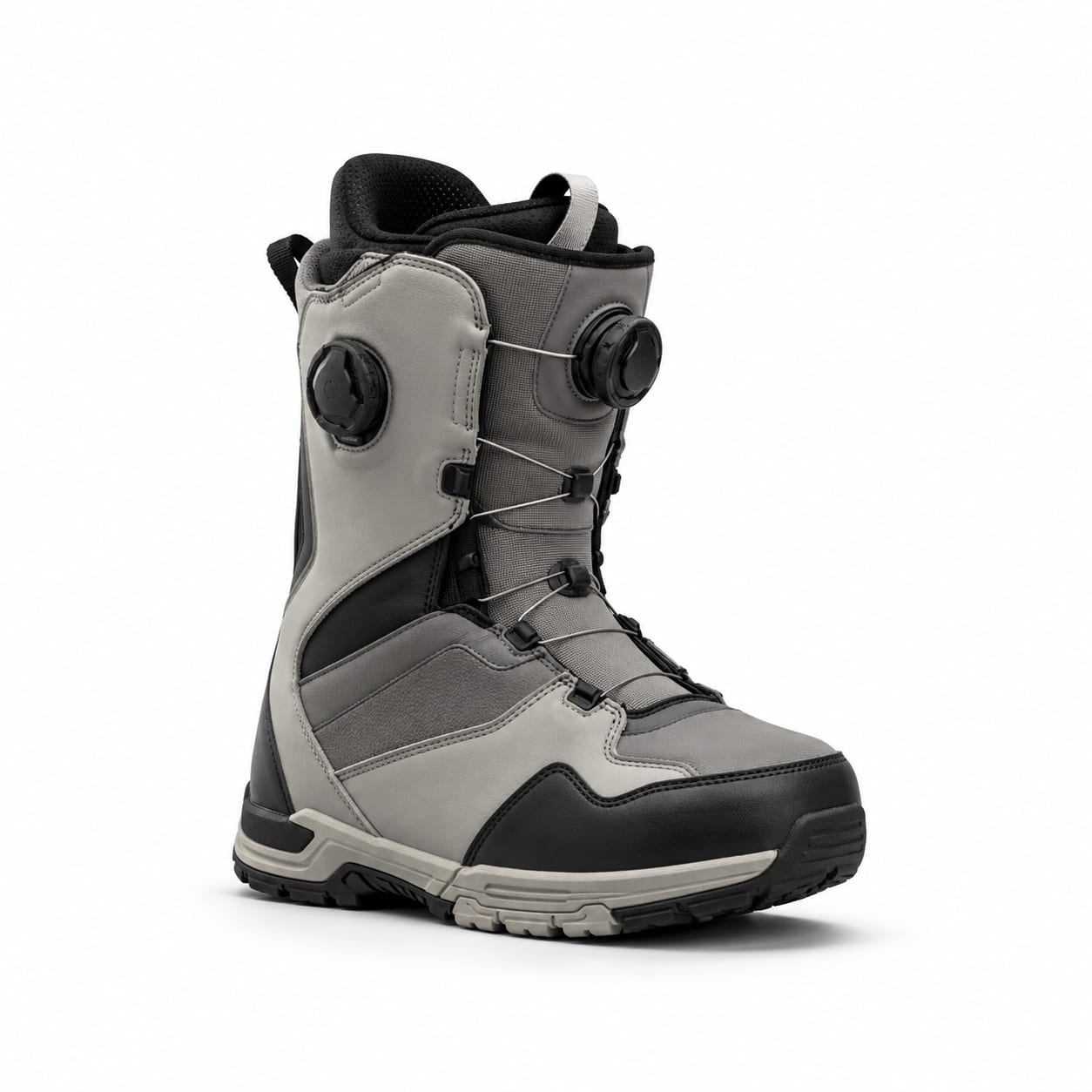
51 questions
Browse by spec group
Questions are organized the same way as the buying specs on the main equipment page.
Fit & Sizing
Dimensions that determine how the boot fits your foot—critical for comfort and performance
What does Mondo size mean for snowboard boots, and how do I find mine?
Mondo size is simply the length of the boot's internal footbed measured in centimeters. It's the most accurate way to size snowboard boots because it's based on an actual physical measurement rather than inconsistent street shoe sizes. To find your Mondo size, measure your bare foot length in centimeters on a Brannock device or ruler, from heel to longest toe. When trying on boots, they should feel very snug—your toes should just brush the front when standing straight, then pull back slightly when you bend your knees into a riding position. This feels counterintuitive, but snowboard boots pack out (stretch and compress) by a half to full size over your first 10–15 days of riding. If they feel comfortable in the store, they'll likely end up sloppy and unsupportive after break-in. Always size by your Mondo measurement, not your street shoe size, and account for that pack-out when deciding how snug to go.
Read answer →Width / Last · NarrowI have narrow feet and my boots always feel sloppy. Should I be looking at narrow last snowboard boots?
Yes—if you have slim or low-volume feet, a narrow last boot can make a huge difference. The "last" is the foot mold the boot is built around, and a narrow last (typically under 95mm wide at a size 9) creates a lower-volume fit that hugs your foot instead of leaving gaps. This eliminates the slop and heel lift that wider boots cause for narrow feet, giving you much better response and control when initiating turns. The biggest mistake riders with narrow feet make is sizing up in length to get more width—this just creates heel lift and makes things worse. Instead, look for brands that offer specific narrow models, and always try them on with your riding socks. A properly fitted narrow boot should feel snug across the midfoot and forefoot without pressure points, while locking your heel down firmly.
Read answer →Width / Last · Standard / MediumHow do I know if a standard or medium width snowboard boot is right for me?
A standard (or medium) width last is designed to fit the majority of riders with average foot width. If you've never had issues with boots feeling painfully tight across the ball of your foot or so loose that your heel lifts, this is likely your best starting point. The benefit of a standard last is that it offers a balanced fit—snug enough for good board response and heel hold, but with enough room to stay comfortable all day. It's also the most widely available width, giving you the biggest selection of models and brands to choose from. If you're unsure about your width, get properly measured at a shop—foot width is independent of length, so you can have a long, narrow foot or a short, wide one. Always try boots on with your actual riding socks, and if a standard width feels cramped or causes numbness, you may need a wide last instead.
Read answer →Width / Last · WideHow do I know if I need wide snowboard boots?
If you experience foot cramps, numbness, or pinching across the sides of your feet while riding, you likely need a wide last boot. Wide snowboard boots feature a higher-volume fit with more room in the forefoot and toe box, designed specifically for riders with wider feet or a high instep. The biggest mistake people make is sizing up in length to get more width—this creates heel lift and kills your board control. A true wide boot gives you the extra volume where you need it without going longer. Brands like Burton, ThirtyTwo, and K2 all make dedicated wide models. Get your foot properly measured at a shop, since width is independent of length. And always try boots on with your actual riding socks to get an accurate feel for the fit.
Read answer →Heel Hold / Heel Lock · Internal Ankle HarnessWhat does an internal ankle harness do in a snowboard boot, and do I need one?
An internal ankle harness is a separate lacing or strap system built into the boot's liner that locks your heel down independently from the outer shell lacing. Think of it as a second, inner lace-up just for your ankle area—it lets you dial in heel hold without having to crank down the entire boot. This feature is especially valuable if you've struggled with heel lift, where your heel rises inside the boot when you lean into turns. Heel lift kills your edge control and wastes energy, and it's one of the most common fit complaints among riders. An internal harness gives you excellent, adjustable heel lock that you can fine-tune throughout the day. It's most commonly found in performance-oriented boots and is ideal for aggressive riders who demand precise response. If you ride fast, carve hard, or spend time in steep terrain, the added control is worth it. More casual riders or beginners who prioritize simplicity may not need this level of heel security.
Read answer →Heel Hold / Heel Lock · Contoured Heel PocketWhat does a contoured heel pocket do, and is it enough to keep my heel from lifting?
A contoured heel pocket is an anatomically shaped liner that cups your heel, holding it in place through the boot's shape rather than a separate strap or lacing system. It's the most common heel hold feature you'll find in mid-range snowboard boots. For most riders, a contoured heel pocket provides solid heel lock for typical resort riding. It works well because the liner wraps snugly around the natural shape of your ankle, preventing lift without adding extra hardware. If your heel fits the pocket nicely from the start, you'll get reliable performance all day. However, if you have narrow heels or ride aggressively—carving hard, bombing steeps, or laying down high-speed turns—a contoured pocket alone might not be enough. In that case, look for boots with an internal ankle harness or consider adding J-bars for extra lockdown.
Read answer →Heel Hold / Heel Lock · J-Bar / Heel WedgeWhat are J-bars in snowboard boots, and should I be using them?
J-bars (also called heel wedges) are small removable foam inserts that tuck into the liner around your ankle. Their job is simple: fill gaps between your heel and the boot so your foot doesn't lift when you carve turns. They're especially useful if you have narrow heels that tend to slip inside a boot. If your heel lifts more than a few millimeters when you lean forward in your boots, J-bars can be a game-changer for edge control and reducing fatigue. Many boots actually come with them included, but riders often leave them sitting in the box by mistake. Try your boots with and without them to feel the difference. The best part is they're completely removable—if they create pressure points or you don't need the extra snugness, just pull them out. They're a simple, zero-cost way to fine-tune your fit.
Read answer →Heel Hold / Heel Lock · Basic / StandardIs basic heel hold okay for a beginner, or do I need fancy heel lock features?
If you're just starting out or riding casually at moderate speeds, basic heel hold is perfectly fine. Entry-level boots with standard construction rely on the liner's natural compression around your ankle to keep your heel in place, and for mellow riding that's usually enough. You won't notice much heel lift when you're making slow, gentle turns. The tradeoff shows up as you progress. At higher speeds or during aggressive carves, your heel may start lifting inside the boot, which dulls your edge control and makes your feet work harder. That's when dedicated heel hold features really earn their keep. The key is checking fit during try-on. Flex forward in the boot—if your heel lifts more than a few millimeters, even a basic boot doesn't fit right. Don't overtighten the laces to compensate; that just causes calf cramps. If the heel lifts noticeably, try a different size or model rather than settling.
Read answer →Footbed / Insole · Basic Die-Cut FoamMy new snowboard boots came with basic flat foam insoles—are those fine to ride on, or should I upgrade them?
Those basic die-cut foam footbeds are pretty standard in entry-level boots. They're just thin, flat pieces of foam with minimal arch support, so they work okay if you have fairly neutral feet and only ride occasionally. Think of them as a placeholder. However, if you have high arches, flat feet, or any foot discomfort while riding, that basic insole won't do you any favors. It's one of the biggest reasons riders end up with sore feet or cramped arches after a few runs. Most experienced riders and bootfitters strongly recommend upgrading to an aftermarket footbed—even a basic contoured one like Superfeet makes a noticeable difference in comfort and control. The good news is you don't need to buy premium boots to get better support. Just pull out the stock footbed, drop in an aftermarket insole ($40–$80 for most), and you'll feel the improvement immediately.
Read answer →Footbed / Insole · Pre-Molded Arch SupportWhat does pre-molded arch support mean on a snowboard boot footbed, and is it good enough or do I still need to upgrade?
Pre-molded arch support footbeds are contoured insoles with a defined arch shape and heel cup built right in. Unlike the thin, flat foam insoles that come in entry-level boots, these actually follow the natural shape of your foot, giving you better alignment and reducing fatigue on long days riding. These typically come in mid-range boots and are a solid step up from basic die-cut foam. If you have fairly neutral feet and don't deal with arch pain or excessive foot fatigue, a pre-molded footbed might be all you need. They offer moderate support without the extra cost of an aftermarket insole. That said, if you have high arches, flat feet, or find your feet cramping or aching after a few runs, you'll likely still benefit from upgrading to a custom or aftermarket footbed like Superfeet. Pre-molded is a good middle ground, but it's not a replacement for truly custom support if your feet need it.
Read answer →Footbed / Insole · Ortholite / Premium StockI see some boots come with Ortholite footbeds—what's the benefit and do I still need to upgrade?
Ortholite footbeds are a step up from the basic flat foam insoles found in entry-level boots. They're made from high-quality open-cell foam that provides better cushioning and breathability, plus moisture management to keep your feet drier throughout the day. Unlike cheap die-cut foam that packs out and loses support quickly, Ortholite retains its properties longer over the life of the boot. You'll typically find Ortholite insoles in premium snowboard boots right out of the box. They're a solid stock option for riders with fairly neutral feet who want decent comfort without immediately buying an aftermarket footbed. That said, if you have high arches, flat feet, or specific alignment issues, Ortholite still won't replace a proper aftermarket or custom footbed like Superfeet. Think of it as a better starting point—you might be perfectly happy with it, but performance-oriented riders or those with foot pain will still benefit from upgrading.
Read answer →Footbed / Insole · Custom / Aftermarket FootbedShould I upgrade to a custom or aftermarket footbed in my snowboard boots?
If you're dealing with foot pain, fatigue, or have high arches or flat feet, a custom or aftermarket footbed is one of the best upgrades you can make. Brands like Superfeet and Sidas offer contoured insoles that provide proper arch support and heel alignment—something most stock footbeds barely address. This means better comfort all day and more precise control since your foot isn't collapsing inside the boot. Even if you don't have specific foot issues, performance-oriented riders benefit from the improved power transfer. When your foot is properly supported, every movement translates more directly to your board instead of getting lost in a squishy, unsupportive insole. Budget anywhere from $40 for a basic aftermarket insole up to $200 for a fully custom-molded orthotic. Just remember to always remove the stock footbed before dropping in your new one—stacking them changes the fit and defeats the purpose.
Read answer →Flex & Response
Dimensions that affect how the boot transfers rider input to the board
Who should buy soft flex snowboard boots?
Soft flex boots (rated 1–3 on the stiffness scale) are a great match for two types of riders: beginners and dedicated park or freestyle riders. The very pliable construction gives you maximum ankle mobility, making these boots comfortable right out of the box with minimal break-in time. For beginners, soft boots are forgiving—you won't fight your equipment while learning to link turns and find your balance. They let you develop proper technique without the fatigue that stiffer boots can cause early on. For park riders, that same flexibility makes presses, butters, and tweaked grabs much easier because your ankles can move naturally with the trick. The trade-off is less edge-to-edge precision and stability at high speeds. If you're charging steep freeride lines or riding fast on groomers, you'll want something stiffer. Heavier riders may also find soft boots don't provide enough support, even for park riding.
Read answer →Stiffness / Flex · Medium-Soft (4–5)I'm an intermediate rider who likes hitting the park but also riding the whole mountain. Would a medium-soft flex boot be a good choice for me?
Medium-soft flex boots (rated 4–5) are a great match for exactly that type of riding. They give you a bit more structure than a pure park boot, which helps with control when you're cruising groomers or exploring the whole mountain, but they're still soft enough to keep things playful in the terrain park. This flex rating sits in that sweet spot where you can press and butter without fighting your boots, yet you'll still feel responsive edge-to-edge when you pick up speed. It's especially popular with intermediate riders who are progressing beyond beginner gear but aren't ready for the precision—and stiffness—of a freeride boot. If you're spending most of your time lapping the park, you might prefer going even softer. But if you want one boot that handles park laps and all-mountain cruising without sacrificing too much in either direction, medium-soft is a solid pick.
Read answer →Stiffness / Flex · Medium (5–6)Who should get medium flex snowboard boots?
Medium flex snowboard boots (rated 5-6 on most scales) sit right in the sweet spot between comfort and performance. They give you enough structure for confident edge control at speed, but still flex enough that your ankles can move naturally—making them less fatiguing over a full day on the hill. These boots are ideal for all-mountain and resort riders who want one boot to handle a bit of everything: groomers, side hits, maybe some light park laps, and even mellow powder. If you're an intermediate rider still figuring out your style, medium flex is a safe bet because it won't hold you back in any direction. They're also a great call if you ride with friends who mix up the terrain all day. You won't feel overpowered like you might in a stiff freeride boot, but you'll still have enough response to hold an edge when things get steep or icy.
Read answer →Stiffness / Flex · Medium-Stiff (7–8)I'm an advanced rider who charges all over the mountain but still likes to play around occasionally. Are medium-stiff boots a good middle ground?
Medium-stiff boots (rated 7–8) are an excellent choice for advanced all-mountain and freeride riders who want responsive performance without going full race-mode. They deliver snappy power transfer from your legs to your edges, which really shines when you're carving hard, dropping into steep terrain, or riding through choppy snow at speed. You'll feel noticeably more locked in and stable than you would in a softer boot. The trade-off is less ankle mobility, so park riding takes more effort. Butters, presses, and tweaked grabs won't come as naturally, and these boots feel less forgiving on landings. If you're only hitting the park occasionally, that's usually manageable—just know what you're giving up. Think of medium-stiff as the sweet spot if you spend most of your time exploring the whole mountain and want precision and control as your priority, with enough give to keep you comfortable all day.
Read answer →Stiffness / Flex · Stiff (9–10)When should I choose stiff snowboard boots, and who are they really for?
Stiff snowboard boots (rated 9–10) are built for riders who need maximum precision and control at speed. They're ideal for freeriders, big mountain chargers, and racers who want instant edge engagement when carving steep lines or riding technical terrain. If you spend your days bombing groomers or dropping into consequential backcountry lines, stiff boots deliver the responsive power transfer that keeps you locked in. The trade-off is that stiff boots are noticeably less forgiving. They restrict ankle mobility, which makes them tiring for beginners and uncomfortable for long casual days. They're also not great for park riding—you won't get the loose feel needed for presses and butters. Heavier riders sometimes benefit from stiffer boots even at intermediate levels, since the extra support prevents the boot from over-flexing under their weight. If you're an advanced or expert rider who values control over comfort, stiff boots are a strong choice. Otherwise, a medium or medium-stiff flex will serve you better across more varied terrain.
Read answer →Forward Lean AngleWhat does forward lean mean on snowboard boots, and should I look for more or less?
Forward lean is the angle the boot's cuff tilts forward from a straight-up position. Think of it as how much the boot naturally pushes your knees into a bent stance. Most snowboard boots come with a fixed forward lean between 12 and 18 degrees, though some high-end models let you adjust it. More forward lean puts you in an aggressive, athletic stance with your knees bent, which helps with quick edge-to-edge transitions and responsive carving—great for freeriding and steep terrain. Less lean keeps you more upright and relaxed, which many freestyle and park riders prefer for pressing and spinning. When choosing, consider your riding style. If you charge groomers or ride backcountry, more lean feels natural and responsive. If you're mostly in the park or prefer a surfy feel, less lean is the way to go. Just remember: your bindings also have a forward lean adjustment (the highback), so you can fine-tune your stance there as well.
Read answer →Impact Protection / Dampening · Minimal CushioningWhy would someone choose snowboard boots with minimal cushioning? Isn't more protection always better?
Not always. Boots with minimal cushioning use basic foam without dedicated impact-absorbing technology, which gives you maximum board feel. This means you can sense exactly what's happening under your feet—subtle edge changes, rail pressure, and terrain details come through clearly. That sensitivity is why many freestyle riders prefer minimal cushioning. When you're hitting rails, jibbing, or doing technical park tricks, feeling the board beneath you is crucial for control and precision. The trade-off is comfort on harsh landings. Without impact-absorbing tech, flat landings and choppy terrain send more shock through your legs, leading to faster fatigue. If you're hitting big jumps or charging rough terrain all day, minimal cushioning probably isn't for you. But if your priority is a connected, responsive feel for park laps and street-style riding, it's worth the trade-off.
Read answer →Impact Protection / Dampening · Standard DampeningIs standard dampening enough for all-mountain riding, or do I need enhanced impact protection?
Standard dampening uses an EVA midsole—a dense foam—to give you moderate shock absorption, and for most riders, it's exactly what you need. It strikes a solid balance between cushioning rough terrain and maintaining enough board feel to stay connected to what's happening under your feet. If you spend most of your time cruising groomers, exploring the mountain, and occasionally hitting small features, standard dampening handles that without issue. You'll get enough protection to avoid leg fatigue on choppy days without the added weight or reduced sensitivity that comes with heavier impact-tech boots. Where you'd want to step up to enhanced impact protection is if you're regularly hitting large park jumps, dropping cliffs, or charging through brutal variable snow at speed. But for typical all-mountain resort riding, standard dampening is the sweet spot.
Read answer →Impact Protection / Dampening · Enhanced Impact ProtectionDo I really need snowboard boots with enhanced impact protection, or is standard dampening fine for most riders?
Enhanced impact protection uses dedicated cushioning technology—like Burton's ReBounce or ThirtyTwo's STI Evolution foam—to absorb the shock from hard landings and rough terrain. It goes beyond the basic EVA foam found in most boots, giving your feet and joints significantly more protection when you're coming down hard. This extra cushioning really matters if you're hitting large park features, dropping cliffs, or charging through choppy, variable snow at speed. If that describes your riding, the reduction in leg fatigue and injury risk is absolutely worth it. You'll feel the difference at the end of a long day. The trade-off is that boots with enhanced impact absorption tend to be slightly heavier, and you may sacrifice a bit of that direct board feel underfoot. If you mostly cruise groomers or ride mellow terrain, standard dampening is plenty—and you'll likely appreciate the lighter, more responsive feel.
Read answer →Closure & Construction
How the boot is built and secured to the foot
Is a Single BOA lacing system good enough for snowboard boots, or do I need double BOA?
A Single BOA system uses one dial to tighten the entire boot at once, making it super quick and easy to get in and out of your boots. It's a great option if you're on a budget or just want simple, hassle-free operation without overthinking your setup. The tradeoff is that you can't adjust the lower and upper zones independently. If you like your forefoot snug but your ankle area a bit looser—or vice versa—a single dial won't let you fine-tune that. The pressure is even across the whole foot, which works for some riders but can cause numbness or heel lift for others. Single BOA shines for casual resort riders and beginners who value convenience over precision. If you're charging hard all day or have finicky feet that need zone-specific tension, consider upgrading to Double BOA or a hybrid system instead.
Read answer →Lacing System · Double BOAWhat's the advantage of Double BOA on snowboard boots, and is it worth the upgrade over a single dial?
Double BOA gives you two independent dials—one controlling the lower zone around your forefoot and one for the upper zone around your ankle. This lets you crank down your ankle for heel lock and responsiveness while keeping your forefoot looser for comfort and circulation. With a single BOA, one dial tightens everything equally, which can leave your toes numb or your heel sloppy. The real benefit is that zonal control. If you've ever dealt with heel lift or foot cramps, Double BOA lets you fine-tune each area separately. It's the most popular lacing option right now because it hits the sweet spot between convenience and customization. It's worth the upgrade if you ride frequently, have hard-to-fit feet, or like tweaking your fit throughout the day. Casual riders on a budget will still do fine with single BOA or speed lace.
Read answer →Lacing System · Triple BOAWho actually needs triple BOA on snowboard boots—is it overkill for most riders?
Triple BOA gives you three independent dials to control three separate zones of the boot—usually the lower forefoot, midfoot, and upper ankle/cuff. This lets you micro-tune tension exactly where you need it, which is why it shows up mostly on high-end freeride and aggressive all-mountain boots. If you're charging steep, technical terrain or riding at high speeds where precise response matters, that extra adjustability can make a real difference in heel lock and overall control. For most resort riders and park riders, triple BOA is probably more than you need. Double BOA already gives you solid upper and lower zone control, and it's lighter and simpler. Triple BOA adds a bit of weight and more moving parts, so if you don't have a specific fit issue—like a narrow heel with a wide forefoot—you likely won't notice the benefit. It's also worth remembering that more dials means more potential points of failure, so always pack a spare dial on longer trips.
Read answer →Lacing System · Speed LaceIs speed lacing on snowboard boots reliable, or should I just go with BOA?
Speed lacing uses pull-cords with a locking mechanism to tighten your boots quickly—just pull and lock, and you're ready to ride. It's a solid middle ground between traditional laces and BOA systems, offering faster entry/exit than laces but with more field-repairability than BOA dials, which can break on multi-day trips. The main advantage of speed lace is simplicity. If a cord wears out or breaks, you can usually replace it yourself or even rig a temporary fix in the parking lot. BOA systems, while convenient, typically require a replacement dial that you need to carry with you. Speed lace also gives you moderate zonal control—most systems have separate pulls for the lower and upper zones so you can dial in different tension. The downside? Speed lace can slip slightly over a long day, meaning you may need to re-tighten after a few runs. It's also not quite as fast or effortless as twisting a BOA dial. If you value reliability and easy repairs over maximum convenience, speed lace is a great choice—especially for riders who spend multiple days on the mountain without easy access to a shop.
Read answer →Lacing System · Traditional LaceAre traditional lace snowboard boots outdated, or is there still a good reason to choose them over BOA?
Traditional lace boots aren't outdated at all—they're still the go-to choice for riders who want the most customizable fit. Unlike BOA systems that apply even pressure across a zone, laces let you tweak tension in specific spots: crank down the ankle for heel lock while keeping the forefoot looser for comfort. That level of fine-tuning is hard to beat. The biggest advantage is reliability. Laces don't break, freeze up, or pop off like BOA dials can. If a lace snaps on a trip, you can replace it at any gas station or lodge—no special parts required. For backcountry riders or anyone on multi-day trips, that peace of mind matters. The trade-off is speed. Traditional laces take longer to tighten and adjust, especially with cold hands. If you're someone who constantly loosens and retightens boots throughout the day, you might prefer the convenience of a dial. But if fit precision and bulletproof reliability are your priorities, traditional laces remain a smart choice.
Read answer →Lacing System · Hybrid (BOA + Lace)What's the point of a hybrid lacing system on snowboard boots, and is it worth it?
A hybrid lacing system gives you a BOA dial on one zone (usually the upper/ankle) and traditional laces on the other (usually the lower/forefoot). The idea is to blend the quick, hassle-free tightening of BOA with the fine-tuned adjustability that only laces can provide. This setup shines if you've ever struggled to get your forefoot tension just right with a BOA dial—some feet need looser pressure across the toes but a locked-down ankle, and laces let you dial that in knot by knot. Meanwhile, the BOA zone lets you crank your ankle tight in seconds, which is especially nice when you're adjusting on the hill with cold fingers. It's a great choice for riders who want convenience without sacrificing a truly customized fit. The tradeoff is slightly more complexity and a higher price tag than a single-system boot. If you're happy with pure BOA or don't mind lacing up every time, a hybrid may be more than you need.
Read answer →Shell Construction · Injected TPU / PolyurethaneWhat does injected TPU shell construction mean for snowboard boots, and is it a good thing?
Injected TPU (thermoplastic polyurethane) is a molded plastic shell that makes up the outer structure of most modern snowboard boots. It's the most common shell construction you'll find across all riding styles, from freestyle to freeride. The biggest advantage of TPU shells is flex consistency. Unlike softer materials that can stiffen up on freezing days or break down and get sloppy over time, TPU maintains a predictable feel across a wide range of temperatures and throughout the life of the boot. That means if you buy a medium-flex boot, it'll still feel medium-flex on a bitter January morning rather than turning into a stiff brick. TPU shells are also highly durable and resist abrasion better than synthetic leather alternatives. For most riders, this is the ideal construction—you get reliability and consistent performance without having to think about it. The only downside is that TPU boots can feel slightly less broken-in right out of the box compared to softer-shell options, but they pack out naturally after a few days on snow.
Read answer →Shell Construction · Synthetic LeatherI see some snowboard boots have synthetic leather shells—are they durable enough, or should I look for something else?
Synthetic leather shells are a great choice if you prioritize a soft, broken-in feel right out of the box. They're lighter than molded plastic (TPU) shells and flex more naturally, which is why you'll find them mostly on freestyle and soft-flex boots. If you spend your days hitting rails, jibbing, or just cruising relaxed turns, that softer flex can feel more comfortable and forgiving. The trade-off is that synthetic leather may stretch over time and can feel slightly different in very cold temperatures compared to TPU shells. They also tend to break in faster, which means the flex you feel on day one will soften up after a season or two. Look for models with internal reinforcement panels in high-wear areas—they help maintain structure where you need it most. If you're an aggressive all-mountain rider or charge hard in variable conditions, you might prefer the consistent flex and durability of a TPU shell. But for park riders and casual cruisers who want comfort and a softer ride, synthetic leather is a solid pick.
Read answer →Shell Construction · Composite / Multi-MaterialWhat does composite or multi-material shell construction mean on snowboard boots, and is it worth it?
Composite shell construction means the boot uses a mix of materials—like TPU plastic, rubber, fabric, and reinforced panels—strategically placed in different zones. Instead of one material throughout, each section is tuned for a specific purpose: stiffer reinforcement where you need support and response, and softer materials where you want flex and comfort. You'll typically find this approach on higher-end boots because it allows designers to create zoned flex patterns. For example, the spine of the boot might be reinforced for heelside power, while the forefoot stays softer for tweakability and all-day comfort. It's a best-of-both-worlds concept that can really improve how the boot rides. The trade-off is cost and complexity. These boots tend to be pricier, and with more materials and seams involved, there are slightly more potential wear points. If you're an experienced rider who wants precise performance tuning, composite construction is worth considering. Casual riders or beginners will likely do just fine with simpler TPU shells at a lower price point.
Read answer →Liner Type · Removable Standard LinerAre standard removable liners okay for casual riding, or do I need heat-moldable ones?
A standard removable liner is perfectly fine if you're a casual rider who gets out a handful of times a season. These basic foam liners provide adequate cushioning and insulation without the extra cost. They break in naturally as you ride, conforming to your foot over time rather than through a shop heat-molding process. The big advantage of a removable standard liner is simplicity—you can pull it out to dry between sessions, which helps prevent odor and extends the boot's life. They're also typically found in more affordable boots, making them a practical choice for beginners or riders on a budget. Where they fall short is initial fit precision. Without heat molding, you may experience more heel lift or pressure points during the first few days of riding. If you ride frequently or demand responsive performance, upgrading to a heat-moldable liner is worth it. But for mellow resort days and occasional sessions, a standard liner gets the job done just fine.
Read answer →Liner Type · Heat-Moldable LinerWhat does a heat-moldable liner actually do, and is it worth paying extra for?
A heat-moldable liner is a foam liner that can be warmed up in a shop and shaped to your foot's specific contours. Instead of spending days or weeks breaking in stiff boots, a shop tech heats the liners and you wear them while they cool, giving you a custom fit right out of the box. The biggest benefit is heel hold—when the foam forms around your ankle and heel, it locks your foot in place, which means less lifting and better control on turns. It also reduces hot spots and pressure points that can make a day on the mountain miserable. If you're riding more than a few days a season, heat-moldable liners are absolutely worth it. Most mid-range and higher boots include them now. Just make sure you actually get them molded at the shop when you buy—skipping that step defeats the whole purpose.
Read answer →Liner Type · Intuition Foam LinerI keep seeing Intuition liners in higher-end snowboard boots. What makes them better than regular heat-moldable liners?
Intuition liners use a denser, higher-quality foam than standard heat-moldable liners, which gives them a more supportive, locked-in feel around your foot and ankle. When heat-molded at the shop, they conform precisely to your foot shape for a truly custom fit right out of the box. The biggest advantage is longevity. Regular liners tend to "pack out"—meaning the foam compresses and loses its shape—after a season or two of hard riding. Intuition's denser foam resists that breakdown, so your boots maintain their fit and responsiveness season after season. That's why you'll find them in high-end freeride, all-mountain, and park boots alike. If you ride frequently or want boots that won't feel sloppy by mid-season next year, Intuition liners are worth the premium. Just make sure to get them heat-molded when you buy—skipping that step means you're leaving performance on the table.
Read answer →Liner Type · Integrated / Non-Removable LinerI noticed some snowboard boots have liners that can't be removed—should I avoid those?
Integrated (or non-removable) liners are built right into the boot shell, so you can't pull them out like you can with most snowboard boots. You'll typically find these on some youth models and entry-level boots—they're a cost-saving design that also keeps the boot a bit lighter. The real downside is day-to-day convenience. After a full day on the hill, you can't take the liner out to dry it properly, which means moisture and odor can build up faster. And if the liner packs out or wears down over time, there's no replacing it—you'd need whole new boots. For kids who outgrow their gear quickly or very casual riders on a tight budget, integrated liners can be perfectly fine. But for most riders, especially if you're out multiple days a season, a boot with a removable liner is the smarter choice for the drying and replacement flexibility alone.
Read answer →Comfort & Climate
Dimensions affecting warmth, dryness, and all-day comfort
Should I get lightweight insulation in my snowboard boots if I usually run hot?
Lightweight or minimally insulated snowboard boots are a great choice if you naturally run hot or tend to get sweaty feet on the hill. These boots use thinner liners with less thermal material, so they breathe better and feel less bulky—giving you a more comfortable ride when temperatures are mild. They're ideal for spring riding, warmer climates like the Pacific Northwest, or indoor slopes where heavy insulation would just turn your boots into saunas. The trade-off is that you'll feel the cold quickly when temps drop below freezing, so they're not the best pick for deep winter days or icy east coast mornings. One thing to keep in mind: sweaty feet actually get colder than dry feet. If you're overheating in heavily insulated boots, your feet end up freezing anyway. For riders who run hot, going lighter can actually keep you warmer in the long run by keeping your feet dry.
Read answer →Insulation / Warmth · Standard InsulationIs standard insulation in snowboard boots enough for most riding, or should I upgrade to heavy insulation?
For the majority of riders, standard insulation is all you need. It's designed to handle typical winter resort conditions, keeping your feet comfortable in the 15°F to 32°F range—which covers most days at most mountains. Standard insulation strikes a nice balance: warm enough for cold mornings but breathable enough that your feet won't overheat and sweat when the sun comes out or you're hiking the park. Heavy insulation is really only necessary if you regularly ride in sub-zero temps or you're someone who always struggles with cold feet due to poor circulation. Going overboard with insulation can actually backfire—sweaty feet get colder than dry feet, and overly warm boots can make that happen fast. One tip: if you do hit an unusually cold day, you can always add boot heaters to a standard-insulation boot. That's a more flexible setup than locking yourself into a heavily insulated boot that might feel like a sauna on normal days.
Read answer →Insulation / Warmth · Heavy / Maximum InsulationI always get cold feet on the mountain—should I be looking at snowboard boots with heavy insulation?
Heavy insulation can be a game-changer if you regularly ride in sub-zero temps or you're someone who just runs cold. These boots use thicker insulation and sometimes reflective materials like heat-trapping foil to keep warmth locked in. If you've ever had to cut a day short because your toes went numb, maximum insulation is worth considering. That said, more insulation isn't always better. Heavy insulation adds bulk, which can affect the responsiveness of your boot. More importantly, if you ride in milder conditions—think spring days or resorts with temps above freezing—your feet will likely overheat and sweat. And sweaty feet actually get colder faster once that moisture chills. Before jumping to heavily insulated boots, also check your fit. Boots that are too tight restrict circulation, which is a sneaky cause of cold feet no matter how much insulation you have. If you only occasionally need extra warmth, boot heaters can supplement any boot without the bulk of heavy insulation.
Read answer →Waterproofing / Weather Resistance · Water-ResistantAre water-resistant snowboard boots good enough, or do I really need waterproof ones?
For most resort riders, water-resistant boots are perfectly fine. They have a treated outer shell that sheds light snow and splashes, which covers you on typical groomer days and even moderate powder. If you're mostly riding lifts in normal winter conditions, these boots will keep your feet comfortable without the extra cost of a waterproof membrane. The limitation is that water-resistant boots can wet through during sustained exposure. If you're post-holing in deep snow, sitting on cold lifts during heavy storms, or riding in rain and slush, moisture can eventually penetrate to your liner. Once your liner gets damp, your feet get cold fast. Stick with water-resistant boots if you ride mostly fair-weather resort days and want to save some cash. Just keep in mind that the treatment wears off over time—reapply a waterproofing spray annually to maintain protection. If you regularly ride in wet climates or venture into the backcountry, consider stepping up to a waterproof membrane instead.
Read answer →Waterproofing / Weather Resistance · Waterproof MembraneDo I need snowboard boots with a waterproof membrane, or are water-resistant boots enough?
For most resort riders on typical days, water-resistant boots handle the job just fine. They shed light snow and splashes without issue. But if you regularly ride in deep powder, wet coastal snow, or rainy conditions, a waterproof membrane like Gore-Tex is a game-changer. It creates a sealed barrier that keeps water out even when you're post-holing through soaked snow or sitting on a slushy chairlift. Waterproof membrane boots are especially worth it for backcountry riders and anyone in wet climates like the Pacific Northwest. The trade-off is that they can run slightly warmer and cost more, since the membrane adds a layer inside the boot. If your feet tend to run hot, that reduced breathability is worth considering. But if you've ever ended a powder day with soggy, freezing feet, the investment pays for itself quickly.
Read answer →Waterproofing / Weather Resistance · Fully Sealed / Storm-ProofDo I really need fully sealed storm-proof snowboard boots, or is that overkill?
For most resort riders, fully sealed storm-proof boots are probably more than you need. But if you ride in consistently wet climates like the Pacific Northwest, spend long days guiding, or regularly tackle deep powder and backcountry terrain, they're absolutely worth considering. These boots combine sealed seams, gusseted tongues (an extra flap of material behind the laces that blocks snow and water), and an internal waterproof membrane to keep your feet dry in the nastiest conditions. The trade-off is that all that weather protection can make boots run warmer and less breathable, which isn't ideal if you tend to run hot or ride milder days. They also come at a premium price. If you're mostly cruising groomers on fair-weather days, water-resistant or waterproof membrane boots will serve you just fine for less money. Think of fully sealed boots as insurance for extreme conditions—worth the investment if wet feet ruin your day, but unnecessary if you pick and choose your storm days.
Read answer →Weight (per boot)Does the weight of my snowboard boots actually matter, and how do I know what's right for me?
Yes, boot weight matters—but how much depends on how you ride. Most snowboard boots fall between 900 and 1100 grams per boot (in a size 9). Freestyle-oriented boots tend to be on the lighter side since park riders are spinning, hiking rails, and doing laps all day—every ounce counts when you're rotating or climbing. Freeride and splitboard boots with walk modes often run heavier due to stiffer construction and added features. That said, lighter isn't automatically better. Heavier boots usually offer more dampening, which smooths out chatter and impacts at speed or in rough snow. If you charge hard or ride big mountain lines, that extra weight can actually feel more stable and confident. The biggest mistake is chasing a low number at the expense of fit. A lighter boot that doesn't fit your foot properly will ruin your day way faster than a slightly heavier one that locks in comfortably. Also, remember to compare weights in the same size—larger boots naturally weigh more, so a straight gram comparison across sizes is misleading.
Read answer →Terrain & Use Case
Dimensions that align the boot with specific riding disciplines and environments
I ride mostly park and hit a lot of jumps and rails—should I be looking at freestyle-specific boots?
Yes, if the terrain park is your happy place, freestyle boots are worth it. They're built with softer flex, which makes it easier to press, tweak grabs, and initiate turns quickly—exactly what you need for tricks and rail riding. That softer feel also makes them more forgiving when you land slightly off-balance. Freestyle boots also prioritize low weight and enhanced impact absorption, so your feet take less of a beating on big landings and long sessions. The low-profile sole gives you better board feel, which helps with technical maneuvers where precision matters. The trade-off? They won't give you the snappy, high-speed response that stiffer freeride boots deliver. But if you're spending 70% or more of your time in the park, that's a compromise worth making. If you mix in a lot of all-mountain cruising too, look for a medium-flex freestyle boot—it'll give you some park-friendly flex without feeling too sloppy at speed.
Read answer →Optimized Riding Style · All-MountainWhat does all-mountain mean for snowboard boots, and is that the right choice for me?
All-mountain snowboard boots are built with a medium flex and balanced construction so they handle a bit of everything—groomers, trees, park laps, and light powder. They're not the absolute best at any one thing, but they don't have any glaring weaknesses either. Think of them as the versatile daily driver for resort riding. If you spend most of your time at the resort and like to explore different terrain rather than specialize, all-mountain boots are probably your best bet. The medium flex gives you enough responsiveness to carve and stay in control at speed, but they're still forgiving enough for occasional park hits or sloppy landings. They're also the safest starting point if you're not sure what type of rider you are yet. Many snowboarders never move past all-mountain boots because they simply work well across the board. Just keep in mind that if you end up riding park every single day or chasing steep backcountry lines, a discipline-specific boot will eventually serve you better.
Read answer →Optimized Riding Style · Freeride / Big MountainI mostly ride steep terrain and fresh powder—should I be looking at freeride snowboard boots?
Yes, if steep lines, deep snow, and high-speed riding make up most of your days on the mountain, freeride boots are built specifically for that. They feature a stiff flex that translates your leg movements directly into edge control, which is critical when you're carving at speed or holding an edge on icy, exposed terrain. You'll feel far more locked in and responsive compared to a softer all-mountain or park boot. Freeride boots also typically come with lugged outsoles for better traction when you're hiking to a line or bootpacking, plus premium liners that provide a snug, supportive fit all day. The trade-off is that they're less forgiving—stiff boots don't flex easily, so they can feel harsh on flat traverses or casual groomer laps, and they're not ideal if you like dipping into the park. If your riding leans heavily toward big mountain lines and you value precision over comfort and playfulness, freeride boots are the right call. If you only occasionally hit steep terrain, a stiff all-mountain boot might give you a better balance.
Read answer →Optimized Riding Style · Backcountry / SplitboardDo I really need backcountry-specific boots for splitboarding, or can I just use my regular snowboard boots?
If you're doing any significant touring on a splitboard, dedicated backcountry boots are worth it. The big difference is the walk mode—a mechanism that frees the ankle for natural uphill strides, then locks down for the descent. Regular boots force you to hike in a fixed, flexed position, which gets exhausting fast. Backcountry boots also feature lugged outsoles with deeper tread for grip on rocky or icy terrain, and they're built lighter to save energy on long approaches. The stiff flex ensures you still get responsive control on the way down, even in variable snow conditions. If you're only doing short sidecountry laps or occasional tours, a stiff freeride boot can work in a pinch. But for full days in the backcountry, the touring efficiency and comfort of a purpose-built splitboard boot makes a real difference.
Read answer →Walk Mode / Touring · YesDo I need snowboard boots with walk mode?
Walk mode unlocks the boot's upper cuff from the lower shell, letting your ankle move naturally for hiking. If you're a splitboarder or backcountry rider who tours regularly, this feature is a game-changer—it makes the uphill climb dramatically easier and far less exhausting. However, walk mode boots come with real tradeoffs. They're typically heavier, more expensive, and have a more complex construction that can be a potential failure point. If you only ride at the resort, these downsides aren't worth it. Some resort riders think walk mode is nice for the parking lot walk, but that's not enough to justify the added weight and cost. Walk mode is really designed for people who earn their turns. If you're committing to splitboarding or regular backcountry hikes, get boots with walk mode. Otherwise, stick with standard boots for a simpler, lighter setup.
Read answer →Walk Mode / Touring · NoDo I need walk mode on my snowboard boots if I only ride at the resort?
No, you definitely don't need walk mode for resort-only riding. Standard boots without the walk/hike mechanism are actually the better choice for most riders who stick to lift-accessed terrain. They're lighter, simpler in construction, and typically less expensive than their touring-equipped counterparts. Walk mode adds a mechanical switch and moving parts, which means more weight on your feet all day and a potential failure point over time. For resort riding, that's an unnecessary tradeoff—you're strapping in at the top and riding down, not hiking for miles. The stiffer, locked-in feel of a standard boot also delivers more consistent power transfer to your board. The one small perk of walk mode at a resort is the easier stroll from the parking lot, but that's not worth the added cost and bulk. Save walk mode boots for splitboarding and backcountry missions, and go with a standard boot if your feet stay on the groomers.
Read answer →Outsole / Traction · Rubber Lugged OutsoleDo I need a rubber lugged outsole on my snowboard boots, or is that overkill for resort riding?
Rubber lugged outsoles feature deep tread patterns designed for serious traction when you're hiking—whether that's to a backcountry line, up a ridge, or across an icy parking lot. If you spend any time walking in your boots outside of bindings, that aggressive tread grips ice, rock, and hardpack far better than smoother soles. For pure resort riders who step from car to lodge to lift, lugged outsoles are probably more than you need. They add noticeable weight and bulk compared to EVA cushioned or low-profile soles, which can make your setup feel heavier on long days. But if you regularly hike for turns, access sidecountry gates, or just hate slipping on icy cat tracks, the traction and durability are absolutely worth the trade-off. One bonus: that deep rubber tread is built tough, so these soles tend to outlast softer options—meaning better binding contact over the life of the boot.
Read answer →Outsole / Traction · EVA Cushioned OutsoleI mostly ride resort and hit the park occasionally—are EVA cushioned outsoles a good choice for me?
EVA cushioned outsoles are a great fit for exactly that type of riding. They use a lightweight foam midsole with rubber patches at key contact points, which keeps the boot lighter than a full lugged rubber sole while still giving you decent grip on snow and in your bindings. The big advantage for park and all-mountain riders is dampening. When you're coming off jumps or landing flat, the EVA foam absorbs impact better than a stiffer sole, saving your feet and knees from jarring landings. You also get a slightly more responsive board feel compared to bulky lugged outsoles. The trade-off is traction. If you find yourself hiking steep boot packs or traversing icy ridges, EVA soles won't grip like lugged rubber or Vibram options. But for lift-served resort days with occasional park laps, they strike a nice balance between comfort, weight, and cushioning.
Read answer →Outsole / Traction · Vibram OutsoleI see Vibram outsoles on some snowboard boots—what's the advantage, and is it worth paying more for?
Vibram is a premium rubber compound originally developed for mountaineering boots, and it brings that same mountain-grade grip to snowboard boots. Compared to standard rubber or EVA soles, Vibram outsoles offer noticeably better traction on icy surfaces, slick rocks, and sketchy hike-a-lines. They're also built to last longer before wearing down, which helps maintain solid contact with your bindings over time. This makes Vibram especially valuable for backcountry riders and freeriders who regularly bootpack, traverse icy ridgelines, or scramble over rocky terrain. If you're hiking for fresh lines or accessing remote terrain, the confidence underfoot is real—and worth the premium price. However, if you mostly ride inbounds at the resort and rarely hike, a standard rubber lugged outsole or EVA midsole will serve you just fine at a lower cost. Vibram shines when the terrain demands sure footing off the board, not just on it.
Read answer →Outsole / Traction · Low-Profile / Minimal OutsoleWhat's the point of low-profile outsoles on snowboard boots, and should I consider them?
Low-profile outsoles are thin, minimal-tread soles designed to give you maximum board feel—the closer your foot is to the board, the more responsive and connected your riding feels. They're also lighter, which helps with quick maneuvers and spin tricks in the park. These outsoles shine for freestyle and park riders who prioritize that direct connection to their board over everything else. If you're hitting rails, jumps, and jibs all day, that enhanced feel can make a real difference in control and confidence. The trade-off is less cushioning on flat landings and minimal traction if you're ever hiking or walking on ice and rock. They're not a great pick for backcountry or freeride setups where grip and durability matter more. If you mostly ride resort park laps and want the snappiest, most connected feel underfoot, low-profile soles are worth it—just don't plan on doing any significant hiking in them.
Read answer →