Kitvore.com

Kitvore.com

Specs that matter. Gear that fits.

Snowboard Equipment

Snowboard Boots

Footwear designed specifically for snowboarding, providing the critical interface between rider and board through binding interaction, ankle support, and power transmission.

Beginner snowboarders seeking comfortable, forgiving bootsFreestyle riders wanting soft flex and park-friendly featuresAll-mountain riders needing versatile performance across terrainFreeride and backcountry riders prioritizing stiff responsiveness and walk modes

15

Key specs

9

Subcategories

6

Related gear topics

Snowboard Boots

Overview

What this equipment is for

Snowboard boots are arguably the most important piece of a rider's setup. They directly affect comfort, control, and performance on the hill. Unlike ski boots, snowboard boots use a soft-shell construction but vary widely in flex, lacing systems, liner technology, and fit characteristics. Choosing the right boot depends on riding style, foot shape, skill level, and personal preference for responsiveness versus comfort.

Related equipment

Snowboard BindingsSnowboardsSnowboard SocksBoot HeatersCustom FootbedsBinding Inserts/Discs

Buying specs

Specs worth understanding before you buy

Each spec explains how it affects performance, fit, and whether a product suits your style and use case.

Fit & Sizing

Dimensions that determine how the boot fits your foot—critical for comfort and performance

Boot Size (Mondo)

Mondo Size

Importance

The length of the boot's internal footbed measured in centimeters (Mondo point sizing). This is the most accurate sizing standard for snowboard boots.

Typical range: 21–31.5 cm

Measure your foot length in cm on a Brannock or similar device. Snowboard boots should fit very snugly—your toes should just brush the front when standing straight, and pull back slightly when knees are flexed in riding position. Boots pack out 0.5–1 full size over 10–15 days of riding.
Width / Last

Last Width

Importance

The internal volume and width of the boot shell, determining how snugly the boot fits across the forefoot and midfoot. Measured by the 'last'—the foot mold the boot is built around.

Narrow

Low-volume last for slim feet, typically under 95mm width at size 9

Standard / Medium

Average-volume last fitting the majority of riders

Wide

High-volume last with expanded forefoot and toe box

Get properly measured—foot width is independent of length. If you experience foot cramps or numbness, you likely need a wider last. Brands like Burton, ThirtyTwo, and K2 offer specific wide models. A boot that's too narrow is the #1 cause of foot pain.

Heel Hold / Heel Lock

Heel Hold Technology

Importance

Design features that prevent the heel from lifting inside the boot during turns. Heel lift reduces edge control and causes fatigue. Includes internal harness systems, ankle pockets, and liner construction.

Internal Ankle Harness

Separate inner lacing or strap system that locks the heel down independently

Contoured Heel Pocket

Anatomically shaped liner that cups the heel

J-Bar / Heel Wedge

Removable foam inserts that fill gaps around the ankle

Basic / Standard

No dedicated heel hold features beyond liner compression

Heel lift is the most common boot fit problem. If your heel lifts more than 3–5mm when flexing forward, the boot doesn't fit properly. Internal harness systems are best for aggressive riders. J-bars can help fine-tune fit.

Footbed / Insole

Footbed / Insole

Importance

The removable insole inside the liner that provides arch support, cushioning, and alignment. Stock footbeds are often minimal; many riders upgrade to aftermarket options.

Basic Die-Cut Foam

Thin, flat foam insole with minimal arch support

Pre-Molded Arch Support

Contoured insole with defined arch and heel cup

Ortholite / Premium Stock

High-quality open-cell foam insole with moisture management

Custom / Aftermarket Footbed

Aftermarket insole (e.g., Superfeet, Sidas) or custom-molded orthotic

Stock footbeds are the weakest component in most boots. Upgrading to an aftermarket footbed (Superfeet, Sidas, custom orthotic) is the single best improvement you can make for comfort and performance. Budget $40–$200 for a quality footbed upgrade.

Flex & Response

Dimensions that affect how the boot transfers rider input to the board

Stiffness / Flex

Flex Rating

Importance

How resistant the boot is to forward flexion. Softer boots allow more ankle mobility and are forgiving; stiffer boots deliver precise power transfer and edge control.

Soft (1–3)

Very pliable, maximum ankle mobility and comfort

Medium-Soft (4–5)

Slightly more structure while remaining comfortable

Medium (5–6)

Middle-ground flex suitable for varied terrain

Medium-Stiff (7–8)

Noticeably responsive with some flex remaining

Beginners should start soft to medium. Match flex to your primary riding style: soft for park, medium for all-mountain, stiff for freeride. Heavier riders may benefit from stiffer boots for adequate support.

Forward Lean Angle

Forward Lean

Importance

The angle the boot's upper cuff is tilted forward relative to vertical. Affects default riding stance, knee bend, and how aggressively the rider is positioned over the board.

Typical range: 0–25 degrees

Most boots have a fixed forward lean of 12–18°. Some high-end boots offer adjustable lean. More lean = more aggressive stance, less lean = more upright and relaxed. Freestyle riders often prefer less lean; freeriders prefer more. This is also adjustable via binding highbacks.

Impact Protection / Dampening

Impact Absorption

Importance

The boot's ability to absorb shock from flat landings, choppy terrain, and drops. Determined by midsole material, heel cushioning technology, and liner density.

Minimal Cushioning

Basic foam with little dedicated impact technology

Standard Dampening

EVA or similar midsole with moderate shock absorption

Enhanced Impact Protection

Dedicated impact-absorbing technology (e.g., Burton ReBounce, ThirtyTwo STI Evolution)

Park riders hitting large jumps and freeriders charging variable snow benefit most from enhanced impact absorption. If you mostly cruise groomers, standard dampening is sufficient. Impact absorption degrades over time as foam compresses.

Closure & Construction

How the boot is built and secured to the foot

Lacing System

Lacing System

Importance

The mechanism used to tighten and secure the boot. Affects speed, adjustability, reliability, and how evenly pressure is distributed across the foot.

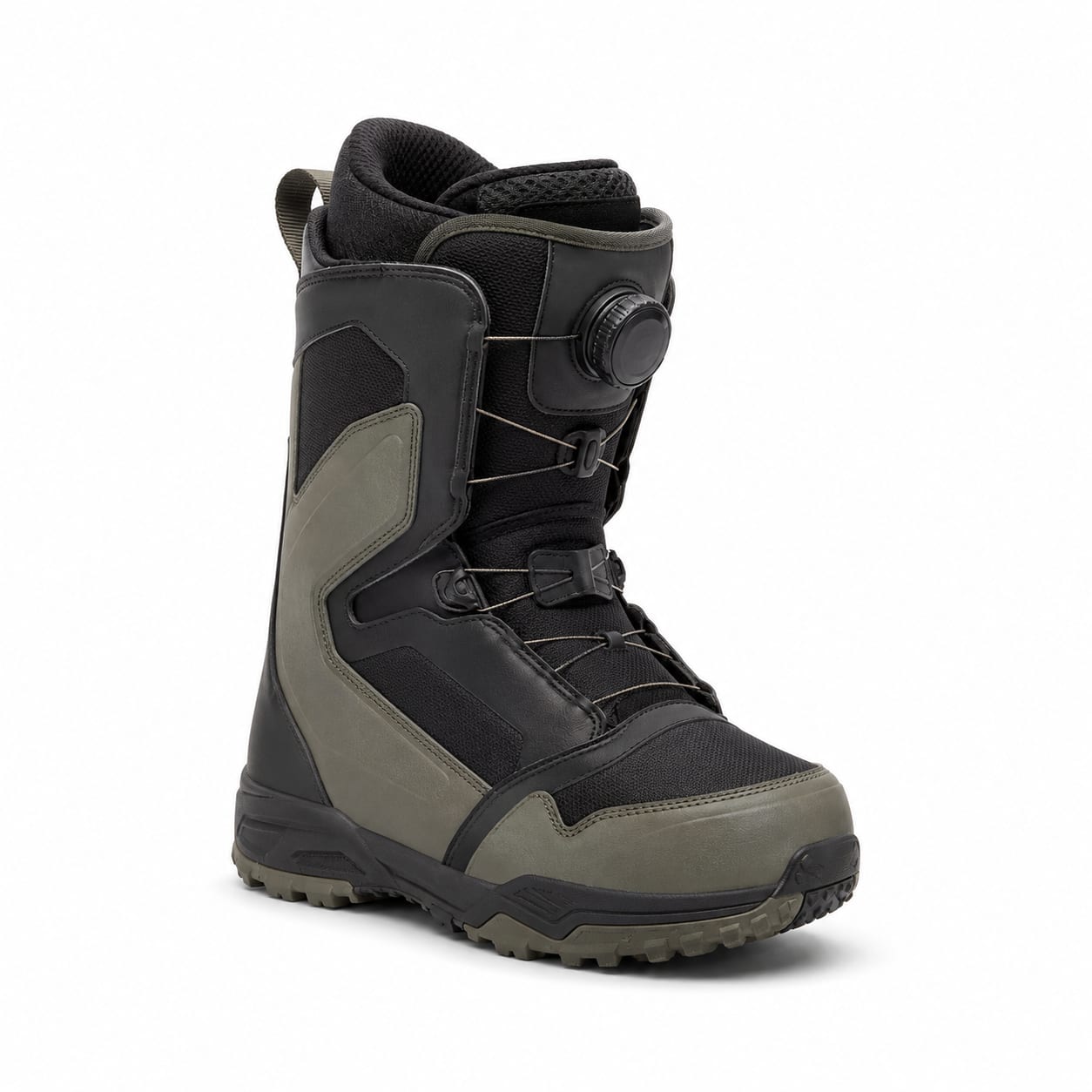
Single BOA

One dial controlling a single zone of cable lacing

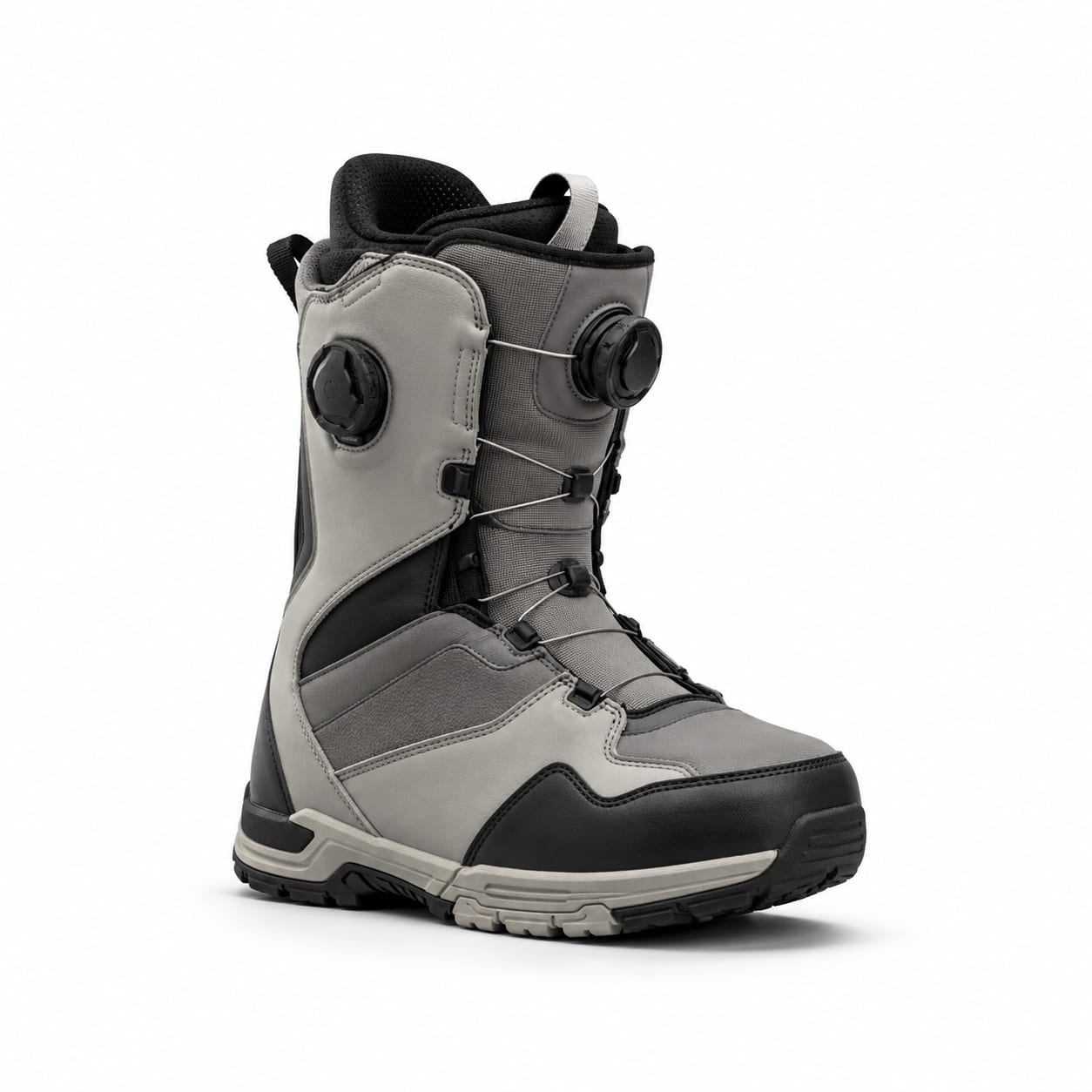
Double BOA

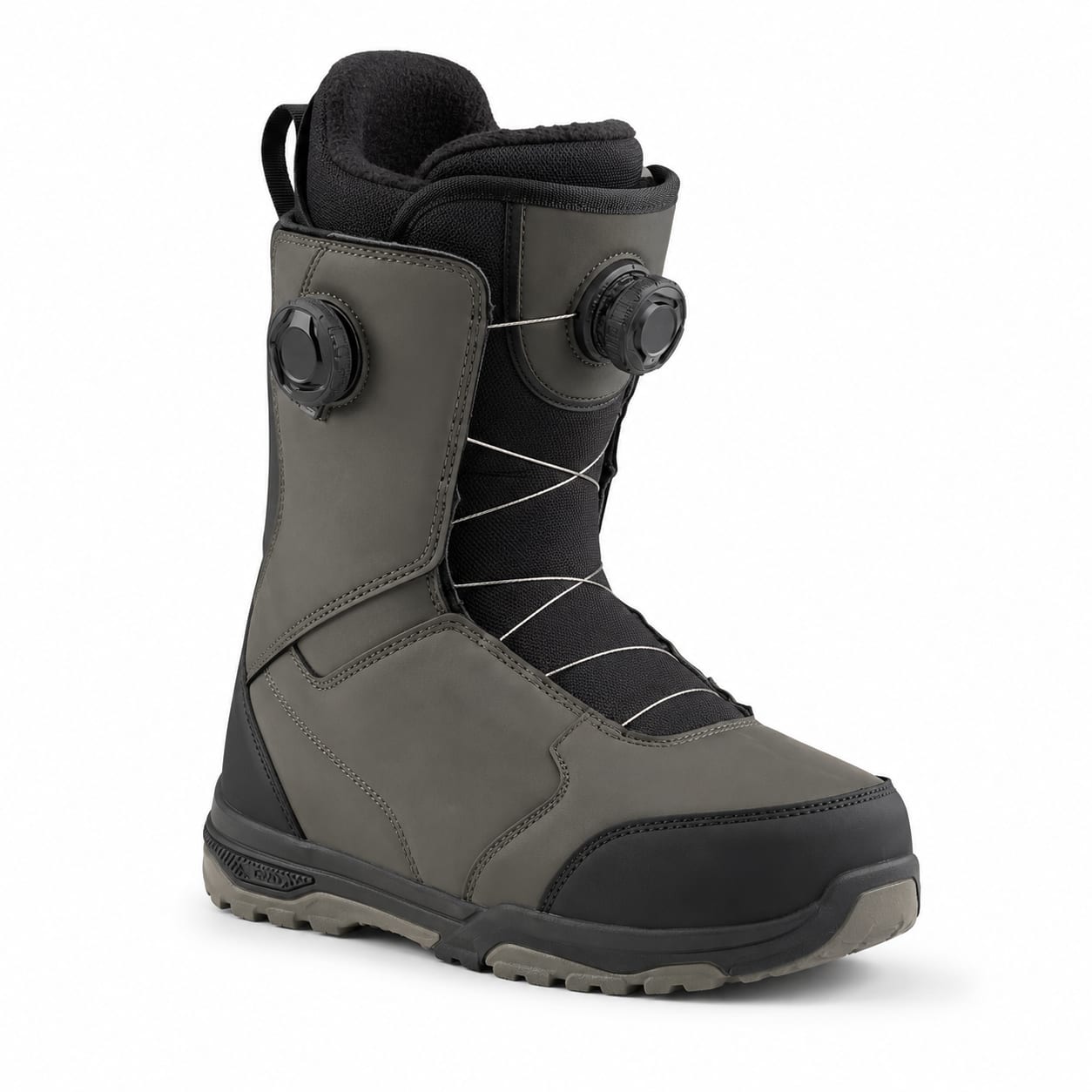
Two independent dials for upper and lower zones

Triple BOA

Three dials for maximum zonal control

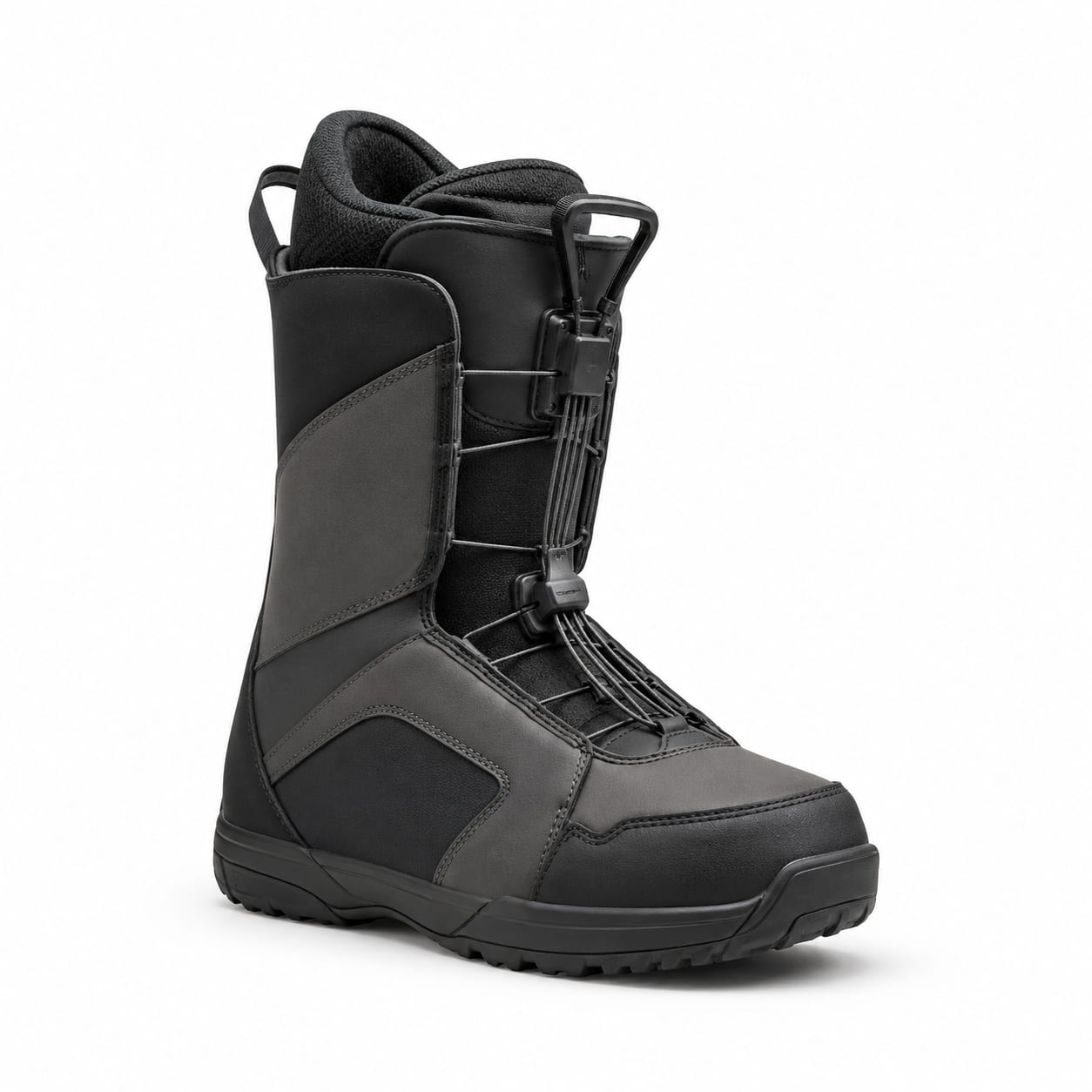
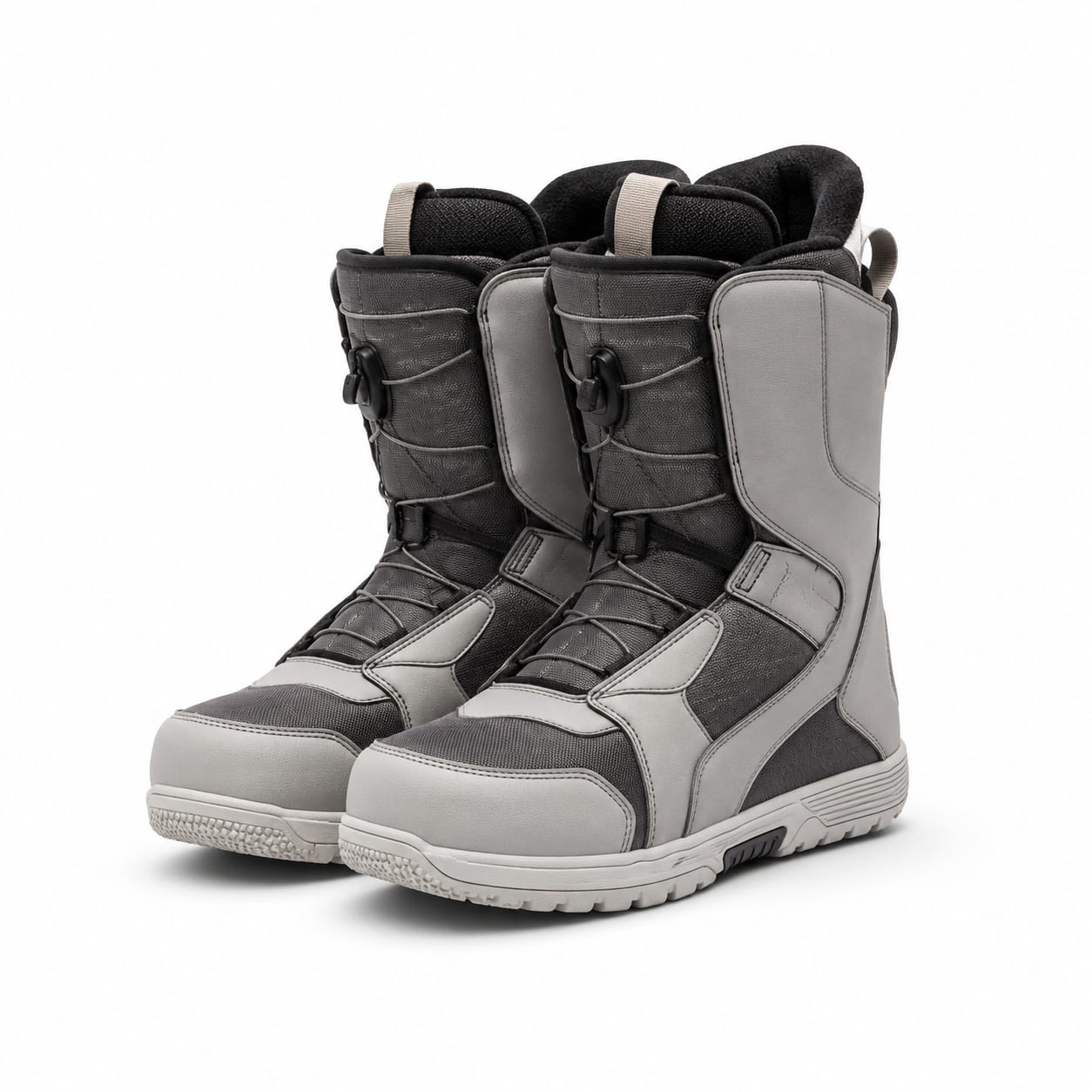
Speed Lace

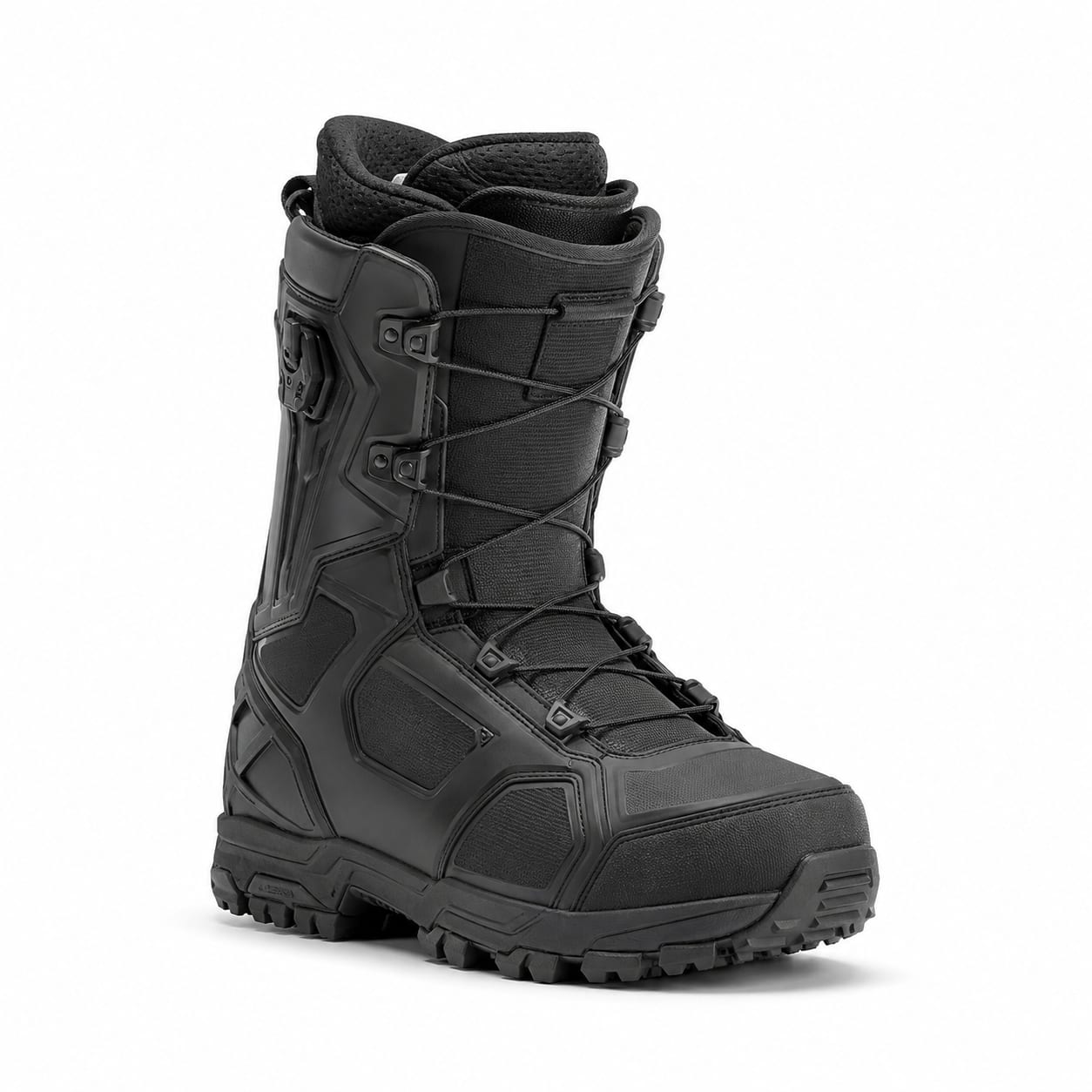
Pull-cord system with locking mechanism for quick tightening

BOA is fastest and most convenient but harder to repair in the field. Traditional laces offer the most customizable fit. Double BOA is the most popular compromise. Consider how often you adjust your boots during the day.

Shell Construction

Shell Construction

Importance

The outer boot's material and build method. Affects durability, weight, water resistance, and how the boot flexes over time.

Injected TPU / Polyurethane

Molded plastic shell providing consistent flex and durability

Synthetic Leather

Soft outer material with internal reinforcement panels

Composite / Multi-Material

Combination of TPU, rubber, fabric, and reinforcement panels

Most riders don't need to choose shell construction directly—it's determined by the boot model and flex. TPU shells maintain flex consistency in cold weather better than synthetic leather. Look for reinforced panels in high-wear areas.

Liner Type

Liner Type

Importance

The internal boot structure that provides cushioning, insulation, and fit. Liner type affects heat retention, moldability, and long-term fit quality.

Removable Standard Liner

Basic removable foam liner, not heat-moldable

Heat-Moldable Liner

Foam liner that can be heated and formed to the foot at a shop

Intuition Foam Liner

Premium heat-moldable foam from Intuition, known for dense, supportive feel

Integrated / Non-Removable Liner

Liner built into the shell, cannot be removed

Heat-moldable liners are worth the premium for most riders—they dramatically improve initial fit. Intuition liners are the gold standard and resist pack-out better. Always get liners heat-molded at purchase if available.

Comfort & Climate

Dimensions affecting warmth, dryness, and all-day comfort

Insulation / Warmth

Insulation Rating

Importance

How effectively the boot retains heat. Determined by liner material, insulation type, and shell construction. Critical for riders in cold climates or with poor circulation.

Lightweight / Minimal Insulation

Thin liner with minimal thermal material, prioritizes breathability

Standard Insulation

Moderate insulation suitable for most winter conditions

Heavy / Maximum Insulation

Thick insulation or reflective materials for extreme cold

Most riders do fine with standard insulation. If you regularly ride below 10°F or have circulation issues, seek heavy insulation. Boot heaters can supplement any boot. Over-insulated boots cause sweaty feet, which then get cold.

Waterproofing / Weather Resistance

Waterproofing

Importance

How well the boot prevents water and snow from penetrating to the foot and liner. Determined by shell treatment, seam sealing, and internal waterproof membranes.

Water-Resistant

Treated outer material that repels light moisture but can wet through in sustained exposure

Waterproof Membrane

Internal waterproof/breathable membrane (e.g., Gore-Tex) that blocks water entry

Fully Sealed / Storm-Proof

Maximum waterproofing with sealed seams, gusseted tongues, and membrane

Most resort riders do fine with water-resistant boots. If you ride in the Pacific Northwest, backcountry, or regularly encounter wet snow, invest in waterproof membranes. Gore-Tex lined boots are worth it for wet climates.

Weight (per boot)

Boot Weight

Importance

The weight of a single boot, typically measured in grams or pounds. Lighter boots reduce fatigue but may sacrifice durability and dampening.

Typical range: 700–1400 g

Typical boots weigh 900–1100g per boot (size 9). Freestyle boots tend lighter; freeride and walk-mode boots tend heavier. Weight matters most for park riders doing spins and hikes. Don't sacrifice fit for weight—a lighter boot that doesn't fit is worthless.

Terrain & Use Case

Dimensions that align the boot with specific riding disciplines and environments

Optimized Riding Style

Riding Style

Importance

The primary riding discipline the boot is designed for. While any boot can be used anywhere, boots optimized for a specific style will perform best in that context.

Freestyle / Park

Soft flex, minimal weight, enhanced impact absorption, low-profile sole

All-Mountain

Medium flex, versatile features, balanced construction

Freeride / Big Mountain

Stiff flex, maximum response, lugged outsole, premium liner

Backcountry / Splitboard

Walk mode, lugged outsole, stiff flex, lightweight

Match your boot to your primary riding style. If you ride 70% park and 30% all-mountain, get a freestyle boot. If you're unsure, all-mountain is the safest starting point. Many boots blend categories—medium-flex all-mountain boots work well for casual freestyle.

Walk Mode / Touring

Walk Mode

Importance

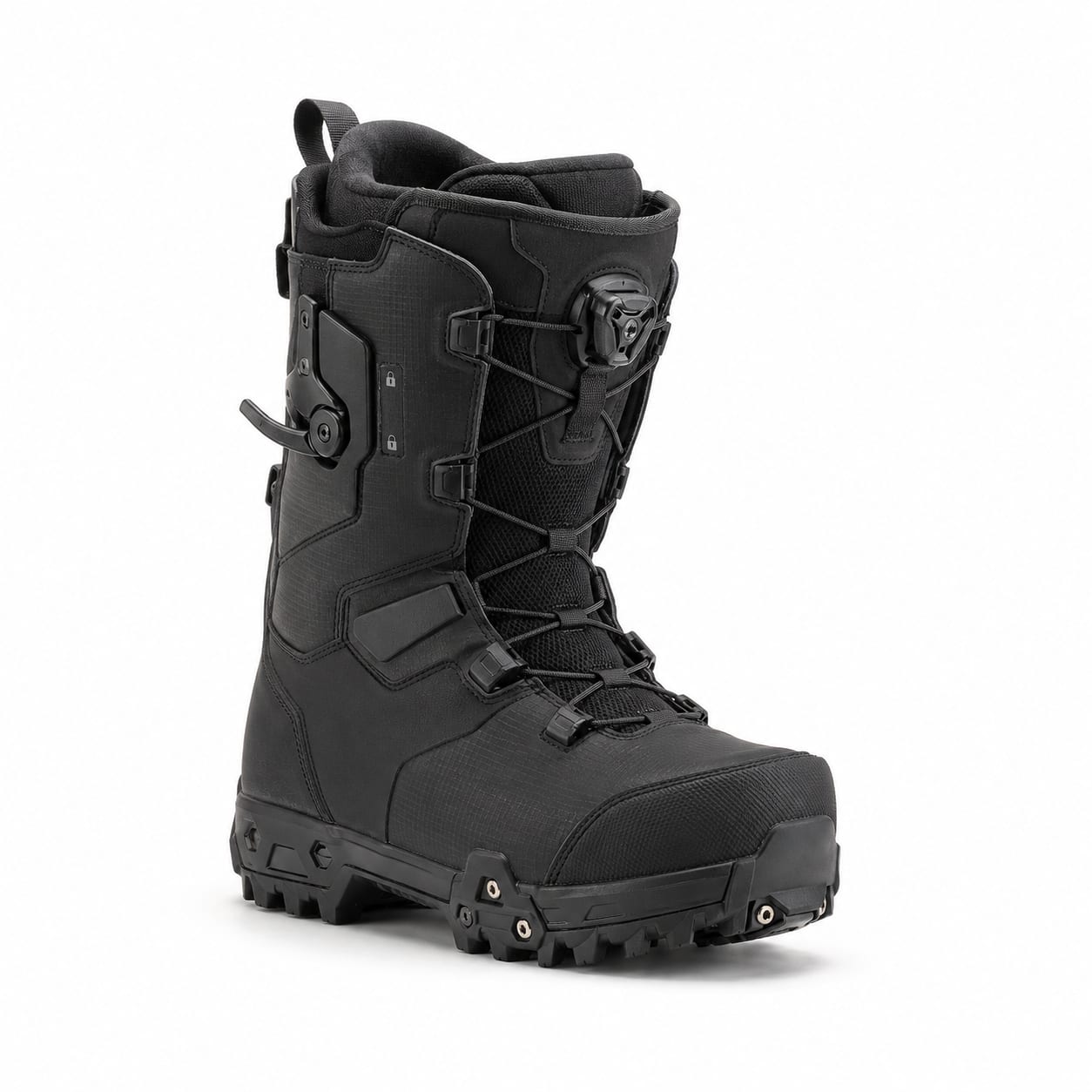
A mechanism that unlocks the boot's upper cuff from the lower shell, allowing a natural walking stride for touring and splitboarding. Sometimes called 'ride/hike mode' or 'touring mode'.

Yes

Boot has a walk/ride switch that frees the cuff for hiking

No

Standard boot without walk mode mechanism

Only necessary if you splitboard or regularly hike for turns. Walk mode boots are heavier and more expensive. Some resort riders like walk mode for the parking lot walk, but it's not worth the tradeoff for pure resort riding.

Outsole / Traction

Outsole Type

Importance

The bottom of the boot that contacts the ground when walking and the binding baseplate when riding. Affects grip, cushioning, durability, and weight.

Rubber Lugged Outsole

Traditional rubber with deep tread pattern for hiking traction

EVA Cushioned Outsole

Lightweight foam midsole with rubber contact patches

Vibram Outsole

Premium rubber compound from Vibram with superior grip and durability

Low-Profile / Minimal Outsole

Thin sole with minimal tread for maximum board feel

If you hike or ride backcountry, prioritize lugged rubber or Vibram. Park riders benefit from low-profile soles for board feel. EVA midsoles are a good all-around choice for resort riders.

Specs FAQ

Common questions about these buying specs

Plain-English answers for each spec and option — tap through for the full explanation.

Who should buy soft flex snowboard boots?

Soft flex boots (rated 1–3 on the stiffness scale) are a great match for two types of riders: beginners and dedicated park or freestyle riders. The very pliable construction gives you maximum ankle mobility, making these boots comfortable right out of the box with minimal break-in time. For beginners, soft boots are forgiving—you won't fight your equipment while learning to link turns and find your balance. They let you develop proper technique without the fatigue that stiffer boots can cause early on. For park riders, that same flexibility makes presses, butters, and tweaked grabs much easier because your ankles can move naturally with the trick. The trade-off is less edge-to-edge precision and stability at high speeds. If you're charging steep freeride lines or riding fast on groomers, you'll want something stiffer. Heavier riders may also find soft boots don't provide enough support, even for park riding.

I'm an intermediate rider who likes hitting the park but also riding the whole mountain. Would a medium-soft flex boot be a good choice for me?

Medium-soft flex boots (rated 4–5) are a great match for exactly that type of riding. They give you a bit more structure than a pure park boot, which helps with control when you're cruising groomers or exploring the whole mountain, but they're still soft enough to keep things playful in the terrain park. This flex rating sits in that sweet spot where you can press and butter without fighting your boots, yet you'll still feel responsive edge-to-edge when you pick up speed. It's especially popular with intermediate riders who are progressing beyond beginner gear but aren't ready for the precision—and stiffness—of a freeride boot. If you're spending most of your time lapping the park, you might prefer going even softer. But if you want one boot that handles park laps and all-mountain cruising without sacrificing too much in either direction, medium-soft is a solid pick.

Who should get medium flex snowboard boots?

Medium flex snowboard boots (rated 5-6 on most scales) sit right in the sweet spot between comfort and performance. They give you enough structure for confident edge control at speed, but still flex enough that your ankles can move naturally—making them less fatiguing over a full day on the hill. These boots are ideal for all-mountain and resort riders who want one boot to handle a bit of everything: groomers, side hits, maybe some light park laps, and even mellow powder. If you're an intermediate rider still figuring out your style, medium flex is a safe bet because it won't hold you back in any direction. They're also a great call if you ride with friends who mix up the terrain all day. You won't feel overpowered like you might in a stiff freeride boot, but you'll still have enough response to hold an edge when things get steep or icy.

I'm an advanced rider who charges all over the mountain but still likes to play around occasionally. Are medium-stiff boots a good middle ground?

Medium-stiff boots (rated 7–8) are an excellent choice for advanced all-mountain and freeride riders who want responsive performance without going full race-mode. They deliver snappy power transfer from your legs to your edges, which really shines when you're carving hard, dropping into steep terrain, or riding through choppy snow at speed. You'll feel noticeably more locked in and stable than you would in a softer boot. The trade-off is less ankle mobility, so park riding takes more effort. Butters, presses, and tweaked grabs won't come as naturally, and these boots feel less forgiving on landings. If you're only hitting the park occasionally, that's usually manageable—just know what you're giving up. Think of medium-stiff as the sweet spot if you spend most of your time exploring the whole mountain and want precision and control as your priority, with enough give to keep you comfortable all day.

Subcategories

Different styles, different picks

Each sub-type has its own guide with typical specs, trade-offs, and buying advice.

All-Mountain Snowboard Boots

All-Mountain Snowboard Boots

$150 – $450

dominant

Versatile boots designed to perform across varied terrain and conditions.

medium flex (5-7 out of 10)balanced support and comfortmoderate cuff height
Freestyle Snowboard Boots

Freestyle Snowboard Boots

$130 – $400

common

Soft-flexing boots optimized for park, pipe, and street-style riding.

soft flex (2-5 out of 10)enhanced impact cushioninglightweight construction
Freeride Snowboard Boots

Freeride Snowboard Boots

$200 – $550

common

Stiff, responsive boots built for aggressive riding in challenging terrain.

stiff flex (8-10 out of 10)maximum power transferreinforced construction
Splitboard Snowboard Boots

Splitboard Snowboard Boots

$300 – $600

niche

Touring-capable boots with walk mode for backcountry splitboarding.

walk mode mechanismVibram or aggressive-lug touring solescrampon compatibility
Alpine/Carving Snowboard Boots

Alpine/Carving Snowboard Boots

$250 – $700

specialty

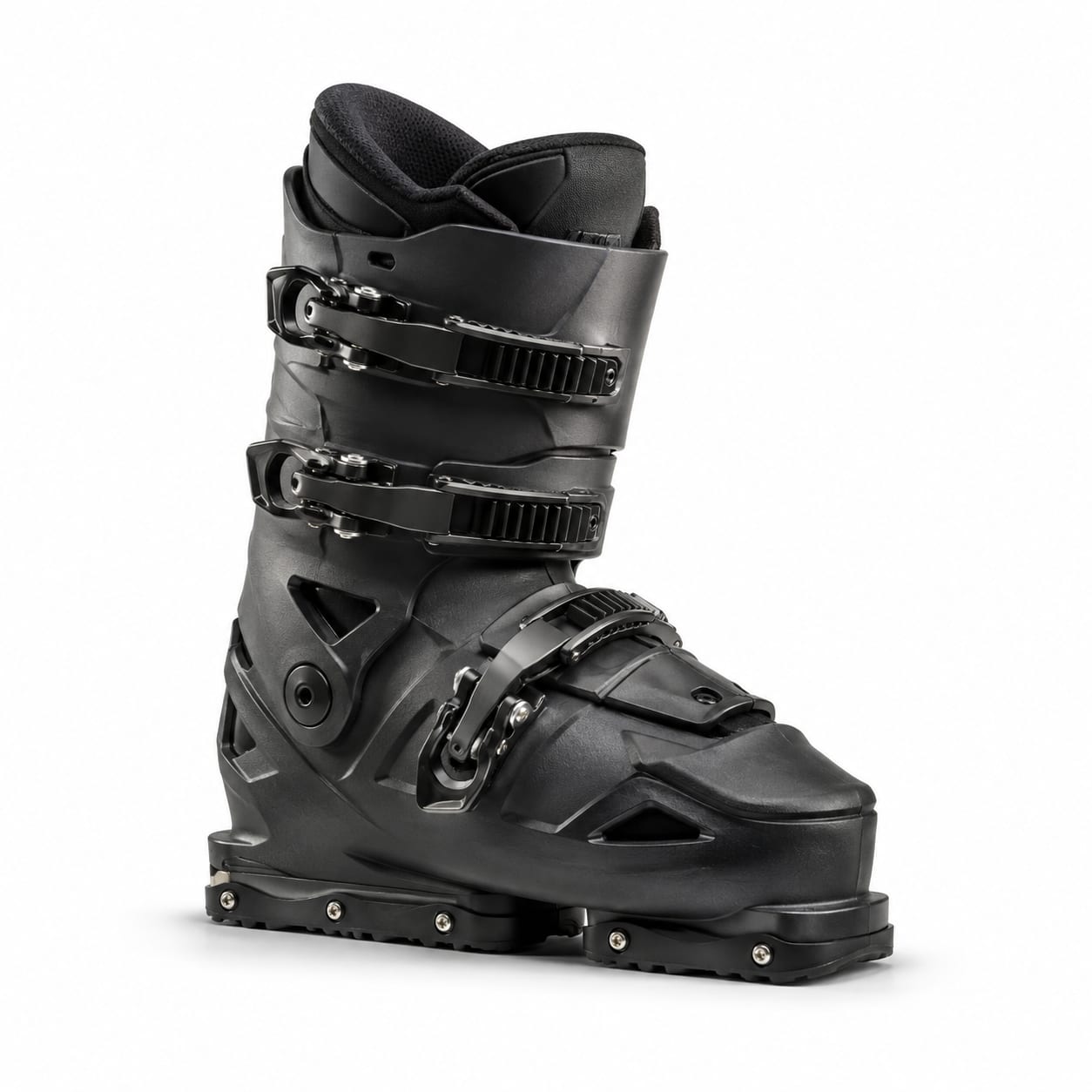
Hard-shell boots for extreme carving and alpine snowboard racing.

hard plastic shell constructionplate binding compatible onlyextremely stiff
BOA Snowboard Boots

BOA Snowboard Boots

$150 – $500

dominant

Snowboard boots featuring BOA dial-based closure systems for quick adjustment.

BOA dial closure systemsteel or nylon lace cablesmicro-adjustable fit
Speed Lacing Snowboard Boots

Speed Lacing Snowboard Boots

$130 – $400

common

Boots with quick-pull lacing systems for fast and easy tightening.

quick-pull handle systemzone-specific tighteningfewer mechanical parts than BOA
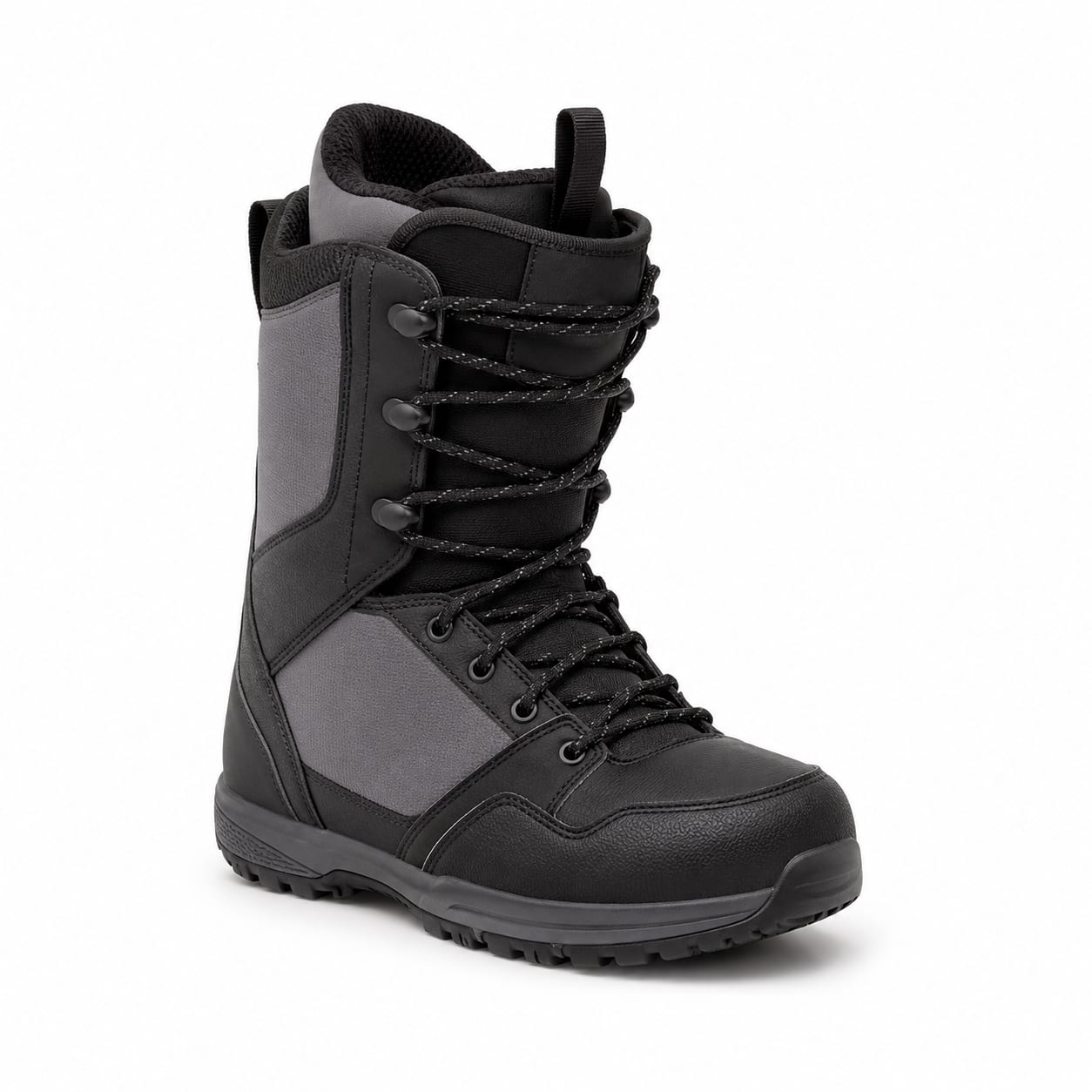
Traditional Lace Snowboard Boots

Traditional Lace Snowboard Boots

$100 – $380

common

Classic lace-up boots offering maximum customization and proven reliability.

standard shoelace closurefully customizable tension at each zoneno mechanical parts
Step-On Compatible Snowboard Boots

Step-On Compatible Snowboard Boots

$200 – $450

niche

Boots designed exclusively for Burton Step-On strapless binding systems.

integrated heel and toe cleatsStep-On binding exclusiveno strap-in required