
Snowboard Boots · FAQ
Questions about Traditional Lace Snowboard Boots
Straight answers on fit, specs, and when this type makes sense — each topic has its own page with links back to the buying guide.
Open Traditional Lace Snowboard Boots guide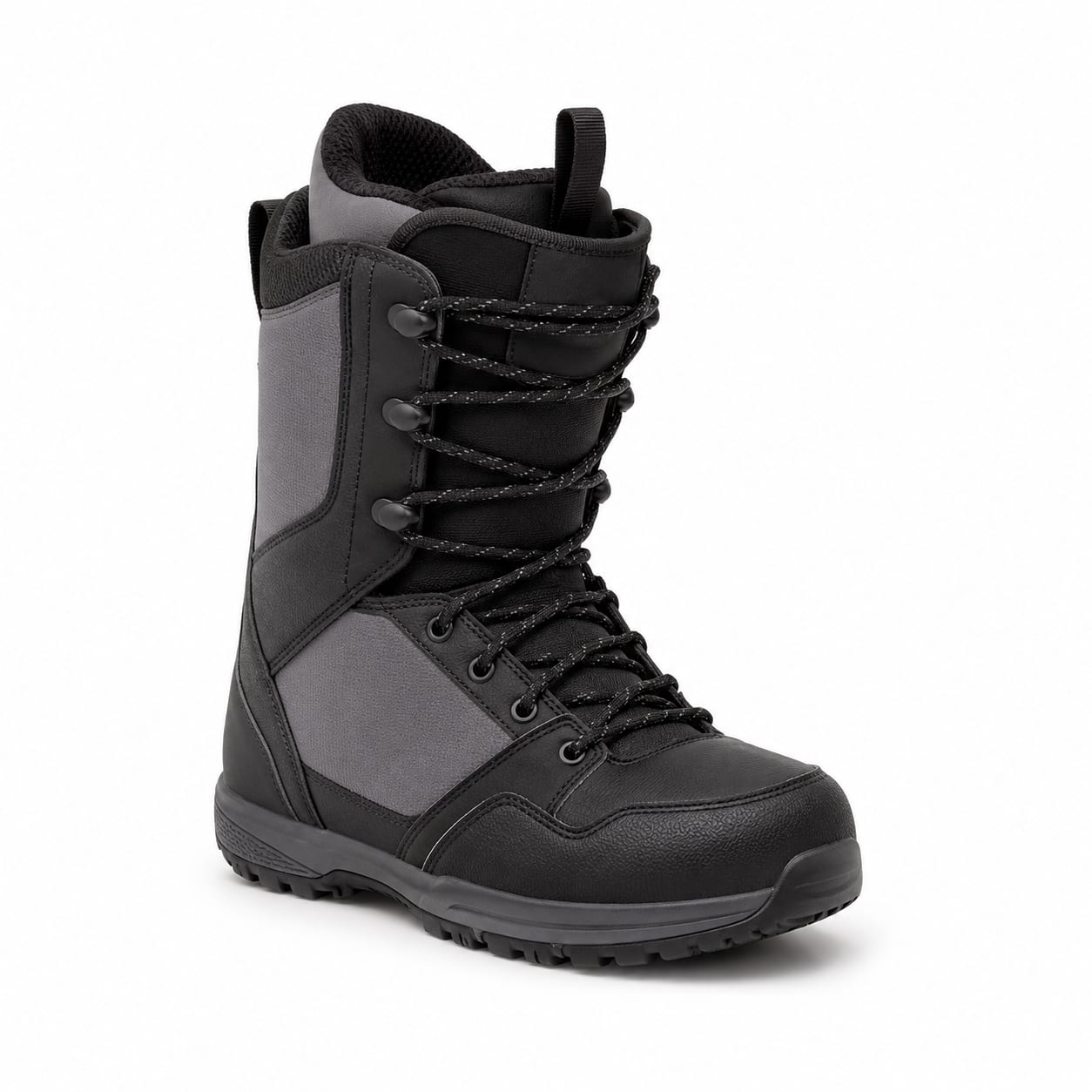
6 topics
Pick a question
Every answer links to the full subcategory guide and related gear types when it helps you decide.
Are traditional lace snowboard boots outdated compared to BOA systems?
Not at all. While BOA systems offer convenience and speed, traditional laces remain the preferred choice of many professional riders and bootfitters because they provide the most customizable fit. No dial system can replicate the independent tension control you get at each eyelet pair. Traditional laces are also the most reliable closure system with zero mechanical failure points and full field-repairability. They're a deliberate choice, not an outdated one.
Read answer →02How do I keep my laces from coming undone while riding?
Always double-knot your laces and tuck the loose ends into the lace guard, behind the tongue, or under a lace cover if your boots have one. Waxed laces hold knots better than unwaxed ones. Some riders use a surgeon's knot (extra wrap) at the ankle zone for extra security. If your boots have lace locks or hooks at the ankle, use them—they're designed to hold tension in the lower zone while you lace the upper zone.
Read answer →03Can I replace traditional laces with any shoelaces?
Yes, one of the biggest advantages of traditional lace boots is that any appropriately sized shoelace will work in a pinch. For optimal performance, use laces designed for snowboard boots—they're typically longer (45–72 inches depending on boot height), more durable, and often waxed for better knot retention. Paracord works as an emergency replacement. Measure your original laces before buying replacements to ensure correct length.
Read answer →04How should I lace my boots for park vs. all-mountain riding?
For park riding, many riders prefer a looser lower zone for increased ankle mobility (easier presses and butters) with moderate upper zone tension for adequate heel hold. For all-mountain riding, tighten both zones more firmly—snug lower zone for toe-side response and firm upper zone for maximum heel lock and edge control. The beauty of traditional laces is that you can adjust this ratio on the fly between laps.
Read answer →05Are traditional lace boots good for beginners?
Traditional lace boots can work well for beginners, especially budget-conscious ones, as they're often the most affordable option. However, beginners may not yet understand how to achieve proper zonal tension and might end up with either too-loose or too-tight boots. If you're a beginner who struggles with lacing technique or finds it frustrating to lace up in cold weather, a BOA system might be more user-friendly. If you're willing to learn proper lacing technique, traditional boots offer excellent value and room to grow.
Read answer →06Why do so many pro riders still use traditional lace boots?
Professional riders choose traditional laces for three main reasons: precise zonal adjustability, reliability, and consistent feel. Pros need to dial in their fit exactly for peak performance, and laces offer the most control over tension distribution. They also can't afford equipment failure during competition—BOA dials can break, but laces rarely fail catastrophically. Finally, many pros grew up riding traditional laces and prefer the consistent, familiar feel they provide.
Read answer →