
Snowboard · Buying specs
Questions about Snowboard specs
Straight answers on the specs that matter when you buy — each question covers one dimension or option so you know what to look for.
Open Snowboard guide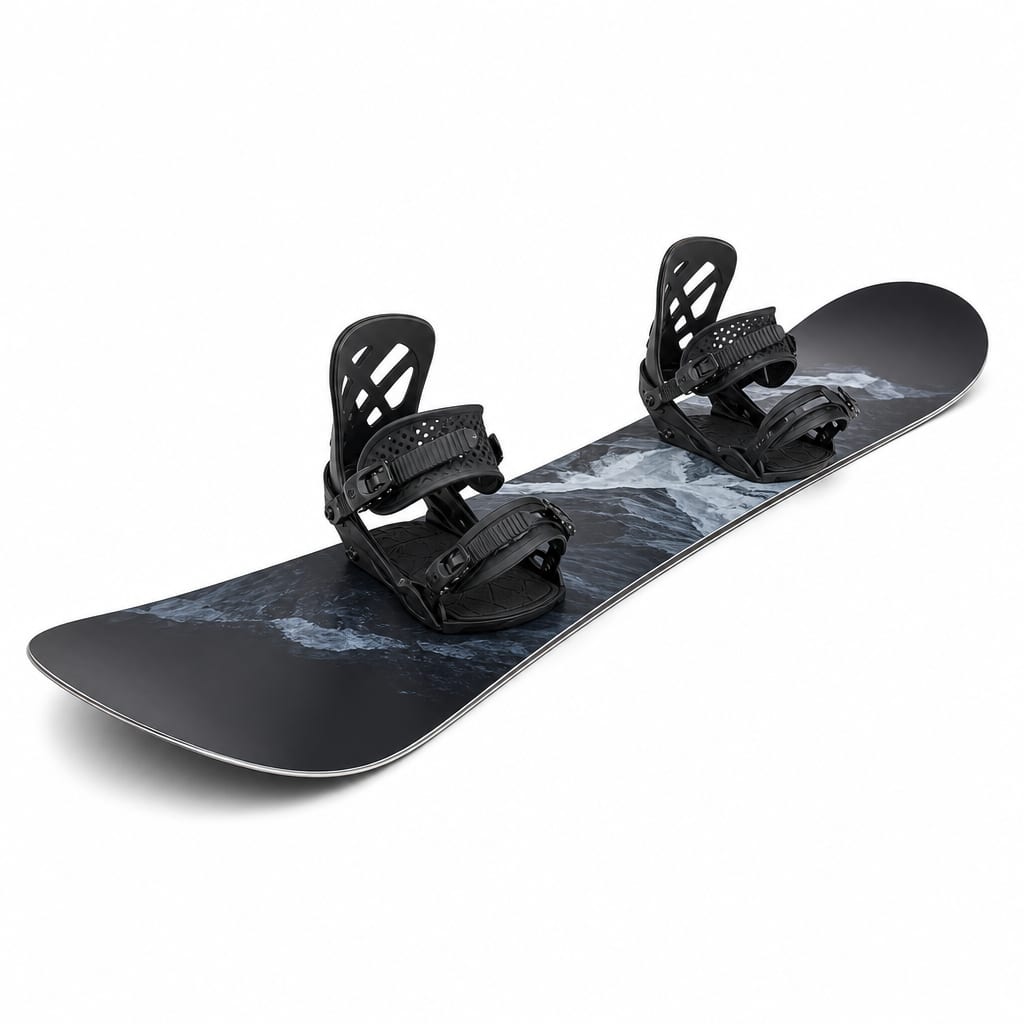
47 questions
Browse by spec group
Questions are organized the same way as the buying specs on the main equipment page.
Board Geometry
Physical dimensions that define the board's shape and size, directly affecting how it rides and who it fits.
How do I know what length snowboard is right for me?
A common starting point is that your board should reach somewhere between your chin and your nose when you stand it on end next to you. But that's just a rough guide—your weight actually matters more than your height. Always check the manufacturer's recommended weight range for any board you're considering, because a board that's too short for your weight will feel unstable and wash out, while one that's too long will feel sluggish and hard to control. Shorter boards are easier to maneuver and spin, making them great for park riding and quick turns. Longer boards give you more stability at speed and better float in deep snow, which is why freeriders and powder chasers tend to go longer. If you're a beginner or mostly ride groomers, something in the middle of your range is usually the safest bet. Don't forget that shape and width also play a role—a wide, short powder board can float just as well as a longer narrow one. When in doubt, size based on weight first, then tweak based on your riding style.
Read answer →Waist WidthWhat does waist width mean on a snowboard, and how do I pick the right size for my boots?
Waist width is the narrowest point of the snowboard, measured in millimeters. It's a critical spec because it determines your boot-to-edge leverage and whether your toes or heels will catch the snow—known as toe drag—when you carve. Your boot size is the biggest factor in choosing the right waist width. If you wear a US men's size 11 or larger, you'll typically need a wide or mid-wide board (250mm or wider) to prevent your boots from hanging over the edges too much. For smaller boots, a narrower board is ideal because it offers quicker, snappier edge-to-edge transitions. A good rule of thumb is to make sure your boots overhang the edge by no more than about an inch on each side when centered. Also, keep your binding angles in mind: duck or forward angles can naturally pull your toes and heels in, reducing overhang compared to a flat, zero-degree stance.
Read answer →Sidecut RadiusWhat does sidecut radius mean on a snowboard, and how do I know which one is right for me?
Sidecut radius is the measure of the curve along your snowboard's edge. It determines the natural turn shape the board wants to make. A smaller sidecut radius (around 5–7 meters) creates a tighter, more responsive turn—great if you spend time in trees, bumps, or the park where quick direction changes matter. A medium sidecut (7–9 meters) is the sweet spot for most all-mountain riders, giving you versatile turning that handles groomers, side hits, and mixed terrain without feeling too twitchy or too sluggish. If you love laying out long, fast carves on wide-open runs or charging big mountain lines, a larger sidecut (9+ meters) keeps you stable at speed and sweeps through turns rather than snapping around. One thing to watch: many modern boards use multi-radius sidecuts, meaning the curve actually changes along the edge. This lets the board handle different turn shapes in one package, so don't assume a single number tells the whole story.
Read answer →Effective EdgeWhat does effective edge mean on a snowboard, and how does it affect my riding?
Effective edge is the length of your board's edge that actually makes contact with the snow when you're carving a turn — it doesn't include the curved-up tip and tail areas. Two boards with the same total length can have very different effective edges depending on their shape and camber profile. A longer effective edge gives you more grip and stability at speed, which is great for carving hardpack or charging big mountain lines. A shorter effective edge makes turns easier to initiate and spins quicker, which freestyle and park riders often prefer. Keep in mind that rocker boards typically have a shorter effective edge than camber boards of the same length, since more of the tip and tail lift off the snow. When choosing, think about your priorities: if edge hold and high-speed confidence matter most, lean toward a longer effective edge. If you want something nimble and spin-friendly, a shorter effective edge is the way to go.
Read answer →Stance SetbackWhat does stance setback mean on a snowboard, and how much should I look for?
Stance setback is how far back from the board's center the reference stance position sits, measured in millimeters. It shifts your weight toward the tail, helping the nose rise in soft snow—similar to leaning back in a canoe to keep the bow from diving. A centered stance (0mm) is what you want for park riding or if you ride switch often, since most twin boards use this. A slight setback of 10–20mm adds a bit of directional feel while keeping things versatile for all-mountain riding. For freeride and powder-focused boards, look for 25–40mm of setback to improve float in softer snow. Anything over 40mm is built specifically for deep powder. Match your setback to where and how you ride most. And when mounting bindings, use the reference stance holes—don't just center them on a setback board, or you'll defeat the purpose of the design.
Read answer →TaperWhat does taper mean on a snowboard, and how much do I need?
Taper is the difference in width between your board's nose and tail, measured in millimeters. A board with a wider nose and narrower tail has more taper, which naturally sinks the tail and lifts the nose in deep snow—giving you better float in powder. If you mainly ride park or love riding switch, look for little to no taper (0–5mm). Twin-shaped boards with zero taper ride the same in both directions. For all-mountain and freeride riders who chase powder but still cruise groomers, moderate taper (6–15mm) is the sweet spot—you get noticeably better float without giving up hardpack performance. Dedicated powder boards often have 16mm or more of taper for maximum float in bottomless snow. Don't assume a tapered board can't handle groomers—moderate taper works just fine all over the mountain. The real tradeoff is switch capability: more taper means the board is designed to go one direction, so switch riding feels noticeably off.
Read answer →Profile & Shape
Design characteristics that define the board's on-snow behavior, turning tendencies, and directional properties.
Should I get a traditional camber snowboard, or is that outdated?
Traditional camber isn't outdated at all—it's still the go-to profile for riders who want maximum performance. A camber board has an upward arc underfoot, so the center sits slightly off the snow while the contact points near the tip and tail stay pressed into the snow. This gives you killer edge hold on hardpack, snappy pop off jumps, and precise, powerful carves. The tradeoff is that camber is less forgiving. Those same contact points that grip so well can also catch edges easily, especially when you're learning or riding loose. If you're still figuring out your turns or you spend most of your time in deep powder or the jib park, camber might fight you more than help you. Camber shines for experienced riders who charge groomers, hit big park jumps, or just love the feeling of a responsive, locked-in ride. If you've got your technique dialed and want a board that rewards aggressive input, traditional camber is hard to beat.
Read answer →Profile · Rocker / Reverse CamberShould I get a rocker snowboard if I'm a beginner or mostly ride powder?
Yes, a rocker (also called reverse camber) snowboard is an excellent choice for beginners and powder riders. The board has a downward curve that puts the center on the snow with the tip and tail raised up—like a banana shape. This design makes it much harder to catch an edge, which is why beginners find rocker boards so forgiving and easier to learn on. In deep powder, rocker really shines. That raised nose naturally floats above the snow instead of diving down, so you spend less energy staying on top of fresh snow. It's also super playful in the park—presses and butters feel effortless because the board already wants to lift at the tips. The trade-off is edge hold and pop. On icy or hardpacked groomers, rocker doesn't grip as confidently as camber, and you won't get that snappy, powerful feel when loading up for ollies or carving turns. If you mostly ride soft snow or are just starting out, those downsides are easy to live with.
Read answer →Profile · Flat / Zero CamberWhat does flat camber mean on a snowboard, and who should ride one?
Flat (or zero) camber means the snowboard rests completely flat on the snow with no upward arc or downward curve running through the middle. It's essentially the middle ground between traditional camber and rocker profiles—offering a stable, predictable feel under your feet without the aggressive edge-catching tendencies of camber or the loose, surfy sensation of full rocker. Flat camber shines in the park, especially on rails and boxes, because the flat base makes for clean, stable contact on features. It also holds a decent edge on groomers and feels balanced at moderate speeds, making it a solid all-mountain choice for riders who spend time both in and out of the terrain park. It's a great option for intermediate riders who want more stability than rocker provides but aren't ready for the precision demands of full camber. Just know that it won't give you the explosive pop of camber or the deep-powder float of rocker—it's a jack-of-all-trades profile that leans playful.
Read answer →Profile · Hybrid CamberWhat does hybrid camber mean on a snowboard, and who is it best for?
Hybrid camber puts traditional camber between your feet and rocker (an upward curve) in the tip and tail. This combination gives you the best of both worlds—the camber zone delivers edge hold and snappy pop for carving and jumps, while the rockered tips make the board more forgiving and help it float in softer snow. It's the most popular modern profile for good reason: versatility. If you ride all over the mountain—groomers one run, the park the next, chasing fresh snow when you can—hybrid camber handles it all without leaving you stranded. Intermediate riders especially benefit because they get real performance without getting punished for every small mistake. One thing to keep in mind: hybrid camber varies between brands. Burton's Flying V, Jones' CamRock, and others each tune the transition zones differently, so they can feel noticeably different on snow. But as a starting point for most riders, hybrid camber is tough to beat.
Read answer →Profile · Hybrid RockerWhat is a hybrid rocker snowboard, and who should ride one?
A hybrid rocker snowboard has a rocker (downward curve) between your feet with small camber zones just outside the inserts near the tip and tail. This design gives you the loose, playful feel of rocker where it matters most, while the camber zones add edge hold and pop that pure rocker boards lack. Hybrid rocker is a great choice if you want a board that's fun and forgiving for freestyle riding, jibbing, or floating in powder, but still holds a decent edge when you carve groomed runs. It's more surfy and easy to press than hybrid camber boards, making it popular with park riders and those who like a playful, buttery feel all over the mountain. The tradeoff is that it won't carve as powerfully or feel as stable at high speeds as a full camber or hybrid camber board. If you're an aggressive rider who charges hardpack and wants maximum edge grip, look elsewhere. But for creative freestyle riders and those who prioritize fun over precision, hybrid rocker hits a sweet spot.
Read answer →Profile · Directional CamberWhat is directional camber on a snowboard, and is it the right choice for me?
Directional camber features a different shape in the nose versus the tail—most commonly a rockered (upward-curved) nose paired with a cambered tail. This combo gives you float in deep snow from the nose and snappy, powerful turns from the tail, making it a favorite for freeride and powder-focused boards. This profile really shines if you spend most of your time riding forward and chasing fresh snow. The rockered nose lifts easily over powder and chop, preventing that dreaded nose-dive, while the cambered tail keeps you locked in when you're driving through a carve. It's ideal for directional all-mountain riders and freeriders who want one board that handles groomers and storm days equally well. The main downside is that directional camber isn't designed for switch riding. Since the nose and tail have different shapes and flex patterns, riding backwards feels noticeably off. If you regularly ride switch, lap the park, or want a twin feel, you'll be happier with a symmetrical profile instead.
Read answer →Shape · True TwinWhat does a true twin snowboard shape mean, and is it the right choice for me?
A true twin snowboard is fully symmetrical—the tip and tail are identical in shape and length, and your stance sits right at the center of the board. This means it rides exactly the same whether you're going forward or switch (backward), making it the preferred shape for park, freestyle, and halfpipe riding. If you spend a lot of time hitting jumps, rails, and boxes, or if you love spinning and riding switch, a true twin gives you that balanced, predictable feel in both directions. It's the most forgiving shape for learning new tricks because the board doesn't favor one end over the other. The downside is that true twins aren't built for deep powder or high-speed directional charging. The centered stance and symmetrical shape mean less natural float in soft snow compared to directional boards. If you mostly cruise the whole mountain and only occasionally visit the park, a directional twin might offer better versatility while still handling switch riding reasonably well.
Read answer →Shape · Directional TwinWhat does directional twin mean on a snowboard, and who is it best for?
A directional twin snowboard has a symmetrical outline—the nose and tail are the same shape—but your stance sits slightly back from center. This means the board rides switch well like a true twin, but the setback stance helps your nose stay up in softer snow when you're riding forward, giving you a bit of natural float. Directional twin is the most popular shape for all-mountain riders because it's so versatile. You can lap the park, cruise groomers, and still get decent performance when the snow softens up. It's especially great if you like mixing freestyle tricks into your freeriding but don't want a board that's purely park-focused. If you spend most of your time in deep powder or charging steep lines, a fully directional or tapered shape will serve you better. But for riders who want one board that handles a bit of everything without sacrificing switch capability, directional twin is tough to beat.
Read answer →Shape · DirectionalWhat does a directional snowboard shape mean, and who is it best for?
A directional snowboard has a distinctly different nose and tail, with your stance set back from the center of the board. This design is made to ride primarily forward, giving you superior float in soft snow and confident stability at higher speeds. The longer nose helps plow through choppy, variable conditions while the setback stance naturally keeps your weight positioned for driving through turns. Directional shapes are ideal if you spend most of your time freeriding, chasing fresh powder, or laying down carves on groomers. They're the go-to for big mountain riding where forward momentum and deep-snow float matter most. The trade-off is that directional boards aren't built for riding switch or hitting the park. If you regularly spin, ride backwards, or lap terrain park features, you'll likely find a twin or directional twin shape much more natural and forgiving.
Read answer →Shape · Tapered DirectionalWhat does a tapered directional snowboard shape do, and who is it really for?
A tapered directional snowboard has a wider nose and narrower tail, creating a taper from front to back. This design is built specifically for deep powder—the narrower tail sinks naturally while the wider nose rises, keeping you floating on top of fresh snow instead of punching through it. It's the most float-focused shape you can get. This shape is ideal if you chase storm days, ride backcountry, or spend most of your time in deep snow and steep freeride terrain. The taper makes the board feel effortless in powder, almost like surfing. The trade-offs are real though. Tapered directional boards are not designed for riding switch, so park riders should look elsewhere. The reduced tail surface area also means less grip and stability on hardpack or icy groomers—these boards can feel sketchy when conditions firm up. If you mostly ride resort groomers with the occasional powder day, a directional twin gives you more versatility. Save the tapered shape for when deep snow is your priority.
Read answer →Shape · AsymmetricWhat exactly is an asymmetric snowboard shape, and who is it best for?
An asymmetric snowboard features a different sidecut or construction on the heel-side edge compared to the toe-side edge. This design accounts for the natural biomechanical differences in how your body turns, since leaning into a toe-side carve feels very different than driving off your heels. Because of this tailored design, the board makes turning feel much more natural and balanced from edge to edge. You'll especially notice improved heel-side engagement, making it easier to hold a strong, confident carve across the mountain. This shape is a great fit if you love aggressive carving or high-performance all-mountain riding. However, keep in mind that it is a niche design. If you're mostly cruising, riding switch, or spending your days in the terrain park, a more traditional twin or directional twin shape will likely serve you better.
Read answer →Nose/Tail Shape · BluntWhat does a blunt nose and tail shape do for a snowboard, and should I choose one for park riding?
A blunt shape means the tip and tail of the board are short and squared off rather than tapering to a point. This design cuts down on swing weight—the resistance you feel when spinning—making it noticeably easier to rotate off jumps and onto rails. That's why you'll see blunt shapes on most park and freestyle boards. The trade-off is that you lose some effective edge length and float in deeper snow, since there's less surface area at the contacts. Blunt shapes are also built tougher, handling rail impacts better than a thin, pointed tip that could get damaged. If you're spending most of your time in the park, street riding, or just hitting features, a blunt shape is a smart match. For all-mountain or powder-focused riders, a pointed or slightly rounded shape will serve you better overall.
Read answer →Nose/Tail Shape · PointedWhat does a pointed nose and tail shape do on a snowboard, and should I look for it?
A pointed nose and tail feature a traditional tapered shape that slices through snow rather than pushing it out of the way. This gives you better float in powder and smoother snow displacement at speed, which is why it's the go-to shape for freeride, all-mountain, and powder boards. The trade-off is slightly more swing weight compared to blunt shapes, so spinning takes a bit more effort. But for most riders exploring the whole mountain—especially those chasing fresh snow—that's rarely a concern. If you spend most of your time on groomers, trees, or deeper snow and want a board that feels smooth and predictable, a pointed shape is a great fit. Park riders who prioritize spins and rail durability will be better served by blunt shapes instead.
Read answer →Nose/Tail Shape · Swallow TailWhat does a swallow tail do on a snowboard, and do I need one?
A swallow tail features a deep V-shaped cutout in the back of the board, inspired by surfboard design. Its main job is to let the tail sink into deep snow, which naturally lifts the nose—giving you effortless float in powder without having to lean back. It also delivers a surfy, slashy feel that many riders love on deep days. However, swallow tails are really designed for powder-specific boards. If you mostly ride groomed runs at the resort or deal with hardpack and icy conditions, this shape won't do you any favors and can feel awkward on firm snow. It's a specialty feature, not a general upgrade. Consider a swallow tail if you chase fresh powder and want that effortless, surf-like experience in deep snow. Skip it if you need one board that handles everything the mountain throws at you.
Read answer →Nose/Tail Shape · Forked / Split TailWhat does a forked or split tail do on a snowboard, and who is it actually for?
A forked (or split) tail has two prongs at the back of the board—think of it as a milder version of the deep V-shaped swallow tail you see on surf-inspired powder boards. The split lets the tail sink into soft snow, which naturally lifts the nose and boosts float in powder. The real advantage over a full swallow tail is that you keep more surface area at the back, so the board holds up better on hardpack and groomed runs. It's a solid middle ground if you want that surfy feel in fresh snow without giving up too much stability when conditions firm up. This shape makes the most sense on directional freeride boards for riders who regularly chase powder but still need to get down hardpack to reach the next stash. If you mostly ride resort groomers, park, or don't see deep snow often, a standard pointed or blunt tail is the more practical choice.
Read answer →Performance & Feel
Attributes that determine how the board responds to rider input and terrain conditions.
What does a snowboard's flex rating mean, and how do I pick the right one?
A snowboard's flex rating tells you how stiff or soft the board is, usually on a 1 to 10 scale. A lower number means a softer board that's easier to bend, while a higher number means a stiffer board that takes more effort to flex. This spec is crucial because it directly impacts how the board turns, responds, and feels under your feet. Soft flex (1-3) is super forgiving and easy to maneuver, making it perfect for beginners, park riders, and lighter riders. Medium flex (4-6) is the sweet spot for all-mountain versatility, giving you enough playfulness for the park but enough stability for cruising. Stiff flex (7-10) offers maximum responsiveness and edge hold at high speeds, which aggressive freeriders and heavier riders usually prefer. Keep in mind that flex scales aren't universal—a 5 from one brand might feel like a 7 from another. Also, your weight plays a big role; a heavier rider will naturally flex a board more, so they might need to size up in stiffness to avoid a washy feel at speed.
Read answer →Terrain / Riding Style · All-MountainWhat does an all-mountain snowboard mean, and is it the right choice for me?
An all-mountain snowboard is designed to handle just about everything the resort throws at you—groomed runs, trees, park features, and even some powder days. It's the most popular category because it gives you one board that works across all terrain without being overly specialized. If you're the type of rider who likes to mix it up—carving groomers in the morning, hitting the park after lunch, and exploring off-trail when the snow's good—an all-mountain board is your best bet. It's also the smartest choice if you're only buying one board for the season. The trade-off is that an all-mountain board won't outperform a specialized board in any single category. A dedicated freestyle board will be more playful in the park, and a freeride board will float better in deep snow. But for most resort riders, the versatility more than makes up for not being the absolute best at any one thing.
Read answer →Terrain / Riding Style · Freestyle / ParkShould I get a freestyle snowboard if I want to ride the park but also cruise the rest of the mountain?
A freestyle or park snowboard is built specifically for hitting rails, jumps, and halfpipes. These boards feature twin shapes—meaning the nose and tail are symmetrical—so you can ride switch easily. They also have soft to medium flex, which makes them playful and easy to press, spin, and butter on features. The construction is typically durable to withstand rail and box abuse. The trade-off is that freestyle boards give up performance elsewhere. They don't float well in powder, and their softer flex can feel unstable at high speeds on steep terrain. If you spend most of your day lapping the park, a freestyle board is the right choice. But if you're splitting time between park laps and all-mountain cruising, consider an all-mountain board with a twin or directional-twin shape instead. It'll handle the park decently while staying stable and versatile everywhere else on the mountain.
Read answer →Terrain / Riding Style · FreerideI love riding steep terrain and fresh snow off-piste—should I get a freeride snowboard?
If you're chasing untracked lines and avoiding groomers, a freeride board is exactly what you want. These boards are built for off-piste terrain, steep chutes, tree runs, and backcountry or sidecountry riding. They thrive in conditions where you need stability and confidence at speed. Freeride boards feature a directional shape, stiff flex, and setback stance. The directional shape and setback stance push your weight toward the tail, helping the nose rise in deeper snow for better float. The stiff flex keeps the board stable and planted when you're charging through choppy, variable snow—no wobbly, sketchy feeling at speed. The trade-off is versatility. Freeride boards aren't designed for the terrain park, riding switch, or casual groomer cruising. They're purpose-built for going fast and forward in technical terrain. If you still want to hit the park occasionally or ride switch, an all-mountain board might be a better fit. But if your heart is in the steep and deep, freeride is the way to go.
Read answer →Terrain / Riding Style · PowderI'm planning a trip to Japan and want a powder board—will it still ride okay on groomers when there's no fresh snow?
A powder snowboard is purpose-built for deep, untracked snow, and that's where it truly shines. The wide nose, tapered shape, and rockered tip work together to keep you floating on top of soft snow rather than sinking in—it's an incredible feeling when the conditions are right. However, those same design features work against you on hardpack and groomers. The taper and setback stance make turn initiation feel sluggish, and you'll notice significantly less edge hold on firm snow. It can feel sketchy on icy patches. If you're riding somewhere that gets consistent deep snow—like Japan, heli-trips, or cat-skiing—a powder board is absolutely worth it. But if you need one board for a mix of conditions, an all-mountain or freeride board with some powder-friendly features will serve you much better overall.
Read answer →Terrain / Riding Style · Carving / AlpineI love bombing groomers and laying down deep turns — is a carving/alpine snowboard the right pick for me?
If high-speed edge-to-edge carving on groomed runs is your idea of a great day, a carving or alpine snowboard is built exactly for that. These boards feature a stiff flex, narrow waist, and aggressive sidecut that lets you lock into turns with precision and hold an edge at speeds where other boards would start to wobble or wash out. The tradeoff is that carving boards are pretty one-dimensional. They're not built for the terrain park, deep powder, or casual cruising — that stiff flex and narrow shape make them unforgiving and awkward outside their element. You won't be pressing rails or floating through waist-deep snow on one of these. A carving board makes the most sense if you ride primarily at resorts with well-groomed terrain and you're focused on speed and turn quality over versatility. If you want to explore the whole mountain, an all-mountain board with a stiffer flex will give you some carving performance without the limitations.
Read answer →Terrain / Riding Style · SplitboardDo I need a splitboard to ride backcountry, or can I just use my regular snowboard?
A splitboard is essential if you want to access backcountry terrain under your own power. It splits into two ski-like halves for climbing uphill with climbing skins, then clips back together for the ride down. Without one, you'd need a snowmobile, helicopter, or chairlift to reach untracked terrain. That said, splitboards come with real trade-offs. The split hardware adds noticeable weight, and the seam down the middle means slightly less responsive performance on the descent compared to a solid board. They're also more expensive and require additional gear like skins, split-specific bindings, and poles. Don't buy a splitboard if you only ride at resorts or plan to access backcountry via snowmobile. They're specifically designed for human-powered touring—and that means committing to fitness, avalanche education, and specialized equipment. If you're just curious about backcountry riding, consider renting a splitboard setup or booking a guided tour first to see if it's really for you.
Read answer →Ability Level · BeginnerDo I really need a beginner snowboard, or should I just get an intermediate one I won't outgrow so fast?
A beginner snowboard is specifically designed to make your first seasons easier and more fun. These boards feature soft flex and rocker or flat profiles, which means they're forgiving when you make mistakes and easier to turn. Most importantly, they reduce those dreaded edge catches that can slam you down hard. It's tempting to buy a stiffer, more advanced board thinking you'll grow into it, but that's one of the biggest mistakes new riders make. A board above your ability level will fight you on every turn, making learning slower and more frustrating. You'll spend more time falling and less time actually progressing. The tradeoff is that beginner boards do have a limited performance ceiling—you'll likely outgrow it after a few seasons. But that's actually fine. By the time you're ready for a more responsive board, you'll have the skills to know exactly what kind of riding you want to do next.
Read answer →Ability Level · IntermediateHow do I know if I'm ready for an intermediate snowboard?
If you're comfortably linking turns on blue runs and starting to explore easy black diamonds, an intermediate board is likely the right fit. Most riders fall into this category after 3–5 seasons of regular riding. Intermediate boards feature medium flex and hybrid camber profiles, which give you a nice middle ground—they're forgiving enough that small mistakes won't punish you, but responsive enough to handle faster speeds and more varied terrain. You'll notice they feel more stable and lively than a beginner board without being demanding. The biggest sign you're ready to move up? Your beginner board starts feeling noodly or unstable at speed, like it can't keep up with you anymore. That said, don't rush it—stepping up too early to an advanced board will fight your progression. An intermediate board lets you explore the whole mountain while still building confidence.
Read answer →Ability Level · AdvancedHow do I know if I'm ready for an advanced snowboard?
An advanced snowboard is designed for riders with 5+ seasons of experience who are comfortable charging hard on double black runs and variable terrain. These boards are noticeably stiffer and more responsive than intermediate options, meaning they react quickly and precisely to your input—but they also react to your mistakes. The big advantage of an advanced board is its high performance ceiling. You'll get better edge hold at speed, more pop out of turns, and stability when things get steep or choppy. Most feature camber or hybrid profiles that deliver that powerful, snappy feel underfoot. The trade-off is forgiveness. If your technique isn't dialed, an advanced board will punish you—edge catches are harsher, and the board won't bail you out of sloppy turns. If you're still working on linking smooth carves or feel tentative on steep terrain, you'll actually progress faster sticking with an intermediate board. Be honest with yourself: a board that fights you slows you down more than it helps you level up.
Read answer →Ability Level · ExpertShould I buy an expert-level snowboard to push my riding to the next level?
Probably not. Expert-level snowboards are the stiffest, most demanding boards out there, built for riders with years of experience and rock-solid technique. They offer zero forgiveness—if your form isn't dialed, the board will fight you on every turn rather than help you improve. These boards are designed for professional riders, big mountain charging, and competitive carving where maximum performance matters more than anything else. They require real physical strength and precision to control at speed. Buying an expert board before you're ready is one of the most common mistakes riders make. Instead of accelerating your progression, an overly stiff board will actually slow you down because you'll spend more energy wrestling with it than refining your technique. A better move is to ride an advanced-level board, which still offers high performance but with a touch more forgiveness as you push your limits.
Read answer →Construction
Materials and mounting systems that affect weight, speed, durability, and binding compatibility.
I see a lot of snowboards with poplar cores—what does that mean, and is it actually good or just average?
Poplar is the most common wood used in snowboard cores, and for good reason—it offers a balanced mix of flex, pop (that snappy feeling when you ollie or carve), and weight. Think of it as the industry baseline that other core materials are compared to. It's not flashy, but it's proven and predictable. You'll find poplar cores in most all-mountain and mid-range boards because it works well for a wide variety of riding styles and conditions. It delivers consistent performance whether you're cruising groomers, hitting side hits, or exploring the trees. Don't let "common" fool you into thinking it's a budget compromise. Poplar provides a natural, lively feel underfoot with solid durability. Unless you're a weight-conscious splitboarder or specifically chasing maximum snap for park laps, a poplar core will serve you well. Focus more on the board's flex and camber profile—those will impact your ride far more than the core wood itself.
Read answer →Core Material · PaulowniaI see paulownia listed as a core material on some higher-end snowboards. What makes it different and is it worth seeking out?
Paulownia is a lightweight tropical hardwood that's become popular in premium snowboards and splitboards. The big advantage is weight savings—paulownia cores are noticeably lighter than the standard poplar cores found in most boards. If you're a splitboarder counting every ounce on the uphill, or just prefer a lighter board for quick turns and less fatigue, paulownia delivers. The trade-off is that paulownia offers slightly less dampening than denser woods, meaning it won't absorb chatter and vibrations quite as smoothly at high speeds. That's why many manufacturers use it in combination with other woods like poplar or ash in dual-species cores, getting the weight benefits while maintaining a smooth ride. For most resort riders, core material shouldn't be your top priority—flex and camber profile matter more. But if weight is a priority for backcountry missions or you're comparing two otherwise similar premium boards, paulownia is a legitimate upgrade worth considering.
Read answer →Core Material · BambooI see some snowboards have bamboo cores — is that worth looking for, and what kind of rider benefits from it?
Bamboo cores are known for delivering excellent snap and pop, making them a great match for freestyle riders who want a lively, responsive board under their feet. The material has an impressive strength-to-weight ratio, so you get that energetic feel without adding bulk. Bamboo is also one of the most sustainable core materials available, which matters if you're eco-conscious about your gear choices. The trade-off is that bamboo can feel less damp than traditional wood cores like poplar. That means it absorbs less vibration, so it might not feel as smooth when you're charging through choppy snow at speed. If you spend most of your time in the park or riding creatively, that lively feel is a plus. If you're a freerider who values stability and smoothness, a dampened wood core might suit you better. That said, core material is just one piece of the puzzle — flex and camber profile will impact your ride more dramatically. Don't overthink the core unless you're specifically seeking that snappy feel or want a more sustainable board.
Read answer →Core Material · Aspen / Enhanced WoodWhat does an Aspen or Enhanced Wood core do for a snowboard, and is it worth upgrading to?
Aspen and enhanced wood cores are a step up from the standard poplar cores found in most mid-range boards. Aspen is naturally lighter than poplar while still being strong, which makes it a popular choice for premium all-mountain and freeride boards where you want agility without sacrificing durability. The real magic of enhanced wood cores comes from how brands combine aspen with denser wood stringers—like maple or ash—placed in specific zones. These stringers add targeted stiffness and snap exactly where you need it, typically under the bindings for better edge hold and through the tail for more pop off jumps and turns. You'll notice the biggest difference if you ride aggressively all over the mountain or spend time in deeper snow where a lighter board reduces fatigue. For casual resort riders or park-focused shredders, the upgrade may not be as noticeable. Focus on flex and camber profile first, since those shape how the board feels far more than core material alone.
Read answer →Core Material · Composite / FoamShould I consider a snowboard with a composite or foam core instead of wood?
Composite and foam cores are all about shaving weight — they use materials like structural foam or honeycomb synthetics instead of traditional wood. You'll mostly find them in specialized boards built for racing or specific deep-powder designs where every gram matters. If you're a splitboarder counting ounces on long approaches or a racer chasing every advantage, the weight savings can be appealing. The trade-off is feel and durability. Wood cores give snowboards that familiar, lively sensation underfoot and tend to hold up better over seasons of hard riding. Composite cores can feel noticeably different — sometimes described as "dead" or less responsive — and may not absorb vibrations as naturally as wood. They also tend to be less durable over the long haul. For most riders hitting the resort or even most backcountry lines, a quality wood core is the better all-around choice. Composite/foam cores are a niche option that make sense only when minimum weight is your top priority and you're willing to compromise on that classic snowboard feel.
Read answer →Base Material · ExtrudedI've seen extruded bases on cheaper snowboards—does that mean they're low quality and I should avoid them?
Not at all! Extruded bases get a bad rap, but they're actually the right choice for certain riders. They're made by melting and pushing out polyethylene, which creates a dense, non-porous surface. The big trade-off is speed: extruded bases are slower than sintered ones, especially on flat traverses and cat tracks. Where extruded bases shine is maintenance. They don't absorb wax, so you don't need to wax them regularly—great if you're not into tuning your gear. They're also easier and cheaper to repair when you gouge them on a rail or rock. That's why park riders and beginners often prefer them. If you're a casual rider hitting the mountain occasionally, a park rat grinding rails, or someone who just doesn't want to deal with waxing, an extruded base is a smart, practical choice. Just don't expect blazing speed on the flats.
Read answer →Base Material · SinteredWhat does a sintered base mean on a snowboard, and is it worth getting one?
A sintered base is made by compressing polyethylene pellets under high heat, which creates a porous structure that absorbs wax. This makes it faster and more durable than an extruded base — you'll really notice the difference on flat traverses and cat tracks where momentum matters. Sintered is the industry standard for performance and comes on most mid-to-high-end boards. It's ideal if you ride all-mountain or freeride and want speed and durability against abrasion from rocks and ice. It also holds wax longer than extruded bases, so when properly maintained, it stays fast for more runs. The catch: you need to wax it regularly. If you buy a sintered board and never wax it, it can actually end up slower than a freshly waxed extruded base. So if you're not willing to commit to tuning every few rides, it may not be the right choice. But if you'll keep up with maintenance, sintered delivers the best all-around performance.
Read answer →Base Material · Sintered High-DensityI see some high-end boards list a 'sintered high-density' base—what does that actually get me over a regular sintered base?
A sintered high-density base uses a higher molecular weight polyethylene, making it the fastest and most durable base option available. It holds wax longer than standard sintered bases and resists abrasion better, so it takes more punishment from rocks and debris without slowing you down. You'll find this base on premium freeride boards, race boards, and top-tier all-mountain models. If you're charging steep lines, racing, or just want maximum speed on cat tracks and flat traverses, it's a legitimate upgrade over regular sintered. The catch is price and maintenance. These bases are the most expensive option, and they demand regular waxing to perform at their best. If you're not going to stay on top of tuning, you won't get the speed advantage you paid for. But if you're willing to put in the work, nothing rides faster.
Read answer →Base Material · Sintered Carbon-InfusedI see some high-end snowboards have carbon-infused sintered bases. What does that actually do, and is it worth paying more for?
A carbon-infused sintered base adds carbon particles to the already-fast sintered material, reducing friction even further for maximum speed. It's the fastest base option you can get on a snowboard. You'll notice the difference on long traverses, cat tracks, and wide-open runs where maintaining momentum matters. These bases are found on competition and top-tier boards, and they come with premium pricing to match. They still require regular waxing like any sintered base, but they hold wax longer than standard sintered, so you get more speed between tune-ups. For most riders, a regular sintered base offers plenty of speed and performance. Carbon-infused makes the most sense if you're racing, riding deep backcountry where speed equals float, or you simply want the best of everything on your board. If you're not maintaining your gear regularly, the extra speed won't matter much.
Read answer →Insert Pattern · 4x4What does 4x4 insert pattern mean on a snowboard, and is it a good choice?
The 4x4 insert pattern is the most common bolt hole setup on snowboards, featuring two rows of inserts spaced 4cm apart both lengthwise and across the board. It's been the industry standard for decades, which means almost any binding you buy will mount right up without adapters or special hardware. With 4x4, you can adjust your stance width in 1cm increments, which gives you plenty of options to dial in a comfortable position. For most riders, this level of adjustability is more than enough to find their sweet spot. The main reason to consider a different pattern is if you're looking at Burton boards, which often use their Channel system for infinite micro-adjustment instead. But if you want maximum compatibility and don't need ultra-fine stance tuning, 4x4 is a solid, hassle-free choice. Just match it with standard four-hole binding discs and you're good to go.
Read answer →Insert Pattern · 2x4What does a 2x4 insert pattern mean on a snowboard, and is it better than 4x4?
A 2x4 insert pattern means your board has two rows of binding holes spaced 4cm apart along the length, but only 2cm apart across the width. Compare that to the older 4x4 pattern, where holes are spaced 4cm in both directions. The tighter 2cm cross-board spacing is the key difference. The big advantage is finer stance adjustability. With 2x4, you can tweak your stance width in smaller 2cm increments instead of jumping 4cm at a time. If you've ever felt like your stance was just slightly too wide or too narrow on a 4x4 board, 2x4 gives you more options to dial it in perfectly. You'll find 2x4 on many modern boards from various brands, including Burton's non-Channel models. The good news: most standard bindings mount right up with no adapters needed. It's increasingly common and worth seeking out if you like experimenting with your stance.
Read answer →Insert Pattern · 3DI found a Burton board with a 3D insert pattern—will my regular bindings work on it?
The 3D pattern is Burton's older proprietary mounting system that uses a triangular three-hole arrangement instead of the standard four-hole grid. It was common on Burton boards for years but is now being phased out in favor of their Channel system. The catch is compatibility: 3D boards only work directly with Burton 3D-specific bindings. If you have non-Burton bindings or newer Burton bindings, you'll need an adapter disc to make them fit. Most binding brands offer these adapters, but it's an extra hassle and cost. Since 3D is an older system, you'll mostly encounter it on used or older-model Burton boards. It also gives you less stance adjustability than modern 4x4 or 2x4 patterns, since the spacing increments are wider. If you're buying new, you likely won't see 3D—but if you're shopping the used market, always check the insert pattern before buying.
Read answer →Insert Pattern · The Channel (Burton)I'm looking at a Burton board with The Channel system. What is it, and will my current bindings work with it?
The Channel is Burton's modern mounting system that replaces traditional bolt holes with two slots running lengthwise along the board. Instead of being locked into fixed insert positions, you slide your bindings along the channel and tighten them down—giving you nearly infinite micro-adjustment for your stance width and angles. It's especially handy if you like to fine-tune your setup throughout the season. The trade-off is compatibility. The Channel requires either Burton bindings made for it or third-party bindings that include a Channel-compatible disc. Many major binding brands do offer Channel discs, but not all include them in the box. If you already own bindings, check whether they came with a Channel disc or if one is available separately. If your bindings only have standard 4x4 or 2x4 discs, they won't mount to a Channel board without an adapter. Always verify compatibility before you buy—mismatched boards and bindings are an easy mistake to avoid.
Read answer →Insert Pattern · Infinite Channel SystemI see some boards use the Infinite Channel System—what is it, and will my current bindings work with it?
The Infinite Channel System (ICS) is a slot-based mounting design similar to Burton's Channel. Instead of traditional fixed bolt holes, the board has two lengthwise slots that let you slide your bindings forward or backward for infinite micro-adjustment of your stance position. This makes it easy to dial in exactly where you want your feet on the board. The big thing to watch for is compatibility. ICS boards don't use standard 4x4 or 2x4 insert patterns, so you need bindings that include the right disc or hardware for channel-style mounting. Many modern bindings from major brands offer compatible discs, but not all do—check before you buy. ICS is worth considering if you like fine-tuning your stance or experiment with different positions across different terrain. Just confirm your bindings are compatible or that you can get the right adapter disc, otherwise you'll be stuck with gear that won't mount up.
Read answer →Rider Fit
Sizing dimensions that ensure the board is appropriate for the rider's body and skill level.
Should I size my snowboard based on my height or my weight?
Always go by weight, not height. A snowboard flexes under your body weight, so the manufacturer's recommended rider weight range is the most reliable way to find the right size. If you're tall but light, you'll want to size down; if you're shorter but heavier, size up. Height-based sizing is an outdated rule of thumb that leads to a lot of mismatched boards. Where you fall within the weight range also matters. If you're near the upper end, the board will feel more responsive and snappy with better pop—great for aggressive riding. If you're closer to the lower end, the board will be easier to turn and feel more playful, which is nice for progressing riders or a surfy feel. The biggest mistake is ignoring weight recommendations entirely and ending up on a board that's too soft or too stiff for you. A rider who's too heavy for the board will overpower it and get unstable performance; a rider who's too light won't be able to flex it properly.
Read answer →Waist WidthWhat does waist width mean on a snowboard, and how do I pick the right size for my boots?
Waist width is the narrowest point of the snowboard, measured in millimeters. It's a critical spec because it determines your boot-to-edge leverage and whether your toes or heels will catch the snow—known as toe drag—when you carve. Your boot size is the biggest factor in choosing the right waist width. If you wear a US men's size 11 or larger, you'll typically need a wide or mid-wide board (250mm or wider) to prevent your boots from hanging over the edges too much. For smaller boots, a narrower board is ideal because it offers quicker, snappier edge-to-edge transitions. A good rule of thumb is to make sure your boots overhang the edge by no more than about an inch on each side when centered. Also, keep your binding angles in mind: duck or forward angles can naturally pull your toes and heels in, reducing overhang compared to a flat, zero-degree stance.
Read answer →Ability Level · BeginnerDo I really need a beginner snowboard, or should I just get an intermediate one I won't outgrow so fast?
A beginner snowboard is specifically designed to make your first seasons easier and more fun. These boards feature soft flex and rocker or flat profiles, which means they're forgiving when you make mistakes and easier to turn. Most importantly, they reduce those dreaded edge catches that can slam you down hard. It's tempting to buy a stiffer, more advanced board thinking you'll grow into it, but that's one of the biggest mistakes new riders make. A board above your ability level will fight you on every turn, making learning slower and more frustrating. You'll spend more time falling and less time actually progressing. The tradeoff is that beginner boards do have a limited performance ceiling—you'll likely outgrow it after a few seasons. But that's actually fine. By the time you're ready for a more responsive board, you'll have the skills to know exactly what kind of riding you want to do next.
Read answer →Ability Level · IntermediateHow do I know if I'm ready for an intermediate snowboard?
If you're comfortably linking turns on blue runs and starting to explore easy black diamonds, an intermediate board is likely the right fit. Most riders fall into this category after 3–5 seasons of regular riding. Intermediate boards feature medium flex and hybrid camber profiles, which give you a nice middle ground—they're forgiving enough that small mistakes won't punish you, but responsive enough to handle faster speeds and more varied terrain. You'll notice they feel more stable and lively than a beginner board without being demanding. The biggest sign you're ready to move up? Your beginner board starts feeling noodly or unstable at speed, like it can't keep up with you anymore. That said, don't rush it—stepping up too early to an advanced board will fight your progression. An intermediate board lets you explore the whole mountain while still building confidence.
Read answer →Ability Level · AdvancedHow do I know if I'm ready for an advanced snowboard?
An advanced snowboard is designed for riders with 5+ seasons of experience who are comfortable charging hard on double black runs and variable terrain. These boards are noticeably stiffer and more responsive than intermediate options, meaning they react quickly and precisely to your input—but they also react to your mistakes. The big advantage of an advanced board is its high performance ceiling. You'll get better edge hold at speed, more pop out of turns, and stability when things get steep or choppy. Most feature camber or hybrid profiles that deliver that powerful, snappy feel underfoot. The trade-off is forgiveness. If your technique isn't dialed, an advanced board will punish you—edge catches are harsher, and the board won't bail you out of sloppy turns. If you're still working on linking smooth carves or feel tentative on steep terrain, you'll actually progress faster sticking with an intermediate board. Be honest with yourself: a board that fights you slows you down more than it helps you level up.
Read answer →Ability Level · ExpertShould I buy an expert-level snowboard to push my riding to the next level?
Probably not. Expert-level snowboards are the stiffest, most demanding boards out there, built for riders with years of experience and rock-solid technique. They offer zero forgiveness—if your form isn't dialed, the board will fight you on every turn rather than help you improve. These boards are designed for professional riders, big mountain charging, and competitive carving where maximum performance matters more than anything else. They require real physical strength and precision to control at speed. Buying an expert board before you're ready is one of the most common mistakes riders make. Instead of accelerating your progression, an overly stiff board will actually slow you down because you'll spend more energy wrestling with it than refining your technique. A better move is to ride an advanced-level board, which still offers high performance but with a touch more forgiveness as you push your limits.
Read answer →