
Cycling Helmet · FAQ
Questions about Aero Road Helmet
Straight answers on fit, specs, and when this type makes sense — each topic has its own page with links back to the buying guide.
Open Aero Road Helmet guide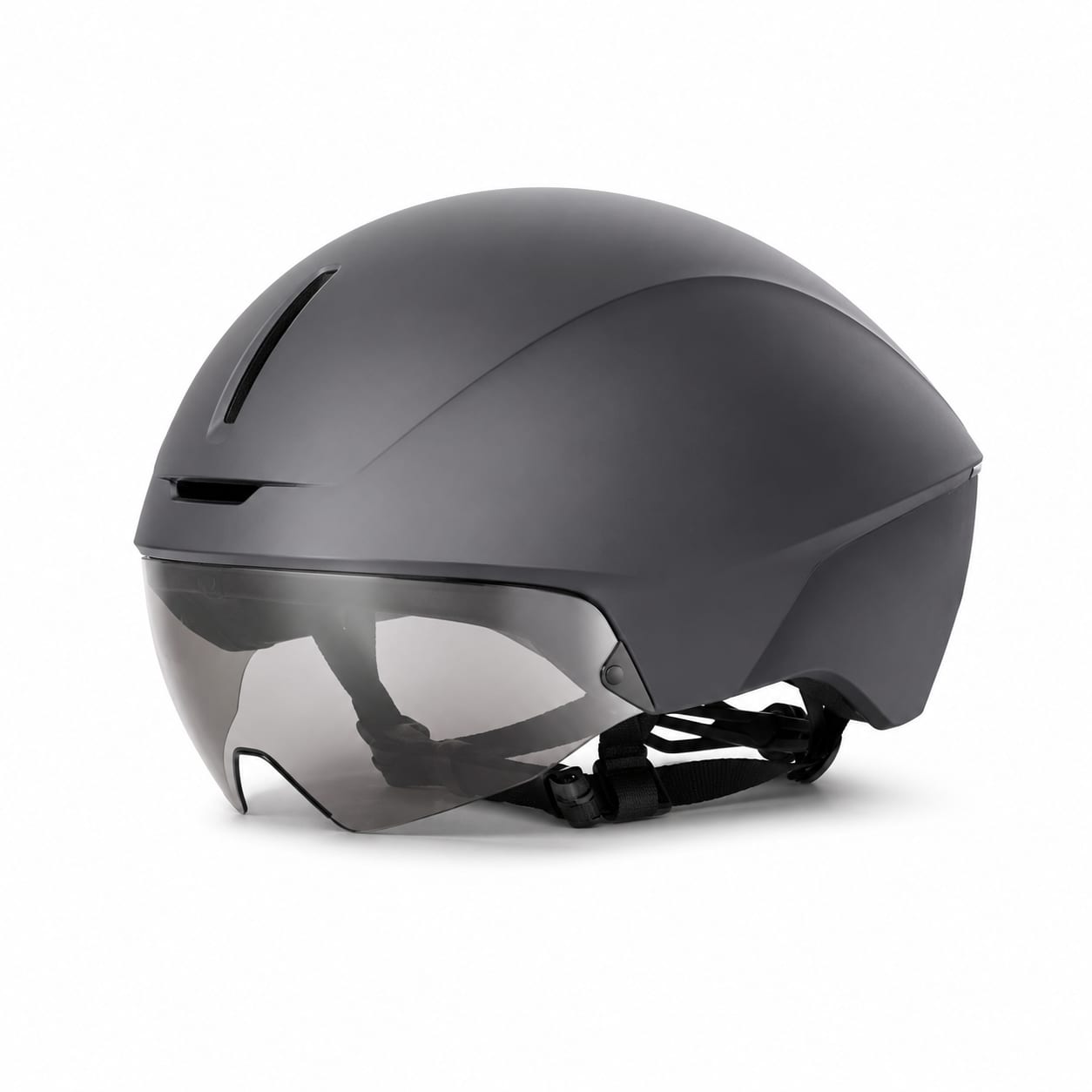
6 topics
Pick a question
Every answer links to the full subcategory guide and related gear types when it helps you decide.
How many watts does an aero road helmet actually save?
Most aero road helmets save 5–15 watts at 40 km/h compared to a standard well-ventilated road helmet. The exact savings depend on the specific models compared, rider position, and head angle. At 30 km/h, savings are roughly 3–8 watts. Below 25 km/h, the savings drop to 1–3 watts and are generally not noticeable.
Read answer →02Are aero road helmets too hot for summer riding?
It depends on the specific model and your heat tolerance. Early aero road helmets were notoriously hot, but modern designs with effective internal channeling have narrowed the gap significantly. In temperatures above 28°C, most riders will notice the reduced ventilation, especially on climbs where airspeed drops. For hot summer riding, a standard road helmet remains more comfortable, and many racers switch between the two based on conditions.
Read answer →03Can I use an aero road helmet for time trials?
Yes, and many triathletes do, especially for draft-legal triathlons where TT helmets are not permitted. However, a dedicated TT/triathlon helmet with a teardrop tail will be faster if you can maintain a consistent aero tuck position. Aero road helmets are more versatile and forgiving of head movement, making them better for road races and courses with technical sections.
Read answer →04Do aero road helmets provide less protection than standard road helmets?
Aero road helmets meet the same CPSC and EN 1078 certification standards as standard road helmets for direct impacts. However, they typically provide less coverage at the temples and rear skull, which means less protection in side and rear impacts. The minimal coverage is a trade-off for aerodynamic performance. If maximum coverage is a priority, look at aero road models that push toward standard road coverage levels.
Read answer →05Is MIPS worth having in an aero road helmet?
Yes. MIPS adds a minimal weight penalty (20–50g) and does not significantly affect aerodynamic performance, but it provides meaningful reduction in rotational forces during oblique impacts—the most common type of cycling crash. Given that road racing involves high-speed falls, the additional protection is worthwhile. Most current premium aero road helmets include MIPS as standard.
Read answer →06How should an aero road helmet fit compared to a standard road helmet?
Fit is even more critical with aero helmets because the aerodynamic benefits depend on the helmet sitting in the designed position. The helmet should sit level on your head with the front edge just above your eyebrows, and the tail should tuck close to your neck when in the drops or aero position. There should be no gap between the helmet's rear edge and your neck. If the helmet sits too high or the tail sticks out, you're losing aero benefit and may actually be slower than with a standard road helmet.
Read answer →