
Cycling Helmet · FAQ
Questions about BMX / Dirt Jump Helmet
Straight answers on fit, specs, and when this type makes sense — each topic has its own page with links back to the buying guide.
Open BMX / Dirt Jump Helmet guide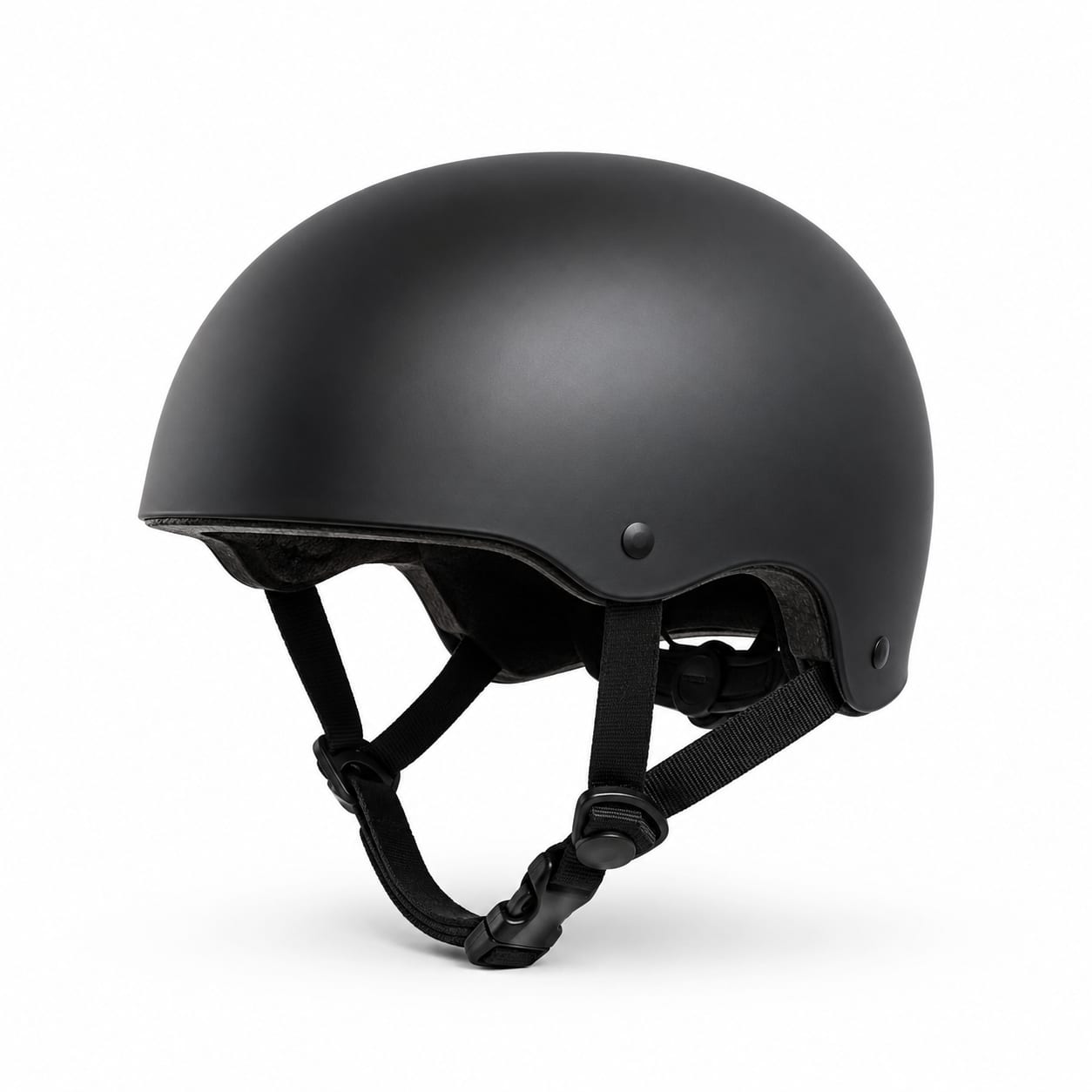
6 topics
Pick a question
Every answer links to the full subcategory guide and related gear types when it helps you decide.
Can I use a BMX helmet for skateboarding?
Many BMX helmets carry dual certification for both bicycling (CPSC/EN 1078) and skateboarding (ASTM F1492), making them suitable for both activities. Check the helmet's certifications before assuming it's appropriate for skating. Helmets certified only to bicycle standards may not provide adequate protection for the types of impacts common in skateboarding. Dual-certified models from brands like Pro-Tec, S1, and Thousand are specifically designed for multi-sport use.
Read answer →02Why are BMX helmets so hot compared to road helmets?
BMX helmets prioritize durability and coverage over ventilation. The ABS hardshell requires more continuous surface area than thin in-mold shells, leaving less room for vents. The extended coverage also means more foam in contact with the head. With only 8-14 small vents versus 18-28 on road helmets, airflow is significantly reduced. This is a deliberate trade-off — the structural integrity needed for hardshell durability and the deep coverage needed for BMX impacts are incompatible with large vent openings.
Read answer →03Do I need a full-face helmet for dirt jumping?
It depends on the size of the jumps and your skill level. For small to medium dirt jumps and skatepark riding, a standard BMX helmet provides adequate protection. For large dirt jumps (over 10 feet of air), step-up jumps, or if you're learning tricks with high consequences, a full-face helmet provides additional jaw and face protection that could prevent serious injury. Some riders use a BMX helmet for practice and a full-face for competition or when attempting new tricks on large jumps.
Read answer →04How do I know if my BMX helmet fits correctly?
A properly fitting BMX helmet should sit level on your head, covering your forehead with about one inch of space above your eyebrows. It should feel snug all around without pressure points. With the chin strap fastened, you should not be able to push the helmet forward off your forehead, backward off the rear of your head, or side-to-side more than an inch. If the helmet rocks in any direction, it's either too large or the padding needs adjustment. With the chin strap undone, shake your head vigorously — the helmet should stay in place.
Read answer →05Is MIPS worth it in a BMX helmet?
Yes, MIPS is worth seeking out in BMX helmets if available. Oblique impacts — where the head hits a surface at an angle — are extremely common in BMX crashes, whether sliding across a skatepark floor, hitting a dirt lip, or falling onto a street obstacle. MIPS reduces the rotational forces transmitted to the brain during these impacts by 10-35%, which can reduce concussion risk. The weight penalty is minimal (20-50g), and the cost premium is typically $20-40. As MIPS becomes more common in BMX helmets, it should be a standard feature to look for.
Read answer →06Can I use a BMX helmet for commuting?
You can, but it's not ideal. BMX helmets are heavier, hotter, and lack the visibility features (reflective elements, light mounts) that make commuter helmets safer for road use in traffic. They also lack aerodynamic optimization, which matters more at the sustained speeds of road commuting. If you ride BMX to work occasionally, your BMX helmet is better than no helmet. But for regular commuting, a dedicated commuter or road helmet will be more comfortable, visible, and appropriate for the riding environment.
Read answer →