Kitvore.com

Kitvore.com

Specs that matter. Gear that fits.

Cycling Helmet · Subcategory

BMX / Dirt Jump Helmet

Rugged, hardshell helmets built for BMX racing, dirt jumping, skatepark, and street riding with maximum durability and extended coverage.

BMX and dirt jump helmets are the tanks of the cycling helmet world. Built with tough ABS hardshell construction, these helmets shrug off the daily abuse of skatepark sessions, dirt jump landings, and street riding that would destroy lighter in-mold helmets. With their skate-inspired low-profile design, extended rear and temple coverage, and minimal venting, they prioritize protection and durability over weight savings and airflow. Whether you're boosting out of a bowl, casing a double, or learning a new trick at the park, these helmets are designed to take hit after hit — though any significant impact still warrants replacement.

$30 – $200budget tierbeginnerintermediateadvanced

Best known for

Hardshell ABS construction that withstands daily abuseSkate-inspired low-profile aestheticExtended coverage around temples, rear, and base of skullDurability that outlasts in-mold helmets in high-impact environmentsDouble D-ring or robust buckle systems that stay secure during crashes
BMX / Dirt Jump Helmet

Guide

Detailed overview

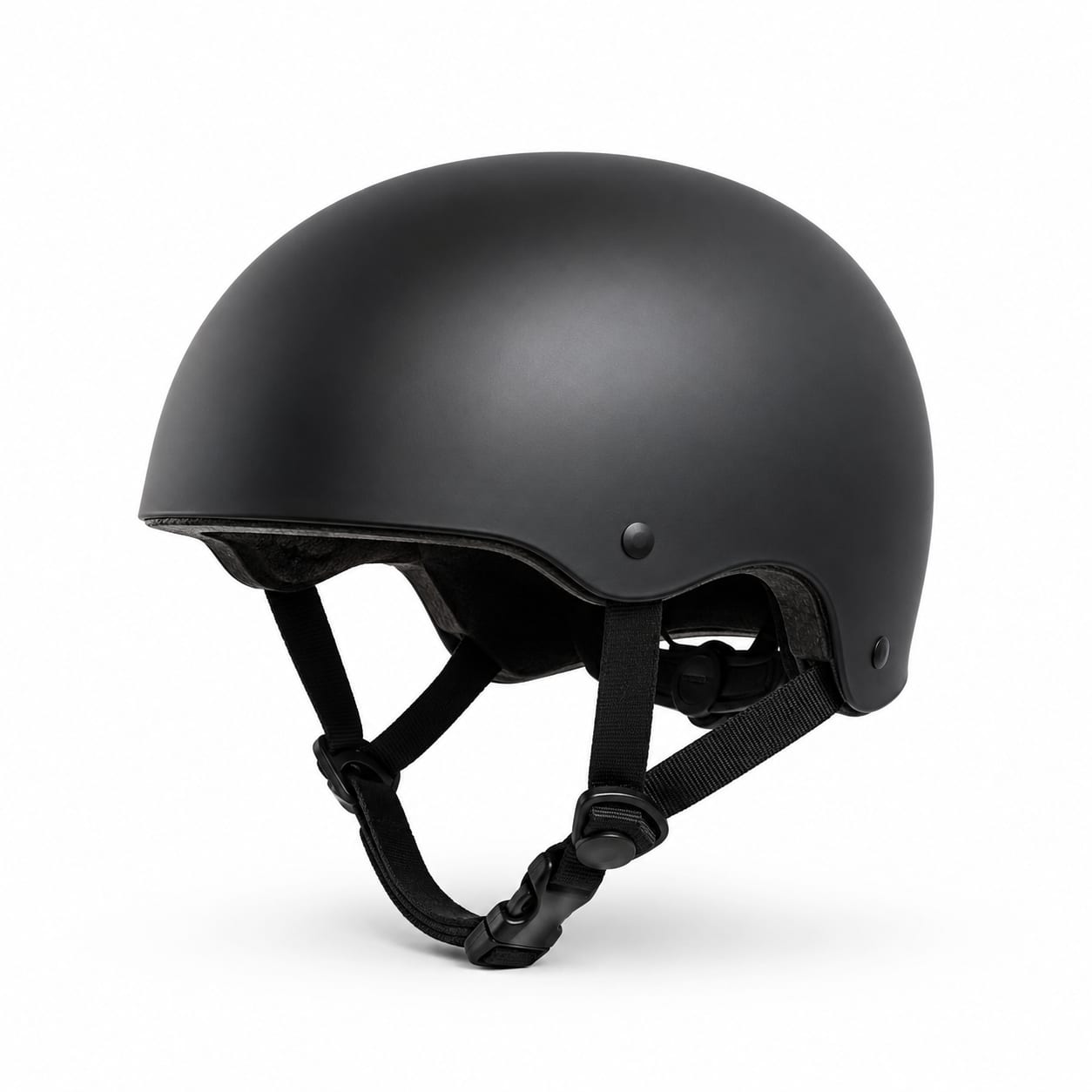
BMX and dirt jump helmets occupy a unique space in cycling head protection. Unlike the lightweight, heavily vented helmets worn by road cyclists, or the feature-rich trail helmets with adjustable visors, BMX helmets are purpose-built for the repeated impacts, hard surfaces, and aggressive riding styles of BMX racing, dirt jumping, skatepark, and street riding. Their defining characteristic is hardshell construction — typically an ABS plastic outer shell bonded to an EPS foam liner — which provides far greater resistance to the everyday bumps, scrapes, and minor impacts that are routine in these disciplines. While any helmet that takes a serious impact should be replaced, the hardshell design means the helmet won't show cosmetic damage from the minor knocks that would crack or delaminate an in-mold helmet. The coverage is notably deeper than road helmets, wrapping further down the temples, rear skull, and nape of the neck — areas particularly vulnerable in the types of falls common to BMX and dirt jumping. Ventilation is typically minimal, with 8 to 14 small vents, reflecting the priority of structural integrity and coverage over cooling. This makes them noticeably warmer than other helmet types, which is a trade-off riders accept for the robust protection. The aesthetic is distinctly skate-influenced: low-profile, rounded, and available in bold colors and graphics that match the culture of BMX and freestyle riding.

BMX and dirt jump helmets trace their design lineage directly to skateboarding helmets, and this heritage is evident in their tough, no-nonsense construction. The hardshell ABS exterior is the defining feature — it's the same material used in skateboard helmets, and for good reason. In a skatepark or dirt jump setting, helmets routinely contact concrete coping, metal rails, wooden ramps, and packed dirt. An in-mold helmet with its thin polycarbonate shell would quickly show scuffs, cracks, and delamination from this kind of contact, even in non-crash scenarios. The ABS shell resists this damage, keeping the helmet looking and functioning properly through months of hard use.

The trade-off for this durability is weight. BMX helmets typically weigh between 350 and 450 grams, making them significantly heavier than road helmets that can weigh under 250 grams. The ABS shell is inherently heavier than the thin polycarbonate used in in-mold construction, and the deeper coverage adds more EPS foam as well. For BMX and dirt jump riders, this weight is rarely a concern — sessions are typically shorter and more intense than road rides, and the helmet's bulk feels appropriate to the aggressive nature of the sport. However, riders transitioning from other disciplines may notice the weight difference initially.

Ventilation is the most common complaint about BMX helmets. With only 8 to 14 small vents, airflow is limited compared to road helmets with 20+ vents. This is a deliberate design choice: more and larger vents would compromise the structural integrity of the hardshell and reduce the coverage area. In practice, BMX and dirt jump sessions tend to be shorter than road rides — typically 1 to 3 hours — and the high-intensity, stop-and-go nature of the riding means riders are frequently taking breaks. For summer skatepark sessions, the heat can be uncomfortable, and many riders compensate by soaking their hair or using moisture-wicking headbands underneath.

Safety certification is an important consideration for BMX helmets. Most meet CPSC (US) or EN 1078 (EU) bicycle helmet standards, which provides a baseline level of protection. Some models also carry ASTM F1492 (skateboard helmet) certification, which has different impact testing protocols that may be more relevant to skatepark use. A few premium models meet ASTM F2032, which is specifically for BMX bicycle helmets. Rotational protection systems like MIPS are increasingly available in BMX helmets, though they remain less common than in road and MTB helmets. Given the high incidence of oblique impacts in BMX crashes, rotational protection is a worthwhile feature to seek out.

Fit is critical with BMX helmets, perhaps more so than with other types, because the hardshell construction doesn't flex or conform to the head over time. The helmet must fit correctly from the first wearing. Many BMX helmets use a padding-based sizing system with multiple thicknesses of interior pads rather than a dial retention system, though some modern models are incorporating dial adjusters. When trying on a BMX helmet, it should sit level on the head, covering the forehead, with no gaps between the padding and the skull. The chin strap should form a V below the earlobes and allow one to two fingers between the strap and chin. If the helmet rocks forward, backward, or side-to-side without the chin strap fastened, it's the wrong size.

Quick facts

Primary purpose
Impact-resistant head protection for BMX racing, dirt jumping, and skatepark cycling
Popular brands
Pro-TecBellFoxTroy Lee DesignsFly RacingSix Six One
Typical terrain
BMX tracksdirt jumpsskateparkspump tracks

What makes it different

Round skate-inspired profile; thick ABS hard shell for durability; very few or no vents; often dual-certified for cycling and skateboarding

Recommended ranges

How this type usually specs out

Each spec is explained in plain language, then we show what buyers usually look for on this type.

Helmet Type

Helmet Type

What it means

The discipline-specific category of the helmet, which determines its shape, coverage, ventilation pattern, and intended use scenario.

Typical for this type

BMX-Specific Or Dual-Certified BMX/Skate Models

Most common pick: BMX/Dirt Jump (Not In Standard Enum; Closest to Mountain Bike With Hardshell Construction)

In practice

BMX/dirt jump helmets are a distinct category not captured by the standard helmet type enum. They share the extended coverage of mountain_bike helmets but use hardshell construction more similar to commuter_urban skate-style helmets. They are purpose-built for the impact profiles and riding styles of BMX racing, dirt jumping, and skatepark use.

Compared to other types

More durable than road/MTB in-mold helmets; less coverage than enduro full-face; more coverage than commuter skate-style; no aerodynamic consideration unlike aero road or TT helmets.

Why it matters: Using the correct helmet type ensures the protection matches the demands of the discipline. A road helmet lacks the coverage and durability for BMX; a full-face enduro helmet is overkill and too hot for most BMX applications.

Certification Standard

Certification Standard

What it means

Safety certification standards the helmet meets, indicating the impact testing protocols and minimum protection levels verified by independent testing bodies.

Typical for this type

At Minimum CPSC Or EN 1078; Ideally Also ASTM F1492 (Skateboard) Or ASTM F2032 (BMX)

Most common pick: CPSC, EN 1078; Some Models Also ASTM F1492 Or ASTM F2032

In practice

BMX helmets must meet at least the baseline bicycle helmet certification for the market they're sold in. Additional certifications like ASTM F1492 (skateboard) or ASTM F2032 (BMX) indicate testing protocols more relevant to the types of impacts common in BMX and skatepark riding.

Compared to other types

Road and aero helmets typically only carry CPSC/EN 1078. Enduro full-face helmets may carry ASTM F1952 for higher-speed impacts. BMX helmets with ASTM F1492 are tested to different impact profiles than standard bicycle helmets.

Why it matters: Certification ensures the helmet has been independently tested to minimum impact protection standards. Dual certification (bicycle + skateboard) means the helmet has passed multiple testing protocols, which can indicate more versatile protection.

Rotational Protection System

Rotational Protection System

What it means

Technology designed to reduce rotational forces transmitted to the brain during oblique impacts, which are the most common type of cycling crash impact.

Typical for this type

MIPS Preferred If Available; None Is Acceptable For Budget Models

Most common pick: None (Most Common); MIPS (Increasingly Available In Newer Models)

In practice

Historically, most BMX helmets have not included rotational protection systems due to the difficulty of integrating MIPS with hardshell construction and the aesthetic preferences of the BMX community. However, MIPS-equipped BMX helmets are becoming more common as the safety benefits become widely recognized.

Compared to other types

Road and MTB helmets commonly include MIPS or equivalent. Aero road and TT helmets sometimes lack rotational protection for aerodynamic reasons. BMX helmets lag behind in adoption but are catching up.

Why it matters: Oblique impacts — where the head hits a surface at an angle — are extremely common in BMX crashes. Rotational protection systems can reduce the rotational forces transmitted to the brain by 10-35%, potentially reducing concussion risk.

Weight

Weight

What it means

The total mass of the helmet including all padding, retention system, and visor (if included), measured in grams.

Typical for this type

350-420g for optimal balance of durability and wearability

Most common pick: 350-450g

In practice

BMX helmets are among the heavier cycling helmets due to their ABS hardshell construction and extended coverage. The ABS shell alone adds significant weight compared to thin polycarbonate in-mold shells. Most quality BMX helmets fall in the 350-450g range, with premium models using thinner ABS or composite shells to reduce weight.

Compared to other types

Significantly heavier than road helmets (200-280g) and aero helmets (250-350g). Comparable to some MTB helmets (280-380g). Much lighter than enduro full-face helmets (600-1000g).

Why it matters: Heavier helmets can cause neck fatigue during long sessions and may shift more during aggressive riding. However, the weight is a direct trade-off for the durability and coverage that defines the category. Under 380g is considered light for a BMX helmet.

Number of Vents

Number of Vents

What it means

The total number of intake and exhaust vents designed to channel airflow through the helmet for cooling.

Typical for this type

10-14 for best balance of cooling and structural integrity

Most common pick: 8-14 vents

In practice

BMX helmets have fewer and smaller vents than most other helmet types. This is a deliberate design choice: the hardshell needs sufficient continuous surface area for structural integrity, and the extended coverage leaves less room for vent placement. Vents are typically small circular or elongated openings rather than the large channels seen on road helmets.

Compared to other types

Far fewer vents than road helmets (18-28) or MTB helmets (12-20). Similar to some aero helmets (4-12) though for different reasons — aero helmets minimize vents for drag reduction, BMX helmets minimize vents for structural integrity and coverage.

Why it matters: Limited ventilation is the primary comfort trade-off of BMX helmets. In hot weather or during intense sessions, riders will notice significantly less airflow compared to road or MTB helmets. Internal channeling design can improve cooling effectiveness even with fewer vents.

Head Circumference Range

Head Circumference Range

What it means

The range of head circumferences the helmet is designed to fit, typically adjustable via the retention system within a specific size bracket.

Typical for this type

Ensure Your Measurement Falls Within The Helmet'S Stated Range; BMX Helmets Have Less Adjustability Than Dial-Equipped Helmets

Most common pick: 51-62cm across size range; most common M/L covers 55-60cm

In practice

BMX helmets typically come in fewer sizes than road helmets — often just S/M and L/XL, or a single adjustable size. The sizing range is critical because many BMX helmets rely on padding thickness rather than dial retention systems for fit adjustment, meaning there's less room for error in sizing.

Compared to other types

Similar circumference ranges to other helmet types but typically offered in fewer size increments. Road and MTB helmets often come in 3-4 sizes with dial adjustment; BMX helmets often come in 1-2 sizes with pad-based adjustment.

Why it matters: A poorly fitting BMX helmet can shift during crashes, exposing areas that should be covered. With less retention adjustability than dial-equipped helmets, getting the right size is even more important. Measure your head circumference at the widest point above the eyebrows before purchasing.

Retention System

Retention System

What it means

The adjustable mechanism at the rear of the helmet that secures it to the head and allows on-the-fly adjustment for a stable, comfortable fit.

Typical for this type

Dial/Ratchet Preferred For Best Adjustability; Sliding Buckle Acceptable For Budget Models

Most common pick: Sliding Buckle Or Padding-Based Fit; Some Newer Models Use Dial/Ratchet

In practice

Traditional BMX helmets often lack a rear retention system entirely, relying on the snug fit of the EPS liner and padding to keep the helmet in place. Some models use a basic sliding buckle adjustment at the rear. Newer, more premium BMX helmets are incorporating dial/ratchet systems for better adjustability and security.

Compared to other types

Road and MTB helmets almost universally use dial/ratchet or rear dial with yoke systems. BMX helmets are behind in retention system adoption, though this is changing. The skate-inspired aesthetic has traditionally favored a cleaner rear profile without visible retention hardware.

Why it matters: A proper retention system keeps the helmet positioned correctly during crashes and prevents it from rocking or shifting. Without a dial system, getting a secure fit depends entirely on choosing the right size and configuring the padding correctly.

Shell Construction

Shell Construction

What it means

The manufacturing method used to join the outer polycarbonate shell to the inner EPS foam liner, affecting durability, weight, and safety.

Typical for this type

Hardshell For Durability; Hybrid In-Mold If Available For Weight Savings Without Sacrificing Too Much Toughness

Most common pick: Hardshell (ABS)

In practice

The vast majority of BMX helmets use hardshell construction with an ABS (Acrylonitrile Butadiene Styrene) outer shell bonded to an EPS foam liner. ABS is significantly tougher than the thin polycarbonate used in in-mold construction, resisting cracking, puncturing, and delamination from the routine impacts of BMX riding.

Compared to other types

Opposite of road and MTB helmets, which almost universally use in-mold construction for lighter weight. Some premium MTB helmets use hybrid in-mold. BMX helmets are one of the few categories where hardshell remains the standard.

Why it matters: Hardshell construction is the defining feature of BMX helmets and the primary reason for their durability. It allows the helmet to withstand the daily bumps, scrapes, and minor impacts of skatepark and dirt jump riding that would damage lighter in-mold helmets. The trade-off is increased weight.

Coverage Level

Coverage Level

What it means

The extent of head coverage provided by the helmet, particularly at the temples, rear, and base of the skull, beyond the minimum certification requirement.

Typical for this type

Extended Rear Minimum; Full Coverage Preferred For Dirt Jumping And Skatepark

Most common pick: Extended Rear to Full Coverage MTB

In practice

BMX helmets provide significantly more coverage than road helmets, extending lower on the temples, rear skull, and nape of the neck. This deep coverage is essential for the types of impacts common in BMX — falls onto hard surfaces from height, often landing on the side or back of the head. The low-profile skate aesthetic means this coverage is achieved without the helmet appearing oversized.

Compared to other types

More coverage than road (minimal to standard) and aero helmets (minimal). Comparable to MTB helmets (extended rear to full coverage). Less than enduro full-face helmets which include chin bar protection.

Why it matters: Extended coverage protects areas that are particularly vulnerable in BMX crashes — the base of the skull, temples, and upper neck area. These are impact zones that minimal-coverage road helmets leave exposed. The deeper fit also helps keep the helmet in place during crashes.

Visor Type

Visor Type

What it means

The type of visor or brim attached to the helmet for sun, rain, and debris protection, and whether it's removable or adjustable.

Typical for this type

No Visor Is Standard And Preferred For BMX; Some Dirt Jump Models May Include A Short Fixed Visor

Most common pick: None

In practice

The vast majority of BMX and dirt jump helmets have no visor. The skate-inspired design prioritizes a clean, low-profile aesthetic and unobstructed field of vision. In skatepark and street riding, a visor would be a liability — it could catch on rails or coping during grinds and tricks. Some dirt jump-specific models include a short fixed visor for sun protection during outdoor jump sessions.

Compared to other types

Unlike MTB helmets which commonly feature removable/adjustable visors, BMX helmets almost never include visors. Road and aero helmets also typically lack visors but for aerodynamic rather than functional reasons.

Why it matters: No visor means maximum field of vision, which is critical for spotting landings, transitions, and obstacles in BMX riding. Riders who need sun protection typically wear caps or sunglasses underneath. A visor could also create a snag hazard during crashes.

Padding System

Padding System

What it means

The type, material, and configuration of interior padding that contacts the head, affecting comfort, moisture management, and fit customization.

Typical for this type

Removable/Washable Pads Minimum; Anti-Microbial Treated Preferred For Frequent Use

Most common pick: Removable/Washable Pads; Some Budget Models Use Basic Foam

In practice

BMX helmets typically use removable padding systems with Velcro-attached pads of varying thicknesses. This serves a dual purpose: the pads provide comfort and moisture management, and different thicknesses allow fit customization since many BMX helmets lack dial retention systems. Premium models may include anti-microbial treatment to combat odor from sweaty sessions.

Compared to other types

Similar to mid-range MTB and road helmets. Budget BMX helmets may use basic foam pads comparable to entry-level helmets in other categories. Premium multi-density pads are rare in BMX helmets.

Why it matters: Removable pads are essential for BMX helmets because they get sweaty frequently and need regular washing. The ability to swap pad thicknesses is also important for achieving a proper fit in helmets without dial retention. Anti-microbial treatment helps with the odor issues common in helmets used for intense, sweaty sessions.

Chin Buckle Type

Chin Buckle Type

What it means

The type of buckle used on the chin strap, affecting ease of use, reliability, and safety.

Typical for this type

Double D-Ring For Racing And Aggressive Riding; Standard Side-Release For Casual Use

Most common pick: Standard Side-Release Or Double D-Ring

In practice

BMX helmets use either standard side-release buckles or double D-ring buckles. Double D-rings are more common on BMX race helmets where maximum security is required — they cannot accidentally release during a crash. Standard side-release buckles are more common on freestyle and dirt jump helmets where convenience and ease of use are prioritized.

Compared to other types

Double D-rings are shared with enduro full-face helmets. Road and aero helmets use standard side-release or magnetic Fidlock buckles. BMX race helmets are one of the few non-full-face categories that commonly use D-rings.

Why it matters: Buckle security matters in BMX because crashes are frequent and violent. A buckle that releases during a crash could allow the helmet to shift or come off entirely. Double D-rings are the most secure option but take longer to fasten and require practice, especially with gloves.

Reflective Elements

Reflective Elements

What it means

Presence and extent of reflective materials on the helmet for enhanced visibility in low-light conditions.

Typical for this type

Minimal Decal Acceptable; Not A Priority For This Subcategory

Most common pick: None to Minimal Decal

In practice

Most BMX helmets have little to no reflective elements. The riding disciplines — skatepark, dirt jumps, street — primarily occur during daylight hours or in well-lit indoor parks. The aesthetic of BMX culture also tends to favor clean, bold graphics over safety-oriented reflective elements. Some models include small reflective logos or decals, but this is not a design priority.

Compared to other types

Far less reflective material than commuter/urban helmets (strategic placement to full wrap). Similar to road and aero helmets which may have minimal or no reflective elements. MTB helmets typically have at least minimal reflective decals.

Why it matters: Reflective elements are largely irrelevant for the primary use cases of BMX helmets. Riders who commute on BMX bikes in low light should consider a separate commuter helmet with better visibility features, or supplement with lights and reflective clothing.

Integrated Light Mount

Integrated Light Mount

What it means

Built-in mount or attachment point for rear lights, either as a dedicated clip, magnetic mount, or integrated light.

Typical for this type

Not Applicable For This Subcategory

Most common pick: None

In practice

BMX helmets do not include integrated light mounts. The riding environments — skateparks, dirt jump tracks, street spots — are either well-lit or ridden during daylight. Adding a light mount would add unnecessary weight and complexity, and the hardshell construction doesn't easily accommodate the clip mounts found on some road and commuter helmets.

Compared to other types

Unlike commuter/urban helmets which frequently feature clip, magnetic, or integrated lights, BMX helmets never include this feature. Road and MTB helmets also typically lack integrated light mounts.

Why it matters: Light mounts are irrelevant for BMX riding. Riders who use their BMX bike for commuting should consider a separate helmet with light mounting capability for those rides, or use a separate light attached to the bike or body.

Aerodynamic Optimization

Aerodynamic Optimization

What it means

The degree to which the helmet is designed to reduce aerodynamic drag, from no consideration to purpose-built time trial aerodynamics.

Typical for this type

Not Applicable; Aero Optimization Is Irrelevant For BMX Riding

Most common pick: None

In practice

BMX helmets have no aerodynamic optimization. The riding speeds in BMX, dirt jumping, and skatepark riding are too low for aerodynamic drag to be a significant factor, and the riding positions are too variable for any aero shaping to be effective. The blocky, rounded shape of BMX helmets is dictated by coverage and durability requirements, not airflow.

Compared to other types

Opposite end of the spectrum from aero road and TT helmets, which are purpose-built for drag reduction. Even standard road and MTB helmets typically have some aero-informed design. BMX helmets are purely protection-driven.

Why it matters: Aerodynamics are irrelevant for BMX riding. The speeds achieved — even in BMX racing, where speeds can reach 35-40 mph on downhill starts — don't justify the compromises in coverage, ventilation, and weight that aero optimization would require. Riders should ignore aero claims and focus on fit, coverage, and certification.

Strap Adjustment System

Strap Adjustment System

What it means

The system used to adjust and lock the chin strap length and position, affecting ease of fitting and strap stability during use.

Typical for this type

Standard Sliding Is Typical; Adjustable Splitters With Locking Preferred If Available

In practice

BMX helmets typically use standard sliding tri-glide buckles for strap length adjustment. This is the simplest and most common system across all helmet types. Some premium BMX helmets may feature adjustable splitters with locking, which prevent the straps from creeping and maintain a consistent fit — valuable for the aggressive head movements of BMX riding.

Compared to other types

Similar to most road and MTB helmets which use standard sliding systems. Premium road helmets may have fixed position splitters for a cleaner look. The aggressive nature of BMX riding makes strap security more important than in most other disciplines.

Why it matters: Strap stability matters in BMX because the helmet experiences more violent forces during crashes than most other cycling disciplines. Straps that slip or creep could allow the helmet to shift during a crash, reducing its protective effectiveness. Adjustable locking splitters are worth seeking out if available.

Evaluation

Strengths and trade-offs

Pros

What this type does best

Exceptional durability from hardshell construction

Critical

The ABS hardshell shrugs off the daily bumps, scrapes, and minor impacts of skatepark and dirt jump riding that would crack or delaminate in-mold helmets. This durability means the helmet maintains its protective capability and appearance through months of hard use.

Extended coverage for high-risk impact zones

Critical

BMX helmets provide deeper coverage at the temples, rear skull, and nape of the neck than most other helmet types. These are precisely the areas most vulnerable in the types of falls common to BMX and dirt jumping — backwards and sideways falls onto hard surfaces from height.

Skate-inspired aesthetic that matches the culture

High

The low-profile, rounded design with bold colors and graphics fits the visual language of BMX, skatepark, and dirt jump culture. Riders are more likely to wear a helmet that looks right for their sport, making the aesthetic a genuine safety feature.

Secure fit options with double D-ring buckles

High

Many BMX race helmets use double D-ring buckles that cannot accidentally release during a crash. This is the most secure buckle type available and provides confidence that the helmet will stay in place during violent impacts.

Cost-effective over time due to durability

Medium

While BMX helmets may have a similar or higher initial cost than entry-level road helmets, their hardshell construction means they don't need to be replaced for cosmetic damage from minor impacts. This can make them more economical over time for riders who frequently ding their helmets.

Dual certification potential (bicycle + skateboard)

Medium

Some BMX helmets carry both CPSC/EN 1078 bicycle certification and ASTM F1492 skateboard certification, meaning they've passed testing protocols for both types of impacts. This makes them versatile for riders who skate and ride BMX.

Low-profile design reduces snag risk

Medium

The smooth, rounded exterior without visors or protruding features reduces the risk of the helmet catching on obstacles during crashes. In skatepark environments, this prevents the helmet from snagging on coping, rails, or transitions.

Cons

Trade-offs to be aware of

Poor ventilation leads to overheating

Significant

With only 8-14 small vents, BMX helmets are significantly hotter than road or MTB helmets. During intense summer sessions, especially in indoor skateparks, the heat buildup can be uncomfortable and distracting. This is the most common complaint among BMX helmet users.

Heavier than in-mold alternatives

Moderate

The ABS hardshell construction adds 100-200g compared to similar-coverage in-mold helmets. This weight is noticeable during long sessions and can contribute to neck fatigue. Riders transitioning from lighter helmets will feel the difference immediately.

Limited size adjustability without dial retention

Moderate

Many BMX helmets lack dial retention systems, relying on padding thickness for fit adjustment. This provides less precise sizing than dial-equipped helmets and makes it harder to achieve a secure, customized fit. Getting the right size is more critical as a result.

Rotational protection is rarely included

Moderate

Most BMX helmets do not include MIPS or other rotational protection systems, despite oblique impacts being extremely common in BMX crashes. While the helmets meet certification standards, they lack this additional safety layer that is increasingly standard in road and MTB helmets.

Not suitable for long rides or hot-weather cycling

Minor

The combination of weight, poor ventilation, and extended coverage makes BMX helmets uncomfortable for rides longer than 2-3 hours, especially in warm weather. They are purpose-built for short, intense sessions and perform poorly as all-around cycling helmets.

Hardshell can separate from foam in severe impacts

Minor

Unlike in-mold construction where the shell and foam are bonded as a single unit, hardshell helmets have the shell glued or taped to the EPS liner. In severe crashes, the shell can separate from the foam, potentially reducing the helmet's effectiveness in multi-impact scenarios within the same crash.

Best for

Surfaces & terrain

Skateparks (concrete and wood)Dirt jump tracksBMX race tracksStreet spots (stairs, rails, ledges)Pump tracksIndoor skateparks

Riding conditions

Daylight ridingWell-lit indoor parksDry conditions (limited wet-weather features)Temperate to warm weather (with heat tolerance)Hard surface impacts (concrete, wood, packed dirt)

Skill level

Beginner (learning to air, jump, and ride transitions)Intermediate (progressing tricks and increasing air)Advanced (complex tricks and competition-level riding)Professional (BMX racing and freestyle competition)

Riding discipline

BMX racingDirt jumpingSkatepark ridingStreet ridingFlatland (with caveats about visibility)Pump track riding

Rider profile

BMX racers needing certified, secure helmetsDirt jumpers who crash frequently and need durabilitySkatepark riders who value style and toughnessStreet riders who need a helmet that withstands daily abuseParents buying helmets for kids in BMX programsMulti-sport riders who skate and ride BMX

Not ideal for

Reasons

Too hot and heavy for sustained aerobic efforts over 2+ hoursNo aerodynamic benefit for high-speed road ridingInsufficient protection (no chin bar) for downhill MTBNo visibility features for commuting in traffic and low lightOverbuilt and uncomfortable for casual recreational riding where a lighter, cooler helmet would suffice

Surfaces & terrain

Road cycling (poor ventilation, heavy, no aero benefit)Long-distance gravel riding (too hot, too heavy)Enduro mountain biking (no chin bar for aggressive downhill)Commuting in low light (no reflective elements or light mount)

Skill level

Not skill-dependent — the helmet type is wrong for the discipline, not the rider level

Riding discipline

Road cycling and racingTime trialing and triathlonLong-distance touring and bikepackingCasual recreational riding (overkill and uncomfortable)Downhill mountain biking (needs full-face protection)

Compare

How it stacks up

This page

BMX / Dirt Jump Helmet

Far more durable hardshell construction withstands daily abuse that would destroy an in-mold MTB helmet. Lower profile reduces snag risk in skatepark environments. Double D-ring option provides more secure buckle for aggressive riding.

Alternative

Mountain Bike Helmet (XC/Trail)

Significantly better ventilation with 12-20 vents and internal channeling. Lighter weight (280-380g vs 350-450g). Dial retention system provides better fit adjustment. Adjustable visor for sun and debris protection on trails.

Bottom line

Choose BMX/dirt jump for skatepark, dirt jumping, and street riding where durability and coverage matter most. Choose MTB helmet for trail riding, cross-country, and all-mountain use where ventilation and lighter weight are priorities.

This page

BMX / Dirt Jump Helmet

Much lighter (350-450g vs 600-1000g). Better ventilation. Less fatigue during long sessions. Easier to communicate. Lower cost. No chin bar obstruction for eating, drinking, or talking between runs.

Alternative

Enduro/Full-Face Helmet

Full-face protection including chin bar for jaw and face protection. Higher impact certification (ASTM F1952). More comprehensive coverage for high-speed downhill crashes. Neck brace compatible on some models.

Bottom line

Choose BMX/dirt jump for skatepark, dirt jumping, and BMX racing where chin protection isn't required and ventilation matters. Choose enduro full-face for downhill mountain biking, bike park riding, and any discipline with high-speed risk to the face and jaw.

This page

BMX / Dirt Jump Helmet

More robust hardshell construction for impact durability. Deeper coverage at rear and temples. More secure buckle options. Designed for higher-energy impacts common in BMX. Better suited for the physical demands of trick-based riding.

Alternative

Commuter / Urban Helmet

Better ventilation for sustained commuting efforts. Integrated lights and reflective elements for low-light visibility. Lighter weight for daily wear. More discreet styling appropriate for urban environments. Often includes rain covers or weather protection.

Bottom line

Choose BMX/dirt jump for BMX riding, skatepark sessions, and dirt jumping where durability and coverage are paramount. Choose commuter/urban for daily commuting, city riding, and casual use where visibility features and comfort matter more than impact durability.

This page

BMX / Dirt Jump Helmet

Dramatically more durable construction. Much deeper coverage protecting temples, rear skull, and neck. Better suited for the impact types and frequencies of BMX riding. Won't be destroyed by minor impacts that would crack an in-mold road helmet.

Alternative

Aero Road Helmet

Far superior ventilation (18-28 vents). Much lighter weight (200-280g). Aerodynamic optimization for speed. More comfortable for long rides. Sleeker aesthetic for road cycling culture. Dial retention for precise fit.

Bottom line

These are completely different tools for completely different jobs. Choose BMX/dirt jump for BMX, skatepark, and dirt jumping. Choose road helmets for road cycling, criteriums, and gran fondos. Never substitute one for the other.

Shopping

Buying tips

  • 1

    Measure your head circumference before ordering — BMX helmets often come in fewer sizes with less adjustment range than road helmets, so getting the right size is critical.

  • 2

    Prioritize dual certification (CPSC + ASTM F1492 or ASTM F2032) if you ride both BMX and skateboards — it means the helmet has passed impact tests for both disciplines.

  • 3

    Look for MIPS or another rotational protection system if available — oblique impacts are extremely common in BMX crashes, and rotational protection can reduce concussion risk.

  • 4

    If between sizes, size up and use thicker padding inserts rather than sizing down — a too-small helmet will create pressure points and won't cover properly.

  • 5

    Check the buckle type: double D-rings are most secure for racing and aggressive riding but take practice to fasten quickly; side-release buckles are more convenient for casual sessions.

  • 6

    Consider ventilation if you ride in hot climates or indoor parks — even among BMX helmets, vent count and internal channeling vary significantly. Models with 12+ vents and internal channels will be noticeably cooler.

  • 7

    Don't be fooled by the tough exterior — any BMX helmet that takes a significant impact should be replaced, even if the hardshell shows no visible damage. The EPS foam inside may be compressed and no longer protective.

  • 8

    Try on multiple brands if possible — BMX helmet shapes vary more than road helmets, and the round vs. oval internal shape can make a big difference in comfort and security of fit.

Care

Maintenance notes

  • Remove and wash padding regularly (every 1-2 weeks with frequent use) — sweat and bacteria degrade padding and cause odor. Hand wash with mild soap and air dry.
  • Inspect the EPS foam liner regularly for cracks, dents, or compression — remove padding to check the foam underneath. Any visible damage to the foam means the helmet should be replaced.
  • Check the shell-foam bond periodically — if you can slide the ABS shell relative to the foam liner, the adhesive has failed and the helmet should be replaced.
  • Replace the helmet after any significant impact, even if no damage is visible — the EPS foam is designed to compress on impact and may not provide protection in a subsequent crash.
  • Store the helmet in a cool, dry place out of direct sunlight — UV exposure and heat can degrade both the EPS foam and ABS shell over time.
  • Replace chin straps if they show fraying, stretching, or buckle damage — a compromised strap can allow the helmet to shift or come off during a crash.
  • Most manufacturers recommend replacing BMX helmets every 3-5 years even without crashes, as EPS foam degrades over time and the ABS shell can become brittle.
  • Avoid decorating the helmet with thick stickers or paint — solvents in some paints and adhesives can degrade the ABS shell. Thin vinyl stickers are generally safe.

Progression

Skill development path

BMX/dirt jump helmets are appropriate for all skill levels within their discipline. Beginners benefit most from the durability and coverage — they crash more frequently and at lower speeds, making the hardshell's resistance to minor impacts especially valuable. As riders progress to larger jumps and more complex tricks, the extended coverage becomes increasingly important for the higher-energy falls that come with pushing limits. Advanced and professional riders may seek out lighter-weight models with MIPS and better ventilation for competition, but the fundamental helmet type remains the same. The key progression is not in the helmet itself but in the rider's understanding of when to replace it — experienced riders are better at recognizing subtle damage and understanding that any significant impact warrants replacement regardless of the helmet's external appearance.

FAQ

Common questions

Each question has a dedicated page with a full answer and links to the buying guide.

Can I use a BMX helmet for skateboarding?

Many BMX helmets carry dual certification for both bicycling (CPSC/EN 1078) and skateboarding (ASTM F1492), making them suitable for both activities. Check the helmet's certifications before assuming it's appropriate for skating. Helmets certified only to bicycle standards may not provide adequate protection for the types of impacts common in skateboarding. Dual-certified models from brands like Pro-Tec, S1, and Thousand are specifically designed for multi-sport use.

Why are BMX helmets so hot compared to road helmets?

BMX helmets prioritize durability and coverage over ventilation. The ABS hardshell requires more continuous surface area than thin in-mold shells, leaving less room for vents. The extended coverage also means more foam in contact with the head. With only 8-14 small vents versus 18-28 on road helmets, airflow is significantly reduced. This is a deliberate trade-off — the structural integrity needed for hardshell durability and the deep coverage needed for BMX impacts are incompatible with large vent openings.

Do I need a full-face helmet for dirt jumping?

It depends on the size of the jumps and your skill level. For small to medium dirt jumps and skatepark riding, a standard BMX helmet provides adequate protection. For large dirt jumps (over 10 feet of air), step-up jumps, or if you're learning tricks with high consequences, a full-face helmet provides additional jaw and face protection that could prevent serious injury. Some riders use a BMX helmet for practice and a full-face for competition or when attempting new tricks on large jumps.

How do I know if my BMX helmet fits correctly?

A properly fitting BMX helmet should sit level on your head, covering your forehead with about one inch of space above your eyebrows. It should feel snug all around without pressure points. With the chin strap fastened, you should not be able to push the helmet forward off your forehead, backward off the rear of your head, or side-to-side more than an inch. If the helmet rocks in any direction, it's either too large or the padding needs adjustment. With the chin strap undone, shake your head vigorously — the helmet should stay in place.