
Cycling Helmet · FAQ
Questions about E-Bike / Speed Pedelec Helmet
Straight answers on fit, specs, and when this type makes sense — each topic has its own page with links back to the buying guide.
Open E-Bike / Speed Pedelec Helmet guide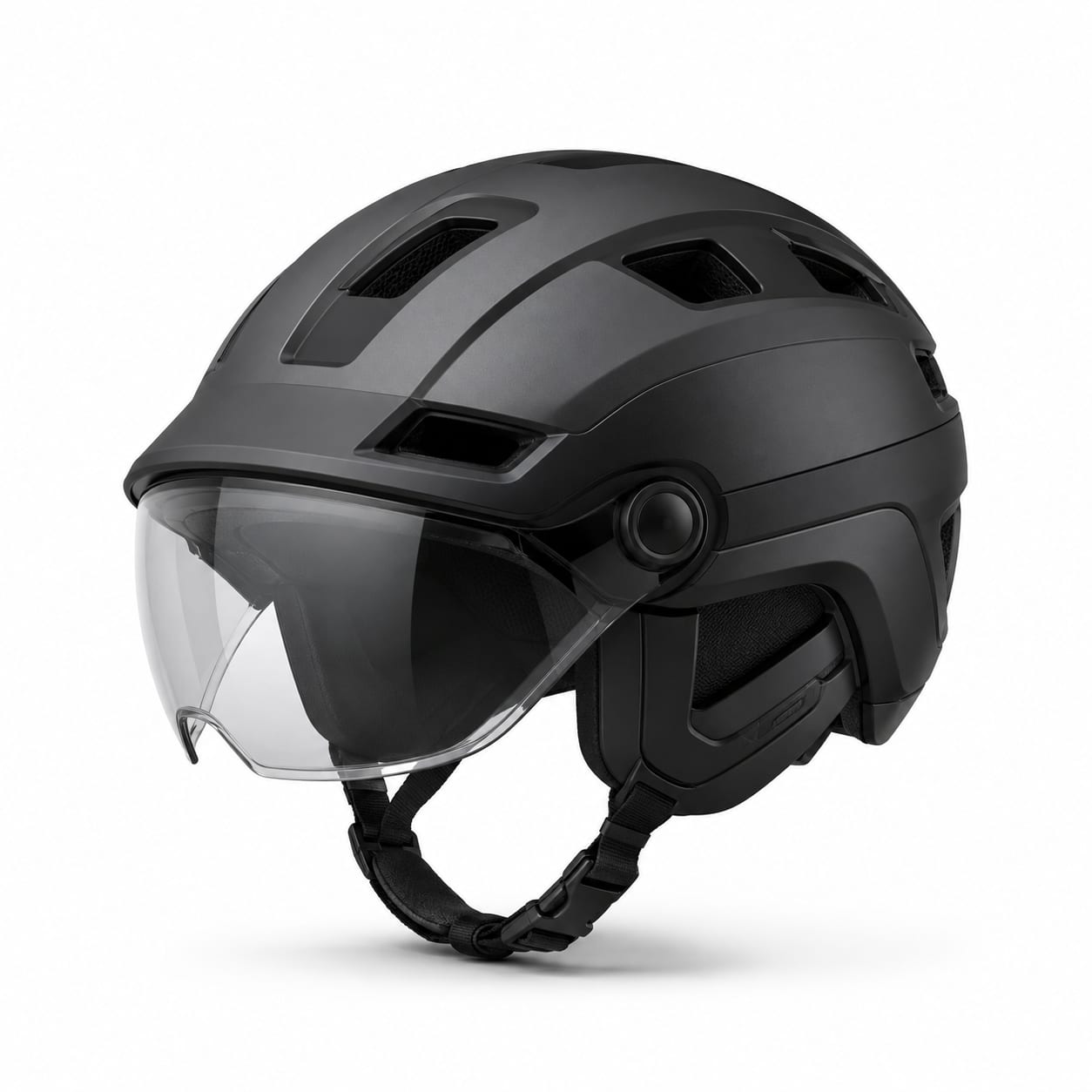
6 topics
Pick a question
Every answer links to the full subcategory guide and related gear types when it helps you decide.
Do I really need a special helmet for my e-bike, or is a regular bike helmet sufficient?
It depends on your e-bike's speed and your riding environment. For e-bikes limited to 25 km/h (15.5 mph) used on bike paths, a standard bicycle helmet meeting CPSC or EN 1078 certification provides adequate protection. However, for speed pedelecs capable of 45 km/h (28 mph), or any e-bike regularly ridden above 30 km/h in mixed traffic, an e-bike helmet with NTA 8776 certification provides protection matched to the actual impact energies you'll experience. The higher speeds generate significantly more impact energy—approximately 60–80% more at 45 km/h versus 25 km/h—which standard helmets are not designed to absorb.
Read answer →02What is NTA 8776 certification and why does it matter for e-bike helmets?
NTA 8776 is a Dutch technical agreement specifically developed for helmets used on speed pedelecs (e-bikes up to 45 km/h). It requires impact testing at higher velocities than standard bicycle helmet certifications (CPSC, EN 1078), with impact energies approximately 60–80% greater. The standard also includes tests for the specific impact angles common in e-bike crashes. While not legally required in most countries, NTA 8776 is the only certification that verifies a helmet's performance at e-bike speeds. If you ride a speed pedelec, NTA 8776 certification should be a non-negotiable requirement.
Read answer →03Can I use an e-bike helmet for regular cycling too?
Yes, absolutely. An e-bike helmet provides equal or better protection than a standard bicycle helmet for conventional cycling. The main trade-offs are slightly higher weight, potentially less ventilation, and a more substantial appearance. If you use both an e-bike and a conventional bicycle, an e-bike helmet works well for both—there's no safety downside to using a higher-protection helmet for lower-speed riding. The only reason to choose a standard helmet for conventional cycling would be if you prioritize lighter weight, more ventilation, or a sleeker profile for road riding.
Read answer →04Are integrated helmet lights bright enough to replace a separate rear bike light?
Integrated helmet lights vary significantly in brightness and visibility. Basic integrated LEDs (typically 5–20 lumens) supplement but don't replace a proper rear bike light (50–100+ lumens). Premium e-bike helmets with high-output integrated lights (30–50+ lumens) may be sufficient as a primary rear light for urban riding with street lighting, but a separate frame-mounted light remains recommended for dark roads and higher-speed traffic. The key advantage of integrated lights is that they're always available and properly positioned—they're a reliable backup even if you also run a separate primary light.
Read answer →05How often should I replace my e-bike helmet?
Replace your e-bike helmet every 3 years if you commute daily, or every 5 years for occasional use, even without crashes. Replace immediately after any crash where the helmet impacted a surface, even if damage isn't visible—EPS foam compresses irreversibly on impact. Also replace if you notice cracks in the shell, loose components, degraded padding that can't be replaced, or if the retention system no longer holds securely. Daily commuters should be especially vigilant about replacement timelines, as sweat, UV exposure, and temperature cycling degrade the foam faster than occasional recreational use.
Read answer →06Is MIPS or rotational protection more important in an e-bike helmet than a regular bike helmet?
Yes, the case for rotational protection is stronger in e-bike helmets than in conventional bicycle helmets. Higher speeds generate greater rotational forces in oblique impacts, which are the most common type of cycling crash. MIPS and similar systems reduce rotational acceleration by 10–35%, which can meaningfully reduce the risk of traumatic brain injury. Given that e-bike crashes occur at higher speeds with greater impact energies, the additional protection from rotational mitigation systems provides a proportionally greater safety benefit. We strongly recommend choosing an e-bike helmet with MIPS or an equivalent rotational protection system.
Read answer →