
Cycling Helmet · FAQ
Questions about Enduro / All-Mountain Helmet
Straight answers on fit, specs, and when this type makes sense — each topic has its own page with links back to the buying guide.
Open Enduro / All-Mountain Helmet guide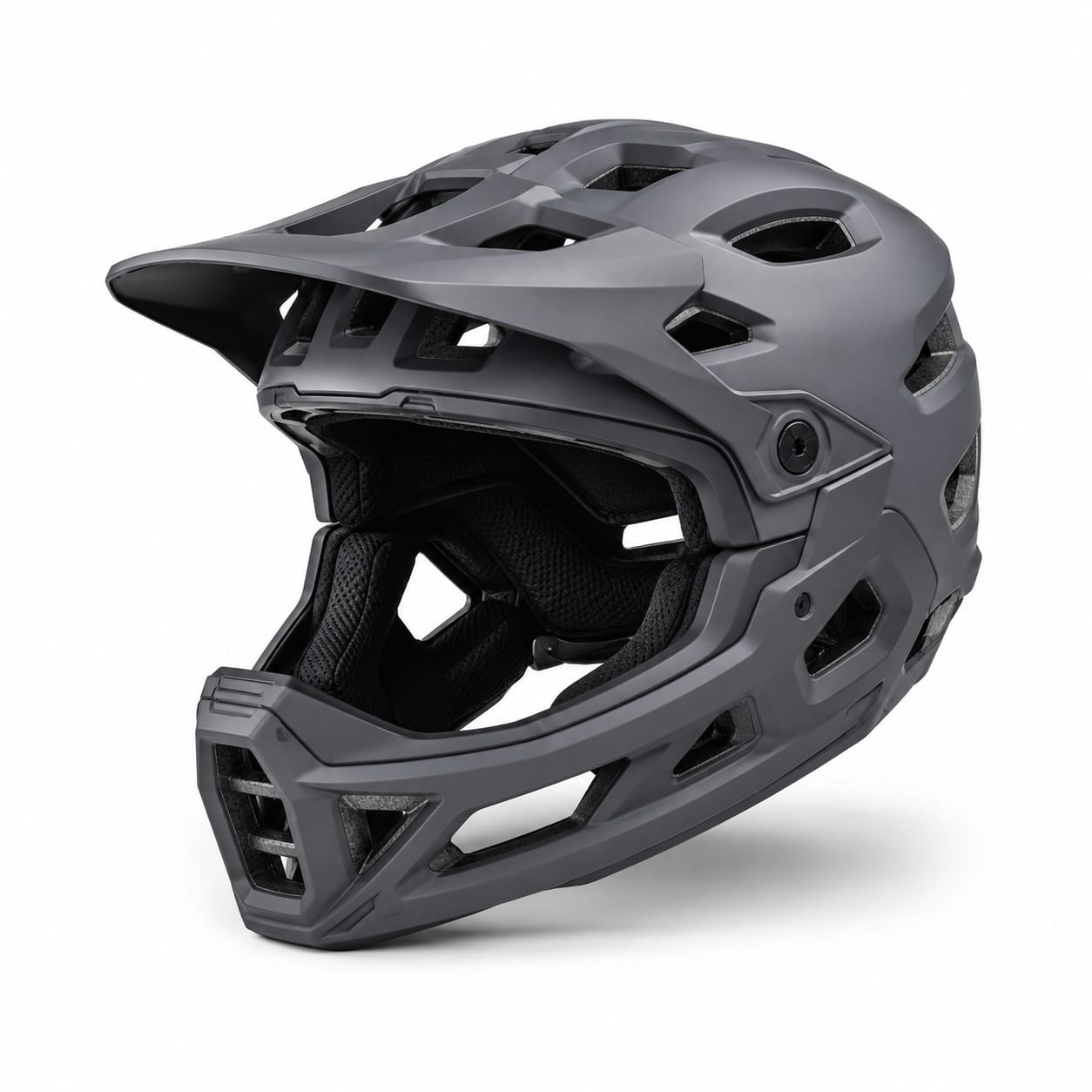
6 topics
Pick a question
Every answer links to the full subcategory guide and related gear types when it helps you decide.
Do I need an enduro helmet if I only ride flow trails?
If your trails are smooth, groomed, and lack technical features like rocks, roots, and steep descents, a standard trail or XC helmet provides adequate protection with less weight and better ventilation. Enduro helmets become necessary when crash risk increases due to technical terrain, higher speeds, or larger features. If you're unsure, err on the side of more coverage—you can always remove the visor and open the vents on an enduro helmet, but you can't add coverage to a trail helmet.
Read answer →02Are convertible full-face enduro helmets as safe as dedicated DH helmets?
Most convertible full-face enduro helmets do not meet the ASTM F1952 downhill standard that dedicated DH helmets are designed around. The chin bar attachment mechanisms on convertible helmets are generally not as robust as the one-piece construction of a dedicated DH helmet. For lift-accessed bike park days with large features and high speeds, a dedicated DH helmet is recommended. Convertible models are excellent for enduro racing and aggressive trail riding where you need face protection on some stages but must pedal on others.
Read answer →03Is MIPS worth the extra cost in an enduro helmet?
Yes. The types of crashes common in enduro riding—oblique impacts with rocks, roots, and hardpack—are precisely the scenarios where rotational protection systems provide the most benefit. MIPS reduces rotational acceleration by 10-35% in oblique impacts, which is linked to reduced concussion risk. Given that enduro helmets already represent a premium purchase for aggressive riding, the additional $20-40 for MIPS is a worthwhile investment in brain protection. MIPS Spherical and WaveCel offer enhanced protection at higher price points.
Read answer →04How should an enduro helmet fit with goggles?
The goggle strap should sit flat against the back of the helmet without gaps, and the goggle frame should nest seamlessly against the helmet's brow and visor with no exposed forehead skin. The visor should be adjustable enough to accommodate the goggle frame underneath when pushed up for storage. If there's a gap between the goggle and helmet, debris and sunlight will enter. Try your specific goggle and helmet combination before purchasing, as compatibility varies between brands.
Read answer →05Can I use an enduro helmet for road cycling?
Physically yes, but it's not ideal. The visor creates aerodynamic drag and can obstruct vision in the road riding position. The extended coverage traps more heat than necessary for road riding. If you occasionally ride road to access trails, the enduro helmet works fine. For regular road riding, a dedicated road helmet is lighter, cooler, and more aerodynamic. Some riders remove the visor from their enduro helmet for road sections, which improves the experience significantly.
Read answer →06When should I replace my enduro helmet?
Replace your helmet after any crash where your head contacts the ground, even if no damage is visible—EPS foam compresses on impact and does not recover. Replace every 3-5 years even without crashes, as UV exposure, sweat, and temperature cycling degrade the shell and foam over time. Replace immediately if you notice cracks in the shell, separation at the edges, loose fitting components, or if the retention system no longer holds securely. The cost of replacement is always less than the cost of inadequate protection.
Read answer →