
Cycling Helmet · FAQ
Questions about Time Trial / Triathlon Helmet
Straight answers on fit, specs, and when this type makes sense — each topic has its own page with links back to the buying guide.
Open Time Trial / Triathlon Helmet guide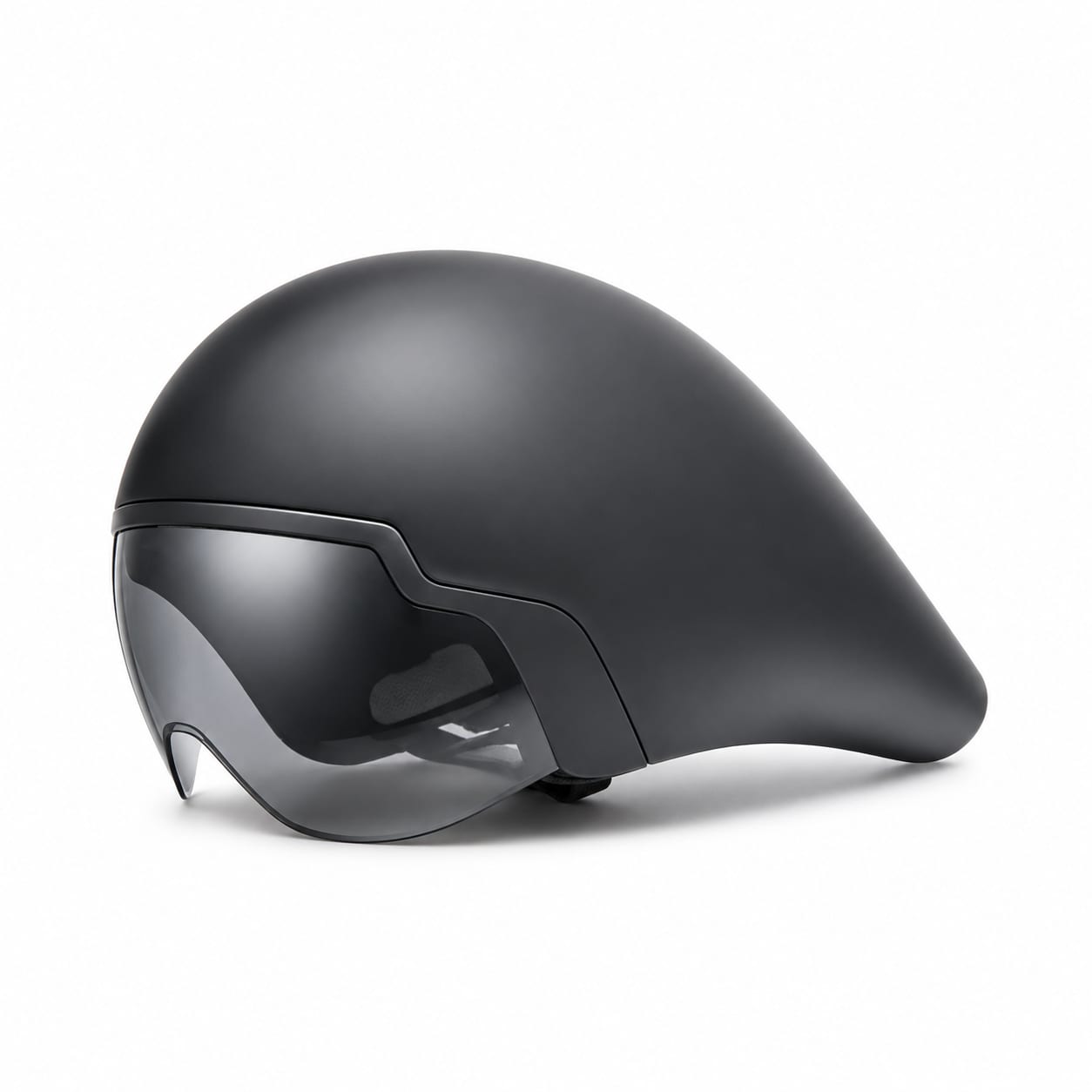
6 topics
Pick a question
Every answer links to the full subcategory guide and related gear types when it helps you decide.
How much time does a TT helmet actually save?
A TT helmet typically saves 15–30 watts at 40 km/h compared to a standard road helmet. Over a 40K time trial, this translates to approximately 30–90 seconds for most riders, depending on speed and conditions. The faster you ride, the greater the absolute time savings because aerodynamic drag increases with the square of velocity. For a rider averaging 40 km/h, expect savings in the 45–75 second range over 40K.
Read answer →02Can I use a TT helmet for road riding or group rides?
No. TT helmets are inappropriate for road riding and group rides for several reasons: the aero benefit requires a tucked head position that is unsafe in groups where you need to look around; the minimal ventilation makes them uncomfortably hot at road riding intensities; the tail catches crosswinds and can affect head stability; and they provide minimal coverage compared to road helmets. Save your TT helmet for race day and use a road or aero road helmet for training.
Read answer →03Is a TT helmet worth it for a beginner triathlete?
Yes, a TT helmet is one of the most cost-effective aero upgrades available and is worth it even for beginners who are committed to triathlon. The watt savings are significant and consistent regardless of your fitness level—you get the same aerodynamic benefit whether you're riding 30 km/h or 45 km/h. However, if you're still developing your aero position and frequently sit up or move your head, an aero road helmet might be more practical until your position is consistent.
Read answer →04What happens if I lift my head or look around in a TT helmet?
Lifting your head or looking sideways disrupts the smooth airflow over the tail, potentially making the TT helmet slower than a standard road helmet. The tail acts as a sail when misaligned, catching air and creating additional drag. This is why TT helmets are only appropriate for disciplines where you can maintain a consistent head position. Practice looking ahead with peripheral vision and use course reconnaissance to minimize the need to look around during your TT.
Read answer →05Should I choose a TT helmet with an integrated shield or wear sunglasses?
An integrated shield is faster because it eliminates the gap between glasses and helmet, creating a smoother aerodynamic surface. However, shields can fog in humid conditions, may not suit all face shapes, and limit your ability to quickly adjust or remove eye protection. If you wear prescription glasses, you'll need a TT helmet that accommodates them. For most riders, the shield is faster if it fits well and doesn't fog. Test both configurations if possible.
Read answer →06How do I know if a TT helmet fits my aero position?
The key test is whether the tail aligns with your upper back when you're in your aero position on the aerobars. Sit on your bike on a trainer and have someone photograph you from the side—the tail should smoothly transition to your back without a gap or overlap. Different helmets suit different torso angles and head positions, so try multiple models if possible. The helmet should also stay firmly in place when you're pulling hard without shifting on your head.
Read answer →