Kitvore.com

Kitvore.com

Specs that matter. Gear that fits.

Cycling Helmet · Subcategory

Time Trial / Triathlon Helmet

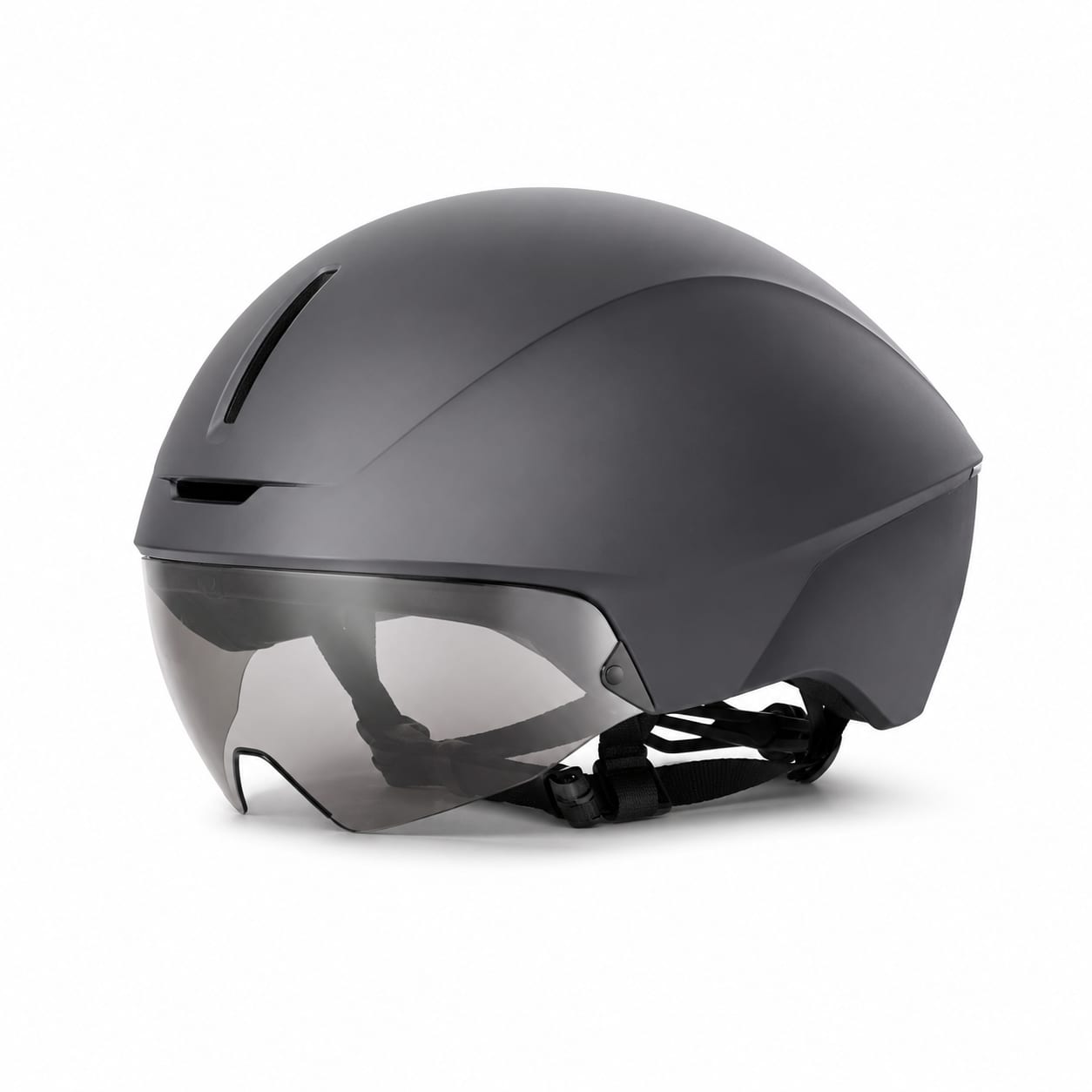
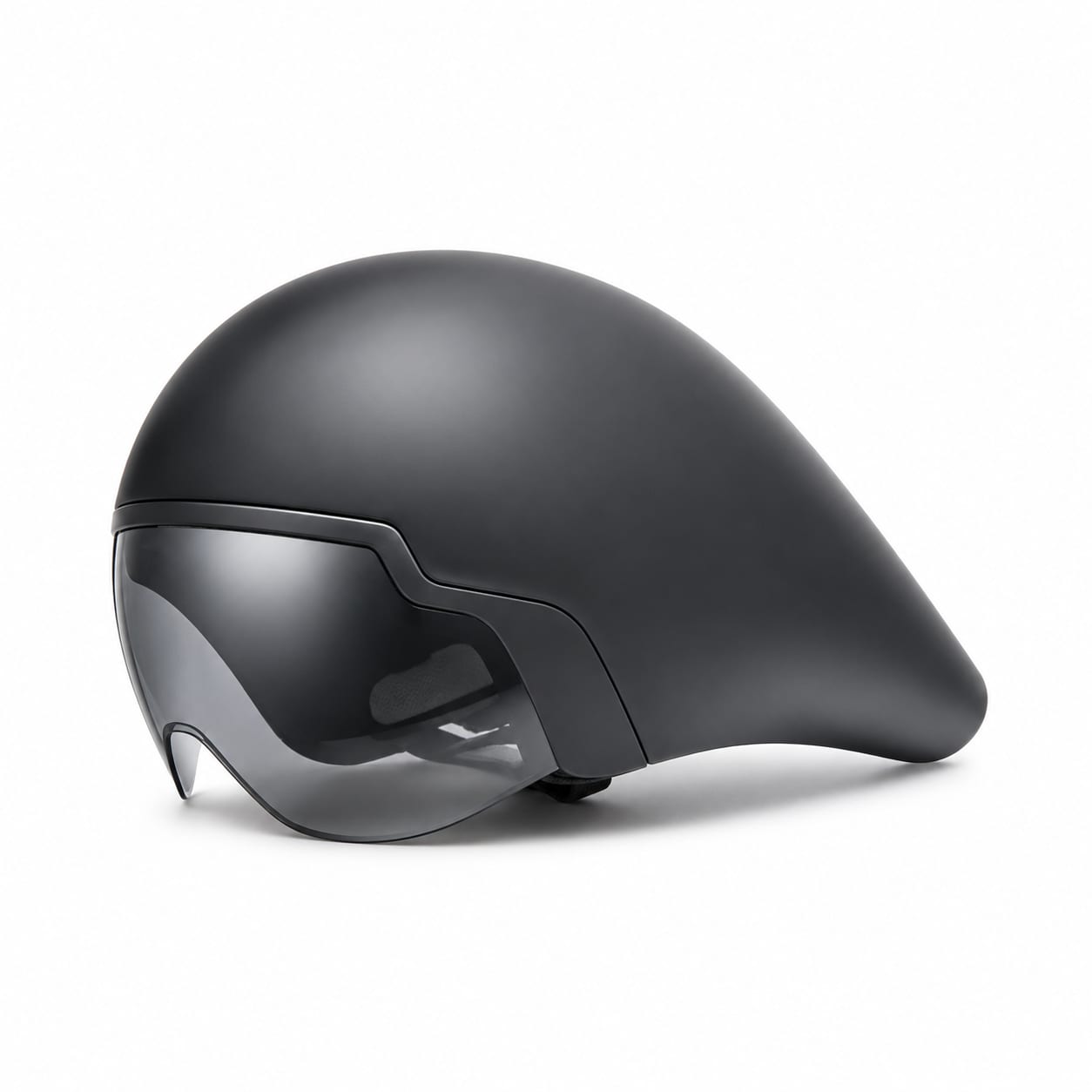
Purpose-built aerodynamic helmet with a teardrop profile delivering maximum drag reduction for time trial and triathlon competition.

The TT/Triathlon helmet is the most aerodynamically efficient helmet category available, featuring an elongated tail designed to smooth airflow over the rider's back when in an aggressive aero tuck. Capable of saving 15–30 watts at 40 km/h compared to standard road helmets, it is the single most cost-effective aero upgrade available to competitive riders. However, its benefits are entirely dependent on maintaining a consistent tucked position—lifting your head or looking around can actually make it slower than a road helmet. Minimal ventilation and a narrow use case mean this is a race-day tool, not an everyday lid.

$200 – $600pro tieradvancedexpert

Best known for

Maximum aerodynamic drag reduction of any helmet typeTeardrop shape with elongated tail for smooth airflowWatt savings of 15–30W at 40 km/h over standard road helmetsRace-day performance advantage in UCI time trials and triathlon bike legs
Time Trial / Triathlon Helmet

Guide

Detailed overview

Time trial and triathlon helmets are the most aerodynamically optimized helmets in cycling, purpose-built to minimize drag when a rider maintains a low, tucked position on aerobar extensions. Their defining feature is an elongated teardrop tail that bridges the gap between the rider's head and upper back, creating a smooth aerodynamic surface that dramatically reduces turbulent wake. Unlike aero road helmets, which balance aerodynamics with everyday usability, TT helmets make virtually no compromise toward comfort or versatility—their singular goal is saving watts. The aerodynamic savings are substantial and well-documented: independent wind tunnel and velodrome testing consistently shows 15–30 watts saved at 40 km/h compared to standard road helmets, and 5–15 watts over aero road helmets. This makes the TT helmet one of the largest single aerodynamic gains available, often exceeding the savings from deep-section wheels or aero framesets at a fraction of the cost. However, these gains are conditional. The tail must align with the rider's back to function as designed; when the rider lifts their head, looks sideways, or sits up, the tail becomes a sail, potentially increasing drag beyond that of a conventional helmet. This positional dependency is the key limitation and the reason TT helmets are inappropriate for road racing, group rides, or any discipline requiring frequent head movement. Ventilation is minimal—typically 2 to 6 small vents—because each vent introduces turbulence. This makes TT helmets significantly hotter than road helmets, a serious consideration for long-course triathlons in warm conditions. Some newer models offer removable tails or modular designs that attempt to bridge the gap between TT and aero road categories, but these compromises reduce the pure aerodynamic advantage. Certification standards are the same as road helmets (CPSC, EN 1078), and rotational protection systems like MIPS are increasingly available, though integration can be challenging given the smooth interior surfaces. For competitive time trialists and triathletes, a TT helmet is an essential piece of equipment that delivers measurable, repeatable performance gains. For everyone else, it is an expensive, uncomfortable, and potentially slower choice.

The time trial helmet occupies a unique position in cycling equipment as perhaps the most discipline-specific piece of gear a rider can own. Unlike a road helmet that can be used for training, commuting, and racing alike, the TT helmet is designed for a single scenario: riding as fast as possible in a straight line while maintaining an aerodynamic tuck. This specialization is both its greatest strength and its most significant limitation.

Aerodynamically, the TT helmet works by fundamentally altering how air flows around the rider's head and upper body. In a standard helmet, air strikes the front of the head, flows over the top, and separates into turbulent eddies at the rear, creating a low-pressure wake that pulls the rider backward. The TT helmet's elongated tail extends this airflow, keeping it attached to the helmet surface longer and directing it smoothly onto the rider's back. The result is a smaller, cleaner wake and dramatically reduced pressure drag. Wind tunnel data consistently shows this is one of the largest aerodynamic gains available to a cyclist—often larger than the difference between a road bike and a time trial bike frame.

The critical caveat is positional dependency. The aerodynamic advantage only exists when the tail is aligned with the rider's back, which means the rider must maintain a consistent head position with their chin tucked and eyes looking forward through the brow of the helmet. Looking down the road requires practice with peripheral vision. Looking sideways to check for competitors or course features immediately destroys the aero benefit and can create more drag than a standard helmet. This is why TT helmets are never used in road races, criteriums, or group rides where situational awareness is essential for safety.

Heat management is the other major consideration. With only 2 to 6 small vents, TT helmets trap significantly more heat than road helmets, which typically have 18 to 28 vents. In a 40K time trial lasting around an hour, this is manageable for most riders. In a long-course triathlon bike leg of 112 miles in hot conditions, the heat buildup can become a significant factor affecting comfort and even performance. Some triathletes opt for aero road helmets in hot races, accepting a small aerodynamic penalty for better cooling. Newer TT helmet designs are beginning to address this with strategic internal channeling that moves some air through the helmet without creating external turbulence, but the fundamental tradeoff between ventilation and aerodynamics remains.

For triathletes, the TT helmet also presents a transition consideration. The helmet must be clipped before mounting the bike per race rules, and the aerodynamic position must be maintained throughout the bike leg. Magnetic Fidlock buckles have become popular on TT helmets for faster transitions. After the bike leg, the helmet must be unclipped before removing it—failing to do so results in a penalty. These race-day logistics are worth practicing. When choosing a TT helmet, the most important factor after aerodynamic performance is fit stability. A helmet that shifts on your head during effort negates its aerodynamic purpose. The retention system must hold the helmet firmly in place even when you're pulling hard on the aerobars and your upper body is rocking slightly. Try before you buy if possible, and test the helmet in your race position on a trainer to ensure it stays put.

Quick facts

Primary purpose
Absolute maximum aerodynamic advantage for time trial and triathlon competition
Popular brands
GiroPOCKaskLazerRudy ProjectBontrager
Typical terrain
time trial coursestriathlon coursesvelodromes

What makes it different

Full-length aero tail extending past occipital ridge; sealed visor integration; near-zero vent area; designed for sustained head-up position

Recommended ranges

How this type usually specs out

Each spec is explained in plain language, then we show what buyers usually look for on this type.

Helmet Type

Helmet Type

What it means

The discipline-specific category of the helmet, which determines its shape, coverage, ventilation pattern, and intended use scenario.

Typical for this type

Tt Triathlon

In practice

TT/Triathlon helmets are defined by their teardrop shape with an elongated tail, minimal vents, and aerobar-compatible design for maximum drag reduction in timed events.

Compared to other types

Unlike aero road helmets which balance aero with some ventilation and everyday usability, TT helmets make no such compromise. Road helmets prioritize cooling and comfort, while TT helmets sacrifice both for maximum speed.

Why it matters: This is the defining characteristic of the subcategory. The TT/Triathlon type dictates the entire design philosophy—every element is subordinated to aerodynamic efficiency in a tucked riding position.

Certification Standard

Certification Standard

What it means

Safety certification standards the helmet meets, indicating the impact testing protocols and minimum protection levels verified by independent testing bodies.

Typical for this type

CPSC + EN 1078 Minimum

Most common pick: CPSC, EN 1078

In practice

TT helmets must meet the same mandatory safety certification as all bicycle helmets—CPSC in the US and EN 1078 in Europe. Some premium models may also carry Snell B-95 certification for above-baseline protection.

Compared to other types

Certification requirements are identical across road, aero road, and TT helmets. Full-face MTB helmets may carry additional ASTM F1952 certification for higher-impact protection, which TT helmets do not need.

Why it matters: Even race-focused helmets must provide adequate impact protection. Certification ensures the aerodynamic shell still meets minimum safety standards. Never purchase a TT helmet lacking proper certification.

Rotational Protection System

Rotational Protection System

What it means

Technology designed to reduce rotational forces transmitted to the brain during oblique impacts, which are the most common type of cycling crash impact.

Typical for this type

MIPS Preferred

Most common pick: MIPS Or None

In practice

MIPS is increasingly available in TT helmets, though some models still omit it due to integration challenges with the smooth interior surfaces. A few premium models feature MIPS Spherical. Many TT helmets still ship without any rotational protection system.

Compared to other types

TT helmets are less likely to include rotational protection than road or MTB helmets, partly because the smooth EPS interior is difficult to integrate with MIPS liners. Aero road helmets more commonly feature MIPS. WaveCel and Koroyd are rare in TT helmets.

Why it matters: Crashes in time trials still involve oblique impacts where rotational force mitigation matters. The aerodynamic focus of TT helmets does not reduce crash risk, and high speeds can increase impact severity.

Weight

Weight

What it means

The total mass of the helmet including all padding, retention system, and visor (if included), measured in grams.

Typical for this type

250–350g

Most common pick: 290g

In practice

TT helmets typically weigh between 250g and 350g, with the elongated tail and solid shell surfaces adding mass compared to road helmets. The aerodynamic savings far outweigh the slight weight penalty on flat and rolling courses.

Compared to other types

Road helmets typically weigh 200–280g; aero road helmets 250–320g. TT helmets are slightly heavier than aero road helmets due to the tail and reduced vent structure, but lighter than MTB helmets (280–380g) and much lighter than full-face helmets.

Why it matters: While heavier than road helmets, the weight difference (typically 30–80g) is negligible compared to the 15–30 watt aerodynamic advantage. On flat TT courses, aerodynamics dominates over weight. On very hilly courses, the weight penalty is still minor relative to the aero benefit at TT speeds.

Number of Vents

Number of Vents

What it means

The total number of intake and exhaust vents designed to channel airflow through the helmet for cooling.

Typical for this type

2–8 vents

Most common pick: 4

In practice

TT helmets have the fewest vents of any helmet type, typically 2 to 6 small intake vents with minimal exhaust ports. Some models have no external vents at all, relying on internal channeling from the front opening.

Compared to other types

Road helmets have 18–28 vents; aero road helmets 4–12; MTB helmets 12–20. TT helmets have the fewest vents by a significant margin, making them the hottest helmet type to wear.

Why it matters: Each vent introduces turbulence that increases drag. TT helmets minimize vents to maintain smooth airflow, but this comes at a significant cost to cooling. Riders must weigh the aerodynamic benefit of fewer vents against heat buildup, especially in long-course events or hot conditions.

Head Circumference Range

Head Circumference Range

What it means

The range of head circumferences the helmet is designed to fit, typically adjustable via the retention system within a specific size bracket.

Typical for this type

Ensure Your Measurement Falls Within The Specific Model'S Range

Most common pick: 52–60cm

In practice

TT helmets typically come in 1–3 size brackets covering approximately 52–60cm. Some models are offered in a single size with a wide adjustment range. Proper fit is especially critical because a loose TT helmet shifts on the head, destroying the aerodynamic seal between the tail and the rider's back.

Compared to other types

Size ranges are comparable to road and aero road helmets. However, TT helmets are less forgiving of sizing errors because the tail must align with your back in your specific aero position. Some brands offer fewer size options for TT helmets compared to their road lines.

Why it matters: Fit is more important in a TT helmet than any other type because the aerodynamic advantage depends on the helmet staying precisely positioned. A helmet that shifts during effort creates gaps between the tail and your back, increasing drag. Measure your head at the widest point above your eyebrows and consult the manufacturer's size chart.

Retention System

Retention System

What it means

The adjustable mechanism at the rear of the helmet that secures it to the head and allows on-the-fly adjustment for a stable, comfortable fit.

Typical for this type

Dial/Ratchet Or Rear Dial With Yoke

In practice

Most TT helmets use a dial/ratchet retention system for secure, adjustable fit. Some premium models feature rear dial with yoke systems for enhanced stability. The retention system must hold the helmet firmly in place during aggressive aero positioning and hard efforts.

Compared to other types

TT helmets use similar retention systems to road and aero road helmets. The key difference is that retention security matters more in TT helmets because the aerodynamic function depends on positional stability. Budget sliding buckle systems are rare in TT helmets.

Why it matters: A secure retention system prevents the helmet from shifting when you're in the aero position or when your upper body moves during hard efforts. Any movement of the helmet relative to your head and back disrupts the aerodynamic seal that makes the TT helmet effective.

Shell Construction

Shell Construction

What it means

The manufacturing method used to join the outer polycarbonate shell to the inner EPS foam liner, affecting durability, weight, and safety.

Typical for this type

In-Mold Or Dual-Density Foam

In practice

TT helmets almost universally use in-mold construction for the best combination of light weight and impact energy management. Some premium models with MIPS Spherical use dual-density foam construction. The smooth, continuous shell surface is also important for aerodynamic performance.

Compared to other types

TT helmets use the same in-mold construction as road and aero road helmets. Hardshell construction is essentially never used in TT helmets because it adds weight and creates surface irregularities that harm aerodynamic performance.

Why it matters: In-mold construction provides the smooth, bonded shell surface that is essential for aerodynamic performance. Any separation between shell and foam would create drag-inducing irregularities. The lightweight construction also helps offset the weight of the elongated tail.

Coverage Level

Coverage Level

What it means

The extent of head coverage provided by the helmet, particularly at the temples, rear, and base of the skull, beyond the minimum certification requirement.

Typical for this type

Minimal Coverage (Standard For This Type)

In practice

TT helmets provide minimal coverage, extending just past certification minimums at the temples and rear. The elongated tail is an aerodynamic feature, not a coverage feature—it extends backward without providing additional impact protection for the rear of the skull.

Compared to other types

TT helmets have the least effective coverage of any helmet type. Road helmets provide standard coverage; MTB helmets provide extended rear coverage; enduro helmets provide full coverage. The TT helmet's tail is aerodynamic, not protective.

Why it matters: The minimal coverage is a deliberate tradeoff for aerodynamic efficiency. The tail looks like it provides rear protection, but it is a thin aerodynamic shell, not a thick EPS extension. Riders should understand that the tail does not significantly increase impact protection coverage.

Visor Type

Visor Type

What it means

The type of visor or brim attached to the helmet for sun, rain, and debris protection, and whether it's removable or adjustable.

Typical for this type

Integrated Shield/Visor For Maximum Aero Benefit

In practice

Many TT helmets feature an integrated shield or visor that covers the eyes and face, replacing sunglasses for a seamless aerodynamic surface. Some models have no visor and are designed to be worn with standard cycling sunglasses. The integrated shield provides the best aerodynamic performance by eliminating the gap between glasses and helmet.

Compared to other types

Road and aero road helmets typically have no visor. MTB helmets have removable adjustable visors. TT helmets are the only road-adjacent type that commonly features integrated shields, which are a significant aerodynamic advantage when used correctly.

Why it matters: An integrated shield creates a smooth aerodynamic transition from the helmet's brow to the rider's face, which is faster than wearing separate sunglasses. However, shields can fog in humid conditions and may not suit all face shapes. Some riders prefer sunglasses for familiarity and better peripheral vision.

Padding System

Padding System

What it means

The type, material, and configuration of interior padding that contacts the head, affecting comfort, moisture management, and fit customization.

Typical for this type

Removable/Washable Or Anti-Microbial Treated

Most common pick: Removable/Washable Pads

In practice

TT helmets typically feature removable/washable pads or anti-microbial treated pads. Because TT helmets run hot and riders sweat heavily in them, moisture management and hygiene are important. Premium models may include multi-density zone pads with sweat channels at the brow.

Compared to other types

TT helmets have similar padding systems to road and aero road helmets at comparable price points. The sweat management challenge is greater in TT helmets due to the heat buildup, making quality padding more important than it might be in a well-ventilated road helmet.

Why it matters: The minimal ventilation in TT helmets means sweat management falls heavily on the padding system. A good brow pad with a sweat channel prevents sweat from dripping into your eyes during a TT, which is critical when you can't easily wipe your face while in the aero position.

Chin Buckle Type

Chin Buckle Type

What it means

The type of buckle used on the chin strap, affecting ease of use, reliability, and safety.

Typical for this type

Magnetic (Fidlock) For Triathlon; Standard Side-Release Acceptable For TT-Only

In practice

Magnetic Fidlock buckles have become increasingly popular on TT helmets, especially those designed for triathlon, because they enable faster transitions. Standard side-release buckles are also common, particularly on pure TT helmets not designed with triathlon in mind.

Compared to other types

Fidlock buckles are more common on TT/triathlon helmets than on any other helmet type because of the transition advantage. Road helmets typically use standard side-release buckles. Full-face MTB helmets use double D-rings.

Why it matters: For triathletes, the Fidlock buckle saves seconds in T1 and T2 transitions. For pure time trialists who clip in before the start ramp, the buckle type matters less. Fidlock buckles are also easier to operate with gloved hands in cold early-season TTs.

Reflective Elements

Reflective Elements

What it means

Presence and extent of reflective materials on the helmet for enhanced visibility in low-light conditions.

Typical for this type

None Or Minimal Decal (Acceptable For Race Use)

In practice

TT helmets typically have no reflective elements or minimal reflective decals. Reflective elements add surface texture that can increase drag, and TT helmets are not designed for low-light riding—they are race-day equipment used in daylight conditions.

Compared to other types

Commuter and urban helmets prioritize reflective elements for low-light visibility. Road and MTB helmets typically have minimal reflective decals. TT helmets have the least reflective coverage, which is appropriate for their exclusive race-day use case.

Why it matters: Reflective elements are essentially irrelevant for TT helmet use cases. Time trials and triathlon bike legs are conducted in daylight under race conditions. If you need to ride in low light, you should not be wearing a TT helmet.

Integrated Light Mount

Integrated Light Mount

What it means

Built-in mount or attachment point for rear lights, either as a dedicated clip, magnetic mount, or integrated light.

Typical for this type

No Mount (Appropriate For Race Use)

In practice

TT helmets do not include integrated light mounts. A rear light would destroy the aerodynamic profile of the tail, and TT helmets are never intended for use in low-light conditions where a light would be necessary.

Compared to other types

Commuter helmets frequently feature clip mounts, magnetic mounts, or integrated lights. Road and MTB helmets may have clip mounts. TT helmets never include light mounts because they would compromise aerodynamics and serve no purpose in competition.

Why it matters: Light mounts are irrelevant for TT helmet use. If you need a rear light, you are riding in conditions where a TT helmet is inappropriate. Use a road or commuter helmet with a light mount for training rides in low light.

Aerodynamic Optimization

Aerodynamic Optimization

What it means

The degree to which the helmet is designed to reduce aerodynamic drag, from no consideration to purpose-built time trial aerodynamics.

Typical for this type

TT/Triathlon Optimized

In practice

TT helmets represent the maximum level of aerodynamic optimization available in cycling helmets. They are purpose-built with teardrop profiles, minimal vents, integrated shields, and elongated tails specifically designed for time trial and triathlon riding positions. Wind tunnel testing and CFD modeling are standard in their development.

Compared to other types

Aero road helmets save 5–15 watts at 40 km/h over standard road helmets. TT helmets save an additional 5–15 watts beyond aero road helmets. Standard road helmets have aero-informed design but are not optimized. TT helmets are the only category that sacrifices all other considerations for pure aerodynamic performance.

Why it matters: This is the entire reason TT helmets exist. The aerodynamic optimization delivers 15–30 watts of savings at 40 km/h compared to standard road helmets, making it one of the most impactful aero upgrades available. However, this optimization only works in the specific aero tuck position—head position changes can negate or reverse the benefit.

Strap Adjustment System

Strap Adjustment System

What it means

The system used to adjust and lock the chin strap length and position, affecting ease of fitting and strap stability during use.

Typical for this type

Fixed Position Splitters Or Adjustable Splitters With Locking

In practice

TT helmets commonly use fixed position splitters for a cleaner aerodynamic profile and reduced strap clutter. Some premium models offer adjustable splitters with locking for a more customized fit. Standard sliding systems are less common in TT helmets.

Compared to other types

Road and MTB helmets more commonly use standard sliding systems. Aero road helmets also use fixed position splitters for similar aerodynamic reasons. TT helmets prioritize clean strap routing to minimize any aerodynamic disruption.

Why it matters: Fixed splitters reduce strap clutter and create a cleaner aerodynamic profile around the jaw and ears. However, they may not accommodate all ear positions perfectly. Strap stability matters because fluttering straps create drag and noise at TT speeds.

Evaluation

Strengths and trade-offs

Pros

What this type does best

Largest aerodynamic savings of any helmet

Critical

Saves 15–30 watts at 40 km/h compared to standard road helmets, making it one of the most cost-effective aero upgrades available. Often provides more savings than deep-section wheels or aero framesets at a fraction of the price.

Measurable, repeatable performance advantage

High

The aerodynamic benefit is well-documented in wind tunnel and velodrome testing across multiple independent sources. Unlike marginal gains that are theoretical, TT helmet savings are consistently measurable and significant.

Cost-effective aero upgrade

High

At $150–$400, a TT helmet delivers more watts-per-dollar than most other aero upgrades. Deep-section wheels cost 5–10x more for comparable or smaller savings.

Integrated shield eliminates glasses gap

Medium

Models with integrated shields create a seamless aerodynamic surface from helmet brow to face, eliminating the drag-inducing gap between sunglasses and helmet that exists with other helmet types.

Fidlock buckle speeds triathlon transitions

Medium

Magnetic Fidlock buckles common on TT helmets allow one-handed operation for faster T1 and T2 transitions, saving valuable seconds in triathlon competition.

Psychological race-day focus

Low

Putting on a TT helmet signals a shift to race mode. The focused design and purpose-built nature reinforces the disciplined, focused mindset required for time trial performance.

Cons

Trade-offs to be aware of

Extremely hot with minimal ventilation

Significant

With only 2–6 small vents, TT helmets trap significantly more heat than any other helmet type. This is manageable for short TTs but becomes a serious issue in long-course triathlons or hot conditions, potentially affecting performance.

Aero benefit requires maintained tuck position

Significant

The aerodynamic advantage disappears entirely if you lift your head, look sideways, or sit up. In these positions, the tail can actually increase drag compared to a standard helmet. This positional dependency makes TT helmets inappropriate for any discipline requiring head movement.

Single-purpose with no everyday utility

Moderate

TT helmets are unsuitable for road riding, group rides, commuting, or training. They are race-day-only equipment, meaning you still need a separate helmet for all other riding. The cost per use is high compared to an everyday helmet.

Tail can catch crosswinds

Moderate

The elongated tail acts as a sail in crosswinds, potentially affecting head stability and requiring more neck effort to maintain position. This is particularly noticeable on exposed courses with gusting winds.

Integrated shields can fog

Minor

Shields on TT helmets can fog in humid conditions or during low-speed sections, impairing visibility. This is especially problematic at the start of a TT or in transition areas where speed is low and airflow through the helmet is minimal.

Best for

Surfaces & terrain

Flat time trial coursesRolling time trial coursesTriathlon bike coursesIndoor velodrome events

Riding conditions

Cool to moderate temperaturesLow-wind conditionsDaylight race conditions

Skill level

Intermediate racersAdvanced racersElite/professional racers

Riding discipline

Time trialingTriathlon bike legTrack cycling pursuits

Rider profile

Competitive time trialists seeking maximum aero advantageTriathletes racing sprint to middle distanceRoad racers doing occasional TT stagesPerformance-focused riders who maintain aero position consistently

Not ideal for

Reasons

Head movement in group rides negates aero benefit and creates safety riskMinimal ventilation causes excessive heat on long, slow ridesTail catches wind and affects stability when not in aero positionNot designed for impacts from varied angles common in non-TT ridingExpensive for a helmet that cannot be used for everyday riding

Surfaces & terrain

Technical descents requiring head movementOff-road or gravel terrainUrban environments with traffic

Skill level

Beginners who have not developed consistent aero positionRiders unfamiliar with TT-specific handling

Riding discipline

Road racing and criteriumsGroup rides and club ridesCommuting and utility cyclingMountain bikingRecreational riding

Compare

How it stacks up

This page

Time Trial / Triathlon Helmet

Saves an additional 5–15 watts at 40 km/h over aero road helmets when in a consistent aero tuck position. The teardrop tail and integrated shield create a smoother aerodynamic surface than any aero road helmet can achieve.

Alternative

Aero Road Helmet

Aero road helmets offer much better ventilation (4–12 vents vs 2–6), can be used for road riding and group rides, and maintain some aero benefit even when head position changes. They are far more versatile as an everyday helmet.

Bottom line

Choose a TT helmet if you compete in time trials or triathlons and can maintain a consistent aero position. Choose an aero road helmet if you want aero benefits for fast road riding, group rides, or if you race triathlons in hot conditions where cooling matters more than marginal aero gains.

This page

Time Trial / Triathlon Helmet

Saves 15–30 watts at 40 km/h compared to standard road helmets. This is one of the largest single aero gains available to a cyclist and far exceeds the cost-per-watt of most other upgrades.

Alternative

Aero Road Helmet

Road helmets offer superior ventilation (18–28 vents), lighter weight, lower cost, and complete versatility for all road riding. They are comfortable for all-day rides and do not require a specific head position to function effectively.

Bottom line

Choose a TT helmet exclusively for TT and triathlon competition. Choose a road helmet for training, group rides, and everyday cycling. Most competitive riders own both—a road helmet for training and a TT helmet for race day.

This page

Time Trial / Triathlon Helmet

Dramatically lower aerodynamic drag at high speeds. TT helmets are designed for performance at 35–50 km/h, speeds never reached in urban commuting.

Alternative

Commuter / Urban Helmet

Commuter helmets offer integrated lights, reflective elements, weather protection, and visibility features essential for urban riding. They are far more practical for stop-and-go riding and low-light conditions.

Bottom line

These categories serve completely different purposes. Never use a TT helmet for commuting—it lacks visibility features, overheats at low speeds, and the aero benefit is irrelevant at commuting speeds. Choose a commuter helmet for urban riding.

This page

Time Trial / Triathlon Helmet

Significantly lower aerodynamic drag. TT helmets are designed for speed on smooth surfaces.

Alternative

Mountain Bike Helmet (XC/Trail)

MTB helmets provide extended rear and temple coverage for off-road crash protection, removable visors for sun and debris, and better ventilation for low-speed technical riding. They are designed for completely different impact scenarios.

Bottom line

These categories are not interchangeable. MTB helmets protect against the specific crash types and debris encountered off-road. TT helmets provide minimal coverage inappropriate for trail riding. Always use the correct helmet type for your discipline.

Shopping

Buying tips

  • 1

    Test the helmet in your actual aero position before buying. The tail must align with your upper back when you're on the aerobars—different torso angles and head positions mean different helmets work better for different riders. A shop with a trainer can help you check this.

  • 2

    Prioritize fit stability above all else. A TT helmet that shifts during effort loses its aerodynamic advantage. The retention system should hold the helmet firmly in place even when you're pulling hard and your upper body is moving slightly.

  • 3

    Consider the shield vs. sunglasses tradeoff carefully. Integrated shields are faster but can fog and may not suit your face shape. If you wear prescription glasses, ensure the shield or helmet accommodates them. Some TT helmets work well with specific sunglass models.

  • 4

    For triathletes, a Fidlock magnetic buckle is worth the premium for faster transitions. Practice clipping and unclipping in T1 and T2 simulations—the rules require the helmet to be clipped before mounting and unclipped after dismounting.

  • 5

    If you race in hot conditions, consider a TT helmet with some ventilation or an aero road helmet instead. The 5–10 watt penalty of an aero road helmet may be offset by better power output when you're not overheating. Test in conditions similar to your goal race.

  • 6

    Check UCI regulations if you race under their governance. Some TT helmet designs have been banned or restricted. Ensure your helmet meets current UCI equipment regulations for sanctioned events.

  • 7

    Budget for a separate training helmet. TT helmets are race-day equipment and should not be used for everyday riding. A good road or aero road helmet for training plus a TT helmet for racing is the standard setup for competitive riders.

Care

Maintenance notes

  • Inspect the tail regularly for cracks or separation from the main shell. The elongated tail is the most fragile part of a TT helmet and the most critical for aerodynamic function. Any damage to the tail compromises both aero performance and structural integrity.
  • Store TT helmets carefully—do not stack objects on top of them or pack them loosely in gear bags where the tail can be crushed. Consider a helmet bag or hard case for transport to races.
  • Clean the integrated shield with microfiber cloth and lens cleaner only. The shield is a critical aerodynamic surface—scratches and smudges affect both visibility and airflow. Replace shields that become heavily scratched.
  • Replace the helmet after any significant impact, even if damage is not visible. EPS foam is designed to compress on impact and does not recover. A crashed TT helmet may look fine but provide reduced protection.
  • Wash removable pads frequently—TT helmets accumulate sweat rapidly due to minimal ventilation. Salt buildup degrades pad material and can cause skin irritation. Use mild soap and air dry.
  • Check strap integrity before each race. At TT speeds, a strap failure would be catastrophic. Look for fraying, loose stitching, or buckle damage, especially at the splitter points and chin buckle.

Progression

Skill development path

Riders new to TT helmets should practice maintaining a consistent head position on a trainer before using the helmet in competition. Start with short intervals in the aero position, focusing on keeping your chin tucked and eyes forward through the helmet's brow. Progress to longer sustained efforts, then practice looking ahead using peripheral vision rather than lifting your head. On the road, practice on quiet, straight roads before using the helmet in traffic or on technical courses. For triathletes, practice the full T1 and T2 sequence with the helmet, including clipping the buckle before mounting and unclipping after dismounting. Advanced riders should experiment with slight head position adjustments to find the optimal angle where the tail just kisses their upper back—this is the position of maximum aerodynamic efficiency. Some riders find that a very slight chin tuck is faster than an aggressive tuck because it keeps the tail aligned without creating a gap at the neck.

FAQ

Common questions

Each question has a dedicated page with a full answer and links to the buying guide.

How much time does a TT helmet actually save?

A TT helmet typically saves 15–30 watts at 40 km/h compared to a standard road helmet. Over a 40K time trial, this translates to approximately 30–90 seconds for most riders, depending on speed and conditions. The faster you ride, the greater the absolute time savings because aerodynamic drag increases with the square of velocity. For a rider averaging 40 km/h, expect savings in the 45–75 second range over 40K.

Can I use a TT helmet for road riding or group rides?

No. TT helmets are inappropriate for road riding and group rides for several reasons: the aero benefit requires a tucked head position that is unsafe in groups where you need to look around; the minimal ventilation makes them uncomfortably hot at road riding intensities; the tail catches crosswinds and can affect head stability; and they provide minimal coverage compared to road helmets. Save your TT helmet for race day and use a road or aero road helmet for training.

Is a TT helmet worth it for a beginner triathlete?

Yes, a TT helmet is one of the most cost-effective aero upgrades available and is worth it even for beginners who are committed to triathlon. The watt savings are significant and consistent regardless of your fitness level—you get the same aerodynamic benefit whether you're riding 30 km/h or 45 km/h. However, if you're still developing your aero position and frequently sit up or move your head, an aero road helmet might be more practical until your position is consistent.

What happens if I lift my head or look around in a TT helmet?

Lifting your head or looking sideways disrupts the smooth airflow over the tail, potentially making the TT helmet slower than a standard road helmet. The tail acts as a sail when misaligned, catching air and creating additional drag. This is why TT helmets are only appropriate for disciplines where you can maintain a consistent head position. Practice looking ahead with peripheral vision and use course reconnaissance to minimize the need to look around during your TT.