
Cycling Jersey · FAQ
Questions about Aero Race Jersey
Straight answers on fit, specs, and when this type makes sense — each topic has its own page with links back to the buying guide.
Open Aero Race Jersey guide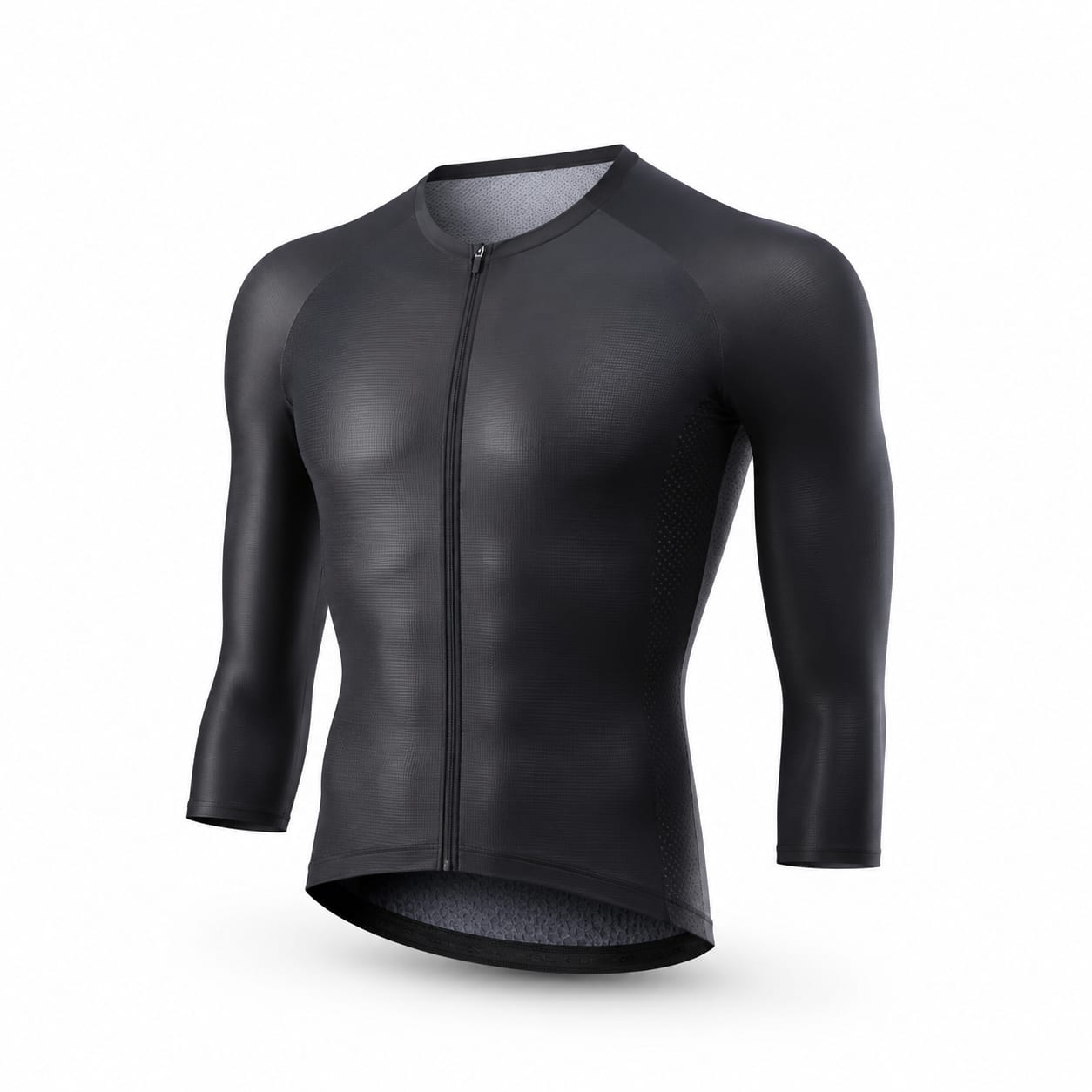
6 topics
Pick a question
Every answer links to the full subcategory guide and related gear types when it helps you decide.
How tight should an aero race jersey actually be?
It should feel compressive and slightly restrictive standing up — like a firm handshake on your entire torso. You should not be able to pinch more than 1-2cm of fabric anywhere. When you lean into your riding position, the jersey should be smooth with zero wrinkles across your back and shoulders. If it feels comfortable standing in the shop, it's too big. However, it should not restrict your breathing — if you can't take a deep breath, size up one. The jersey should feel like a second skin on the bike, not a tourniquet.
Read answer →02How many watts does an aero race jersey actually save?
Independent testing and manufacturer data consistently show 5-15 watts savings at 40-45 km/h compared to a standard club-fit jersey. The exact savings depend on your position, the jersey you're comparing against, and the specific aero jersey design. The extended sleeves account for roughly 40-60% of the total savings. At lower speeds (under 30 km/h), the savings diminish because aerodynamic drag is proportional to the square of velocity. For a rider averaging 35 km/h in a race, a 10-watt saving translates to roughly 40-50 seconds over a 40K time trial.
Read answer →03Can I wear an aero race jersey for long endurance rides?
You can, but it's not ideal. The compressive fit can cause fatigue and restricted breathing on rides over 3-4 hours, especially in hot conditions. The limited pocket space makes carrying food, tools, and extra layers challenging. Many riders find the tight fit uncomfortable during café stops and slow sections. If you do use an aero jersey for endurance rides, consider sizing up slightly for comfort, and be aware that you're sacrificing some aero benefit for that comfort. An endurance-fit jersey is a better choice for rides over 4 hours.
Read answer →04Why do aero race jerseys have such long sleeves?
The extended sleeves are the single most impactful aero feature of the jersey. By covering the upper arm and terminating with a silicone gripper at the widest part of the deltoid, the sleeve smooths the transition from torso to arm, eliminating the turbulent airflow and fabric flutter that occurs with traditional shorter sleeves. Wind tunnel testing shows this feature alone can save 3-8 watts at race speeds. The silicone gripper is essential — without it, the sleeve would ride up and negate the aero benefit.
Read answer →05Are expensive aero race jerseys worth the premium price?
It depends on your goals and budget. The difference between a $100 aero jersey and a $300 aero jersey might be 1-3 watts — measurable in a wind tunnel but unlikely to affect race results for amateur riders. Budget aero jerseys from reputable brands capture 80-90% of the aero benefit at a fraction of the price. Premium jerseys offer better fabric quality, more refined fit, improved durability, and aesthetic details. If you're a competitive racer where every second matters, the premium may be justified. For most riders, a mid-range aero jersey ($100-180) offers the best value.
Read answer →06Do I need a base layer under an aero race jersey?
It's optional but recommended in most conditions. A thin, sleeveless mesh base layer improves moisture management and can actually enhance the aero jersey's fit by providing a smooth surface against your skin. In hot weather, a base layer prevents the jersey from sticking to sweaty skin and makes it easier to remove. In cooler conditions, a lightweight merino or synthetic base layer adds warmth without significantly affecting the aero fit. Avoid thick base layers — they'll make the jersey too tight and restrict breathing. If your aero jersey is already at the limit of comfortable tightness, skip the base layer.
Read answer →