
Cycling Jersey · FAQ
Questions about Gravel / Adventure Jersey
Straight answers on fit, specs, and when this type makes sense — each topic has its own page with links back to the buying guide.
Open Gravel / Adventure Jersey guide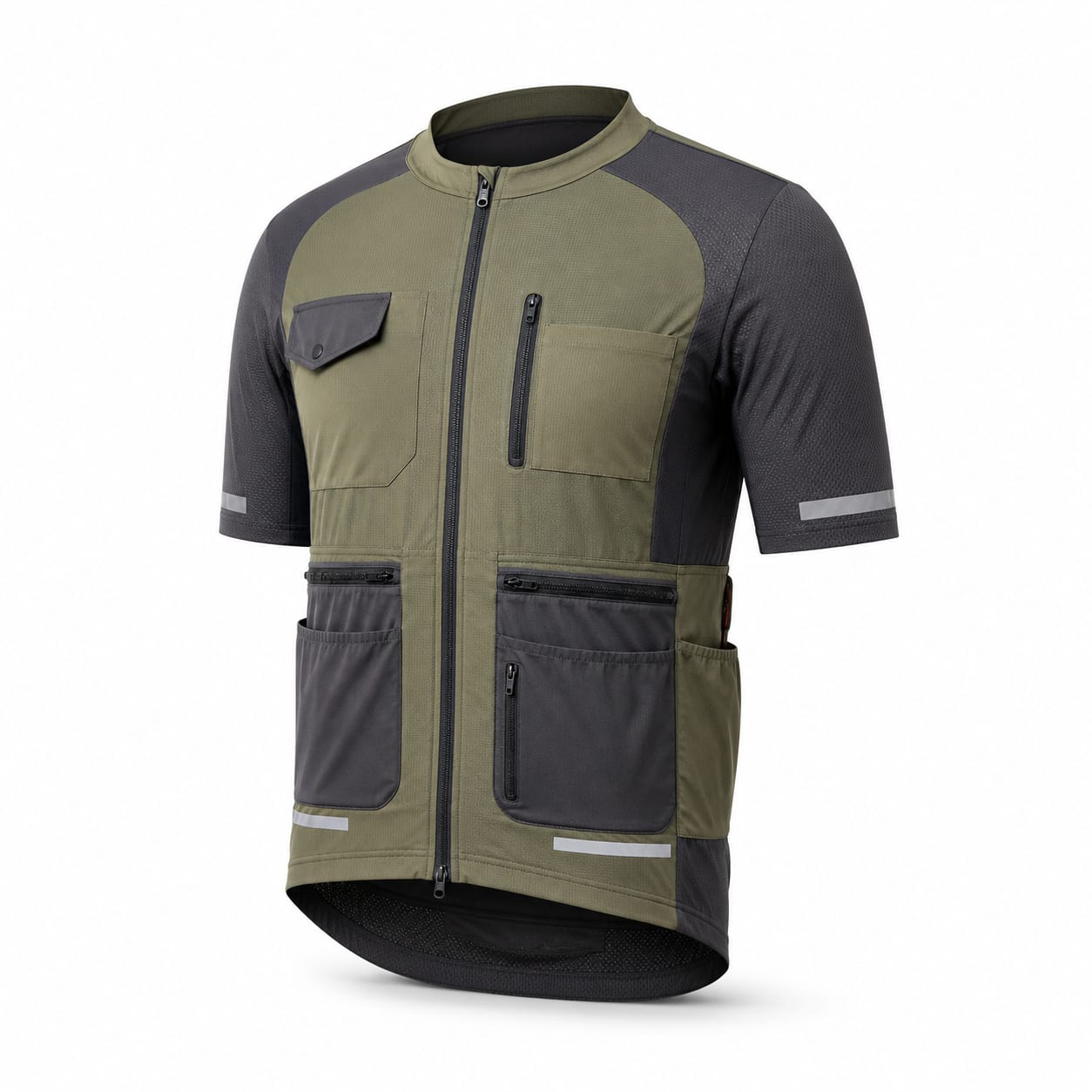
6 topics
Pick a question
Every answer links to the full subcategory guide and related gear types when it helps you decide.
Can I use a road jersey for gravel riding?
You can, but you will likely find it limiting. Road jerseys typically have only three pockets with no zippered security, and their lightweight polyester fabric is prone to damage from brush, gravel spray, and crashes. For occasional gravel rides on smooth dirt roads, a road jersey works fine. For regular gravel riding, especially on rough terrain or long distances, a dedicated gravel jersey's extra storage, durable fabric, and practical features make a significant difference.
Read answer →02How many pockets do I actually need on a gravel jersey?
Four is the practical minimum for most gravel riders: three standard pockets plus one zippered pocket for your phone, keys, or wallet. Five or more pockets are valuable for bikepacking, ultra-endurance events, or riders who prefer not to use frame bags. If you typically ride with a hydration pack or frame bag, three pockets may suffice, but you will still miss the zippered security pocket on rough terrain.
Read answer →03Is a gravel jersey worth the extra cost over a basic road jersey?
For regular gravel riding, yes. The durable fabric alone justifies the premium — a road jersey that gets shredded on thornbushes is a false economy. The extra pockets eliminate the need for a frame bag or backpack on many rides, and the zippered security pocket prevents the expensive mistake of losing your phone on a bumpy descent. If you only ride gravel occasionally, a road endurance jersey can serve double duty adequately.
Read answer →04What is the difference between a gravel jersey and a bikepacking jersey?
The categories overlap significantly, but bikepacking jerseys tend to have even more pocket capacity (sometimes 6+ pockets), may include features like integrated tool rolls or expandable cargo pockets, and often use merino wool for multi-day odor resistance. Gravel jerseys are more performance-oriented, with a slightly trimmer fit and lighter weight. For most riders, a gravel jersey handles bikepacking duties just fine.
Read answer →05Should I choose merino wool or synthetic fabric for a gravel jersey?
Synthetic (nylon-polyester blend) is the better choice for most gravel riders because it dries faster, is more durable, and maintains its shape better when pockets are loaded. Merino wool is worth considering if you do multi-day rides where odor resistance matters, or if you have sensitive skin. However, merino is slower to dry after creek crossings or rain, less durable against abrasion, and typically more expensive. A merino-synthetic blend can offer the best of both worlds.
Read answer →06Do I need a long-sleeve gravel jersey?
A long-sleeve gravel jersey is valuable for shoulder-season riding (spring and fall) when temperatures range from 8–18°C, and for riders who want maximum sun protection on exposed terrain. However, a short-sleeve jersey paired with arm warmers offers more versatility — you can remove arm warmers and stuff them in a pocket when it warms up. If you ride gravel primarily in summer, short sleeves are sufficient. If you ride year-round, a long-sleeve gravel jersey is a worthwhile addition.
Read answer →