
Cycling Pants · FAQ
Questions about Cycling Overpants
Straight answers on fit, specs, and when this type makes sense — each topic has its own page with links back to the buying guide.
Open Cycling Overpants guide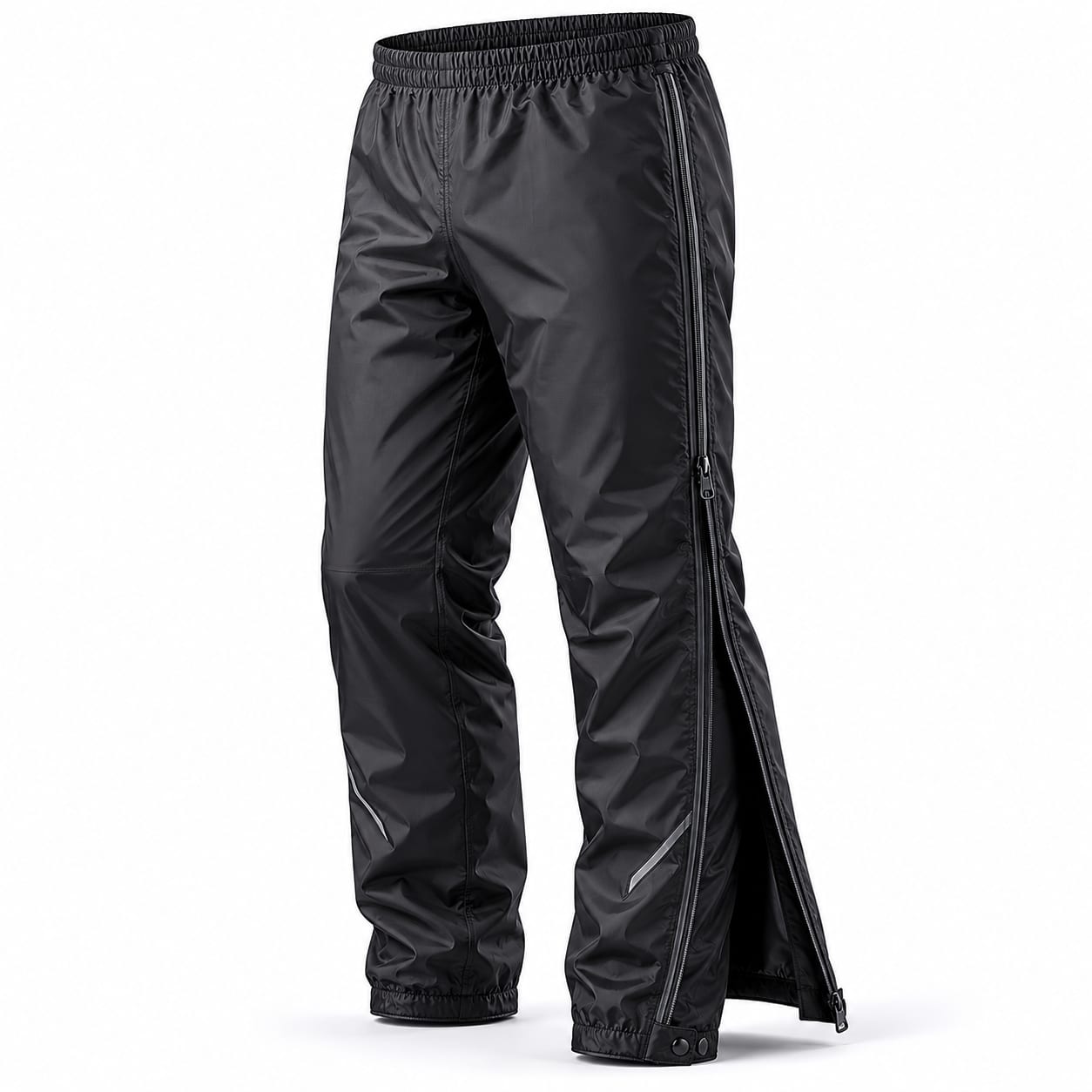
6 topics
Pick a question
Every answer links to the full subcategory guide and related gear types when it helps you decide.
Do I wear cycling overpants over or under my padded shorts?
Always over. Cycling overpants are designed as an outer shell layer and have no chamois. Wear your regular padded cycling shorts or bib shorts against your skin as the base layer, then pull the overpants on top. Wearing overpants under your shorts would defeat the waterproofing and create uncomfortable bunching.
Read answer →02Will I get too hot wearing overpants in warm rain?
It depends on the temperature and effort level. Above about 18°C (64°F), even the most breathable overpants will feel warm during hard riding. In warm rain, you may actually be more comfortable getting wet from rain than from trapped sweat. Consider lightweight, well-vented overpants for warm rain, or skip them entirely and accept getting wet if the temperature is above 20°C. Ventilation zips help significantly.
Read answer →03Can I use regular rain pants instead of cycling-specific overpants?
You can, but you'll notice significant differences. Regular rain pants lack articulated knees (causing fabric bunching behind the knee on every pedal stroke), don't have cycling-specific ankle closures to prevent chainring contact, and often have seams in places that chafe in the riding position. Cycling overpants are cut for the forward-leaning riding position and include features like reflective elements, saddle-compatible crotch construction, and pedal-friendly ankle design. For occasional use, regular rain pants work; for regular riding, cycling-specific overpants are worth the investment.
Read answer →04How do I know if my overpants need DWR reapplication?
Sprinkle some water on the outer fabric. If it beads up and rolls off, the DWR is still effective. If the water soaks into the fabric and creates a dark, wet patch (called 'wetting out'), the DWR has degraded and needs reapplication. Wetting out doesn't mean the pants leak—water still can't penetrate the waterproof membrane—but it dramatically reduces breathability because the wet outer fabric blocks moisture vapor escape. Reapply DWR treatment using products like Nikwax TX.Direct after cleaning the garment.
Read answer →05Are expensive waterproof overpants really worth it compared to budget options?
For occasional emergency use, budget overpants ($40-70) are adequate. For regular commuting or touring in rain, the investment in premium overpants ($150-300) pays off in three ways: significantly better breathability (the biggest difference), more durable waterproofing that lasts years rather than months, and better features like full-length zips, articulated knees, and proper seam sealing. The breathability gap between a budget PVC-coated pant and a Gore-Tex overpant is enormous—you'll be damp from sweat in the cheap option and merely warm in the premium one.
Read answer →06How do full-length side zippers work and are they really necessary?
Full-length side zippers run from the waist to the ankle on one or both legs, allowing you to put on or remove the overpants without taking off your shoes. This is incredibly valuable when you're caught in rain mid-ride—you can pull them on at a stoplight without dismounting. Two-way zippers (that open from both top and bottom) are even better, allowing you to open the ankle for ventilation while keeping the waist sealed. While not absolutely necessary, full-length zips are one of the most appreciated features on overpants and strongly recommended for any rider who changes conditions mid-ride.
Read answer →