What it means
The fundamental construction style of the cycling pants, determining overall design, intended use, and how the garment stays in position while riding.
Typical for this type
Rain Pant
In practice
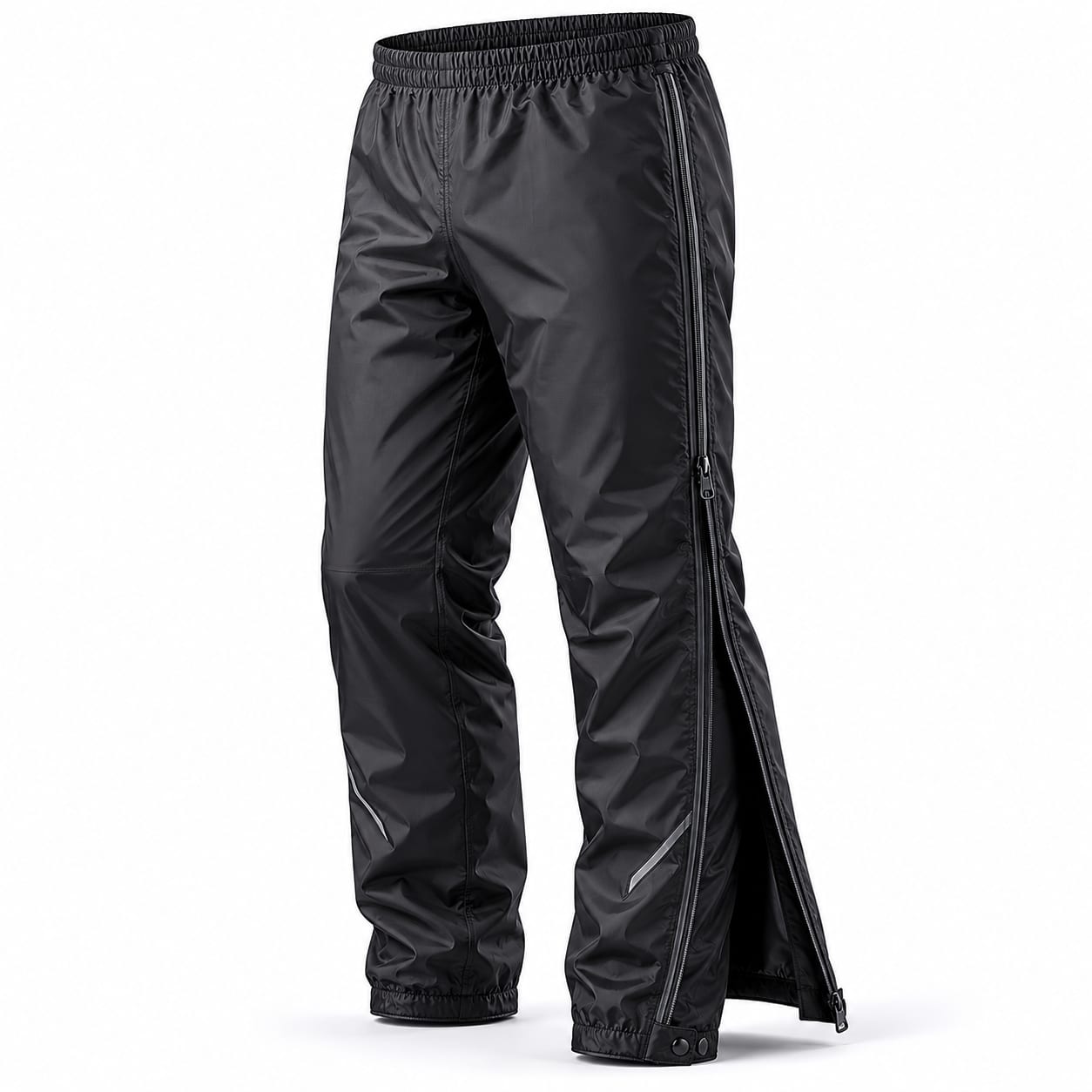
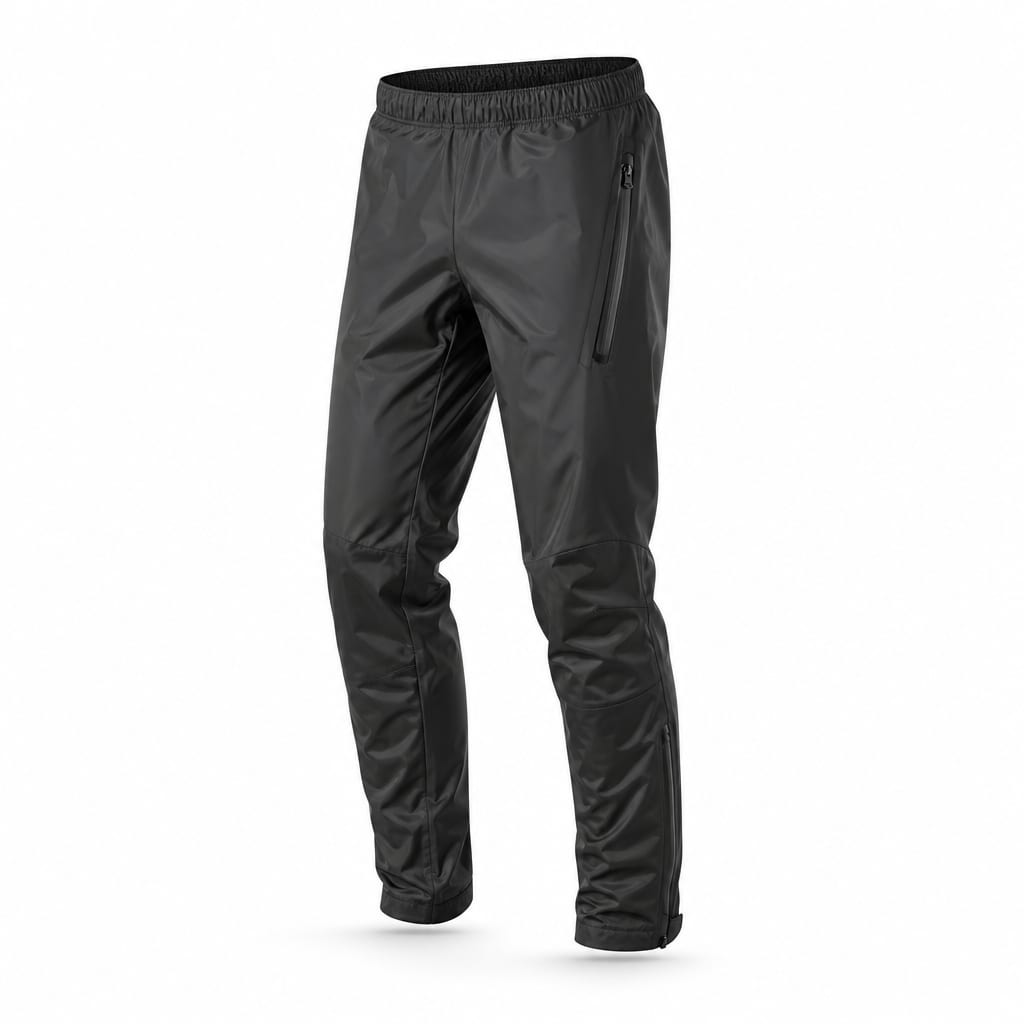
Cycling overpants are classified as rain/waterproof pants because they are designed as an outer protective shell to be worn over other cycling pants with a chamois.
Compared to other types
Unlike bib shorts or waist shorts which provide the primary saddle interface, overpants serve purely as a weather shell. Unlike baggy shorts which may include a liner, overpants never include a chamois and are always an outer layer.
Why it matters: This classification defines the overpant's purpose: weather protection rather than direct saddle comfort. Understanding this ensures riders don't expect an integrated chamois and instead layer appropriately over padded shorts.
What it means
The design, construction, and technology of the padded insert sewn into the crotch area of cycling pants, which is the primary determinant of saddle comfort.
Typical for this type
None
In practice
Cycling overpants do not include an integrated chamois because they are designed to be worn over separate padded cycling shorts or bib shorts.
Compared to other types
All other cycling pant subcategories (bib shorts, waist shorts, baggy shorts, tights) typically include a chamois. Overpants are unique in being a chamois-free shell layer, similar to how a rain jacket doesn't include base layer functionality.
Why it matters: This is fundamental to the overpant concept. Riders must wear a separate padded garment underneath. Attempting to wear overpants alone would result in severe saddle discomfort.
Pad Thickness
Chamois Thickness
What it means
The maximum thickness of the chamois padding, typically measured at the densest point under the sit bones, affecting cushioning level and feel on the saddle.
Typical for this type
N/A
Most common pick: 0 mm
In practice
Overpants have no chamois, so thickness is not applicable. The chamois thickness is determined by whatever padded shorts are worn underneath.
Compared to other types
All other subcategories feature chamois thickness from 3-18mm. Overpants are the only type where this dimension is zero, reinforcing their role as a shell layer.
Why it matters: Riders should not expect any padding from overpants. Comfort depends entirely on the base layer shorts chosen.
What it means
The length of the leg portion of the cycling pants, measured from the crotch seam to the leg opening, determining coverage and muscle compression area.
Typical for this type
Full Length
In practice
Cycling overpants are almost universally full-length to the ankle, providing maximum rain and spray protection for the entire leg.
Compared to other types
While road shorts are typically standard or long length, and knickers are 3/4, overpants must be full-length to fulfill their weather protection role. Some models offer 3/4 overpants for mountain biking, but full-length is the standard.
Why it matters: Full-length coverage is essential for keeping road spray and rain off the lower legs. Shorter lengths would defeat the purpose of rain protection, as water runs down the legs and pools behind the knees.
What it means
How closely the cycling pants conform to the body, affecting aerodynamics, compression, comfort, and freedom of movement.
Typical for this type
Relaxed to Loose
In practice
Overpants use a relaxed or loose fit to accommodate layering over padded cycling shorts or tights without restricting movement or compressing the underlying garments.
Compared to other types
Unlike race or club fit shorts that conform tightly to the body, overpants need extra room. This is closer to the loose/baggy fit of mountain bike shorts but with more taper at the ankles to prevent chainring contact.
Why it matters: The fit must be generous enough to layer comfortably but not so baggy that fabric catches on the saddle or chainring. Too tight and the overpants compress your shorts; too loose and fabric flaps dangerously near the drivetrain.
Material
Fabric Composition
What it means
The primary materials used in the cycling pants construction, affecting stretch, moisture management, durability, compression, and comfort.
Typical for this type
Softshell to Waterproof Membrane
In practice
Overpants primarily use softshell or waterproof membrane fabrics (e.g., Gore-Tex, eVent, proprietary laminates) to block wind and rain. Many combine a waterproof front panel with a more breathable back panel.
Compared to other types
While standard shorts use polyester-spandex or nylon-spandex for stretch and moisture wicking, overpants prioritize weather resistance over stretch. Minimal elastane content is typical (0-5%), as waterproof membranes don't stretch. This contrasts sharply with the 15-20% spandex in performance shorts.
Why it matters: The fabric determines the balance between weather protection and breathability. Full waterproof membranes offer maximum rain protection but less breathability. Softshell fabrics provide better breathability with good water resistance for light to moderate rain.
Number of Panels
Panel Count
What it means
The number of individual fabric pieces used to construct the cycling pants, with more panels generally allowing better anatomical shaping and fit.
Typical for this type
4-8 panels
Most common pick: 4-6 panels
In practice
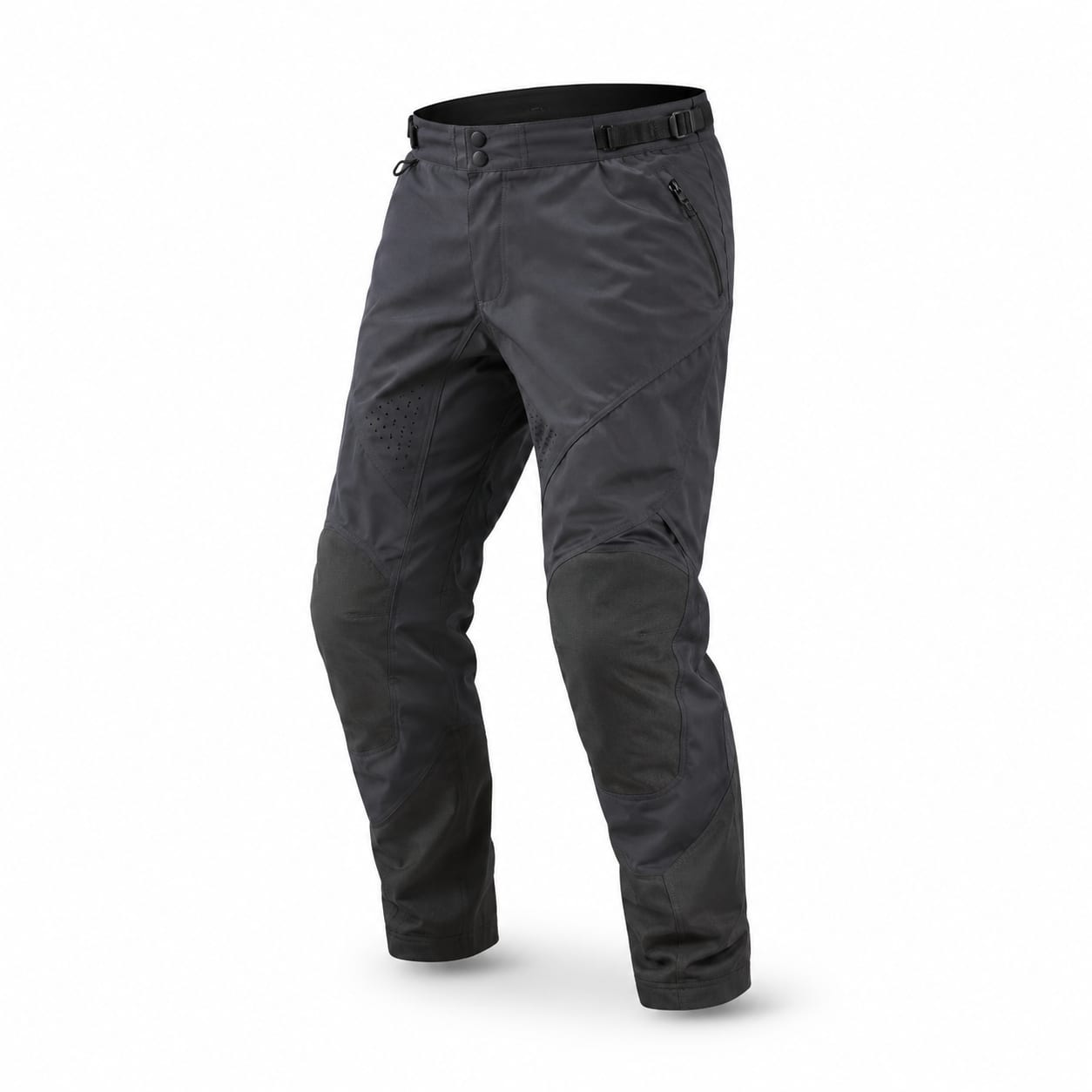
Overpants typically use fewer panels than form-fitting shorts because the relaxed fit requires less anatomical shaping. However, articulated knee panels are common for pedaling comfort.
Compared to other types
Road bib shorts often use 6-10 panels for anatomical shaping. Overpants need fewer panels due to their relaxed fit, but strategic panels at the knees and crotch improve on-bike comfort significantly.
Why it matters: While panel count matters less for overpants than for tight-fitting shorts, well-placed panels—especially at the knees—improve range of motion and reduce fabric bunching in the riding position.
Compression
Compression Level
What it means
The degree of graduated or uniform compression provided by the fabric, affecting muscle support, blood flow, fatigue reduction, and recovery.
Typical for this type
Light
In practice
Overpants provide minimal to no compression. Their purpose is weather protection, not muscle support. Any slight fabric tension is incidental rather than designed.
Compared to other types
Unlike race or club shorts that offer moderate to firm compression, overpants are purely a weather shell. This is similar to the light compression of casual baggy shorts but even less, as waterproof fabrics don't typically include compression-oriented elastane.
Why it matters: Riders should not expect any performance compression benefit from overpants. If compression is desired, it should come from the shorts worn underneath.
Leg Gripper
Leg Gripper Type
What it means
The method used to keep the leg openings of cycling pants in place and prevent riding up during pedaling.
Typical for this type
Elastic Band With Adjustable Closure
In practice
Overpants typically use elastic bands at the ankle, often with adjustable Velcro tabs, snap closures, or zippered cuffs to seal around the leg and prevent water ingress and chainring contact.
Compared to other types
While road shorts use silicone dots or compression hems at the thigh, overpants need a different approach at the ankle. The elastic band with adjustable closure is unique to overpants and rain pants, reflecting their full-length design and weather-sealing requirements.
Why it matters: Ankle closure is critical for overpants—it prevents rain from running down into shoes, stops road spray from entering the pant leg, and keeps fabric safely away from the chainring. Adjustable closures allow a custom seal over different shoe types.
Bib Strap Style
Bib Strap Design
What it means
The construction and configuration of shoulder straps on bib-style cycling pants, affecting comfort, breathability, and convenience.
Typical for this type
N/A
Most common pick: N/A (Waist Style)
In practice
Cycling overpants are virtually always waist-style rather than bib-style, as the bib straps would interfere with the jersey and base layers already being worn. A few niche bib-style overpants exist but are extremely rare.
Compared to other types
Most road cycling shorts are available in bib versions, but overpants are exclusively waist-style. This makes sense given their role as a removable shell layer—the convenience of pulling them on and off quickly outweighs any potential benefit from bib straps.
Why it matters: The waist-style design allows easy on-off over existing kit without interfering with upper body layers. This is a practical necessity for a garment designed to be added and removed as weather changes.
Seam Construction
Seam Type
What it means
The method used to join fabric panels, affecting comfort, chafing risk, durability, and aerodynamics.
Typical for this type
Bonded With Taped Seams
In practice
Quality overpants use bonded or welded seams with waterproof tape sealing all seam joints to prevent water penetration through stitch holes. This is essential for maintaining waterproof integrity.
Compared to other types
While flatlock stitching is the standard for comfort in regular cycling shorts, overpants prioritize waterproofing over comfort. The inner lining or smooth taping prevents chafing, but the primary concern is water tightness, not seam feel against skin.
Why it matters: In waterproof garments, seams are the weakest point for water entry. Taped or bonded seams are not just a comfort feature—they are essential for the garment to function as intended. Non-taped seams will leak at stitch holes during sustained rain.
Temp Range
Temperature Range
What it means
The ambient temperature range in which the cycling pants are designed to perform optimally, based on fabric weight, insulation, and breathability.
Typical for this type
Cool to Cold (0-15°C / 32-59°F)
In practice
Overpants are primarily used in cool to cold wet conditions where rain protection is needed. In warm rain, they can cause overheating. Most riders deploy overpants below 15°C when rain is expected.
Compared to other types
Unlike standard cycling shorts designed for warm conditions (18-28°C), overpants are a cool-to-cold weather tool. They share the temperature profile of thermal tights but serve a different purpose—weather protection rather than insulation, though they do provide some warmth as a wind-blocking layer.
Why it matters: Temperature management is the biggest challenge with overpants. In warm conditions with rain, the interior can become clammy from trapped sweat. Understanding the effective temperature range prevents the common mistake of overheating in mild but wet conditions.
What it means
The Ultraviolet Protection Factor rating indicating how effectively the fabric blocks UV radiation, important for long sun-exposed rides.
Typical for this type
UPF 30+
Most common pick: UPF 30-50
In practice
Waterproof fabrics used in overpants inherently provide good UV protection due to their dense construction and membrane layers, typically achieving UPF 30-50 even without specific UV treatment.
Compared to other types
UV protection in overpants is comparable to or better than standard cycling shorts due to thicker, denser fabrics. However, since overpants are typically worn in overcast or rainy conditions, UV protection is less relevant than in regular shorts.
Why it matters: UV protection is a secondary benefit of overpants rather than a primary design goal. The dense, multi-layer waterproof fabrics naturally block most UV radiation, but this is rarely the reason riders choose overpants.
Reflectivity
Reflective Elements
What it means
The presence and extent of reflective materials on the cycling pants for visibility in low-light conditions.
Typical for this type
Moderate to High Visibility
In practice
Most cycling overpants include moderate to extensive reflective elements because they are worn in low-light, rainy conditions where visibility is critically important. Reflective ankle bands, side stripes, and logos are common.
Compared to other types
Overpants typically have more reflective elements than road cycling shorts, which often have minimal reflectivity. This reflects the overpant's role as a commuting and all-conditions garment where visibility in poor weather is paramount.
Why it matters: Rain often coincides with reduced daylight and poor visibility. Reflective elements on overpants are particularly effective because the pedaling motion of the legs creates moving reflections that attract driver attention. This is a safety-critical feature for commuting overpants.
What it means
The construction and closure system at the waist of non-bib cycling pants, affecting comfort, security, and adjustability.
Typical for this type
Elastic Drawstring Or Snap Zip Fly
In practice
Overpants commonly use an elastic waistband with drawstring adjustment to ensure a secure fit over varying layers underneath. Some models use snap/button closures with zip flies for a more traditional pant feel.
Compared to other types
Unlike road shorts that use simple elastic or wide comfort waistbands, overpants need adjustability to handle layering. The drawstring or snap closure is similar to mountain bike shorts but prioritizes weather sealing at the waist to prevent water ingress.
Why it matters: The waist system must accommodate different thicknesses of underlying shorts while staying secure during riding. Adjustable systems are important because the overpant may be worn over thin summer bibs or thick winter tights, requiring different waist tensions.
Water Resistance
Water Resistance
What it means
The level of water and rain protection provided by the cycling pants, from none to fully waterproof.
Typical for this type
Waterproof Membrane (For Full Rain Protection) Or Dwr Coated (For Light Rain)
In practice
Cycling overpants are defined by their water resistance. Most use waterproof breathable membranes (Gore-Tex, eVent, proprietary) for full rain protection. Some lightweight models use DWR-coated fabrics for emergency shower protection with better packability.
Compared to other types
Overpants are the only cycling pant subcategory where waterproof_membrane is the typical water resistance level. All other subcategories default to none or DWR at most. This makes water resistance the key differentiator and primary purchase consideration for overpants.
Why it matters: This is the defining characteristic of overpants. The level of water resistance determines whether the pants handle brief showers or sustained downpours. Waterproof membranes with taped seams are essential for serious rain riding; DWR-only models are best as emergency backup.
Pockets
Pocket Configuration
What it means
The number, type, and placement of pockets on the cycling pants, affecting storage options for ride essentials.
Typical for this type
Minimal to Standard
In practice
Overpants typically have minimal pockets—perhaps one or two zippered pockets for essentials. Some commuter-oriented models include more pockets, but most keep pocket count low to reduce bulk and potential leak points.
Compared to other types
Overpants have fewer pockets than mountain bike or commuter shorts but more than road bib shorts (which have none). The pocket design prioritizes waterproof integrity over storage capacity, with any pockets requiring waterproof zippers or sealed construction.
Why it matters: Pockets in waterproof garments are potential leak points, so they must be carefully designed with waterproof zippers or storm flaps. Minimal pockets reduce this risk while still providing storage for keys or a phone during commuting.