
Cycling Shoes · FAQ
Questions about Gravel / Cyclocross Shoes
Straight answers on fit, specs, and when this type makes sense — each topic has its own page with links back to the buying guide.
Open Gravel / Cyclocross Shoes guide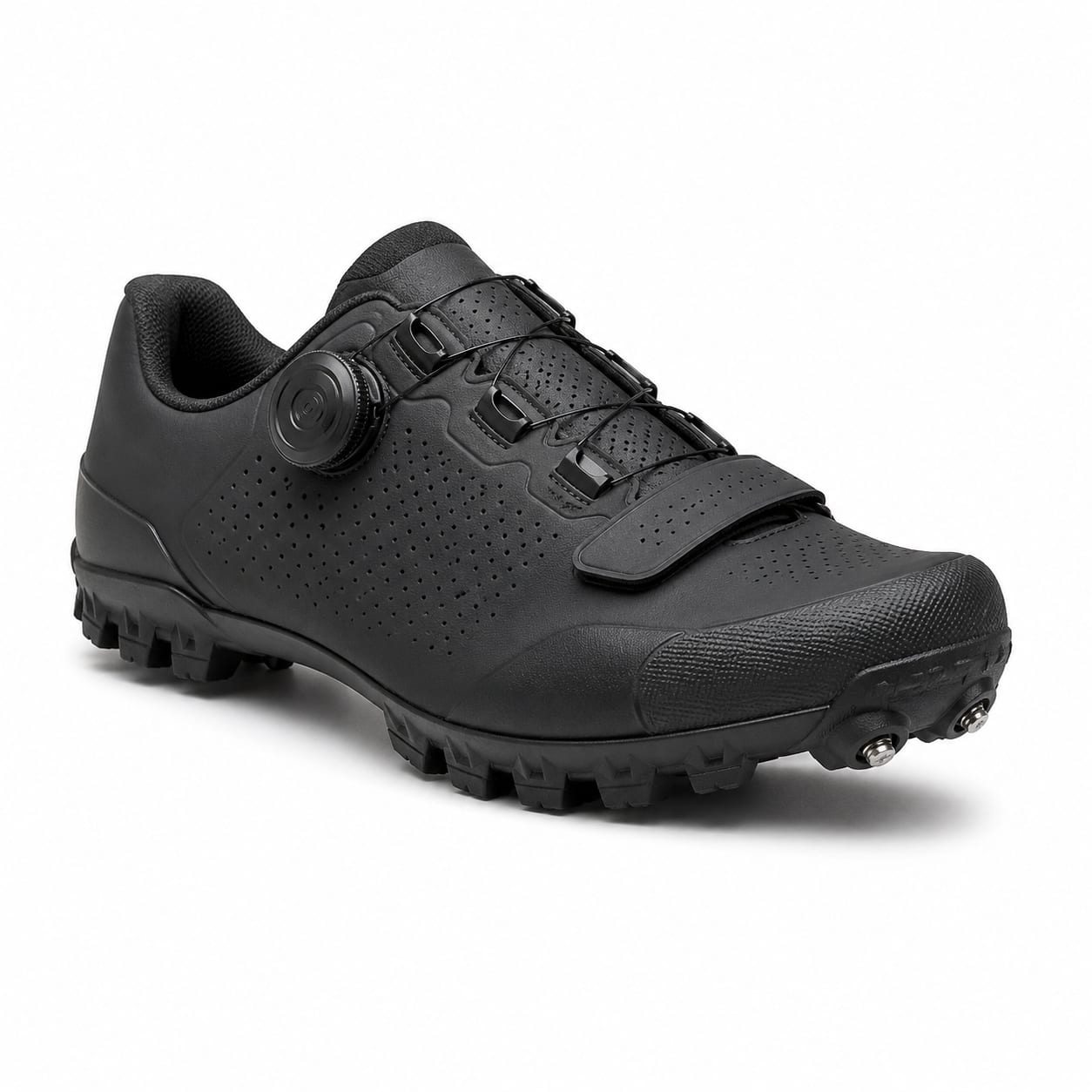
6 topics
Pick a question
Every answer links to the full subcategory guide and related gear types when it helps you decide.
Can I use gravel shoes with road pedals?
No. Gravel shoes use a 2-bolt cleat pattern that is incompatible with 3-bolt road pedal systems (Shimano SPD-SL, LOOK Keo, Speedplay). You must use 2-bolt pedals like Shimano SPD, crankbrothers, or Time ATAC. If you want to share shoes between road and gravel bikes, install SPD pedals on both bikes or consider dual-sided pedals with SPD on one side and SPD-SL on the other.
Read answer →02Are cyclocross shoes different from gravel shoes?
While they share the same category, CX race shoes tend to have more aggressive tread for mud, stiffer soles for sprinting, and simpler closures that resist mud fouling. Gravel-specific shoes often prioritize all-day comfort with slightly more flexible soles, more generous fits, and better ventilation. Many riders use the same shoe for both, but competitive CX racers may prefer purpose-built models.
Read answer →03Do I need toe spikes for gravel riding?
Toe spikes are primarily for cyclocross racing and steep, muddy hike-a-bike sections. Most gravel riders don't need them for typical gravel roads and moderate terrain. However, if your routes include steep, loose, or muddy hike-a-bike sections, toe spikes provide significant traction improvement. They're inexpensive and removable, so there's little downside to having the mounting option available.
Read answer →04How do gravel shoes compare to road shoes for pure road riding?
Gravel shoes sacrifice some power transfer (due to the more compliant sole and smaller 2-bolt cleat platform) and add weight compared to road shoes. For casual road riding, the difference is minimal and most riders won't notice. For competitive road racing, sprinting, or time trialing, the efficiency loss becomes measurable. If you ride 80%+ road, consider dedicated road shoes instead.
Read answer →05Can I use gravel shoes for mountain biking?
Yes, for cross-country and light trail riding, gravel shoes work adequately since they share the same 2-bolt cleat system. However, for technical trail, enduro, or downhill riding, gravel shoes lack the ankle protection, aggressive tread, and sole flexibility needed for safe off-bike movement on steep, technical terrain. They also lack the reinforced protection against rock strikes that dedicated MTB shoes provide.
Read answer →06How should gravel shoes fit compared to road shoes?
Gravel shoes should fit similarly to road shoes in length but with slightly more allowance in the forefoot for foot swelling during long rides and toe splay during walking. You should be able to wiggle your toes slightly, with no pressure on the sides or top. The heel should be secure with no lift during walking or hard pedaling. When trying on shoes, wear the socks you'll ride in and consider that feet swell after hours of riding.
Read answer →