
Cycling Shoes · FAQ
Questions about Triathlon Shoes
Straight answers on fit, specs, and when this type makes sense — each topic has its own page with links back to the buying guide.
Open Triathlon Shoes guide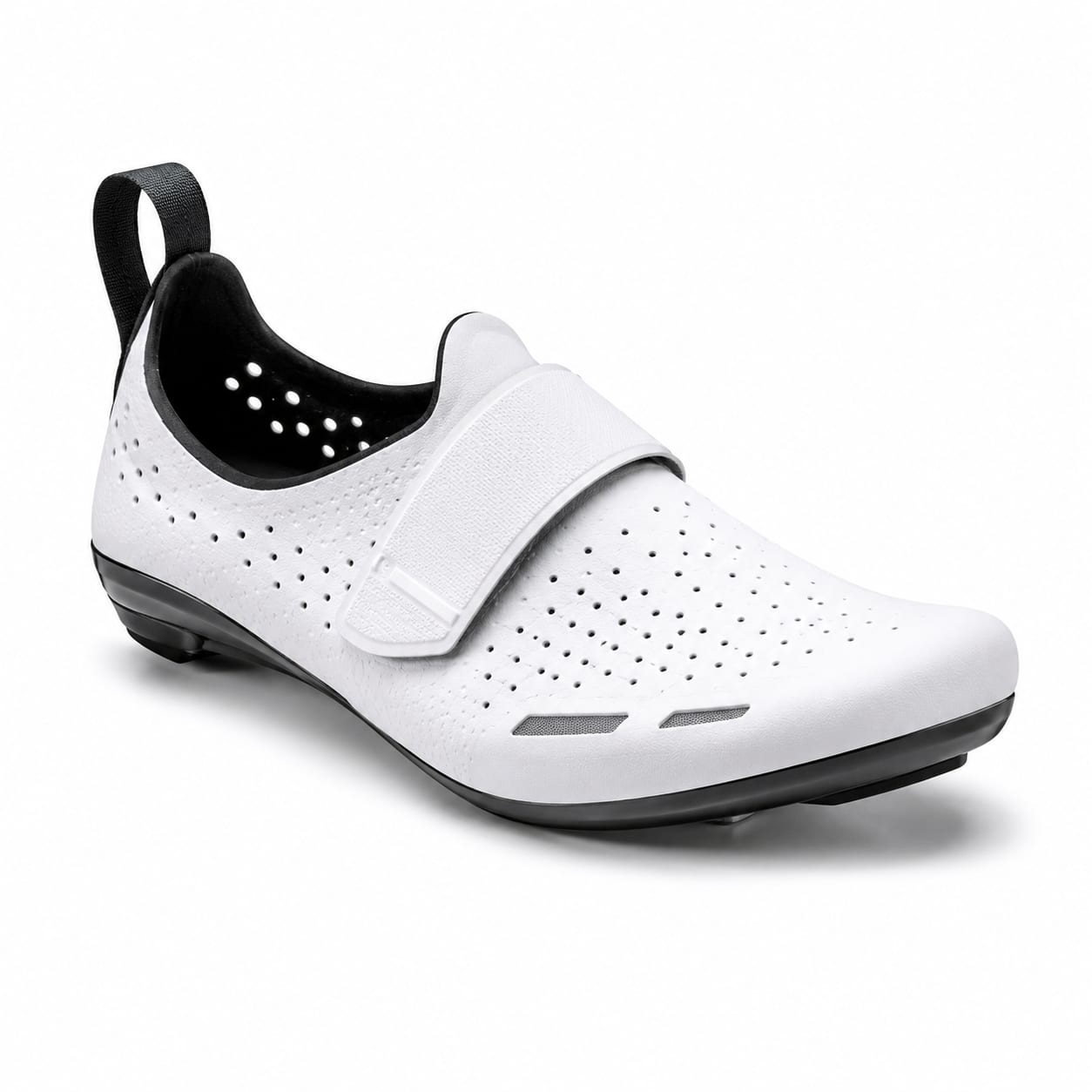
6 topics
Pick a question
Every answer links to the full subcategory guide and related gear types when it helps you decide.
Can I use regular road shoes for triathlon instead of triathlon-specific shoes?
Yes, you can, and many beginners do. However, road shoes with dual BOA dials or multiple straps add 15-30 seconds per transition compared to single-strap triathlon shoes. If you are competitive in your age group or chasing a personal best, the transition time savings of triathlon shoes are significant. For your first few triathlons, road shoes are perfectly fine—invest in triathlon shoes when you start caring about transition speed.
Read answer →02Do I really need to wear triathlon shoes without socks?
No, you can wear thin cycling socks with triathlon shoes, and many long-course athletes do for comfort over 112 miles. However, the shoes are designed for barefoot use with smooth interiors. If you wear socks, you may need to size up slightly. For sprint and Olympic distances, most competitive triathletes race barefoot to save transition time. Practice both approaches in training to find what works for you.
Read answer →03How do I pre-mount my triathlon shoes on the pedals before the race?
Clip your shoes into the pedals and use thin rubber bands to hold them horizontal—attach one end to the shoe heel loop and the other to a frame point like the rear derailleur or chainstay. When you start pedaling, the bands snap, and the shoes hang ready for foot entry. Practice this technique in training before race day, and always carry spare rubber bands. Some modern triathlon bikes have integrated shoe holders that eliminate the need for rubber bands.
Read answer →04What is the difference between single Velcro strap and single BOA dial triathlon shoes?
Single Velcro straps are the traditional choice—they are the fastest to secure and release, making them ideal for short-course racing where every second counts. Single BOA dial models offer better micro-adjustability during the ride, which is beneficial for long-course events where foot swelling may require on-the-fly tension changes. BOA dials are slightly slower to secure initially but provide more consistent pressure. Choose based on your race distance and whether you value transition speed or ride comfort more.
Read answer →05Are triathlon shoes worth it for Ironman distance races?
Yes, but the calculus is different than for sprint races. In an Ironman, the bike leg is 112 miles taking 4.5-6+ hours, so comfort and fit precision become more important relative to transition time savings. Some Ironman athletes prefer road shoes for the superior adjustability over long distances. However, triathlon shoes still save time in transitions, and modern models offer excellent comfort. If you have no fit issues with triathlon shoes, they remain the better choice. If you experience foot discomfort or swelling, consider road shoes for Ironman.
Read answer →06How long do triathlon shoes typically last?
Triathlon shoes typically last 1-3 racing seasons depending on usage frequency and care. The mesh uppers and Velcro straps tend to wear faster than road shoe materials, especially with barefoot use and saltwater exposure. If you race 5-10 triathlons per year and train in them occasionally, expect about 2 seasons of optimal performance. If you use separate shoes for training, race-only shoes can last 3+ seasons. Key indicators for replacement include Velcro that no longer holds securely, heel loop detachment, upper tearing, or sole delamination.
Read answer →