Kitvore.com

Kitvore.com

Specs that matter. Gear that fits.

Cycling Shoes · Subcategory

Triathlon Shoes

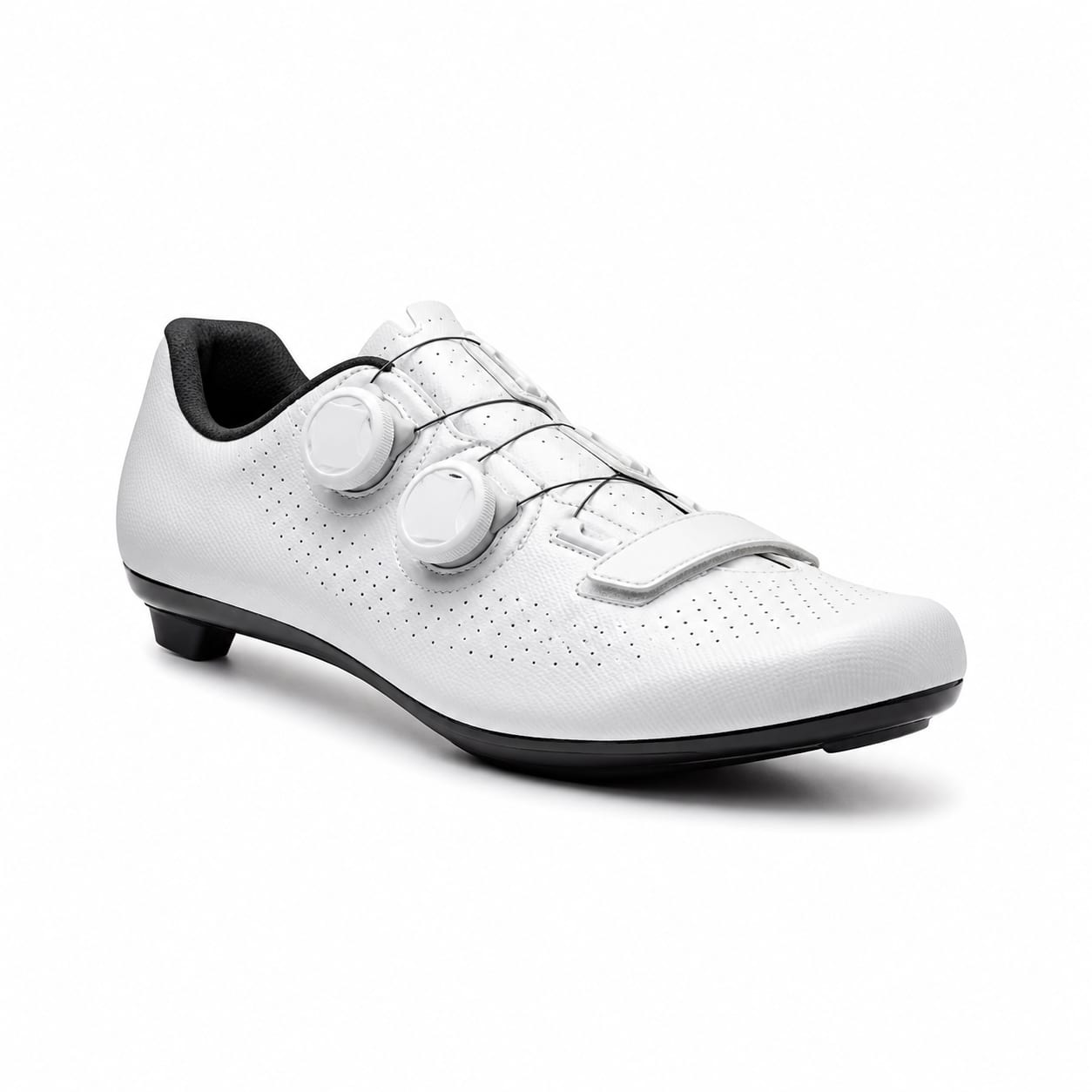
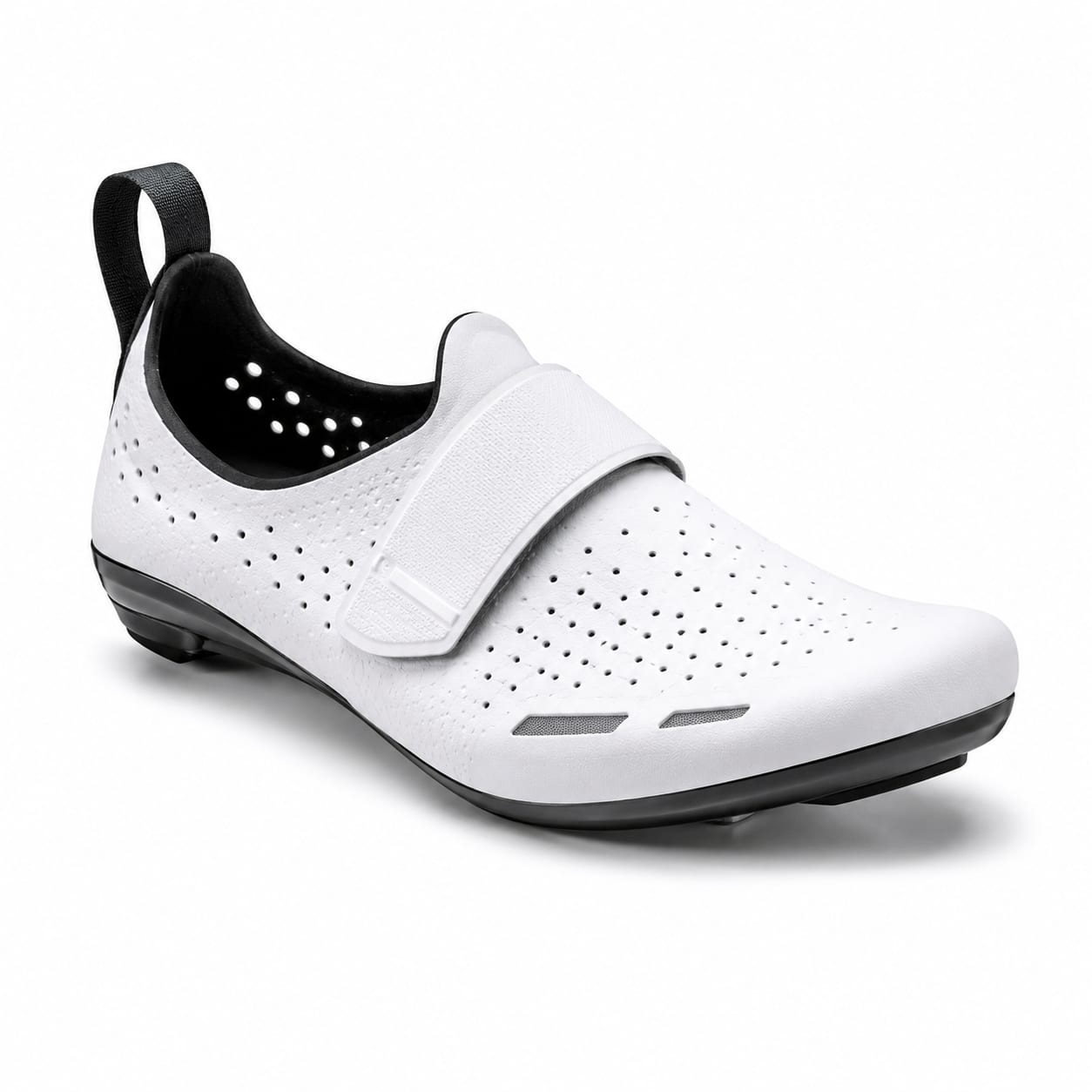
Quick-transition cycling shoes designed for triathletes to minimize T1 and T2 times with easy entry, single-strap closure, and heel pull loops.

Triathlon shoes are purpose-built for the unique demands of triathlon racing, where every second in transition counts. Featuring wide-opening single-strap closures, heel pull loops for mounting shoes on pedals before mounting, and smooth interiors for barefoot comfort, these shoes sacrifice fine-tuned adjustability for raw speed in and out of the bike leg. If you race triathlons or duathlons, they are an essential piece of equipment that can save 30-60 seconds per transition.

$100 – $450premium tierintermediateadvancedexpert

Best known for

Ultra-fast transitions with single-strap or minimal closure systemsHeel pull loops for pre-mounting shoes on pedalsBarefoot-friendly interiors with seamless liningsWide-opening uppers for quick foot entry on the fly
Triathlon Shoes

Guide

Detailed overview

Triathlon cycling shoes are a specialized subcategory of road-style cycling shoes engineered specifically for the transition-intensive sport of triathlon. Unlike standard road shoes that prioritize precise fit and maximum power transfer through multi-dial or multi-strap closures, triathlon shoes optimize for speed of entry and exit during T1 (swim-to-bike) and T2 (bike-to-run) transitions. The design philosophy is simple: in a race where seconds matter, the time saved by faster transitions can be the difference between a podium finish and an also-ran result. The hallmark features include a single wide Velcro strap or simplified closure that opens fully for quick foot insertion, a large heel loop that allows the athlete to pull the shoe on rapidly or secure it to the pedal before mounting, and a smooth interior that can be worn without socks against wet or sweaty feet. Most triathlon shoes use a 3-bolt road cleat pattern and feature stiff carbon or composite soles for efficient power transfer during the bike leg. Ventilation is typically generous to accommodate racing in warm conditions and to help dry wet feet from the swim. While they share the road shoe platform of low stack height and minimal walkability, triathlon shoes are distinctly different in their user experience: they are designed to be put on while moving, often with the shoes already clipped into the pedals and the athlete sliding their feet in while coasting out of transition.

Triathlon shoes occupy a unique niche in cycling footwear because they must balance two competing demands: efficient power transfer during the bike leg and rapid donning and doffing during transitions. Standard road shoes achieve a precision fit through dual BOA dials, ratchet buckles, or multiple straps, but each of these systems adds time to the transition process. Triathlon shoes solve this by using a single wide Velcro strap—or occasionally a single BOA dial with quick release—that can be secured in one motion. The strap is often offset or reversed compared to road shoes, positioning the pull tab for easy access while riding.

The heel pull loop is arguably the most iconic feature of triathlon shoes and deserves special attention. During T1, many triathletes pre-clip their shoes into the pedals and secure them horizontally using rubber bands that snap when pedaling begins. The athlete then mounts the bike barefoot, slides each foot into the shoe while coasting, and pulls the strap tight—all without stopping. The heel loop provides the necessary grip for this maneuver, and its size, stiffness, and positioning are critical design elements. During T2, the process reverses: the athlete releases the strap, pulls the foot out, and dismounts while leaving the shoes clipped into the pedals for the run into transition.

Interior comfort without socks is another defining characteristic. Triathlon shoes feature smooth, seamless linings that prevent chafing against bare skin, even when feet are wet from the swim or sweaty from effort. The upper materials are typically highly breathable mesh or microfiber to promote quick drying and airflow. Some models include drainage holes in the sole to allow water from the swim to escape. This barefoot-friendly design means the interior must be carefully engineered to avoid hot spots that socks would normally cushion against.

For triathletes deciding between dedicated triathlon shoes and standard road shoes, the calculation comes down to transition speed versus fit precision. In a sprint-distance triathlon, the time saved in transitions can be significant relative to total race time. In an Ironman, where the bike leg spans 112 miles, the comfort and power transfer of a perfectly fitted road shoe might outweigh transition speed for some athletes. However, most competitive triathletes—even at the Ironman distance—prefer triathlon-specific shoes because the transition advantages are proven, and modern triathlon shoes offer excellent power transfer that approaches road shoe performance. The key trade-off is that triathlon shoes typically offer less micro-adjustability during the ride, which can be a drawback for riders with hard-to-fit feet or those who experience foot swelling over long distances.

Quick facts

Primary purpose
Minimizing transition time and enabling barefoot comfort in triathlon racing
Popular brands
S-WorksShimanoFizikBontragerSidiBont
Typical terrain
paved roadstriathlon courses

What makes it different

Designed to be put on and removed while riding; unlined interior for barefoot comfort after the swim; heel loop for flying mounts

Recommended ranges

How this type usually specs out

Each spec is explained in plain language, then we show what buyers usually look for on this type.

Discipline / Shoe Type

Shoe Type

What it means

The intended riding discipline and design philosophy of the shoe, which determines sole stiffness, tread, cleat mounting, and overall construction.

Typical for this type

Triathlon

In practice

Triathlon shoes are classified as their own discipline-specific type, featuring road-style soles with quick-transition closure systems, heel pull loops, and barefoot-friendly interiors.

Compared to other types

Unlike road shoes that prioritize fit precision, or commuter shoes that prioritize walkability, triathlon shoes uniquely optimize for transition speed above all else while retaining road-level sole stiffness.

Why it matters: The triathlon shoe type dictates the entire design philosophy: every feature is optimized for fast transitions while maintaining road-level power transfer during the bike leg.

Cleat Compatibility

Cleat Compatibility

What it means

The bolt pattern on the shoe sole that determines which cleat and pedal systems can be mounted. This is the most fundamental compatibility requirement.

Typical for this type

3_bolt, 4_bolt_speedplay

In practice

Triathlon shoes use the 3-bolt road cleat pattern (SPD-SL, LOOK Keo) as standard, with some models offering 4-bolt Speedplay direct-mount compatibility. The 3-bolt system provides the large, stable platform needed for high-power triathlon bike legs.

Compared to other types

Same as road shoes (3-bolt), unlike MTB/gravel/commuter shoes which use 2-bolt. Some triathlon shoes include Speedplay 4-bolt direct mount, which is less common in other subcategories.

Why it matters: Cleat compatibility must match your pedal system. Since triathlon bikes use road-style pedals for maximum efficiency, 3-bolt compatibility is essential. Using 2-bolt MTB pedals would sacrifice the power transfer advantage.

Sole Material

Sole Material

What it means

The primary material of the shoe sole, which determines stiffness, weight, durability, and price. Stiffer soles transfer more power but reduce walkability and comfort.

Typical for this type

Full Carbon, Carbon Reinforced

In practice

Most triathlon shoes feature full carbon soles for maximum power transfer, as the bike leg demands efficient energy output. Mid-range models may use carbon-reinforced nylon composites. Nylon-only soles are rare in this category.

Compared to other types

Similar to road race shoes in sole material preference (full carbon). Unlike MTB shoes which use rubber outsoles, or commuter shoes with flexible soles. Triathlon shoes may have slightly more sole ventilation than pure road shoes.

Why it matters: A stiff carbon sole ensures minimal energy loss during the bike leg, which is critical when you need to produce sustained power after the swim and before the run. Sole flex wastes watts that matter in race conditions.

Sole Stiffness Index

Stiffness Index

What it means

A manufacturer-assigned or comparative rating of how resistant the sole is to flex under pedaling load. Higher numbers indicate stiffer soles that transfer more power.

Typical for this type

8-12

Most common pick: 10

In practice

Triathlon shoes typically fall in the high-performance stiffness range (8-12 on manufacturer scales). This provides excellent power transfer for the bike leg while maintaining enough compliance to avoid foot fatigue before the run.

Compared to other types

Comparable to road race shoes (9-12) and stiffer than gravel (6-9), MTB (5-8), and commuter shoes (3-6). Slightly below the ultra-stiff time trial shoes that some brands produce at stiffness 13+.

Why it matters: Sufficient stiffness ensures efficient power transfer, but extremely stiff soles (12+) can cause hot spots and foot fatigue that compromise the upcoming run leg. The balance is slightly more nuanced than pure road racing.

Closure System

Closure System

What it means

The mechanism used to secure the shoe to the foot, affecting fit precision, adjustability, speed of entry/exit, and reliability.

Typical for this type

Velcro Strap, Boa Dial

In practice

The dominant closure for triathlon shoes is a single wide Velcro strap, designed for one-motion securing during transitions. Some newer models use a single BOA dial with quick-release capability. The key requirement is rapid, one-handed operation while riding.

Compared to other types

Unique among cycling shoe subcategories in primarily using single Velcro straps. Road shoes favor dual BOA dials, MTB shoes use BOA or ratchet systems, and gravel shoes often use laces. Some triathlon models now offer single BOA as a compromise.

Why it matters: Closure system is the defining feature of triathlon shoes. A single Velcro strap can be secured in under 2 seconds, while dual BOA dials or laces would add 10+ seconds to transition time. The strap must open fully for quick foot insertion.

Weight per Pair

Weight (Pair)

What it means

The total weight of both shoes, typically measured in grams. Lighter shoes reduce rotational mass and can improve acceleration and climbing.

Typical for this type

400-550g

Most common pick: 480g

In practice

Triathlon shoes typically weigh between 400-550g per pair, similar to lightweight road race shoes. The minimal closure system (single strap) and ventilated uppers help keep weight down. Premium carbon-soled models approach the 400g mark.

Compared to other types

Comparable to road race shoes (400-550g). Lighter than MTB shoes (600-1000g) and commuter shoes (700-1200g) due to minimal tread, simple closures, and carbon soles.

Why it matters: Lighter shoes reduce rotational mass during pedaling, which matters in racing. However, weight savings should not come at the expense of the structural integrity needed for secure foot entry during transitions.

Upper Material

Upper Material

What it means

The primary material of the shoe upper, affecting breathability, durability, water resistance, stretch, and overall comfort.

Typical for this type

Mesh Knit, Microfiber

In practice

Triathlon shoes predominantly use highly breathable mesh or knit uppers to accommodate wet feet from the swim and promote airflow during hot race conditions. Microfiber is used in some models for a balance of breathability and structure. The interior lining must be smooth for barefoot comfort.

Compared to other types

More ventilated than typical road shoes, which may use synthetic leather for durability. Unlike GORE-TEX winter shoes or protective MTB shoes. Most similar to summer-weight road shoes in upper material choice.

Why it matters: Breathable uppers help dry wet feet quickly after the swim and prevent overheating during the bike leg. The interior surface must be seamless and smooth to prevent chafing against bare skin without socks.

Width / Fit Profile

Width / Fit Profile

What it means

The volume and width of the shoe last (foot mold), which determines how the shoe accommodates different foot shapes. Critical for comfort and preventing numbness.

Typical for this type

Standard, Wide

In practice

Most triathlon shoes are available in standard/medium width, with some brands offering wide options. The fit must accommodate barefoot wear and potential foot swelling during long-course racing. A slightly roomier fit than road shoes is common to allow for wet, swollen feet.

Compared to other types

Similar width options to road shoes, but triathlon shoes may fit slightly more generously to account for barefoot use and foot swelling. Less variety than road shoes, which offer the widest range of width options across brands.

Why it matters: Feet swell during triathlon racing, especially in hot conditions and after the swim. A shoe that fits perfectly dry may become uncomfortably tight during the bike leg. Some extra volume is beneficial, but too loose causes power loss and heel slip.

Ventilation Level

Ventilation

What it means

The degree of airflow through the shoe upper and sole, affecting temperature regulation, moisture management, and comfort in different weather conditions.

Typical for this type

High, Moderate

In practice

Triathlon shoes are typically highly ventilated with extensive mesh panels, sole vents, and drainage holes. This serves dual purposes: drying wet feet from the swim and cooling during hot race conditions. Some models feature large cutouts in the sole for airflow.

Compared to other types

More ventilated than most road shoes, which balance ventilation with aerodynamics. Far more ventilated than MTB, commuter, or winter shoes. Most similar to hot-weather-specific road shoes.

Why it matters: High ventilation is critical for triathlon racing where athletes start the bike leg with wet feet and race in warm conditions. Drainage holes allow water to escape quickly, and airflow prevents overheating during sustained effort.

Heel Retention System

Heel Retention

What it means

Design features in the heel cup that prevent heel lift during the upstroke, ensuring efficient power transfer and stable foot positioning.

Typical for this type

Reinforced Heel, Adjustable Heel

In practice

Triathlon shoes feature reinforced heel cups with the addition of a prominent heel pull loop. The heel cup must hold the foot securely during hard pedaling while the pull loop enables quick shoe entry and pedal mounting. Some premium models offer adjustable heel retention.

Compared to other types

Similar reinforcement level to road performance shoes, but with the added heel pull loop that is unique to triathlon shoes. The pull loop is a defining feature absent from all other subcategories except some time trial shoes.

Why it matters: Secure heel retention is essential because triathlon shoes are often put on while riding, which can result in imperfect initial foot positioning. The heel must lock in quickly and stay put. The pull loop must be rigid enough to pull against without collapsing.

Sole Stack Height

Stack Height

What it means

The distance from the pedal axle to the bottom of the foot, determined by sole thickness and cleat design. Lower stack height improves pedaling efficiency and cornering clearance.

Typical for this type

7-11mm

Most common pick: 8.5mm

In practice

Triathlon shoes have low stack heights similar to road race shoes, typically 7-11mm. Low stack height improves pedaling efficiency and stability, which is important for the high-power output demanded during the triathlon bike leg.

Compared to other types

Identical stack height range to road shoes (7-11mm). Much lower than MTB shoes (10-15mm with tread) or commuter shoes. Some triathlon shoes with Speedplay direct mount achieve the lowest possible stack heights.

Why it matters: Lower stack height means better power transfer and a more connected feel to the pedal. In triathlon racing, where marginal gains matter, a low stack height contributes to efficient power delivery over the full bike leg.

Included Insole / Footbed

Insole Type

What it means

The type and quality of the footbed included with the shoe, which affects arch support, comfort, and the ability to customize fit.

Typical for this type

Contoured Ergonomic, Basic Flat

In practice

Triathlon shoes typically come with contoured ergonomic insoles, though some athletes remove them entirely for a more spacious barefoot fit. Basic flat insoles are also common since many triathletes replace stock insoles with custom orthotics or prefer minimal insole bulk for barefoot comfort.

Compared to other types

Less emphasis on premium insole features compared to road shoes, where interchangeable arch inserts are more common. Triathletes are more likely to use minimal or no insoles, whereas road riders typically keep the stock insole for cushioning with socks.

Why it matters: The insole must be comfortable against bare skin without causing hot spots. Some triathletes prefer to remove insoles for a roomier fit or to reduce weight. The insole surface should be smooth and non-abrasive.

Toe Box Shape

Toe Box Shape

What it means

The shape and volume of the front of the shoe where the toes sit, affecting comfort, toe splay, and prevention of numbness or bunions.

Typical for this type

Rounded Standard, Wide Anatomical

In practice

Triathlon shoes typically feature rounded/standard toe boxes, with some models offering wider anatomical shapes. A slightly roomier toe box is beneficial for barefoot comfort and to accommodate foot swelling during long-course racing.

Compared to other types

Less likely to feature the pointed/tapered toe boxes common in Italian road race shoes. More similar to comfort-oriented road shoes or gravel shoes in toe box shape, prioritizing barefoot comfort over aerodynamic aesthetics.

Why it matters: Without socks to cushion the toes, the toe box shape becomes more critical for comfort. Toe numbness before the run leg is particularly problematic, as it can affect running performance. A shape that allows natural toe splay is ideal.

Ankle Coverage

Ankle Coverage

What it means

How high the shoe extends above the ankle bone, affecting protection, support, weather resistance, and range of motion.

Typical for this type

Low Cut

In practice

All triathlon shoes are low-cut, ending below the ankle bone. This design maximizes ankle mobility for the running motion during transitions and allows the widest possible opening for quick foot entry. The low collar also facilitates the heel pull loop function.

Compared to other types

Same as road and XC shoes. Unlike mid-ankle trail/enduro shoes or high-ankle winter boots. The low-cut design is universal across triathlon shoes with no exceptions.

Why it matters: Low-cut design is essential for quick foot entry during transitions. A higher collar would restrict the opening and slow down the donning process. Ankle mobility is also important for the transition from cycling to running posture.

Walkability Rating

Walkability

What it means

How easily and comfortably you can walk in the shoes off the bike, determined by sole flexibility, tread pattern, and cleat recess.

Typical for this type

None

In practice

Triathlon shoes have essentially no walkability, featuring smooth carbon soles with exposed 3-bolt cleats. Walking is awkward, slippery, and damages cleats. This is by design—triathlon shoes are meant to be put on and removed while clipped into the pedals.

Compared to other types

Same as road race shoes (not walkable). Unlike gravel shoes (limited walkability), MTB shoes (moderate), or commuter shoes (high). This is a shared limitation with road shoes that triathletes accept as part of the discipline.

Why it matters: Walkability is irrelevant for triathlon racing where the shoes stay clipped into the pedals through both transitions. The athlete never walks in the shoes during a race, so any tread or sole flexibility would add unnecessary weight and reduce power transfer.

Heat Moldable Upper/Sole

Heat Moldable

What it means

Whether the shoe upper, sole, or both can be heat-molded to customize the fit to the rider's foot shape.

Typical for this type

False, True

In practice

Most triathlon shoes are not heat moldable, though some premium models from brands like Bont and Shimano offer this feature. Heat moldability is less common in triathlon shoes than in road race shoes because the simpler closure system provides less fine-tuned adjustment capability.

Compared to other types

Less commonly available than in road shoes, where brands like Bont and Lake emphasize moldability. More common than in MTB or commuter shoes. When available, it is typically found in premium triathlon models.

Why it matters: For triathletes with hard-to-fit feet, heat moldable shoes can provide a custom fit that compensates for the less precise single-strap closure. However, the molding process must not compromise the smooth interior needed for barefoot comfort.

Gender-Specific Design

Gender Design

What it means

Whether the shoe is built on a gender-specific last, which accounts for typical differences in foot shape, volume, and proportions.

Typical for this type

Unisex, Mens, Womens

In practice

Many triathlon shoes are offered in unisex sizing, though women-specific models are available from major brands. The women's versions feature narrower heels and lower overall volume to accommodate typical female foot proportions for secure barefoot fit.

Compared to other types

Similar gender availability to road shoes, with many models offered in men's, women's, and unisex variants. Less variety in women-specific models compared to the road category, but major brands like Shimano, Sidi, and Fizik offer women's triathlon shoes.

Why it matters: Proper fit is especially important in triathlon shoes because they are worn without socks. A women-specific last can provide better heel retention and overall comfort for female triathletes, preventing the heel slip that can occur with unisex shoes during the upstroke.

Evaluation

Strengths and trade-offs

Pros

What this type does best

Dramatically Faster Transitions

Critical

The single-strap closure and wide-opening upper allow foot entry and exit in under 3 seconds, saving 30-60 seconds per transition compared to road shoes with dual BOA dials or multiple straps.

Heel Pull Loop for Pedal Mounting

Critical

The rigid heel loop enables the signature triathlon technique of pre-clipping shoes into pedals and sliding feet in while coasting, eliminating the need to stop in transition to put on shoes.

Barefoot-Friendly Interior

High

Seamless, smooth interior linings prevent chafing and hot spots when worn without socks against wet or sweaty skin, which is standard practice in triathlon racing.

Excellent Ventilation and Drainage

High

Mesh uppers and sole drainage holes rapidly dry wet feet from the swim and provide cooling airflow during hot race conditions, improving comfort throughout the bike leg.

Road-Level Power Transfer

High

Full carbon soles and stiff construction deliver power transfer comparable to road race shoes, ensuring no compromise in cycling performance despite the transition-focused design.

Lightweight Construction

Medium

Minimal closure hardware and ventilated uppers keep weight low (often under 500g per pair), reducing rotational mass during the bike leg.

One-Handed Operation

Medium

The single strap can be secured or released with one hand while riding, allowing the other hand to maintain handlebar control during transitions.

Cons

Trade-offs to be aware of

Limited Fit Adjustability

Significant

The single-strap closure provides far less micro-adjustability than dual BOA dials or multi-strap systems. Riders with unusual foot shapes may struggle to achieve a secure, comfortable fit, especially over long distances.

Not Walkable

Moderate

Like road shoes, triathlon shoes have exposed cleats and smooth soles, making walking dangerous and awkward. If you need to walk in transition or during a mechanical, you risk slipping and damaging cleats.

Less Durable Uppers

Moderate

The highly ventilated mesh uppers are less durable than synthetic leather or reinforced road shoe uppers. Repeated barefoot use and transition abrasion can cause faster wear, especially at the heel collar and strap.

Narrow Use Case

Moderate

Triathlon shoes are optimized exclusively for triathlon racing. They are not ideal for group rides, training rides, or any cycling where transition speed is irrelevant, making them a specialized purchase with limited versatility.

Potential for Foot Slippage During Entry

Minor

The wide-opening design that enables fast entry can also allow the foot to slide too far forward or not seat properly in the heel cup on the first attempt, requiring adjustment while riding.

Velcro Strap Degradation

Minor

The Velcro strap closure can lose grip strength over time as it collects debris, sweat, and sand. Unlike BOA dials that maintain consistent tension, worn Velcro may not hold securely during hard efforts.

Best for

Surfaces & terrain

Paved roadsTriathlon bike coursesTime trial coursesFlat to rolling terrain

Riding conditions

Warm weather racingWet feet from open water swimHot and humid conditionsRace-day conditions where transitions matter

Skill level

IntermediateAdvancedElite/Professional

Riding discipline

Triathlon racingDuathlon racingTime trialingIndoor trainer warm-ups before run transitions

Rider profile

Competitive triathletes at any distanceTime-crunched racers who need every secondTriathletes who pre-mount shoes on pedalsDuathletes who want fast T1 and T2Relay team cyclists who need quick shoe changes

Not ideal for

Reasons

Transition-focused features add no value for non-race ridingLimited fit adjustability is problematic for long training ridesNot walkable—impractical for any ride involving stops or walkingMesh uppers provide no weather protection for year-round trainingHigher cost than equivalent road shoes for features you won't use

Surfaces & terrain

Gravel roadsOff-road trailsWet or slippery transition areas requiring walking

Skill level

Beginner cyclists not yet comfortable clipping inNovice triathletes who stop in transition to put on shoes

Riding discipline

Casual group ridesTraining rides where transition speed is irrelevantBikepacking or touringCommutingMountain biking

Compare

How it stacks up

This page

Triathlon Shoes

Significantly faster transitions with single-strap closure and heel pull loops. Better barefoot comfort with smooth interiors and drainage. More ventilated for hot race conditions.

Alternative

Road Shoes

Superior fit adjustability with dual BOA dials or multi-strap systems. Better long-ride comfort with precise tension control. More model options, wider price range, and greater durability.

Bottom line

Choose triathlon shoes if you race triathlons and care about transition times. Choose road shoes if you primarily train, do group rides, or have hard-to-fit feet that need precise adjustment. Some long-course triathletes prefer road shoes for the fit precision over 112 miles.

This page

Triathlon Shoes

Far superior power transfer with stiff carbon soles. Proper road cleat compatibility for outdoor riding. Lighter weight and more efficient pedaling platform. Suitable for actual triathlon racing.

Alternative

Indoor / Spin Shoes

Much lower cost. Often compatible with both LOOK Delta and SPD for spin bike versatility. More casual styling. No need for race-specific features if only riding indoors.

Bottom line

Choose triathlon shoes for actual triathlon racing and outdoor riding. Choose indoor shoes only if you exclusively ride spin bikes or trainers and never race outdoors.

This page

Triathlon Shoes

Faster transitions, stiffer sole for better power transfer, and lower weight. Triathlon-specific features like heel loops and drainage. 3-bolt cleat compatibility for road pedals.

Alternative

Gravel Shoes

Walkable with recessed 2-bolt cleats and tread. More versatile for mixed-terrain riding. Better protection and durability. Suitable for bikepacking and adventure riding.

Bottom line

Choose triathlon shoes for triathlon racing on paved courses. Choose gravel shoes if your triathlon involves any off-road segments or if you want a shoe that doubles for gravel riding and training.

This page

Triathlon Shoes

Much stiffer sole for superior power transfer on paved roads. Lighter weight. Lower stack height for better pedaling efficiency. Aerodynamic design without bulky tread.

Alternative

Flat Pedal Mountain Bike Shoes

Walkable with recessed cleats and aggressive tread. Better foot protection from impacts and debris. 2-bolt cleat compatibility for mud shedding. Suitable for off-road riding.

Bottom line

Choose triathlon shoes for road-based triathlon racing. Choose MTB shoes only if your triathlon includes off-road bike segments (XTERRA-style), where walkability and mud clearance are essential.

Shopping

Buying tips

  • 1

    Size up half a size if you plan to wear thin socks, or stay true to size for barefoot racing—feet swell during long-course events, so consider a slightly roomier fit than your road shoes.

  • 2

    Practice the pre-mount technique (clipping shoes into pedals and sliding feet in while coasting) before race day. This skill takes practice and not all triathlon shoes make it equally easy—look for rigid heel loops that stay upright on the pedal.

  • 3

    If you have wide feet, prioritize brands known for wider fits (Shimano, Lake, Bont) over Italian brands (Sidi, Fizik) that tend to run narrow, especially since barefoot wear leaves no sock material to buffer a tight fit.

  • 4

    Consider a single BOA dial model if you want faster transitions than dual-dial road shoes but more adjustability than a single Velcro strap—this is a growing middle-ground option in triathlon footwear.

  • 5

    Check that the heel pull loop is rigid enough to stay upright when shoes are mounted on pedals. Flimsy loops that flop down make the pre-mount technique much harder and defeat the purpose of triathlon-specific shoes.

  • 6

    If you race both sprint and Ironman distances, consider owning two pairs: a highly ventilated, minimal shoe for sprints where transition speed is paramount, and a slightly more supportive model for Ironman comfort over 112 miles.

  • 7

    Test the strap release mechanism one-handed while wearing cycling gloves—some Velcro straps are harder to release with gloved hands, which matters for early-season races in cooler weather.

  • 8

    Look for drainage holes in the sole if you frequently race in wet conditions or open-water swims. These small features make a noticeable difference in how quickly your feet dry during the bike leg.

Care

Maintenance notes

  • Rinse shoes with fresh water after every open-water race or training session. Saltwater and chlorinated pool water will rapidly degrade mesh uppers, Velcro adhesive, and carbon sole resin if left untreated.
  • Allow shoes to air dry completely after wet use. Do not place near heat sources, as this can warp the carbon sole and damage the upper material. Stuff with newspaper to absorb moisture and maintain shape.
  • Clean Velcro straps regularly with a small brush or toothbrush to remove sand, lint, and debris that reduce grip strength. Degraded Velcro is a safety issue during hard pedaling efforts.
  • Inspect the heel pull loop before each race for signs of tearing or detachment from the upper. A failed heel loop during T1 can cost significant time and cause frustration.
  • Replace worn cleats promptly—triathlon shoes are often mounted and dismounted more aggressively than road shoes, which can accelerate cleat wear at the engagement edges.
  • Check the interior lining for developing seams or rough spots that could cause barefoot hot spots. Unlike sock-cushioned road shoes, any interior imperfection will directly contact skin.
  • Store shoes with straps fastened to maintain upper shape and prevent the strap from curling, which can make quick entry more difficult over time.

Progression

Skill development path

Triathlon shoe usage follows a clear progression. Beginners typically stop in transition, sit down, and put shoes on like normal shoes before mounting the bike. As skills develop, intermediate triathletes learn to pre-clip shoes into pedals, mount the bike barefoot, and slide feet in while coasting—this is where triathlon-specific shoes become truly valuable. Advanced triathletes master the full flying mount, sliding both feet into shoes simultaneously while maintaining speed out of T1, and the flying dismount for T2, pulling feet out of shoes while still clipped in and dismounting at speed. Elite triathletes may also practice elastic band setups to hold shoes horizontal on the pedals before mounting, and they can complete both transitions in under 30 seconds total. Each skill level extracts more value from the triathlon-specific features, making these shoes increasingly worthwhile as transition technique improves.

FAQ

Common questions

Each question has a dedicated page with a full answer and links to the buying guide.

Can I use regular road shoes for triathlon instead of triathlon-specific shoes?

Yes, you can, and many beginners do. However, road shoes with dual BOA dials or multiple straps add 15-30 seconds per transition compared to single-strap triathlon shoes. If you are competitive in your age group or chasing a personal best, the transition time savings of triathlon shoes are significant. For your first few triathlons, road shoes are perfectly fine—invest in triathlon shoes when you start caring about transition speed.

Do I really need to wear triathlon shoes without socks?

No, you can wear thin cycling socks with triathlon shoes, and many long-course athletes do for comfort over 112 miles. However, the shoes are designed for barefoot use with smooth interiors. If you wear socks, you may need to size up slightly. For sprint and Olympic distances, most competitive triathletes race barefoot to save transition time. Practice both approaches in training to find what works for you.

How do I pre-mount my triathlon shoes on the pedals before the race?

Clip your shoes into the pedals and use thin rubber bands to hold them horizontal—attach one end to the shoe heel loop and the other to a frame point like the rear derailleur or chainstay. When you start pedaling, the bands snap, and the shoes hang ready for foot entry. Practice this technique in training before race day, and always carry spare rubber bands. Some modern triathlon bikes have integrated shoe holders that eliminate the need for rubber bands.

What is the difference between single Velcro strap and single BOA dial triathlon shoes?

Single Velcro straps are the traditional choice—they are the fastest to secure and release, making them ideal for short-course racing where every second counts. Single BOA dial models offer better micro-adjustability during the ride, which is beneficial for long-course events where foot swelling may require on-the-fly tension changes. BOA dials are slightly slower to secure initially but provide more consistent pressure. Choose based on your race distance and whether you value transition speed or ride comfort more.