
Cycling Shoes · FAQ
Questions about Winter / Cold Weather Cycling Shoes
Straight answers on fit, specs, and when this type makes sense — each topic has its own page with links back to the buying guide.
Open Winter / Cold Weather Cycling Shoes guide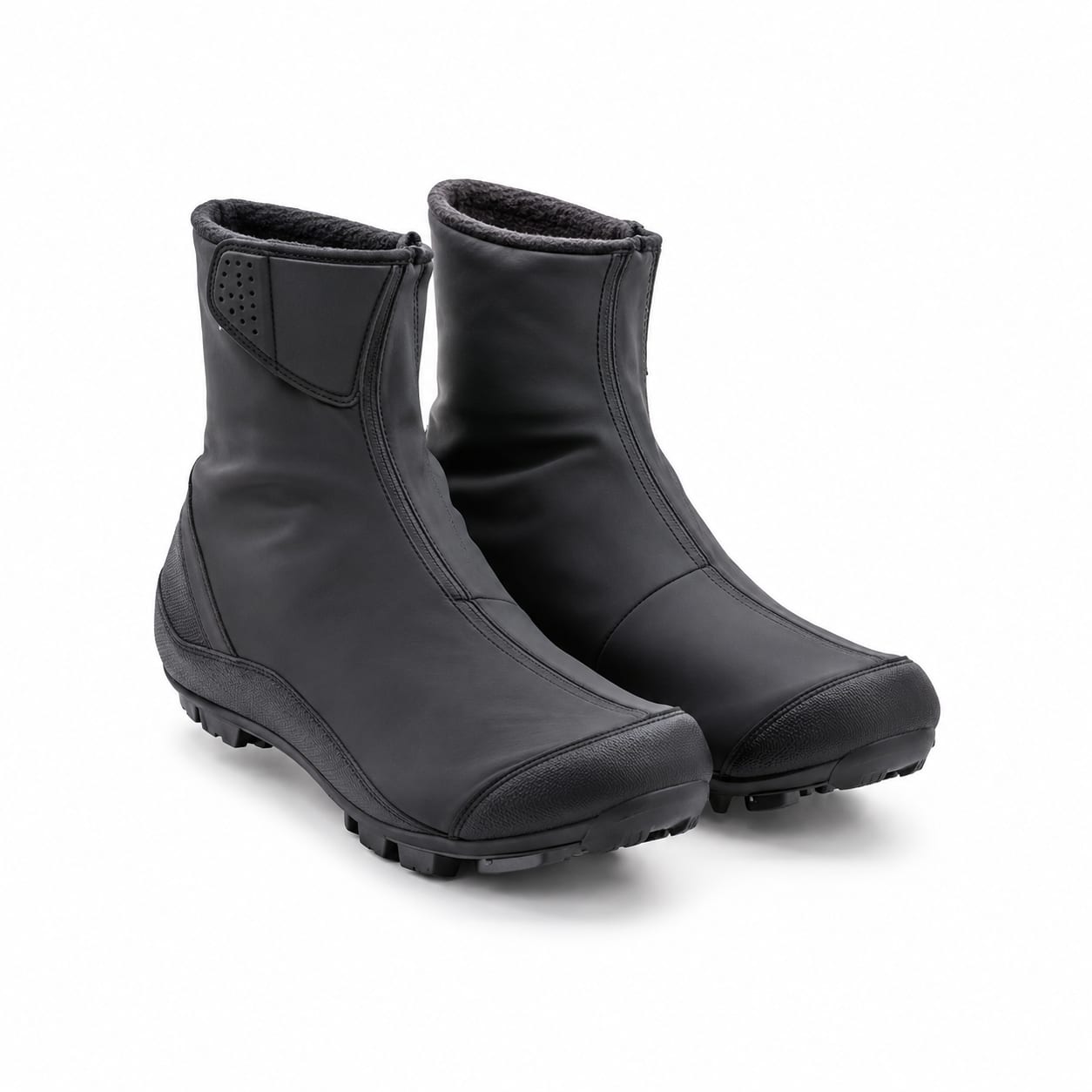
6 topics
Pick a question
Every answer links to the full subcategory guide and related gear types when it helps you decide.
Do I really need winter cycling shoes, or are overshoes good enough?
It depends on how cold and how often you ride. For occasional rides in temperatures above 5°C (41°F), quality neoprene overshoes on summer shoes work adequately. For regular riding below 5°C, or any riding in persistent rain and snow, dedicated winter shoes are dramatically better. Overshoes leak at the cleat hole, heel, and ankle opening, and they tear easily. Winter shoes are waterproof from the ground up with no gaps. If your feet regularly go numb despite overshoes, it is time for winter shoes.
Read answer →02What size should I buy compared to my summer cycling shoes?
Most riders need to size up 0.5 to 1 full EU size from their summer shoe. The insulated liner takes up volume inside the shoe, and you need room for thicker winter socks without compressing your toes. Compressed toes lose circulation and get cold regardless of how insulated the shoe is. Try on winter shoes with the exact socks you plan to wear—this is essential. Some brands (like Lake) are known to run large, so check brand-specific sizing advice.
Read answer →03Can I use winter cycling shoes with my road bike and 3-bolt pedals?
Most winter shoes use 2-bolt (SPD) cleat compatibility, which does not work with 3-bolt road pedals like Shimano SPD-SL or LOOK Keo. You have two options: switch to 2-bolt pedals (like Shimano SPD A520 or PD-T8000) for winter, which many road riders do, or seek out road-specific winter boots with 3-bolt compatibility (such as the Shimano SH-WR131W or Northwave Celsius GTX). Many year-round riders keep a second set of pedals for winter.
Read answer →04Why do my feet still get cold in winter cycling shoes?
The most common cause is shoes that are too tight, compressing toes and restricting circulation. Size up to allow room for thick socks and toe movement. Other causes include: insufficient core insulation (cold blood from a chilled body reaches feet last), socks that are too thick and cause sweating (damp feet get cold), and riding too hard then stopping (sweat cools rapidly). Try merino wool socks, ensure proper core layering, and consider adding chemical toe warmers for extreme cold.
Read answer →05Are winter cycling shoes waterproof enough for riding through deep puddles and streams?
Winter cycling shoes are waterproof from rain, spray, and splashes, but they are not submersion-proof. If water goes above the ankle cuff, it will enter from the top. For deep puddles and stream crossings, the water resistance of the shoe itself is excellent, but the opening at the top is the vulnerability. Some riders add waterproof socks (like SealSkinz) as an additional layer for extreme conditions where submersion is likely.
Read answer →06How do I dry winter cycling shoes after a wet ride?
Remove the insoles and open the shoes fully. Stuff them with crumpled newspaper to absorb moisture—replace the newspaper after a few hours if they are very wet. Let them air dry at room temperature. Never place them on a radiator, heater, or use a hair dryer on high heat, as this can delaminate the waterproof membrane and damage the synthetic materials. Drying typically takes 12–24 hours depending on how wet they got.
Read answer →