Kitvore.com

Kitvore.com

Specs that matter. Gear that fits.

Cycling Shoes · Subcategory

Winter / Cold Weather Cycling Shoes

Insulated, waterproof cycling shoes designed to keep your feet warm and dry in freezing temperatures, rain, snow, and slush.

Winter cycling shoes are purpose-built for riding in cold and wet conditions, featuring insulated liners, waterproof membranes like GORE-TEX, higher ankle coverage, and sealed construction. They sacrifice breathability and weight for warmth and weather protection, making them essential for anyone who rides through winter or in consistently cold, wet climates.

$150 – $400premium tierintermediateadvancedexpert

Best known for

Insulated liners that retain heat in sub-zero temperaturesWaterproof and windproof construction using GORE-TEX or similar membranesHigher ankle coverage that seals out rain, snow, and road spraySealed uppers with minimal ventilation to trap warmthAggressive tread patterns for traction on ice, snow, and mud
Winter / Cold Weather Cycling Shoes

Guide

Detailed overview

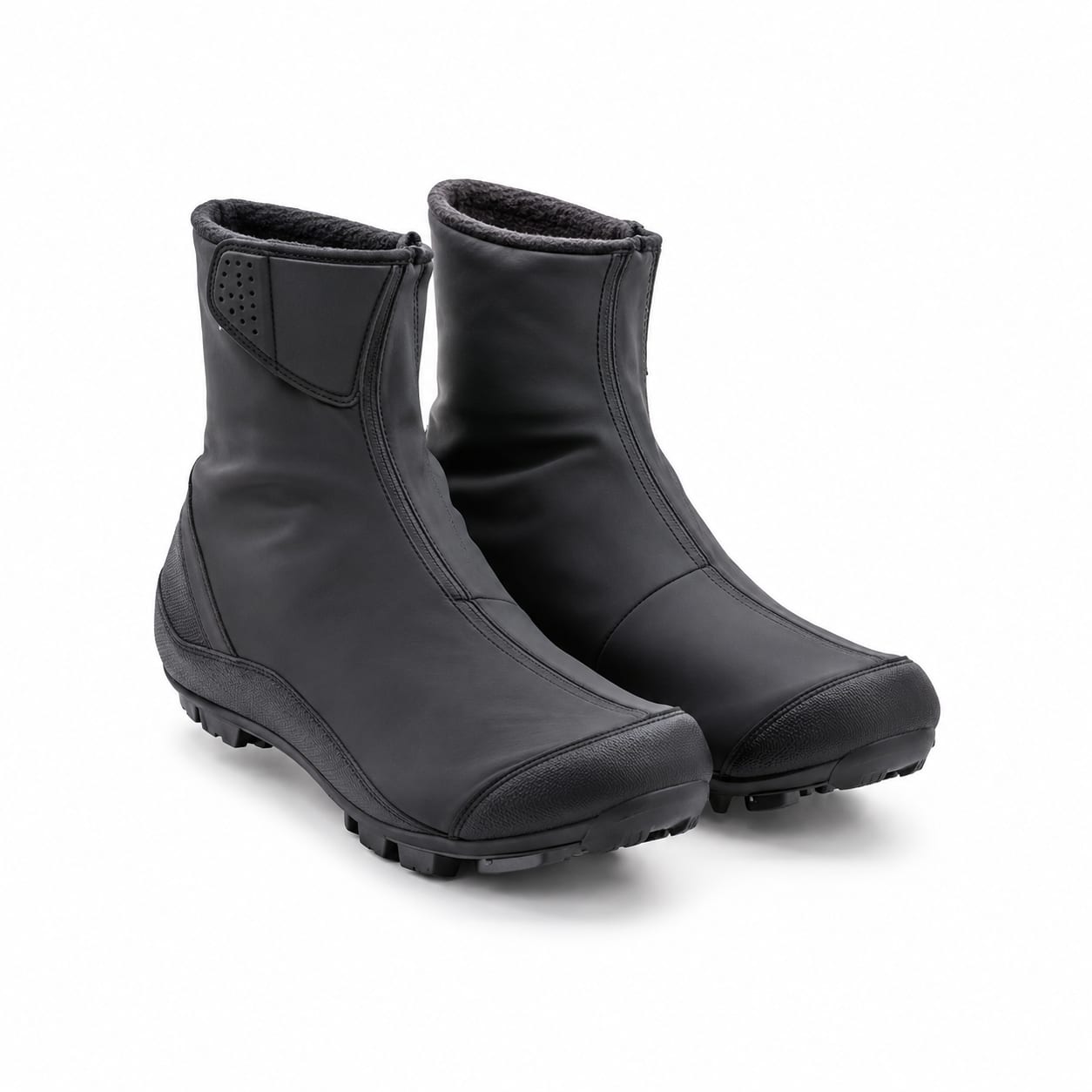
Winter cycling shoes are specialized footwear engineered for riding in cold temperatures, typically below 5°C (41°F), and in wet or snowy conditions. Unlike standard cycling shoes that prioritize breathability and low weight, winter shoes focus on thermal insulation, waterproofing, and wind protection. They feature thicker uppers with waterproof membranes (most commonly GORE-TEX), insulated liners (often fleece or Thinsulate), and higher ankle cuffs that extend above the ankle bone to prevent water and cold air ingress. The soles tend to use nylon or carbon-reinforced composites rather than full carbon, balancing stiffness with some compliance that feels more comfortable when feet are less sensitive in the cold. Most winter shoes use 2-bolt cleat compatibility since winter riding frequently involves gravel, commuting, or mountain biking where walkability on slippery surfaces matters, though road-specific winter boots with 3-bolt patterns exist. The trade-offs are significant: winter shoes are heavier (800–1200g per pair), less breathable, and more expensive than comparable fair-weather shoes. However, for riders in northern climates or those who commute year-round, they are transformative—eliminating the misery of numb, frozen toes and allowing consistent training through the off-season.

Riding through winter without proper footwear is one of the fastest ways to end a cycling season early. Cold feet are not just uncomfortable—they become painful, distracting, and potentially dangerous as reduced circulation and sensation impair your ability to feel the pedals and react quickly. Winter cycling shoes solve this problem by wrapping your feet in a cocoon of insulation and waterproofing that standard shoes with overshoes simply cannot match.

The core technology in winter cycling shoes is the waterproof-breathable membrane, most commonly GORE-TEX, which is laminated between the outer upper and an inner liner. This membrane blocks wind and water from the outside while allowing moisture vapor from sweat to escape, though the breathability is significantly reduced compared to summer shoes. Inside, insulated liners—often made from fleece, Thinsulate, or proprietary thermal materials—trap warm air around your feet. The combination creates a microclimate inside the shoe that stays warm even when temperatures drop well below freezing.

Ankle coverage is a defining feature that separates winter shoes from summer shoes with neoprene overshoes. Most winter boots extend 2–5 cm above the ankle bone, creating a seal that prevents the cold water and road spray that inevitably runs down your legs from entering the shoe. This higher cuff works in conjunction with the closure system—typically BOA dials or covered laces—to create a snug, weather-resistant seal. Some models feature integrated gaiters or neoprene cuffs that bridge the gap between shoe and tights, eliminating the exposed skin gap that lets cold air in.

Walkability is another area where winter shoes excel compared to summer shoe-plus-overshoe combinations. The aggressive rubber tread patterns on winter shoes provide traction on ice, snow, mud, and wet pavement—surfaces you will inevitably encounter when off the bike during winter. Recessed 2-bolt cleat designs keep the cleat from contacting the ground, and the tread lugs are often made from soft compound rubber that stays grippy in cold temperatures. This makes winter shoes practical for commuting scenarios where you need to walk into offices, shops, or train stations.

The main consideration when choosing winter shoes is sizing. Because of the insulated liner, you typically need to size up 0.5 to 1 full EU size from your summer shoe to accommodate thicker winter socks and the liner itself without compressing your toes. Compressed toes lose circulation and get cold regardless of how insulated the shoe is. Many experienced winter riders recommend trying shoes with the specific winter socks you plan to wear. Also consider that winter shoes are an investment in consistency—if they allow you to ride through three additional months of the year, the cost per ride quickly becomes reasonable.

Quick facts

Primary purpose
Protecting feet from cold, water, and wind while maintaining pedaling performance in winter conditions
Popular brands
ShimanoLake45NRTHBontragerSpecializedSidi
Typical terrain
snowslushwet roadsicy trailscold weather conditions

What makes it different

Built-in insulation and waterproofing unlike regular shoes with overshoes; high-cut design extends above the ankle for full weather protection

Recommended ranges

How this type usually specs out

Each spec is explained in plain language, then we show what buyers usually look for on this type.

Discipline / Shoe Type

Shoe Type

What it means

The intended riding discipline and design philosophy of the shoe, which determines sole stiffness, tread, cleat mounting, and overall construction.

Typical for this type

Mountain, Gravel, Commuter

In practice

Winter cycling shoes are most commonly built on MTB or gravel platforms because the 2-bolt cleat system and recessed tread provide essential walkability on snow, ice, and mud. Road-specific winter boots exist but are less common.

Compared to other types

Unlike summer road shoes that prioritize pure on-bike efficiency, winter shoes lean toward MTB/gravel designs because walkability on slippery surfaces becomes a safety requirement in cold conditions.

Why it matters: The shoe type determines cleat compatibility, sole design, and tread pattern—all critical for winter conditions where off-bike traction and walkability are safety concerns, not just conveniences.

Cleat Compatibility

Cleat Compatibility

What it means

The bolt pattern on the shoe sole that determines which cleat and pedal systems can be mounted. This is the most fundamental compatibility requirement.

Typical for this type

2_bolt (primary), Some 3 Bolt Road Models Available

In practice

The vast majority of winter cycling shoes use 2-bolt (SPD) cleat compatibility because the recessed cleat design allows safe walking on ice and snow. A few road-specific winter boots offer 3-bolt patterns.

Compared to other types

Summer road shoes almost universally use 3-bolt systems, but winter shoes flip this preference because walkability and safety on frozen surfaces take priority over maximum power transfer.

Why it matters: In winter, you will unclip more often—at stoplights, on icy patches, at cafe stops—and a recessed 2-bolt cleat prevents slipping on frozen surfaces. Exposed 3-bolt cleats become ice skates on hard ground.

Sole Material

Sole Material

What it means

The primary material of the shoe sole, which determines stiffness, weight, durability, and price. Stiffer soles transfer more power but reduce walkability and comfort.

Typical for this type

Nylon to Carbon Reinforced

In practice

Nylon soles are most common in winter shoes because they offer adequate stiffness for pedaling while providing slight compliance that feels more comfortable when feet are numb from cold. Carbon-reinforced options exist for performance-oriented winter riders.

Compared to other types

Summer race shoes use full carbon for maximum stiffness, but winter shoes prioritize comfort and warmth over absolute power transfer. The slight flex of nylon is actually beneficial in cold conditions.

Why it matters: Full carbon soles transmit every vibration and pressure point directly to cold feet, which can be painful. Nylon absorbs some of that harshness and is less thermally conductive, keeping feet warmer.

Sole Stiffness Index

Stiffness Index

What it means

A manufacturer-assigned or comparative rating of how resistant the sole is to flex under pedaling load. Higher numbers indicate stiffer soles that transfer more power.

Typical for this type

4–8

Most common pick: 6

In practice

Winter shoes typically fall in the mid-range stiffness (4–8 on manufacturer scales) because the insulated construction and thicker soles inherently reduce stiffness compared to race shoes, and some compliance is desirable in cold conditions.

Compared to other types

Summer race shoes range from 9–14 stiffness index. Winter shoes are intentionally less stiff, trading some power transfer for comfort and warmth retention.

Why it matters: Moderate stiffness provides enough power transfer for winter training rides while maintaining comfort for feet that have reduced sensitivity in the cold. Ultra-stiff soles can cause hot spots that you cannot feel until damage occurs.

Closure System

Closure System

What it means

The mechanism used to secure the shoe to the foot, affecting fit precision, adjustability, speed of entry/exit, and reliability.

Typical for this type

Boa Dial Preferred, Laces Acceptable

In practice

BOA dials are the most common closure on winter shoes because they allow easy adjustment with gloved hands and create even pressure across the insulated upper. Some models use covered laces for a cleaner weather seal.

Compared to other types

Summer shoes use any closure system comfortably, but winter shoes strongly favor BOA dials for glove-friendly operation and the ability to adjust fit without exposing hands to cold.

Why it matters: In winter, you wear gloves that reduce dexterity. BOA dials can be operated with thick gloves, while laces are difficult to tie and adjust with cold, gloved fingers. The dial also allows quick release when you want to get out of cold, wet shoes fast.

Weight per Pair

Weight (Pair)

What it means

The total weight of both shoes, typically measured in grams. Lighter shoes reduce rotational mass and can improve acceleration and climbing.

Typical for this type

800–1200g

Most common pick: 950g

In practice

Winter cycling shoes are significantly heavier than summer shoes due to insulated liners, waterproof membranes, thicker uppers, and more substantial tread. Typical pairs weigh 800–1200g depending on ankle height and insulation level.

Compared to other types

Summer road shoes weigh 400–550g per pair—nearly half the weight of winter shoes. The difference comes from insulation, waterproofing, and heavier construction materials.

Why it matters: The extra weight is the price of warmth and weather protection. For winter training and commuting, the weight penalty is acceptable. For racing or fast group rides in cold weather, lighter winter shoes or summer shoes with overshoes may be preferred.

Upper Material

Upper Material

What it means

The primary material of the shoe upper, affecting breathability, durability, water resistance, stretch, and overall comfort.

Typical for this type

Gore Tex Or Similar Waterproof Membrane

In practice

GORE-TEX or equivalent waterproof-breathable membranes are the standard upper material for winter cycling shoes. The membrane is laminated between a durable outer layer and an insulated inner liner to create a waterproof, windproof, and insulated barrier.

Compared to other types

Summer shoes use mesh, knit, or synthetic leather for breathability. Winter shoes use sealed, membrane-lined uppers that sacrifice breathability for waterproofing and wind protection—the opposite priority.

Why it matters: The waterproof membrane is what makes winter shoes effective. Without it, water and wind penetrate the upper, making insulation useless. GORE-TEX blocks external water while allowing some sweat vapor to escape, preventing clammy feet.

Width / Fit Profile

Width / Fit Profile

What it means

The volume and width of the shoe last (foot mold), which determines how the shoe accommodates different foot shapes. Critical for comfort and preventing numbness.

Typical for this type

Standard to Wide (Consider Sizing Up)

In practice

Winter shoes are typically available in standard and wide widths, but most riders need to size up 0.5–1 EU size from their summer shoe to accommodate the insulated liner and thicker winter socks without compressing toes.

Compared to other types

Summer shoes are sized for a snug race fit with thin socks. Winter shoes need extra volume for insulation layers, making proper sizing even more critical for warmth.

Why it matters: Compressed toes lose circulation and get cold regardless of insulation. A shoe that fits perfectly in summer may be too tight in winter with thick socks and the liner. Sizing up ensures adequate volume for warm feet.

Ventilation Level

Ventilation

What it means

The degree of airflow through the shoe upper and sole, affecting temperature regulation, moisture management, and comfort in different weather conditions.

Typical for this type

Minimal (Sealed Construction)

In practice

Winter cycling shoes have minimal to no ventilation—sealed uppers with no mesh panels or sole vents. This is by design: ventilation lets cold air and water in, defeating the purpose of insulation and waterproofing.

Compared to other types

Summer shoes prioritize high ventilation for cooling. Winter shoes are the opposite—completely sealed to retain heat. This makes winter shoes unusable in warm weather as feet will overheat rapidly.

Why it matters: Sealed construction traps warm air inside and blocks cold wind and water from entering. Any ventilation ports would be thermal bridges that compromise the shoe's ability to keep feet warm in freezing conditions.

Heel Retention System

Heel Retention

What it means

Design features in the heel cup that prevent heel lift during the upstroke, ensuring efficient power transfer and stable foot positioning.

Typical for this type

Reinforced Heel to Adjustable Heel

In practice

Winter shoes typically feature reinforced heel cups that provide solid hold despite the thicker, more compressible insulated liner. Adjustable heel retention is available on premium models for riders with narrow heels.

Compared to other types

Heel retention is more challenging in winter shoes because the thick liner introduces compressible material between the heel cup and the foot. Reinforced or adjustable systems compensate for this.

Why it matters: The insulated liner adds compressible material that can allow heel movement if the shoe is not properly sized or the heel cup is not sufficiently rigid. Good heel retention prevents energy-wasting heel lift and blisters from rubbing against wet liners.

Sole Stack Height

Stack Height

What it means

The distance from the pedal axle to the bottom of the foot, determined by sole thickness and cleat design. Lower stack height improves pedaling efficiency and cornering clearance.

Typical for this type

10–16mm

Most common pick: 12mm

In practice

Winter shoes have higher stack heights than summer shoes due to the insulated sole construction, thicker insoles, and more substantial tread. Typical stack heights range from 10–16mm.

Compared to other types

Summer road shoes achieve 5–8mm stack heights. Winter shoes are 4–8mm taller due to insulation layers and aggressive tread, which is an acceptable trade-off for cold-weather functionality.

Why it matters: The higher stack is a consequence of the insulation and tread needed for winter conditions. While this slightly reduces pedaling efficiency compared to low-stack summer shoes, the warmth and traction benefits far outweigh the marginal power loss.

Included Insole / Footbed

Insole Type

What it means

The type and quality of the footbed included with the shoe, which affects arch support, comfort, and the ability to customize fit.

Typical for this type

Contoured Ergonomic to Interchangeable Arch

In practice

Winter shoes typically include contoured ergonomic insoles with some arch support, often with a fleece or thermal top layer for additional warmth. Interchangeable arch inserts are available on premium models.

Compared to other types

Summer shoe insoles prioritize breathability and weight savings. Winter insoles add thermal insulation and often have fleece or foil layers that reflect body heat back toward the foot.

Why it matters: The insole is a critical warmth layer in winter shoes—a fleece-lined or insulated insole adds significant thermal value. Arch support also matters more in winter because cold feet are less tolerant of pressure points and poor support.

Toe Box Shape

Toe Box Shape

What it means

The shape and volume of the front of the shoe where the toes sit, affecting comfort, toe splay, and prevention of numbness or bunions.

Typical for this type

Rounded Standard to Wide Anatomical

In practice

Winter shoes favor rounded or wide anatomical toe boxes to accommodate thicker socks and allow toe circulation. A cramped toe box in cold weather leads directly to numb, frozen toes regardless of insulation quality.

Compared to other types

Summer race shoes often use pointed, tapered toe boxes for aerodynamics. Winter shoes prioritize volume and circulation over aerodynamics, making rounded or wide toe boxes the norm.

Why it matters: Toe circulation is the first thing to fail in cold weather. A toe box that allows natural toe splay and accommodates thick socks maintains blood flow to the extremities, which is the foundation of keeping feet warm.

Ankle Coverage

Ankle Coverage

What it means

How high the shoe extends above the ankle bone, affecting protection, support, weather resistance, and range of motion.

Typical for this type

Mid Ankle to High Ankle

In practice

Winter cycling shoes extend above the ankle bone, typically 2–5 cm, to create a seal that prevents cold air, water, and road spray from entering the shoe. High-ankle boot styles offer maximum protection for extreme cold.

Compared to other types

Summer shoes are almost universally low-cut below the ankle. Winter shoes are defined by their higher ankle coverage, which is the single most distinguishing visual and functional feature of the category.

Why it matters: The ankle cuff is the primary defense against water running down your legs into the shoe. Without it, even waterproof shoes fill with water from the top. The higher coverage also adds warmth by sealing the gap between shoe and tights.

Walkability Rating

Walkability

What it means

How easily and comfortably you can walk in the shoes off the bike, determined by sole flexibility, tread pattern, and cleat recess.

Typical for this type

Moderate to High

In practice

Winter shoes offer moderate to high walkability thanks to recessed 2-bolt cleats, aggressive rubber tread, and slightly more flexible soles. The tread patterns are designed for traction on ice, snow, and mud.

Compared to other types

Summer road shoes have essentially zero walkability. Winter shoes with recessed cleats and aggressive tread are dramatically more walkable, which is critical when surfaces are hazardous.

Why it matters: Winter riding involves more frequent stops and walking on slippery surfaces. Good walkability means you can safely navigate icy parking lots, snowy trails, and wet floors without slipping. This is a safety feature, not just a convenience.

Heat Moldable Upper/Sole

Heat Moldable

What it means

Whether the shoe upper, sole, or both can be heat-molded to customize the fit to the rider's foot shape.

Typical for this type

False (Most Common), Some True Options Available

In practice

Most winter cycling shoes are not heat-moldable because the insulated liner and waterproof membrane complicate the molding process. A few premium models from brands like Lake and Bont offer heat-moldable construction.

Compared to other types

Summer performance shoes more commonly offer heat-moldable options for race-level fit customization. Winter shoes prioritize weather protection over custom fit features.

Why it matters: Heat moldability is less critical in winter shoes because the insulated liner provides a conforming layer between the shoe and foot. The liner itself adapts to foot shape over time, reducing the need for custom molding.

Gender-Specific Design

Gender Design

What it means

Whether the shoe is built on a gender-specific last, which accounts for typical differences in foot shape, volume, and proportions.

Typical for this type

Unisex, Mens, Womens (Limited Selection)

In practice

Many winter cycling shoes are offered in unisex sizing due to the smaller market, though some brands produce men's and women's-specific models. Women's-specific winter shoes are less common than summer models.

Compared to other types

Summer shoes have extensive women's-specific options across all brands. Winter shoes have more limited women's-specific selections, meaning women often need to try unisex or men's models and focus on getting the right size.

Why it matters: Women may need to try both women's-specific and unisex options to find the best fit, especially since winter shoe sizing is already complicated by the need to accommodate thick socks and liners.

Evaluation

Strengths and trade-offs

Pros

What this type does best

Keeps feet warm in sub-zero temperatures

Critical

Insulated liners and sealed construction maintain foot warmth in temperatures well below freezing, allowing comfortable riding when standard shoes with overshoes would leave feet numb.

Fully waterproof protection

Critical

GORE-TEX or equivalent membranes block rain, snow, slush, and road spray completely. Unlike overshoes that leak at the cleat hole and ankle opening, winter shoes are waterproof from the ground up.

Superior to overshoes for sustained cold-weather riding

High

Winter shoes eliminate the gaps, leaks, and cold bridges inherent in overshoes. They are a complete integrated solution rather than a compromise add-on, providing consistent warmth for hours.

Safe walkability on ice and snow

High

Aggressive rubber tread with recessed cleats provides traction on frozen, wet, and snowy surfaces. This is a genuine safety feature when navigating icy roads, parking lots, or hike-a-bike sections.

Higher ankle coverage seals out water and cold

High

The extended cuff prevents the water that runs down your legs from entering the shoe—a failure point that makes overshoes ineffective in heavy rain. It also seals the gap between shoe and tights.

Glove-friendly BOA closure systems

Medium

Most winter shoes use BOA dials that can be easily operated with thick winter gloves, unlike laces that require bare fingers in freezing conditions.

Durable construction withstands harsh conditions

Medium

Winter shoes are built with reinforced materials, robust closures, and protective elements that withstand salt, grit, slush, and abrasion from winter riding that would destroy lightweight summer shoes.

Cons

Trade-offs to be aware of

Significantly heavier than summer shoes

Moderate

At 800–1200g per pair, winter shoes are nearly double the weight of summer road shoes. The insulation, waterproofing, and heavier construction add substantial weight that affects acceleration and climbing.

Very limited breathability causes sweaty feet

Moderate

The sealed, waterproof construction that keeps cold out also traps moisture inside. During hard efforts, feet can become clammy and damp from sweat, which then becomes cold when effort decreases. This is an inherent compromise of waterproof design.

Expensive compared to summer shoes plus overshoes

Moderate

Quality winter cycling shoes typically cost $200–$400, which is a significant investment for seasonal-use footwear. Budget-conscious riders may find that good overshoes paired with summer shoes cover most needs at lower cost.

Unusable in warm weather

Moderate

Winter shoes are single-season footwear. Even on mild winter days above 10°C (50°F), feet will overheat. You need a separate pair of shoes for warmer conditions, making them an additional rather than replacement purchase.

Sizing is tricky due to insulation and sock thickness

Minor

Finding the right size is challenging because you need to account for the insulated liner and varying sock thicknesses. A shoe that fits in the shop with thin socks may be too tight with winter-weight socks, and sizing up too much creates cold air gaps.

Limited model selection and availability

Minor

Far fewer winter shoe models are available compared to summer shoes, especially in women's-specific designs and wide widths. Popular models often sell out before winter starts, requiring early-season purchasing.

Best for

Surfaces & terrain

wet roadssnow-covered roadsicy pavementmuddy trailsslushy bike pathsgravel in wet conditions

Riding conditions

sub-zero temperaturesfreezing rainsnowslush and road spraypersistent cold rainwind chillearly morning frost rides

Skill level

intermediateadvancedprofessional

Riding discipline

winter trainingyear-round commutingcold-weather bikepackingfat bikingcyclocross in wet conditionsgravel riding in winter

Rider profile

year-round commuters who refuse to drivededicated cyclists who train through winterbikepackers riding in cold climatesnordic riders with long cold seasonsanyone whose feet get cold below 5°C despite overshoes

Not ideal for

Reasons

Feet will overheat rapidly in temperatures above 10°C (50°F)Too heavy and restrictive for racing where every gram mattersExcessive for riders who only occasionally face cold conditions and can use overshoes insteadNot compatible with 3-bolt-only pedal systems unless you buy a road-specific winter boot

Surfaces & terrain

dry hot-weather roadsindoor training environments

Skill level

beginners who ride occasionally in mild weather

Riding discipline

summer road racinghot-weather criteriumsindoor spin classestime trialstriathlon

Compare

How it stacks up

This page

Winter / Cold Weather Cycling Shoes

Complete waterproof protection without the gaps, leaks, and cold bridges of overshoes. Overshoes leak at the cleat hole, heel, and ankle opening, and they tear easily. Winter shoes are a purpose-built integrated solution that provides consistent warmth for hours.

Alternative

Summer Road Shoes + Overshoes

Much lower cost since you already own the shoes. Overshoes are removable, so you can use the same shoes year-round. Lighter total weight for milder cold days. Better power transfer with stiff carbon soles.

Bottom line

If you ride regularly in temperatures below 5°C or in persistent rain, invest in dedicated winter shoes. If you only ride in cold weather occasionally or in mild cold (5–10°C), quality overshoes on summer shoes are sufficient and more versatile.

This page

Winter / Cold Weather Cycling Shoes

Waterproof, insulated, and windproof—standard MTB shoes offer none of these. Winter shoes keep feet warm and dry in conditions where standard MTB shoes leave feet frozen and soaked within minutes.

Alternative

Mountain Bike Shoes (Standard/Summer)

Lighter, more breathable, and less expensive. Standard MTB shoes work well from spring through autumn and are more comfortable in mild conditions. Greater model selection and style options.

Bottom line

Use standard MTB shoes for three-season riding and add winter shoes for the cold season. If you ride year-round in a cold climate, having both is the best approach. Do not try to use standard MTB shoes with thick socks as a substitute—they are not waterproof and the socks get wet and cold.

This page

Winter / Cold Weather Cycling Shoes

Waterproof and insulated construction that gravel shoes lack. Gravel shoes may handle light rain but are not designed for sustained cold, wet, or snowy conditions. The higher ankle coverage of winter shoes is a major advantage in winter.

Alternative

Gravel / Adventure Shoes

Gravel shoes are lighter, more breathable, and more versatile across seasons. They work well in cool but not cold conditions (5–15°C) and are better for fast riding where weight and stiffness matter.

Bottom line

Gravel shoes are ideal for cool autumn and spring rides. For true winter conditions below 5°C with rain or snow, switch to dedicated winter shoes. The overlap zone around 5–10°C is where either can work depending on your cold tolerance.

This page

Winter / Cold Weather Cycling Shoes

Much better pedaling efficiency and power transfer than soft-soled commuter shoes. Better waterproofing and insulation than most commuter models. Higher ankle coverage for serious weather protection.

Alternative

Commuter / Urban Shoes

Commuter shoes are more comfortable for extended walking, look better off the bike, and cost less. For short commutes in moderate cold, commuter shoes may be sufficient, especially with wool socks.

Bottom line

For commutes under 30 minutes in moderate cold (above 0°C), waterproof commuter shoes with wool socks may suffice. For longer commutes, colder temperatures, or serious weather, winter cycling shoes provide the warmth and protection that commuter shoes cannot match.

Shopping

Buying tips

  • 1

    Size up 0.5–1 EU size from your summer shoe to accommodate the insulated liner and thick winter socks. Try them on with the specific socks you plan to wear in winter—this is non-negotiable for proper fit.

  • 2

    Prioritize 2-bolt (SPD) cleat compatibility for winter riding. The recessed cleat is dramatically safer for walking on ice and snow compared to exposed 3-bolt road cleats. If you must use 3-bolt, look for road-specific winter boots.

  • 3

    Look for BOA dial closures for glove-friendly operation. Laces are frustrating with cold, gloved hands, and velcro straps can freeze and lose grip when wet. At least one BOA dial is ideal; two provide better zone adjustment.

  • 4

    Check the ankle cuff design carefully—it should seal snugly against your leg or tights without gaps. Neoprene cuffs or integrated gaiters provide the best seal. A loose ankle cuff lets water and cold air pour in.

  • 5

    Consider how the tread performs on ice. Some winter shoes have softer rubber compounds that stay grippy in cold temperatures, while others use harder rubber that becomes slippery. Read reviews specifically about ice traction.

  • 6

    Buy early—popular winter shoe models sell out by October in many regions. Do not wait until the first freeze to start shopping, as selection will be limited and you may not find your size.

  • 7

    If you ride in temperatures below -5°C (23°F), look for models with the highest insulation ratings and consider adding aftermarket thermal insoles. No shoe is too warm at those temperatures.

  • 8

    Waterproof does not mean breathable. Accept that your feet will be damp from sweat during hard efforts. The key is that they stay warm—damp and warm is tolerable; damp and cold is miserable.

Care

Maintenance notes

  • Rinse off salt, grit, and road chemicals after every winter ride. Salt is corrosive and will degrade the upper, closure hardware, and cleat mounting threads over time. A quick rinse with warm water prevents long-term damage.
  • Remove the insoles after wet rides and dry them separately. This speeds drying and prevents mold and odor buildup inside the insulated liner, which takes much longer to dry than standard shoe uppers.
  • Never dry winter shoes on a radiator, heater, or with a hair dryer on high heat. The waterproof membrane and synthetic materials can delaminate or warp. Stuff with newspaper and let them air dry at room temperature.
  • Reapply DWR (Durable Water Repellent) treatment to the outer upper once or twice per winter season. The factory DWR coating wears off, causing the outer fabric to absorb water (though the GORE-TEX membrane still blocks it). A spray-on DWR treatment restores the beading effect.
  • Inspect and tighten cleat mounting bolts regularly. Cold temperatures cause metal to contract, and the vibration of winter riding on rough roads can loosen bolts. Carry a spare cleat bolt in your seat bag.
  • Store winter shoes in a dry, well-ventilated area during the off-season. Do not leave them in a damp garage or shed where mold can develop in the insulated liner. A light stuffing with newspaper helps maintain shape.

Progression

Skill development path

Winter cycling shoes do not have a traditional skill progression like technical riding gear, but there is a learning curve to riding in cold conditions. Beginners should start with short rides in moderate cold (0–5°C) to learn how their feet respond and how to layer socks appropriately. As you gain experience, you will learn your personal cold threshold—when to switch from summer shoes with overshoes to dedicated winter shoes, and how thick your socks need to be at different temperatures. Advanced winter riders develop strategies like pre-warming shoes on a radiator before rides, using toe warmers for extreme cold, and managing the sweat-breathability compromise by adjusting effort levels. The key insight is that keeping feet warm is as much about managing circulation (proper fit, not too tight) as it is about insulation (thick socks, warm shoes).

FAQ

Common questions

Each question has a dedicated page with a full answer and links to the buying guide.

Do I really need winter cycling shoes, or are overshoes good enough?

It depends on how cold and how often you ride. For occasional rides in temperatures above 5°C (41°F), quality neoprene overshoes on summer shoes work adequately. For regular riding below 5°C, or any riding in persistent rain and snow, dedicated winter shoes are dramatically better. Overshoes leak at the cleat hole, heel, and ankle opening, and they tear easily. Winter shoes are waterproof from the ground up with no gaps. If your feet regularly go numb despite overshoes, it is time for winter shoes.

What size should I buy compared to my summer cycling shoes?

Most riders need to size up 0.5 to 1 full EU size from their summer shoe. The insulated liner takes up volume inside the shoe, and you need room for thicker winter socks without compressing your toes. Compressed toes lose circulation and get cold regardless of how insulated the shoe is. Try on winter shoes with the exact socks you plan to wear—this is essential. Some brands (like Lake) are known to run large, so check brand-specific sizing advice.

Can I use winter cycling shoes with my road bike and 3-bolt pedals?

Most winter shoes use 2-bolt (SPD) cleat compatibility, which does not work with 3-bolt road pedals like Shimano SPD-SL or LOOK Keo. You have two options: switch to 2-bolt pedals (like Shimano SPD A520 or PD-T8000) for winter, which many road riders do, or seek out road-specific winter boots with 3-bolt compatibility (such as the Shimano SH-WR131W or Northwave Celsius GTX). Many year-round riders keep a second set of pedals for winter.

Why do my feet still get cold in winter cycling shoes?

The most common cause is shoes that are too tight, compressing toes and restricting circulation. Size up to allow room for thick socks and toe movement. Other causes include: insufficient core insulation (cold blood from a chilled body reaches feet last), socks that are too thick and cause sweating (damp feet get cold), and riding too hard then stopping (sweat cools rapidly). Try merino wool socks, ensure proper core layering, and consider adding chemical toe warmers for extreme cold.