
Gravel Bike · FAQ
Questions about Groad / Mountain-Gravel
Straight answers on fit, specs, and when this type makes sense — each topic has its own page with links back to the buying guide.
Open Groad / Mountain-Gravel guide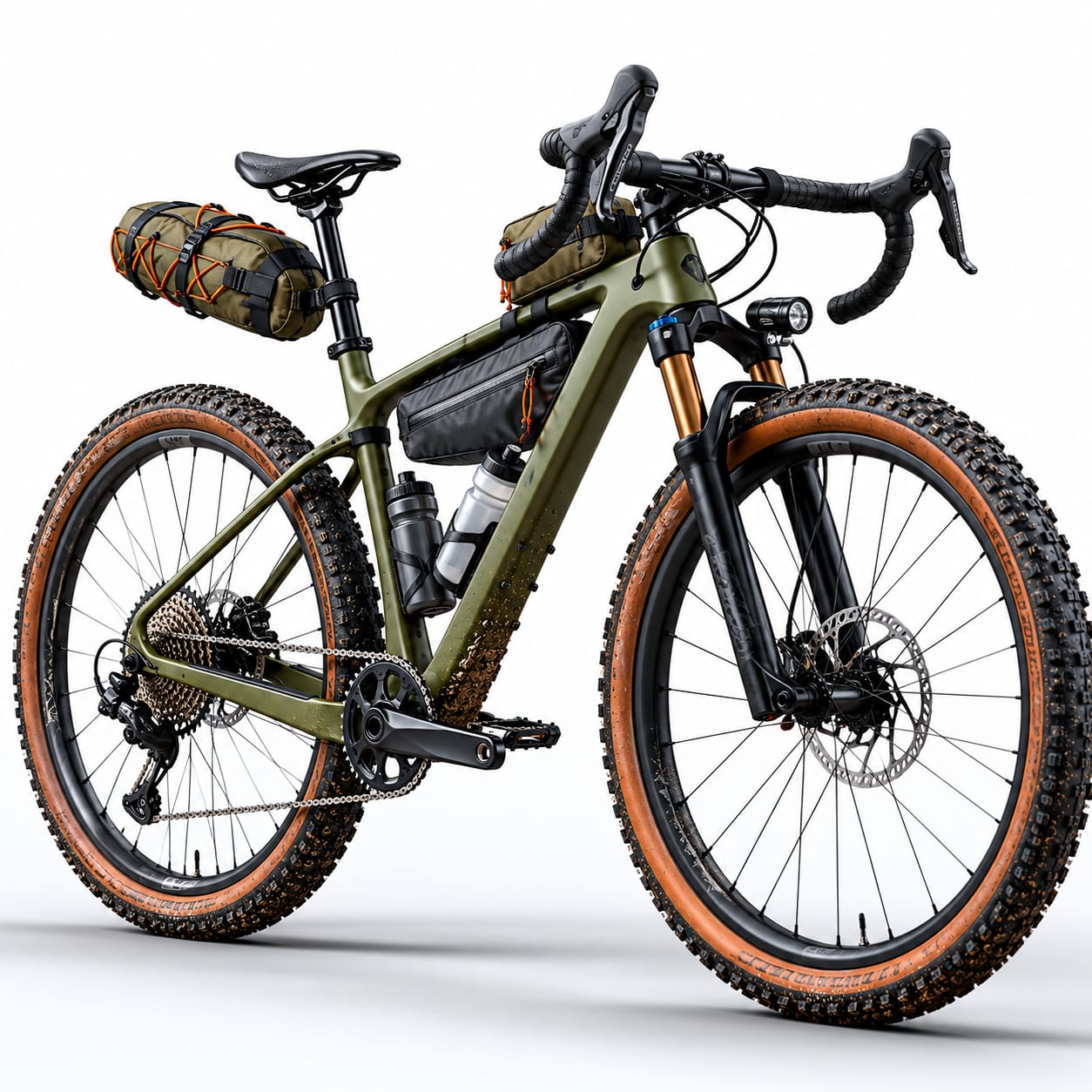
6 topics
Pick a question
Every answer links to the full subcategory guide and related gear types when it helps you decide.
Can a groad bike replace my mountain bike?
For many riders, yes — with caveats. A groad bike with 2.1" 650b tires and a dropper post can handle 80-90% of the terrain that a cross-country hardtail can, including blue and some black singletrack trails. However, it cannot match a mountain bike's capability on sustained technical terrain, steep rock gardens, or jump lines. If your mountain biking consists primarily of flow trails and cross-country riding, a groad bike can replace it. If you ride aggressive enduro or technical downhill trails, keep your mountain bike.
Read answer →02Do I need suspension on a groad bike?
It depends on your terrain and ride duration. If you regularly ride rough terrain for 4+ hours, micro-suspension significantly reduces hand and arm fatigue and is worth the weight and cost. If your rides are shorter or your terrain is moderately rough, wide tires (50mm+) at appropriate pressure provide sufficient comfort for most riders. Many groad riders start rigid and add suspension later if needed. The Fox 32TC and RockShox Rudy are the most popular options and can be retrofitted to some frames.
Read answer →03What is the ideal tire setup for a groad bike?
For maximum versatility, run 700c wheels with 45-50mm tires for general mixed-terrain riding, and have a 650b wheelset with 2.0-2.1" mountain bike tires for technical days. If you can only have one wheelset, 700c with 50-53mm tires is the best all-around choice. Tire pressure is critical: most riders run 22-28psi tubeless for a 75kg rider. Use a pressure calculator like Silca's or SRAM's Zipp tool to find your optimal pressure based on tire width, rider weight, and terrain.
Read answer →04How much dropper travel do I need on a groad bike?
For most riders on groad terrain, 60-80mm of dropper travel is sufficient. This provides enough saddle drop to shift your weight back on steep descents without requiring a very long seatpost insertion depth. Aggressive riders on very steep terrain may want 100-120mm. The limiting factor is usually frame insertion depth — check the manufacturer's maximum insertion depth before buying a dropper. Many groad frames are designed around specific dropper posts, so verify compatibility.
Read answer →05Is a groad bike too slow for group gravel rides?
On fast, smooth gravel group rides, a groad bike will be at a disadvantage compared to lighter, race-oriented gravel bikes. The wider tires create more rolling resistance, the upright position adds aerodynamic drag, and the heavier bike accelerates more slowly. However, on rides that include technical or rough sections, the groad bike's capability advantage can offset its speed disadvantage. For fast group rides, consider a second set of 700c wheels with 35-38mm tires to reduce the penalty.
Read answer →06Can I bikepack on a groad bike, or should I get a dedicated bikepacking bike?
Groad bikes are excellent bikepacking platforms and are often the preferred choice for off-road bikepacking routes. Their long chainstays provide frame bag clearance, abundant mounting points accept any bag configuration, and stable geometry remains composed under load. The main difference from a dedicated bikepacking bike is that groad bikes prioritize off-road capability over maximum load capacity. If your bikepacking involves technical terrain (like the Arizona Trail or Colorado Trail), a groad bike is actually the better choice.
Read answer →