
Mountain Bike · FAQ
Questions about Dirt Jump / Slopestyle Bike
Straight answers on fit, specs, and when this type makes sense — each topic has its own page with links back to the buying guide.
Open Dirt Jump / Slopestyle Bike guide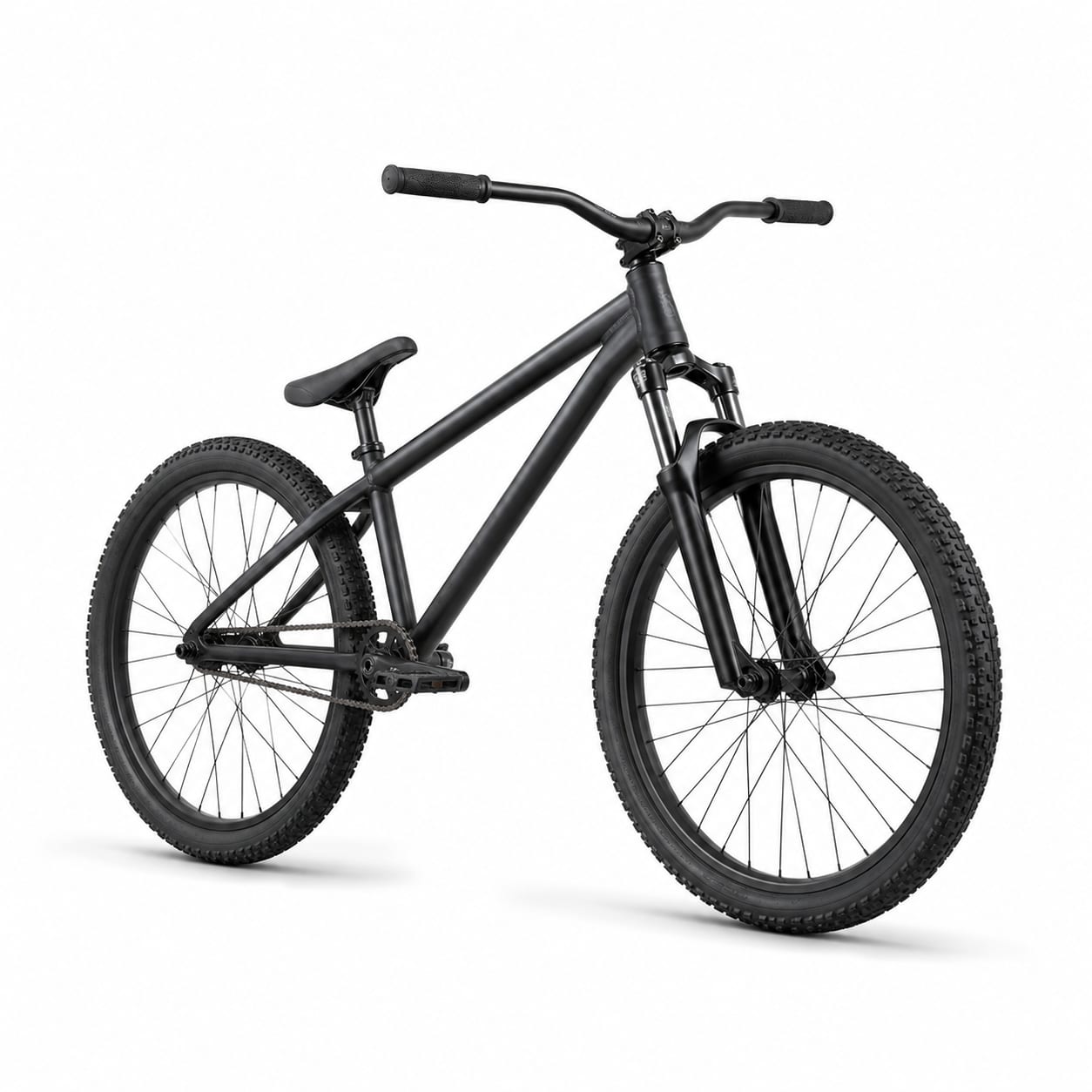
6 topics
Pick a question
Every answer links to the full subcategory guide and related gear types when it helps you decide.
Can I ride a dirt jump bike on regular trails?
Technically yes, but it will be miserable. Dirt jump bikes have no climbing gears, no comfortable saddle position, minimal suspension, and geometry that's exhausting on anything but jump lines. You'll be walking up hills, getting beaten up on rough terrain, and spinning out on flats. If you want to ride trails, get a trail bike. If you want to ride trails AND hit jumps, a trail hardtail is a much better compromise.
Read answer →02Should I get a hardtail or full suspension dirt jump bike?
For most riders, hardtail is the way to go. It's simpler, lighter, cheaper, and provides a more consistent platform for learning tricks. Full suspension slopestyle bikes are really only necessary for competitive slopestyle riding on courses with large, high-speed features. The rear suspension adds complexity and reduces pump track efficiency. If you're not competing in slopestyle events, go hardtail.
Read answer →03Why do some dirt jump riders only have a rear brake?
Running only a rear brake eliminates the front brake cable that would wrap around the stem during bar spins and tail whips. It's a trick-oriented choice—bar spins and tail whips are core tricks in dirt jump and slopestyle, and a front brake cable gets in the way. If you're not doing bar spins or tail whips, keep the front brake for safety. Many riders start with both brakes and remove the front only when they begin learning rotational tricks.
Read answer →04Is 26-inch or 27.5-inch better for dirt jumping?
26-inch remains the most popular choice for dirt jump riding because the smaller wheel is easier to accelerate, more compact in the air, and has a long-established parts ecosystem. 27.5-inch wheels roll slightly better through transitions and maintain momentum better, but the difference is subtle. Most experienced riders prefer 26-inch for its snappy feel and trick-friendly rotational characteristics. If you're coming from BMX, 26-inch will feel more natural. If you're coming from mountain biking, 27.5-inch may feel less dramatically different from what you're used to.
Read answer →05How much should I spend on a dirt jump bike?
Quality entry-level dirt jump bikes start around $800-1,200 new, with mid-range models at $1,200-2,000 and high-end builds from $2,000-3,500. The most important investment is the frame—chromoly steel frames from reputable brands are worth paying for. Budget models often cut costs on wheels, which are the first thing to fail under jump abuse. Consider buying used: quality steel frames are nearly indestructible, and a used frame with fresh components can save 30-50% off new pricing. Budget an additional $150-300 for protective gear.
Read answer →06Do I need a special helmet for dirt jumping?
Yes—a regular cycling helmet is not sufficient for dirt jump riding. At minimum, use a mountain bike helmet with extended rear coverage. Most dirt jump riders prefer full-face helmets, especially when learning new tricks or hitting larger features. Modern lightweight full-face helmets (like the Proframe or Super DH) offer DH-level protection with ventilation that's comfortable for pedaling. A full-face helmet is the single most important safety investment you can make for dirt jump riding.
Read answer →