
Road Bike · FAQ
Questions about Flat-Bar Road Bike
Straight answers on fit, specs, and when this type makes sense — each topic has its own page with links back to the buying guide.
Open Flat-Bar Road Bike guide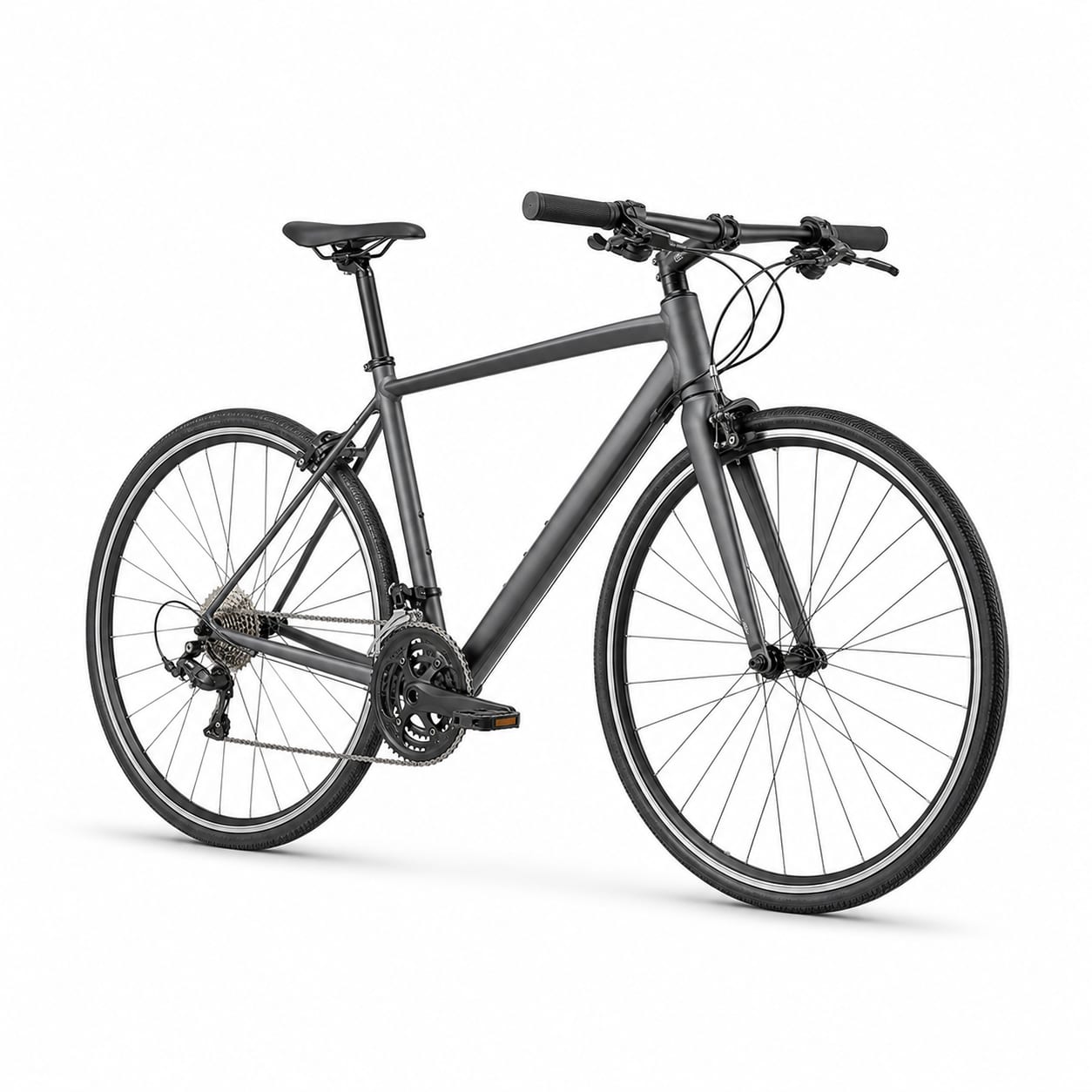
6 topics
Pick a question
Every answer links to the full subcategory guide and related gear types when it helps you decide.
Can I convert a flat-bar road bike to drop bars later?
Technically yes, but it is expensive and often not cost-effective. You would need to replace the handlebar, shifters, brake levers, stem, and potentially the front derailleur and brakes — essentially the entire cockpit and control system. The cost of parts and labor often approaches the price of a new drop-bar bike. If you think you might want drop bars in the future, buy a drop-bar bike now.
Read answer →02Are flat-bar road bikes slower than drop-bar road bikes?
Yes, at speeds above 25 km/h, the upright riding position creates significant aerodynamic drag that makes flat-bar bikes slower for the same effort. Below 20 km/h, the difference is minimal. For commuting and recreational riding at moderate speeds, the speed difference is negligible. For fast group rides or racing, the aerodynamic penalty is substantial.
Read answer →03What is the difference between a flat-bar road bike and a hybrid bike?
Flat-bar road bikes have narrower tires (28–32mm), lighter frames, road-oriented gearing with closer gear ratios, and no suspension. Hybrid bikes have wider tires (38–45mm), often include front suspension forks, have wider-range gearing, and prioritize comfort over speed. Flat-bar road bikes are faster on pavement; hybrids are more comfortable on rough surfaces.
Read answer →04Can I ride a flat-bar road bike on gravel or dirt paths?
Smooth, well-maintained gravel paths are manageable with 32mm tires at lower pressures, but flat-bar road bikes are not designed for off-road use. Rough gravel, loose dirt, and rocky trails exceed their capability. If you regularly ride mixed surfaces, consider a gravel bike with wider tire clearance and drop bars for better control on loose terrain.
Read answer →05How do I prevent hand numbness on long rides with flat bars?
Install ergonomic grips with palm support (Ergon GP1 or similar), add bar ends for an alternate hand position, wear padded cycling gloves, and ensure your saddle is properly adjusted — a nose-down saddle shifts weight onto your hands. Taking regular hand-stretch breaks every 30 minutes also helps. If numbness persists on rides over 90 minutes, a drop-bar bike may be a better fit.
Read answer →06Is a flat-bar road bike good for commuting?
Excellent. The upright position provides great visibility in traffic, flat bars offer intuitive handling for stop-and-go riding, and most models accommodate fenders and racks for all-weather commuting. The road bike efficiency means you arrive faster and less fatigued than on a heavier hybrid. Choose hydraulic disc brakes for reliable wet-weather stopping.
Read answer →