
Road Bike · FAQ
Questions about Touring Road Bike
Straight answers on fit, specs, and when this type makes sense — each topic has its own page with links back to the buying guide.
Open Touring Road Bike guide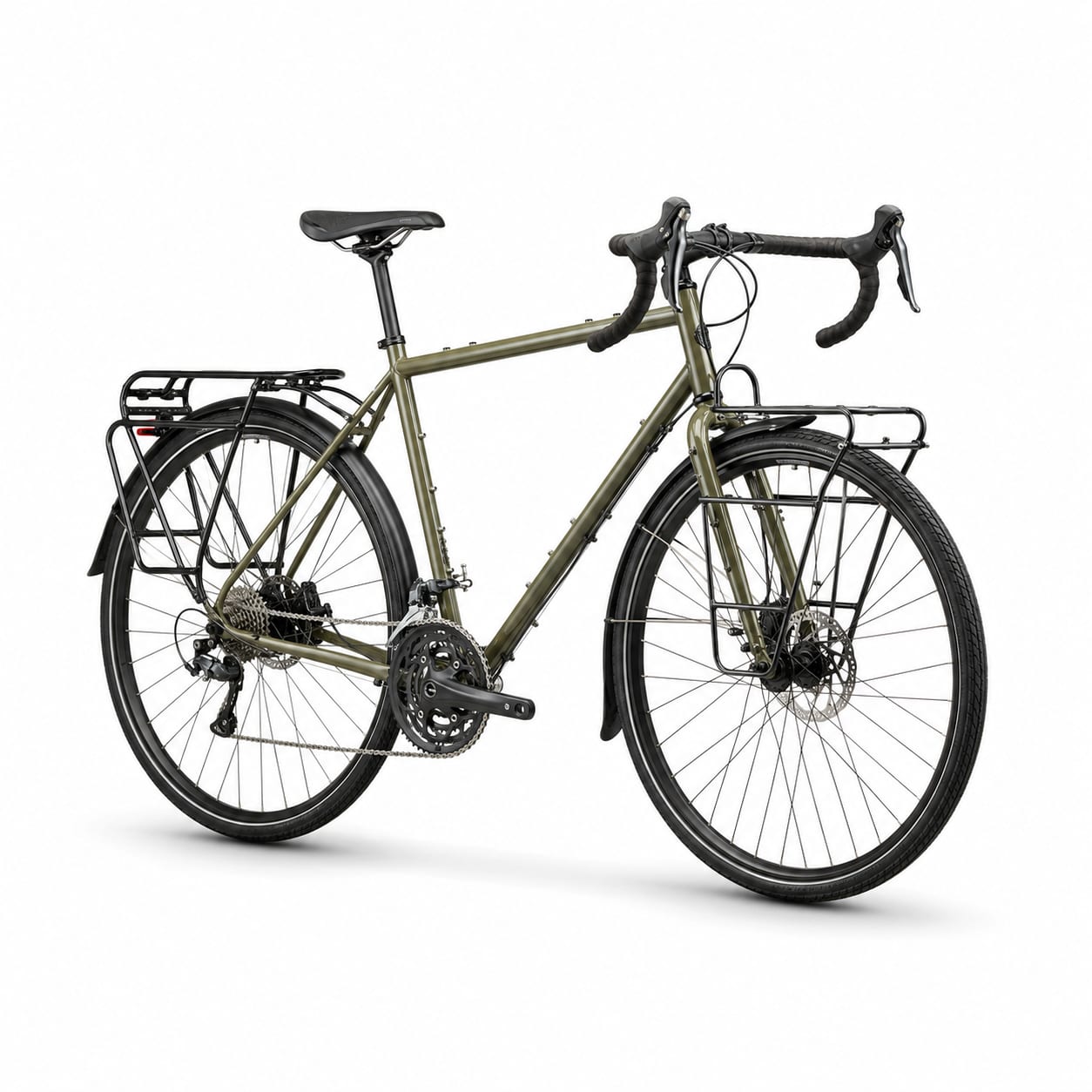
6 topics
Pick a question
Every answer links to the full subcategory guide and related gear types when it helps you decide.
Can I use a touring bike for regular road riding when I'm not touring?
Yes, but it won't be as enjoyable as a standard road bike. Touring bikes are heavier, less aerodynamic, and handle more slowly than road bikes. For occasional unloaded rides, remove the racks and fenders and put on lighter tires — this makes a significant difference. Many touring bike owners also have a lighter road bike for day rides and use the touring bike exclusively for its intended purpose.
Read answer →02Do I really need a dedicated touring bike, or can I tour on an endurance or gravel bike?
It depends on your touring style. For bikepacking with frame bags and seat packs on mixed surfaces, a gravel or all-road bike works well. For traditional rack-and-pannier touring with heavy loads on paved roads, a dedicated touring bike is significantly better due to its rack mounts, stable loaded handling, lower gearing, and longer chainstays for heel clearance. If you plan to do more than one or two tours, a dedicated touring bike is worth the investment.
Read answer →03Steel vs. titanium vs. aluminum for a touring frame — which should I choose?
Steel is the traditional choice offering the best ride quality, repairability (any welder can fix it), and reasonable cost. Titanium provides similar ride quality with lower weight and zero corrosion, but at a premium price and with fewer repair options. Aluminum is the budget choice — durable and stiff but with harsher ride quality and no repair option for cracks. For most touring cyclists, steel offers the best balance of practicality, comfort, and value.
Read answer →04What gearing do I need for loaded touring?
For loaded touring, you need lower gears than standard road bikes. A minimum low gear of 28×32 (0.88 ratio) is acceptable for moderate terrain, but 26×34 (0.76) or lower is better for mountainous tours. Sub-compact cranksets (48/32 or 46/30) paired with wide-range cassettes (11-34 or 11-36) are ideal. If your route includes steep climbs, consider a triple crankset or MTB derailleur with an even wider cassette. It's always better to have lower gears you don't need than to need lower gears you don't have.
Read answer →05How much weight can a touring bike carry?
Most touring bikes are designed to carry 20-30kg of gear in addition to the rider. The frame and wheels are built for this load, with reinforced tubes, higher spoke counts, and sturdy racks. Total system weight (rider + bike + gear) limits are typically 120-140kg depending on the specific bike and wheel build. Exceeding these limits risks frame damage, wheel failure, and unsafe handling. Distribute weight evenly between front and rear racks, with the heaviest items low and centered.
Read answer →06Are hydraulic disc brakes reliable enough for remote touring?
Modern hydraulic disc brakes are extremely reliable and require less maintenance than mechanical systems in normal use. The concern for remote touring is that if they do need service (fluid leak, damaged hose), the repair requires specific tools and knowledge that may not be available. Carry spare pads, a bleed kit if you know how to use it, and consider learning basic hydraulic service. For truly remote expeditions, some riders still prefer mechanical discs for their field-serviceability with basic tools.
Read answer →