
Ski Backpack · FAQ
Questions about Ski Travel Backpack
Straight answers on fit, specs, and when this type makes sense — each topic has its own page with links back to the buying guide.
Open Ski Travel Backpack guide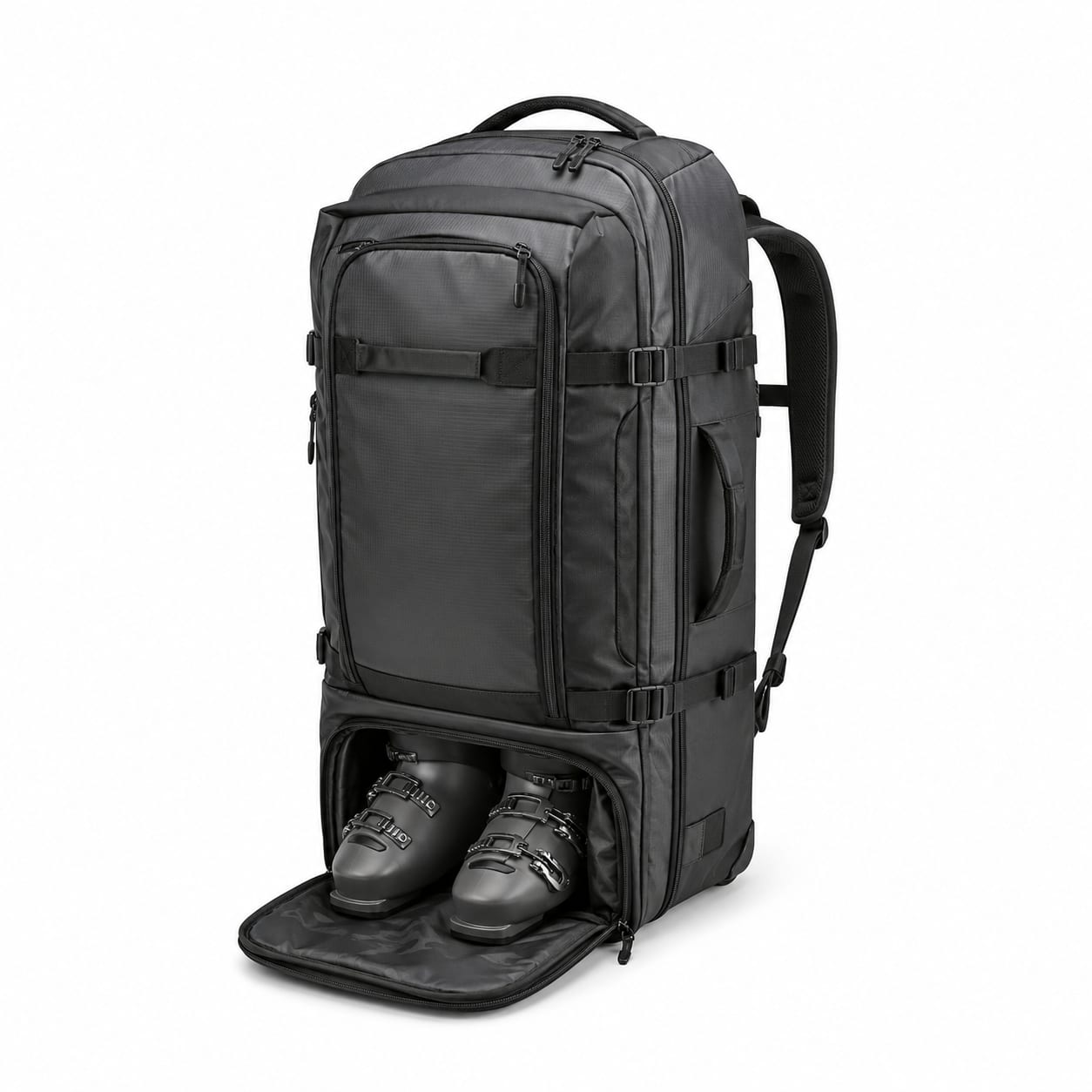
6 topics
Pick a question
Every answer links to the full subcategory guide and related gear types when it helps you decide.
Can I use a ski travel backpack as my only ski bag for a flight?
It depends on the airline and the pack size. Most ski travel backpacks (40–55L) exceed standard carry-on size limits, so you'll likely need to check the bag. Some airlines have specific sports equipment policies that allow ski bags as checked items for a fee. If you want to avoid checked bag fees, look for packs under 40L that compress to airline carry-on dimensions, though you may need to strap skis to the outside. Always check your specific airline's baggage policy before flying.
Read answer →02Do I really need a dedicated ski travel backpack, or can I just use my regular hiking backpack?
A regular hiking backpack can work in a pinch, but it lacks key features that make ski travel easier: dedicated boot compartments, padded goggle pockets, helmet storage, ski/snowboard carry systems, and reinforced construction for heavy gear. Hiking packs also aren't designed to handle the abuse of airline baggage handling or the sharp edges of ski equipment. If you travel to ski even once a year, a dedicated ski travel pack is a worthwhile investment that protects your expensive gear.
Read answer →03How do I pack wet boots for the return trip without ruining my dry clothes?
Look for a travel pack with a dedicated, ventilated boot compartment—this is the best solution. If your pack doesn't have one, use a waterproof stuff sack or plastic bag for wet boots, and pack them at the bottom of the pack. Some travelers bring a small towel to wrap around wet boots. Always empty and dry your boot compartment as soon as you get home to prevent mold and odor.
Read answer →04Can I use a ski travel backpack for backcountry touring?
It's not recommended. Ski travel backpacks lack dedicated avalanche gear compartments for quick shovel and probe access, don't offer airbag compatibility, and are too heavy for efficient uphill travel. If you occasionally venture into the backcountry, consider a dedicated touring pack instead, or bring both: pack your touring pack inside your travel pack for transit, then use the touring pack for backcountry days.
Read answer →05What's the difference between a ski travel backpack and a ski travel duffel bag?
The main difference is wearability. A ski travel backpack has shoulder straps, a hip belt, and a suspension system so you can carry it on your back—essential for walking through airports, from parking lots to lodges, or between hotel and slopes. A duffel bag is carried by hand or shoulder strap, which is fine for car travel but fatiguing for long walks. Backpacks also typically offer better organization with multiple compartments, while duffels are simpler and often larger. Some hybrid designs combine both approaches with stowable backpack straps.
Read answer →06How much should I expect to spend on a quality ski travel backpack?
Quality ski travel backpacks range from $100–180 for basic models with essential features, $180–280 for mid-range packs with dedicated boot compartments, clamshell access, and better organization, and $280–400+ for premium models with the most durable materials, best suspension systems, and full feature sets. Expect to spend $150–250 for a pack that will last multiple seasons and protect your gear effectively. This is a worthwhile investment considering the cost of the ski equipment it protects.
Read answer →