Kitvore.com

Kitvore.com

Specs that matter. Gear that fits.

Ski Backpack · Subcategory

Ski Travel Backpack

Large-capacity, padded backpacks designed to protect and transport ski or snowboard gear through airports, trains, and road trips to the mountains.

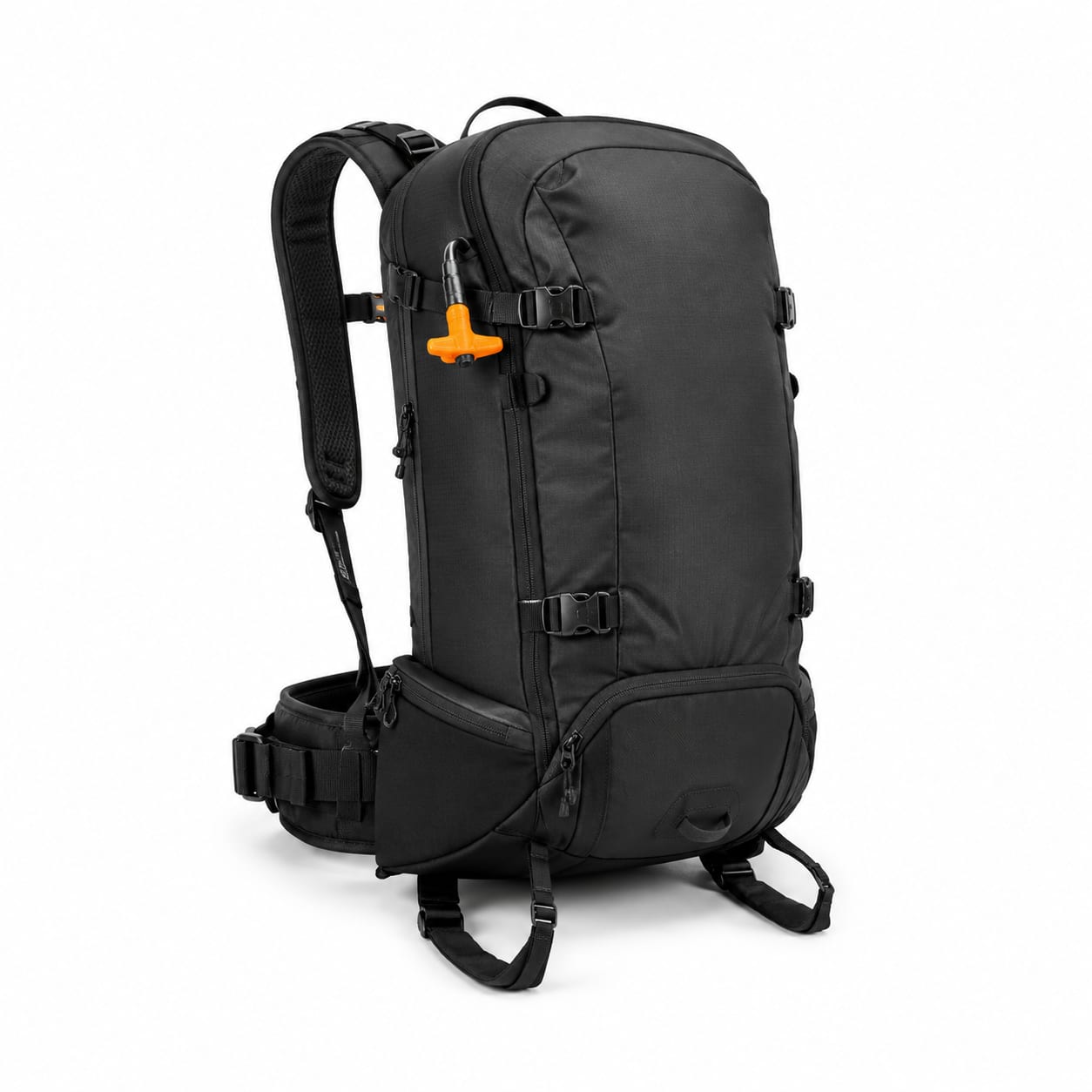
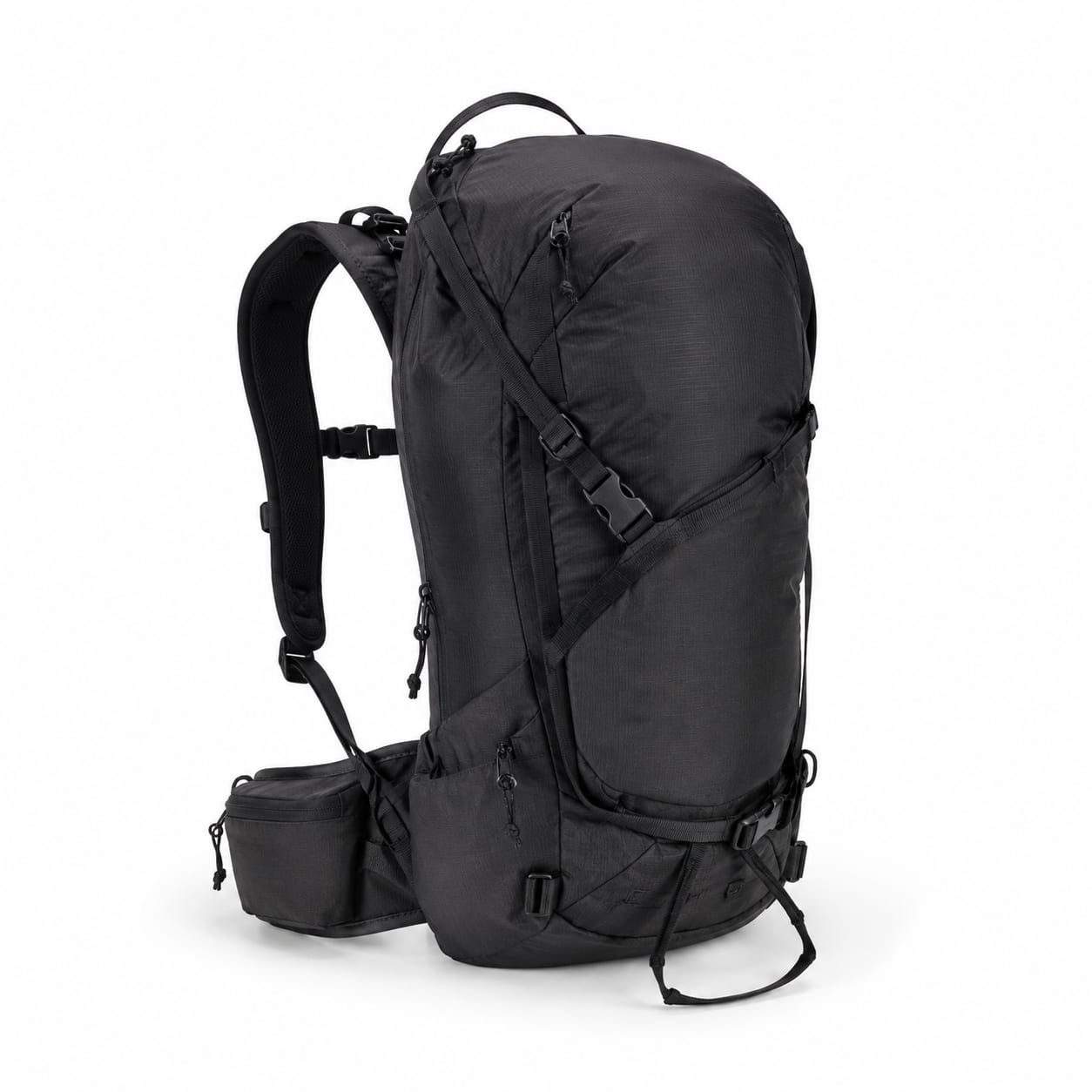
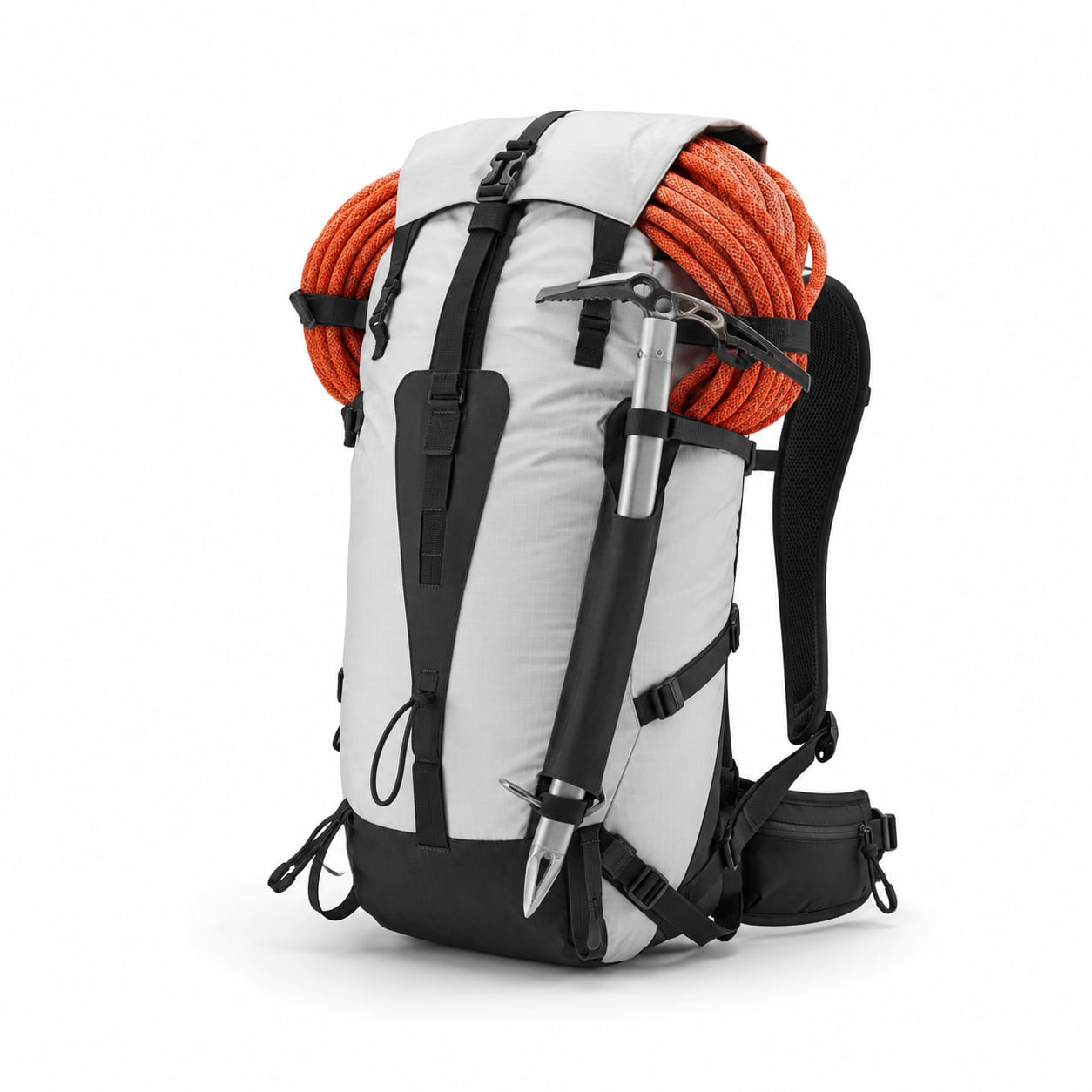
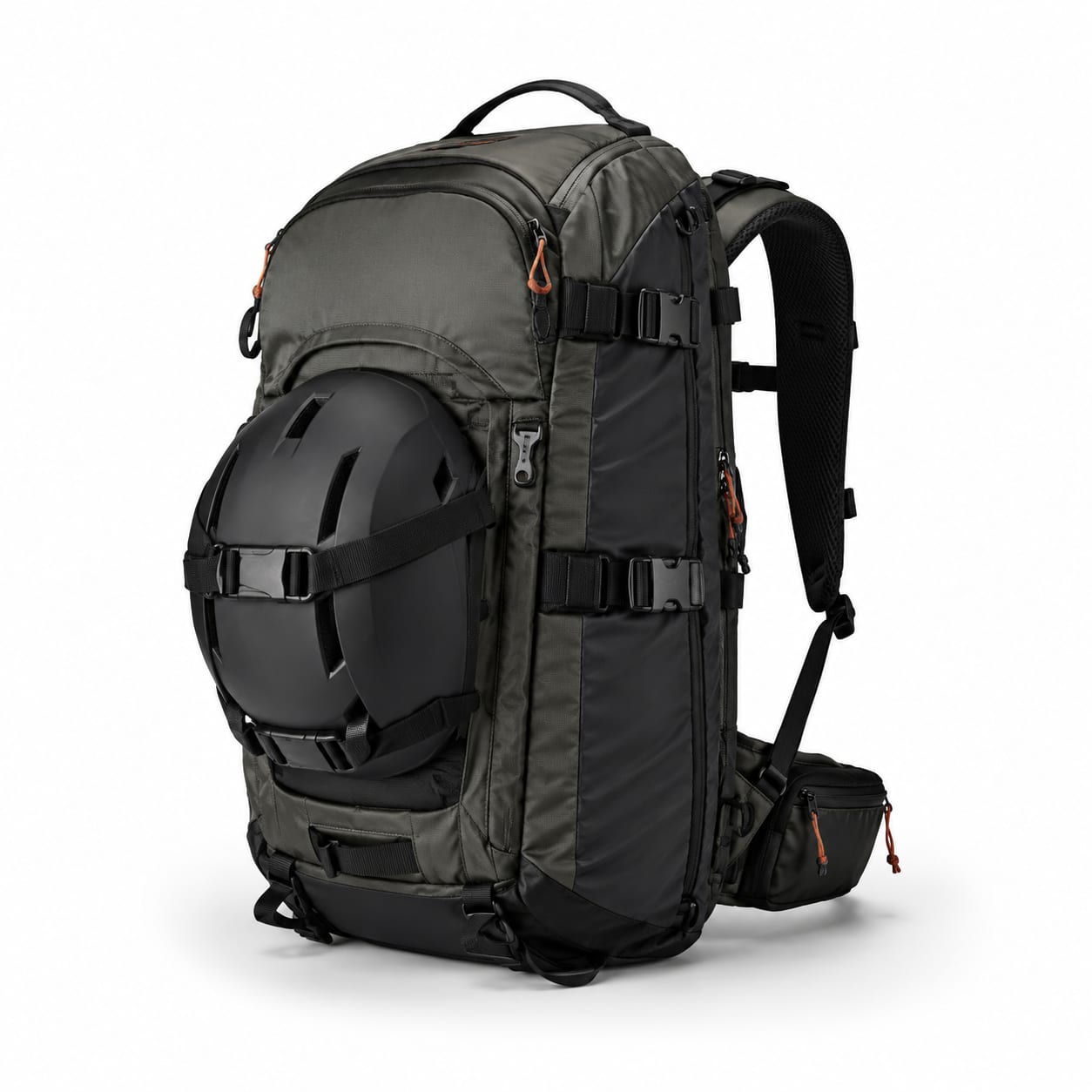
Ski travel backpacks are purpose-built for getting your valuable ski or snowboard equipment safely from home to the mountain. With capacities ranging from 40–55L, padded compartments for helmets and goggles, rugged construction to survive baggage handling, and external carry systems for skis or boards, these packs bridge the gap between luggage and mountain pack. They're the best choice for riders who fly or drive to ski destinations and need one bag that protects gear in transit and still works on the mountain.

$70 – $280mid tierbeginnerintermediateadvanced

Best known for

Padded gear protection during air and road travelLarge capacity for boots, helmet, goggles, and layersExternal ski and snowboard carry for transportDurable construction that survives baggage handlingDual-purpose use as both travel bag and mountain day pack
Ski Travel Backpack

Guide

Detailed overview

Ski travel backpacks are high-capacity, protective packs engineered for skiers and snowboarders who travel to the mountains. Unlike backcountry touring packs that prioritize minimal weight, or resort day packs built for small loads, travel backpacks focus on safely transporting a full quiver of gear—skis or snowboard, boots, helmet, goggles, layers, and accessories—through the rigors of air travel, train journeys, and long road trips. They typically range from 40 to 55 liters, feature padded compartments for fragile items, and use heavy-duty materials to withstand rough handling. Most include external attachment systems for carrying skis or snowboards, making them functional at the destination as well. The best ski travel backpacks balance protection with organization, offering dedicated pockets for boots, helmets, and goggles while maintaining a comfortable carry system for walking through airports or from parking lots to the lodge.

Traveling with ski or snowboard equipment has always been a logistical challenge. Skis are long and awkward, boots are bulky and heavy, helmets and goggles are fragile, and airline baggage handlers are not known for their gentleness. Ski travel backpacks exist to solve this problem, offering a single, organized solution that protects your gear in transit and remains functional once you arrive at the mountain.

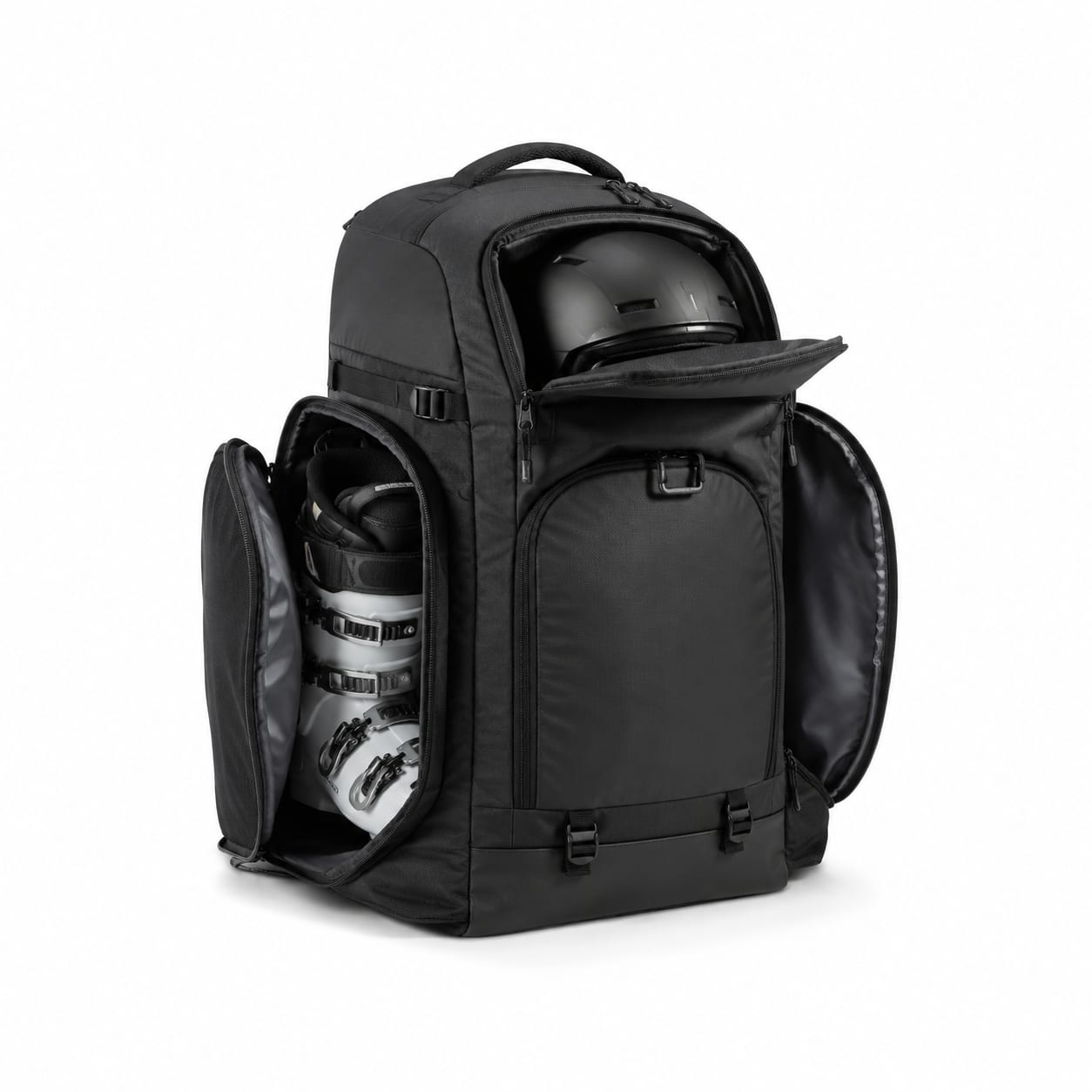
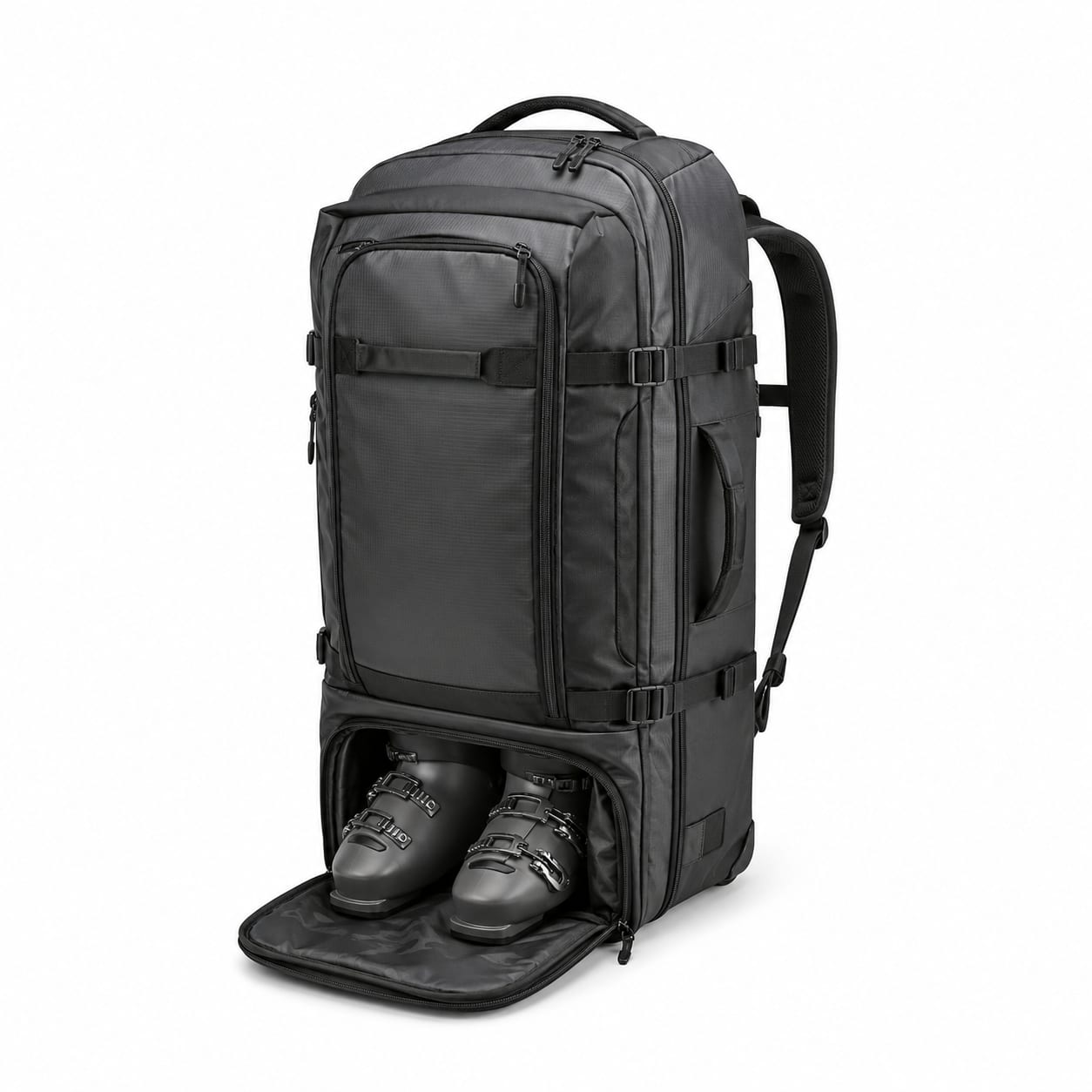
The defining characteristic of a ski travel backpack is capacity. With typical volumes between 40 and 55 liters, these packs are significantly larger than backcountry touring packs or resort day packs. This extra space accommodates boots (which alone can consume 15–20 liters), a helmet, goggles, multiple layers, gloves, and accessories. Many feature dedicated boot compartments with ventilation and drainage, keeping wet boots separate from dry clothing on the return trip. Padded goggle pockets and helmet sleeves protect your most fragile and expensive accessories from crushing impacts during baggage handling.

Durability is paramount in this subcategory. Travel packs are built with heavy-duty nylon (400D+) and feature reinforced bottoms, robust zippers, and protected attachment points. They need to survive being tossed onto conveyor belts, jammed into overhead compartments, and thrown into car trunks alongside other luggage. Many include rain covers for added protection during wet road trips or snowy parking lot transitions. The trade-off is weight—these packs are heavier than touring-focused alternatives, typically ranging from 1400 to 2200 grams empty.

Organization sets travel backpacks apart from simply stuffing gear into a duffel bag. Clamshell or front-panel access makes packing and unpacking easy in hotel rooms. Multiple compartments keep wet and dry gear separate. External ski and snowboard carry systems allow you to walk from your car to the lift with hands free. Some packs even include features like passport pockets, laptop sleeves, and luggage pass-through straps for stacking on roller bags—acknowledging that ski travel often involves navigating airports and train stations, not just skin tracks.

The key limitation of ski travel backpacks is that they are not optimized for backcountry touring. Their larger capacity and heavier weight make them cumbersome on long uphill skin tracks. Most lack dedicated avalanche gear compartments or airbag compatibility. If your primary use is backcountry touring, a dedicated touring pack is a better choice. However, for resort skiers who travel frequently, ski travel backpacks offer the best combination of gear protection, organization, and on-mountain functionality in a single package.

Quick facts

Primary purpose
Transporting ski equipment, clothing, and personal items on ski vacations and trips
Popular brands
DakineThuleAthalonPatagoniaThe North FaceOsprey
Typical terrain
Air travelRoad tripsResort base areas

What makes it different

Duffel-to-backpack conversion; Padded electronics sleeve; Retractable handle or luggage pass-through; Not designed for skiing while wearing; Baggage-handler durability

Recommended ranges

How this type usually specs out

Each spec is explained in plain language, then we show what buyers usually look for on this type.

Volume / Capacity

capacity

What it means

The total storage volume of the backpack measured in liters, determining how much gear can be carried.

Typical for this type

40–55L

Most common pick: 45L

In practice

Ski travel backpacks need enough volume to carry boots (15–20L), helmet, goggles, layers, and accessories. 40L is the minimum for a single traveler with one pair of boots; 50–55L accommodates extra layers, apres-ski clothing, or shared gear for couples.

Compared to other types

Significantly larger than backcountry touring packs (25–35L) and resort day packs (15–22L). Travel packs prioritize total gear transport over uphill efficiency.

Why it matters: Insufficient capacity forces you to check additional bags or leave essential gear behind. Oversized packs may exceed airline carry-on limits and become unwieldy when fully loaded.

Ski Carry System

ski_carry_system

What it means

The method and configuration used to attach skis to the backpack for uphill travel or transport.

Typical for this type

Diagonal Or A-Frame

In practice

Diagonal carry is most common on travel packs because it works well for transport walking from car to lodge and keeps skis secure during transit. A-frame is available on some models and offers better balance for longer walks.

Compared to other types

Touring packs prioritize A-frame for uphill balance. Travel packs often use diagonal because it's simpler and sufficient for short walks. Some travel packs also offer horizontal transport straps for securing skis during car or air travel.

Why it matters: You need a reliable way to carry skis hands-free from parking lot to lift or between accommodations. The carry system must also secure skis during transit without damaging edges or topsheets.

Snowboard Carry

snowboard_carry

What it means

Whether and how the backpack can carry a snowboard.

Typical for this type

Vertical Or Horizontal

In practice

Vertical carry is the most common on travel packs, attaching the snowboard straight up the back. Some larger travel packs offer horizontal carry, which provides a lower center of gravity but creates a wider profile.

Compared to other types

Travel packs are more likely to offer both vertical and horizontal options compared to touring packs, which typically only offer vertical. Splitboard carry is less common since travel packs are designed for in-bounds resort use.

Why it matters: Snowboarders need secure attachment for transport. The carry system must hold the board firmly during walking and not damage it during transit. Horizontal carry can be more comfortable for longer walks but may snag in tight spaces.

Avalanche Safety Gear Compartment

avalanche_gear_compartment

What it means

Dedicated, quick-access compartment for avalanche shovel, probe, and sometimes a first aid kit.

Typical for this type

Not Applicable For Most Travel Use

Most common pick: None Or Integrated With Main Compartment

In practice

Most ski travel backpacks are designed for resort skiing and travel, not backcountry touring. They typically lack a dedicated avalanche gear compartment. Some may have internal organization that can hold a shovel and probe, but without the quick-access design needed for emergency use.

Compared to other types

Backcountry touring packs always feature a dedicated front-access avalanche gear pocket. Travel packs sacrifice this for more general storage space and organization.

Why it matters: If you plan to use this pack for backcountry touring, the lack of a dedicated avalanche gear compartment is a serious limitation. For resort-only use, this is not a concern.

Avalanche Airbag Compatibility

airbag_compatible

What it means

Whether the pack has an integrated avalanche airbag system or is compatible with removable airbag modules.

Typical for this type

Not Applicable For Travel Use

Most common pick: None

In practice

Ski travel backpacks are not designed with avalanche airbag compatibility. The added weight, cost, and reduced internal volume from an airbag system would compromise the pack's primary purpose of gear transport.

Compared to other types

Backcountry touring packs frequently offer integrated or compatible airbag systems. Travel packs prioritize storage capacity and gear protection over avalanche safety features.

Why it matters: Travel packs are not suitable for backcountry use where avalanche safety equipment is required. If you need airbag protection, choose a dedicated backcountry airbag pack instead.

Back Protection

back_protection

What it means

Integrated or compatible spine/back protector for impact protection during falls.

Typical for this type

None Or Compatible

In practice

Most travel packs do not include integrated back protection, as they are designed for transport rather than high-speed skiing. Some models have a protector-compatible sleeve that accepts a removable insert, offering flexibility for riders who want protection at the resort.

Compared to other types

Resort and freeride packs more commonly offer integrated or compatible back protection. Travel packs typically skip this feature to save weight and maximize internal volume.

Why it matters: If you plan to use the travel pack as your primary resort pack and want back protection, look for a compatible model. Otherwise, the padded back panel provides comfort but not certified impact protection.

Pack Weight

weight

What it means

The weight of the empty backpack without any gear, airbag cartridge, or back protector insert.

Typical for this type

1400–2200g

Most common pick: 1600g

In practice

Travel packs are heavier than touring packs due to thicker materials, more padding, additional compartments, and reinforced construction. Expect 1400–1800g for midweight models and 1800–2200g for heavy-duty packs with maximum protection features.

Compared to other types

Significantly heavier than ultralight touring packs (500–900g) and standard backcountry packs (900–1400g). The extra weight is the trade-off for durability and protection.

Why it matters: Weight matters less for travel packs than touring packs since you're not climbing uphill for hours. However, a heavy pack is more fatiguing during long airport walks and when fully loaded with boots and gear can exceed 12kg.

Torso Length / Back Length

torso_length

What it means

The length of the backpack's back panel and suspension system, determining fit for different torso sizes. Often available in multiple sizes (S/M, M/L, L/XL) or with adjustable back length.

Typical for this type

Adjustable or M/L (43–50 cm torso)

In practice

Many travel packs feature adjustable back length to accommodate different users, since these packs are often shared among family members or used by travelers of varying sizes. M/L is the most common fixed size.

Compared to other types

Travel packs are more likely to feature adjustable back length than touring packs, which often come in fixed sizes for weight savings. The adjustability accommodates the shared-use nature of travel gear.

Why it matters: A properly fitting pack distributes weight to your hips rather than your shoulders, which is critical when carrying heavy loads of boots and gear through airports or parking lots.

Hydration System Compatibility

hydration_compatible

What it means

Whether the pack supports a hydration reservoir/bladder and/or has insulated hose routing to prevent freezing.

Typical for this type

Reservoir Sleeve Or Bottle Pockets

Most common pick: Reservoir Sleeve (Non-Insulated)

In practice

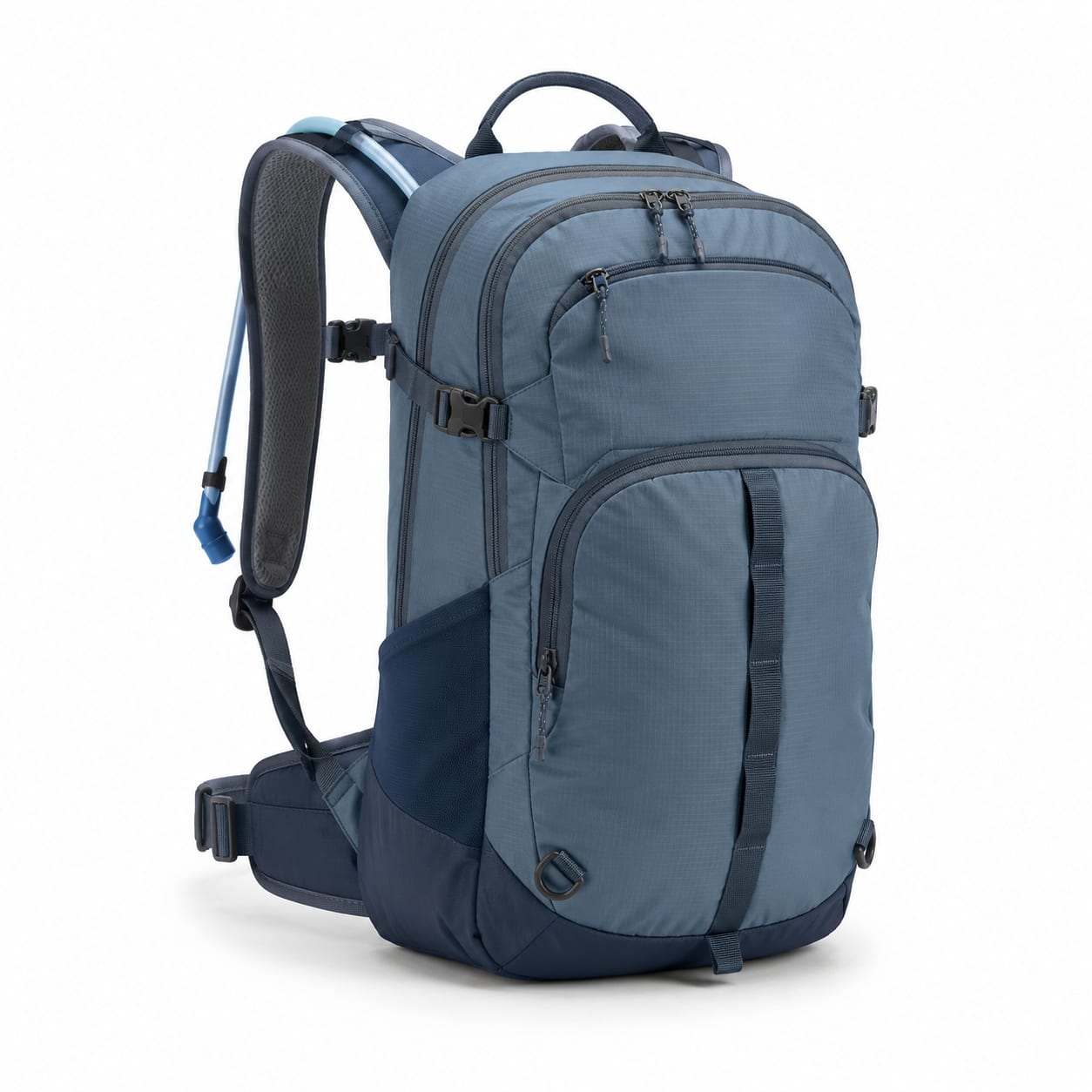
Most travel packs include a reservoir sleeve for hydration compatibility, though insulated hose routing is less common since these packs are primarily used in resort settings where freezing is less of a concern. Side bottle pockets are also common.

Compared to other types

Backcountry touring packs more commonly feature insulated hose routing for cold-weather use. Travel packs typically offer basic reservoir compatibility without the insulation features.

Why it matters: Hydration is important even for resort skiing. A reservoir sleeve allows you to use a hydration bladder on the mountain, while bottle pockets offer a simpler alternative for short days.

Hip Belt Type

hip_belt_type

What it means

The style and padding level of the hip belt, which transfers load from shoulders to hips.

Typical for this type

Padded, Removable Or Padded With Pockets

In practice

A padded removable hip belt is ideal for travel packs because it provides load transfer for heavy gear walks but can be removed for comfort on chairlifts. Padded belts with pockets add convenience for storing snacks, phone, or lift pass.

Compared to other types

Similar to touring packs, travel packs benefit from padded hip belts for load transfer. The removable option is especially valued for resort use where a fixed belt can be uncomfortable on chairlifts.

Why it matters: When fully loaded with boots and gear, a travel pack can weigh 10–15kg. A proper hip belt transfers this weight to your hips, preventing shoulder fatigue during long walks through airports or from parking lots.

Helmet Carry System

helmet_carry

What it means

External attachment point or net to carry a ski helmet when not wearing it.

Typical for this type

Internal Or External Net/Clip

Most common pick: Internal Helmet Storage

In practice

Travel packs commonly feature internal helmet storage since protecting the helmet during transit is a priority. Some also offer external net or clip systems for carrying the helmet when not wearing it on the mountain.

Compared to other types

Travel packs are more likely to feature dedicated internal helmet storage than touring or resort day packs, which typically offer external net carry or no helmet carry at all.

Why it matters: Helmets are expensive and fragile. Internal storage protects them from impacts during baggage handling. External carry is convenient for lodge breaks but offers less protection during transit.

Goggle Pocket

goggle_pocket

What it means

A soft-lined internal or external pocket designed to protect goggles from scratches when stored.

Typical for this type

Fleece-Lined Internal Pocket

In practice

A fleece-lined internal pocket is standard on travel packs, providing scratch-free storage for goggles during transit. This is more important for travel packs than other subcategories because goggles need protection from other gear shifting during transport.

Compared to other types

Travel packs almost always include a fleece-lined goggle pocket, whereas touring and resort packs sometimes omit this feature to save weight or volume.

Why it matters: Goggle lenses cost $50–150 to replace. A fleece-lined pocket prevents scratches from boots, tools, or other hard items shifting inside the pack during travel.

Material / Durability

material_durability

What it means

The primary fabric type and denier rating indicating abrasion resistance and durability of the pack construction.

Typical for this type

Heavy-Duty Nylon (400D+) or Midweight Nylon (200D–400D)

In practice

Travel packs prioritize durability over weight savings. Heavy-duty nylon (400D+) is common because these packs must survive airline baggage handling, being stuffed into car trunks, and abrasion from ski edges during transport. Reinforced bottom panels are standard.

Compared to other types

Travel packs use heavier, more durable materials than touring packs (which often use 100D–200D lightweight nylon) because weight is less critical and durability is paramount.

Why it matters: A torn travel pack mid-trip is a disaster. Heavy-duty materials and reinforced high-wear areas ensure the pack survives the rigors of travel and protects your expensive gear inside.

Water Resistance

water_resistance

What it means

The level of water and snow protection the pack provides for contents.

Typical for this type

DWR Coated Or Rain Cover Included

Most common pick: DWR Coated (Water Resistant)

In practice

DWR coating is standard on travel packs, shedding light snow and rain encountered during parking lot transitions and lodge walks. Some models include a rain cover for full protection during wet road trips or heavy snow at the destination.

Compared to other types

Travel packs are similar to touring packs in water resistance, typically offering DWR coating. Fully waterproof sealed seams are rare in this subcategory since the packs are not exposed to sustained precipitation during use.

Why it matters: Your pack will encounter wet snow, slush, and rain during travel. DWR coating handles typical exposure, while a rain cover provides full protection for prolonged wet conditions or road trips where the pack sits in a car roof box.

Access Type

access_type

What it means

How the main compartment of the backpack is accessed—determines ease of gear retrieval and organization.

Typical for this type

Front Panel (Clamshell) With Top Or Side Access

Most common pick: Front Panel (Clamshell) And Top-Loading

In practice

Clamshell front-panel access is the gold standard for travel packs because it allows suitcase-style packing and full visibility of contents—essential when packing boots, helmet, and clothing in a hotel room. Top-loading provides quick access on the mountain.

Compared to other types

Travel packs are more likely to feature clamshell access than touring packs, which typically use top-loading or back-panel access. The suitcase-style opening is a key advantage for travel use.

Why it matters: Clamshell access makes packing and unpacking dramatically easier, especially when organizing boots, helmet, and layers in a hotel room. On the mountain, top or side access lets you grab layers without unpacking everything.

Chest Strap Features

chest_strap_features

What it means

Features of the sternum/chest strap including adjustability, whistle, and height positioning.

Typical for this type

Integrated Whistle And Height Adjustable

In practice

Most travel packs include an integrated whistle on the chest strap buckle and height adjustability. These are standard features that add minimal weight and improve comfort and safety.

Compared to other types

Chest strap features are similar across all ski backpack subcategories. Travel packs are no more or less likely to include these features.

Why it matters: Height adjustability ensures proper strap positioning whether you're wearing a thin base layer or a thick jacket. The whistle is an emergency signaling device that's always with you on the mountain.

Compression System

compression_system

What it means

Side or vertical compression straps that tighten the pack load to prevent shifting and reduce volume when partially full.

Typical for this type

Side Compression Or Dual (Side + Vertical) Compression

Most common pick: Side Compression Straps

In practice

Side compression straps are standard on travel packs, allowing you to tighten the load after removing layers on the mountain. Dual compression (side + vertical) is found on larger models and provides maximum load control for variable packing volumes.

Compared to other types

Travel packs use similar compression systems to touring packs. Dual compression is more common on larger travel packs (50L+) to manage the variable load sizes inherent in travel use.

Why it matters: Compression straps stabilize the load and reduce pack volume when partially full. This is especially important for travel packs, which may be fully loaded for transit but only partially full during a resort ski day.

Evaluation

Strengths and trade-offs

Pros

What this type does best

All-in-one travel solution

Critical

Carries boots, helmet, goggles, layers, and accessories in a single organized pack, eliminating the need for multiple bags.

Superior gear protection

Critical

Padded compartments, fleece-lined pockets, and reinforced construction protect expensive equipment from damage during transit and baggage handling.

Excellent organization

High

Multiple dedicated compartments for boots, helmet, goggles, and wet/dry separation keep gear organized and accessible throughout your trip.

Durable construction

High

Heavy-duty materials and reinforced high-wear areas survive airline baggage handling, car transport, and years of regular travel.

Dual-purpose functionality

High

Works as both a travel bag for getting gear to the mountain and a functional resort day pack once you arrive, with ski/board carry and hydration compatibility.

Clamshell access for easy packing

Medium

Front-panel clamshell opening allows suitcase-style packing and full visibility of contents, making hotel room organization much easier.

Travel-friendly features

Medium

Luggage pass-through straps, passport pockets, laptop sleeves, and airline carry-on compatible sizes on some models make airport navigation smoother.

Boot compartment ventilation

Medium

Dedicated boot compartments with ventilation and drainage keep wet boots separate from dry clothing on the return trip.

Cons

Trade-offs to be aware of

Heavy even when empty

Moderate

At 1400–2200g empty, travel packs are significantly heavier than touring or resort packs. Fully loaded with boots and gear, total weight can exceed 12–15kg.

Not suitable for backcountry touring

Significant

Lack of dedicated avalanche gear compartment, no airbag compatibility, and heavy weight make these packs inappropriate for backcountry use where safety equipment is essential.

May exceed airline carry-on limits

Moderate

At 40–55L, many travel packs exceed airline carry-on size restrictions, requiring gate checking or paying checked bag fees. Always verify airline dimensions before flying.

Cumbersome on chairlifts

Minor

The large volume and stiff construction can be uncomfortable on chairlifts, especially with a fixed hip belt. Removing the hip belt helps but doesn't fully solve the bulk issue.

Overkill for short resort visits

Minor

If you're staying slope-side and don't need to transport gear, a travel pack's capacity and protection features are unnecessary. A simple 20L resort pack would be more comfortable.

Less comfortable for all-day skiing

Minor

The stiffer frame and heavier materials designed for gear protection reduce comfort compared to purpose-built resort or touring packs during a full day of skiing.

Best for

Terrain

Resort groomed runsResort sidecountry (gated access)Ski area base areas and lodges

Snow conditions

All resort conditionsTravel transit conditionsVariable weather during road trips

Skill level

BeginnerIntermediateAdvanced

Riding style

Resort skiingResort snowboardingFamily ski tripsDestination ski vacations

Rider profile

Traveling skiers who fly to destinationsRoad-trip skiers who drive to the mountainsFamilies needing organized gear transportResort skiers who want one bag for travel and skiingSkiers who stay in hotels and need to carry gear daily

Not ideal for

Reasons

No dedicated avalanche gear compartment makes it unsafe for backcountry useHeavy weight is fatiguing on long uphill skin tracksLack of airbag compatibility eliminates a key backcountry safety optionLarge volume and stiff construction reduce mobility for technical skiing

Terrain

Backcountry touring terrainSidecountry requiring avalanche safety gearSki mountaineering objectives

Riding style

Backcountry ski touringSki mountaineeringSplitboarding in the backcountry

Compare

How it stacks up

This page

Ski Travel Backpack

Much larger capacity for transporting all gear; superior organization with dedicated compartments; better protection for fragile items; more durable construction for travel abuse; clamshell access for easy packing.

Alternative

Backcountry Touring Pack

Significantly lighter for uphill travel; dedicated avalanche gear compartment for safety; airbag compatibility available; better load transfer and comfort on skin tracks; streamlined profile for skiing performance.

Bottom line

Choose a travel pack if you primarily ski inbounds at destination resorts and need to transport gear. Choose a touring pack if you spend significant time in the backcountry. Some travelers bring both: a travel pack for transit and a touring pack packed inside for backcountry days.

This page

Ski Travel Backpack

Much larger capacity for full gear transport; padded protection for helmet and goggles; boot compartment; durable enough for airline travel; works as both travel bag and mountain pack.

Alternative

Resort Day Pack

Lighter and more comfortable for all-day resort skiing; lower profile fits better on chairlifts; simpler design with fewer zippers to fail; less expensive; sufficient for slope-side accommodation where gear transport isn't needed.

Bottom line

Choose a travel pack if you fly or drive to ski destinations and need to carry gear from parking or hotel to slopes. Choose a resort day pack if you stay slope-side or have a locker at the mountain and only need to carry lunch, water, and an extra layer.

This page

Ski Travel Backpack

Wearable as a backpack for hands-free transport; better organization with multiple compartments; functional on the mountain with ski carry and hydration; more comfortable for long walks through airports or parking lots.

Alternative

Ski Travel Bag / Duffel

Often larger capacity for more gear; simpler design with fewer failure points; typically less expensive; easier to pack for pure transport; some models include wheels for airport navigation.

Bottom line

Choose a travel backpack if you want one bag that works for both transit and on-mountain use. Choose a travel duffel if you only need to transport gear and have a separate resort pack at your destination, or if you prefer wheeled luggage for airports.

This page

Ski Travel Backpack

Much lighter; significantly less expensive; larger usable capacity; no cartridge or battery maintenance; simpler operation; more versatile for non-backcountry use.

Alternative

Avalanche Airbag Pack

Proven avalanche survival benefit; dedicated backcountry safety features; appropriate for out-of-bounds travel; professional guides and experienced backcountry riders consider it essential safety equipment.

Bottom line

Choose a travel pack for resort skiing and gear transport. Choose an airbag pack if you regularly travel in avalanche terrain. These serve fundamentally different purposes and are not interchangeable.

Shopping

Buying tips

  • 1

    Verify airline carry-on dimensions if you plan to bring the pack in the cabin. Most 40L+ packs exceed carry-on limits, but some models are designed to compress within airline size restrictions.

  • 2

    Prioritize a dedicated boot compartment with ventilation and drainage. Storing wet boots separately from dry clothing on the return trip prevents everything from getting damp and smelly.

  • 3

    Look for clamshell (front panel) access if you'll be packing and unpacking in hotel rooms. It makes organization dramatically easier compared to top-loading only packs.

  • 4

    Check that the ski or snowboard carry system works with your specific equipment. Wide powder skis (110mm+ underfoot) and long snowboards may not fit all attachment loops.

  • 5

    Consider a removable hip belt if you'll be riding chairlifts with the pack. Fixed hip belts can be uncomfortable on lifts, and a removable belt gives you the option to strip weight for resort days.

  • 6

    If you travel with a laptop or work remotely, look for a dedicated padded laptop sleeve. Many travel packs now include this feature for digital nomads who ski.

  • 7

    Reinforced bottom panels are essential. Your pack will be set down on wet, abrasive surfaces in parking lots, lodge floors, and airport terminals. A reinforced bottom prevents premature wear.

  • 8

    Test the pack fully loaded before your trip. Fill it with boots, helmet, and gear to check comfort and fit. Adjust the torso length and hip belt with the actual weight you'll be carrying.

Care

Maintenance notes

  • Empty and air out the boot compartment after every trip to prevent mold and odor buildup. Leave zippers partially open for airflow during storage.
  • Reapply DWR coating annually or when water stops beading on the fabric surface. Use a spray-on DWR treatment designed for nylon packs.
  • Inspect zippers regularly and clean out sand, dirt, and debris that can cause zipper failure. Use zipper lubricant on sticky zippers.
  • Check all buckle and strap attachments before each trip. Travel packs experience high stress from heavy loads and baggage handling—loose stitching or cracked buckles can cause failures.
  • Store the pack fully unzipped in a dry, cool place. Avoid compressing it under heavy objects, which can deform the back panel and suspension system.
  • Clean the pack with mild soap and water after salt exposure (road trips with road salt) to prevent corrosion of buckles and zipper pulls.
  • Patch small tears immediately with nylon repair tape. Travel packs are expensive—addressing damage early prevents it from spreading.

Progression

Skill development path

Ski travel backpacks are not skill-dependent in the way that touring or freeride packs are. A beginner on their first ski vacation needs the same gear transport capability as an expert. The progression with travel packs is more about travel experience: first-time ski travelers may underestimate the capacity and organization needed, while experienced ski travelers learn exactly what they need to pack and which features matter most. Over time, travelers tend to optimize toward smaller, more organized packs as they learn to pack more efficiently and leave unnecessary items at home.

FAQ

Common questions

Each question has a dedicated page with a full answer and links to the buying guide.

Can I use a ski travel backpack as my only ski bag for a flight?

It depends on the airline and the pack size. Most ski travel backpacks (40–55L) exceed standard carry-on size limits, so you'll likely need to check the bag. Some airlines have specific sports equipment policies that allow ski bags as checked items for a fee. If you want to avoid checked bag fees, look for packs under 40L that compress to airline carry-on dimensions, though you may need to strap skis to the outside. Always check your specific airline's baggage policy before flying.

Do I really need a dedicated ski travel backpack, or can I just use my regular hiking backpack?

A regular hiking backpack can work in a pinch, but it lacks key features that make ski travel easier: dedicated boot compartments, padded goggle pockets, helmet storage, ski/snowboard carry systems, and reinforced construction for heavy gear. Hiking packs also aren't designed to handle the abuse of airline baggage handling or the sharp edges of ski equipment. If you travel to ski even once a year, a dedicated ski travel pack is a worthwhile investment that protects your expensive gear.

How do I pack wet boots for the return trip without ruining my dry clothes?

Look for a travel pack with a dedicated, ventilated boot compartment—this is the best solution. If your pack doesn't have one, use a waterproof stuff sack or plastic bag for wet boots, and pack them at the bottom of the pack. Some travelers bring a small towel to wrap around wet boots. Always empty and dry your boot compartment as soon as you get home to prevent mold and odor.

Can I use a ski travel backpack for backcountry touring?

It's not recommended. Ski travel backpacks lack dedicated avalanche gear compartments for quick shovel and probe access, don't offer airbag compatibility, and are too heavy for efficient uphill travel. If you occasionally venture into the backcountry, consider a dedicated touring pack instead, or bring both: pack your touring pack inside your travel pack for transit, then use the touring pack for backcountry days.