Kitvore.com

Kitvore.com

Specs that matter. Gear that fits.

Ski Equipment

Ski Backpack

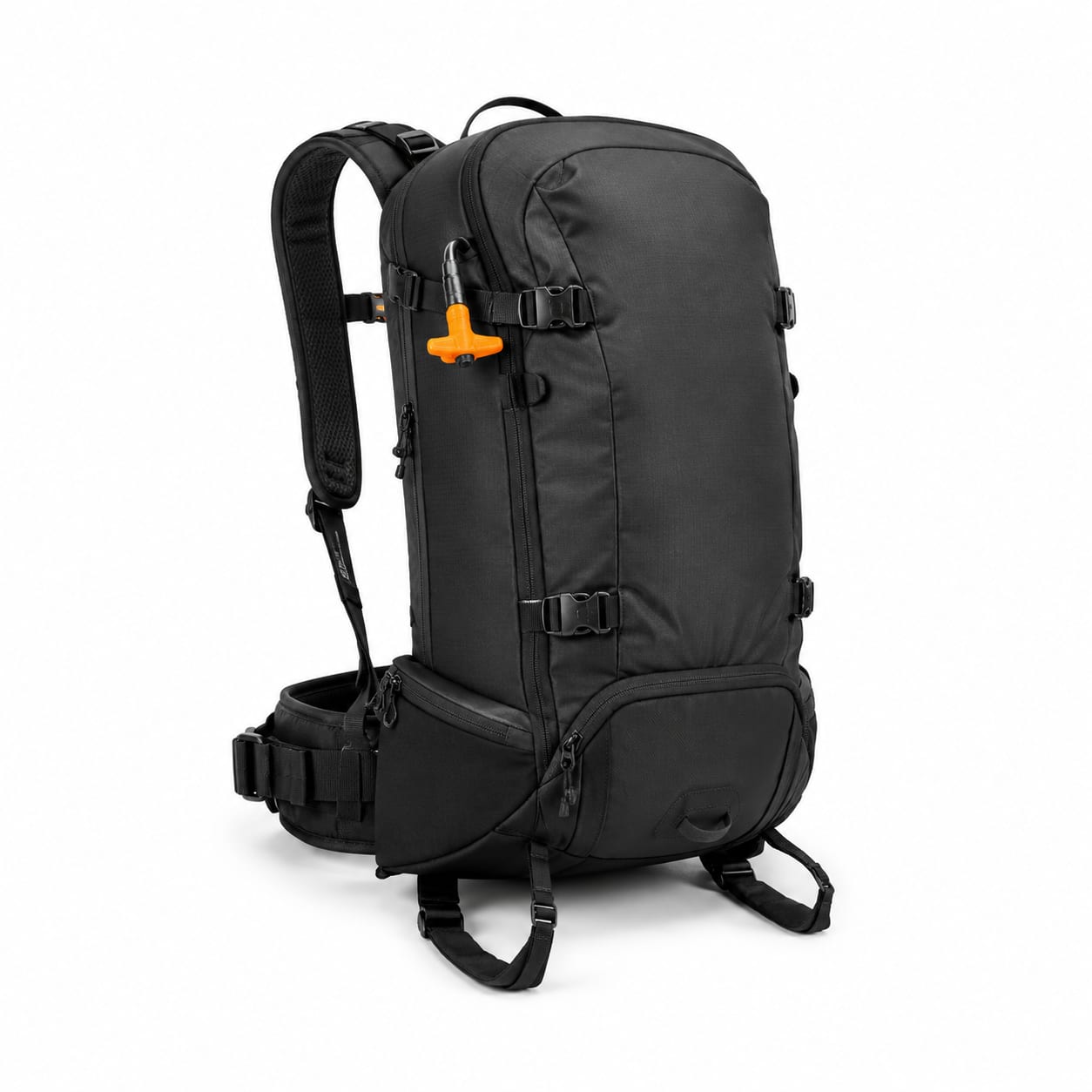
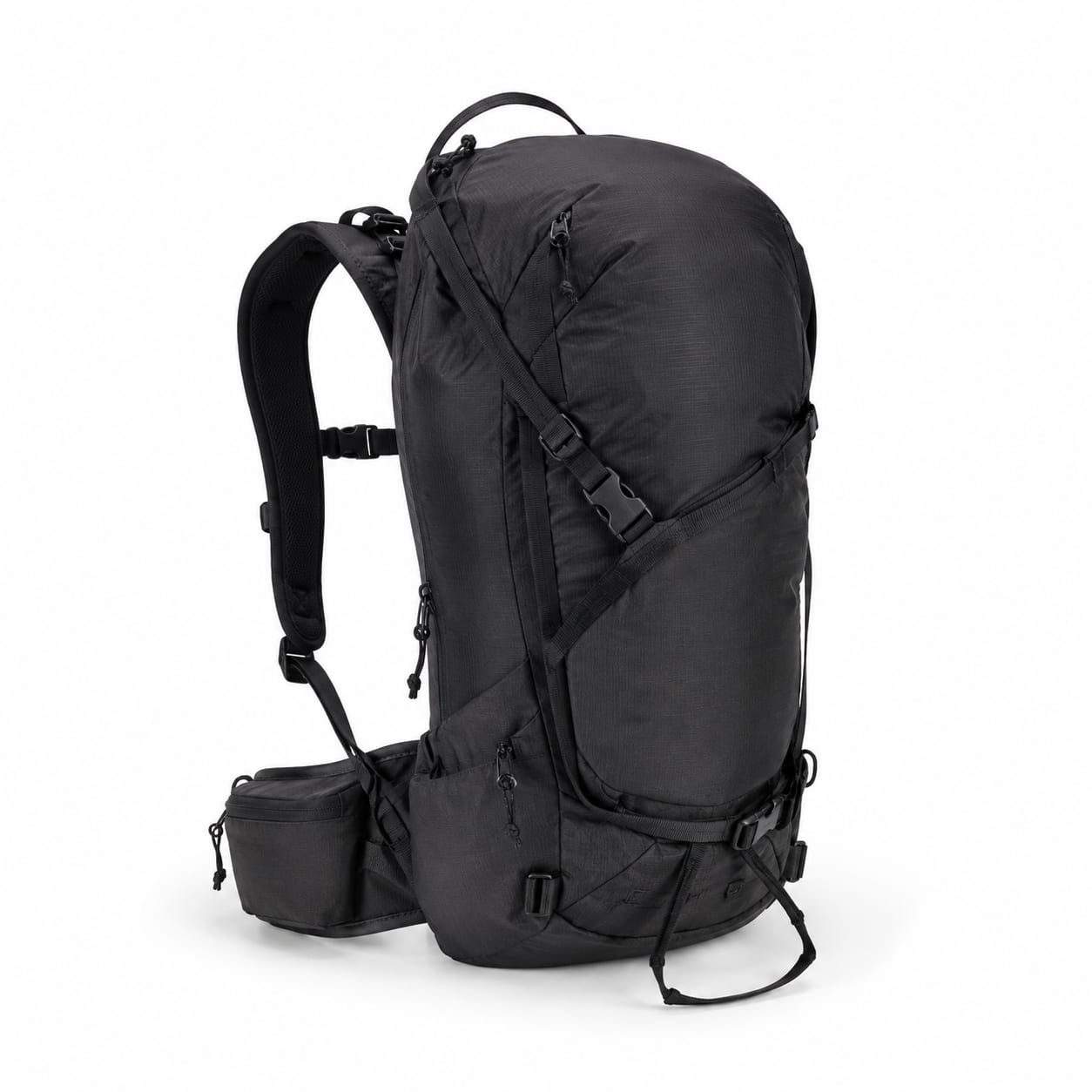
A specialized backpack designed for alpine skiing, backcountry skiing, ski touring, and snowboarding, featuring ski/snowboard carry systems, avalanche safety gear organization, and winter-specific construction.

Backcountry skiers and snowboardersSki tourers and ski mountaineersResort skiers carrying extra layers and gearSidecountry riders accessing gates

17

Key specs

9

Subcategories

7

Related gear topics

Ski Backpack

Overview

What this equipment is for

Ski backpacks are engineered for on-mountain use with purpose-built attachment systems for skis or snowboards, dedicated compartments for avalanche safety equipment (shovel, probe), and weather-resistant materials. They range from small resort packs (15–20L) to multi-day touring packs (40–50L+), with options for integrated avalanche airbag systems and back protection.

Related equipment

Avalanche TransceiverAvalanche ShovelAvalanche ProbeAvalanche Airbag SystemSki HelmetSki PolesCrampons

Buying specs

Specs worth understanding before you buy

Each spec explains how it affects performance, fit, and whether a product suits your style and use case.

Carry Systems

Attachment and carry systems for skis, snowboards, and helmets—the core differentiators of ski-specific packs.

Ski Carry System

ski_carry_system

Importance

The method and configuration used to attach skis to the backpack for uphill travel or transport.

A-Frame

Skis attached vertically on both sides of the pack forming an A shape, poles through the middle.

Diagonal

Single ski attached diagonally across the back of the pack, tail in one corner, tip in opposite.

Vertical

Skis carried straight up and down on one side or center of the pack.

Splitboard Carry

Dedicated straps or sleeves for carrying splitboard halves on uphill.

A-frame is the most versatile and stable for most skiers. Diagonal works for shorter approaches. Splitboarders should verify dedicated splitboard carry. Ensure the system works with your ski width—fat skis may not fit all loops.
Snowboard Carry

snowboard_carry

Importance

Whether and how the backpack can carry a snowboard.

Vertical Carry

Snowboard attached vertically on the back of the pack.

Horizontal Carry

Snowboard strapped horizontally across the back.

Splitboard Compatible Only

Designed for splitboard halves in touring mode, not whole snowboard carry.

No Snowboard Carry

No dedicated snowboard attachment system.

Snowboarders must verify carry compatibility. Many ski-specific packs lack snowboard carry. Splitboarders need splitboard-specific carry or A-frame for split halves.

Helmet Carry System

helmet_carry

Importance

External attachment point or net to carry a ski helmet when not wearing it.

External Helmet Net/Clip

Elastic net or clip system on the front or top for helmet attachment.

Internal Helmet Storage

Helmet fits inside main compartment when not worn.

No Helmet Carry

No dedicated helmet attachment system.

Nice-to-have feature for hut trips or lunch breaks. Most riders keep their helmet on all day. Not a deciding factor for most buyers.

Avalanche Safety

Features related to avalanche emergency preparedness—critical for any backcountry use.

Avalanche Safety Gear Compartment

avalanche_gear_compartment

Importance

Dedicated, quick-access compartment for avalanche shovel, probe, and sometimes a first aid kit.

Dedicated Front Pocket

Separate front-access pocket specifically for shovel and probe with quick zipper or flap access.

Dedicated Internal Sleeve

Internal sleeves or dividers for shovel and probe inside main compartment.

Integrated with Main Compartment

No separate compartment; gear stored loosely in main area.

None

No dedicated avalanche gear storage.

Any pack used in the backcountry must have a dedicated, quick-access avalanche gear compartment. Front-access pockets are standard and fastest. If you ride out-of-bounds, this is non-negotiable.

Avalanche Airbag Compatibility

airbag_compatible

Importance

Whether the pack has an integrated avalanche airbag system or is compatible with removable airbag modules.

Integrated Airbag

Built-in avalanche airbag system (cartridge or fan-based) included with the pack.

Airbag Compatible / Ready

Designed to accept a removable airbag module (e.g., Mammut Removable Airbag, Ortovox Avabag), sold separately.

Not Airbag Compatible

No airbag system or compatibility.

Integrated airbag packs are the most convenient but most expensive and heaviest. Compatible/ready packs offer flexibility to add airbag later. Airbags significantly increase survival odds in avalanches but require training to deploy effectively.

Protection

Impact protection features for the wearer.

Back Protection

back_protection

Importance

Integrated or compatible spine/back protector for impact protection during falls.

Integrated Back Protector

Built-in CE-certified back protector (e.g., SAS-TEC, D3O) in the back panel.

Protector Compatible

Sleeve or pocket that accepts a removable back protector insert, sold separately.

No Back Protection

No integrated or compatible back protector.

Back protection is valued by resort and sidecountry riders, and those skiing technical terrain. Touring-focused riders often skip it to save weight. CE Level 2 offers highest protection. Consider whether you already wear a separate back protector vest.

Fit & Comfort

Dimensions affecting how the pack fits, carries weight, and feels during use.

Torso Length / Back Length

torso_length

Importance

The length of the backpack's back panel and suspension system, determining fit for different torso sizes. Often available in multiple sizes (S/M, M/L, L/XL) or with adjustable back length.

XS/S (36–43 cm torso)

Short back length for smaller torsos, typically under 43 cm measured from C7 to iliac crest.

M/L (43–50 cm torso)

Medium back length for average torsos.

L/XL (50+ cm torso)

Long back length for taller torsos over 50 cm.

Adjustable Back Length

Slider or Velcro system allowing back length adjustment across a range.

Measure your torso from the C7 vertebra (base of neck) to the top of your hip bones. Proper torso fit is more important than overall height. Adjustable back length is ideal if between sizes. A poorly fitting pack causes shoulder pain and poor load transfer.

Hip Belt Type

hip_belt_type

Importance

The style and padding level of the hip belt, which transfers load from shoulders to hips.

Padded, Removable

Well-padded hip belt with closure that can be removed for weight savings or resort use.

Padded, Fixed

Permanently attached padded hip belt.

Webbing Hip Belt

Minimal webbing strap with buckle, no padding.

Padded with Hip Pockets

Padded hip belt with integrated zippered pockets for snacks, phone, camera.

For packs over 25L used on tours, a padded hip belt is essential for load transfer. Removable belts offer the best versatility. Hip pockets are very convenient for snacks and small items on long tours. Webbing belts are fine for resort packs under 20L.

Chest Strap Features

chest_strap_features

Importance

Features of the sternum/chest strap including adjustability, whistle, and height positioning.

Integrated Whistle

Emergency whistle built into the chest strap buckle.

Height Adjustable

Chest strap can slide up and down on shoulder straps to position correctly.

Elastic Section

Elastic portion in chest strap allowing breathing expansion.

An integrated whistle is a standard safety feature—always nice to have. Height adjustability ensures proper fit across different layering. Elastic sections improve comfort during high-output touring. These are minor features but contribute to overall pack quality.

Pack Weight

weight

Importance

The weight of the empty backpack without any gear, airbag cartridge, or back protector insert.

Typical range: 500–3000 g

Ultralight touring packs: 500–900g. Standard backcountry packs: 900–1400g. Packs with airbag systems: 1500–2500g. Every gram counts on long uphill skin tracks. Balance weight against durability and features needed.

Storage & Organization

Capacity, access, and organization features determining how gear is stored and retrieved.

Volume / Capacity

capacity

Importance

The total storage volume of the backpack measured in liters, determining how much gear can be carried.

Typical range: 12–55 L

15–22L for half-day resort or short backcountry tours; 25–35L for full-day tours; 36–45L for overnight hut trips; 46L+ for multi-day expeditions. Choose the smallest pack that fits your needs—oversized packs encourage overpacking and affect balance.

Access Type

access_type

Importance

How the main compartment of the backpack is accessed—determines ease of gear retrieval and organization.

Top-Loading

Single opening at the top of the pack; items at the bottom must be removed to access.

Front Panel (Clamshell)

Full front zipper opening allowing the pack to open like a suitcase for full access.

Side Access Zipper

Side zipper allowing access to main compartment without opening top.

Back Panel Access

Opens from the back panel (body side), keeping front attachments undisturbed.

Top-loading is simplest and most weather-resistant. Front panel (clamshell) is best for organization and access. Back panel access is excellent for touring—access gear without removing skis. Many packs combine multiple access types.

Goggle Pocket

goggle_pocket

Importance

A soft-lined internal or external pocket designed to protect goggles from scratches when stored.

Fleece-Lined Internal Pocket

Soft fleece-lined pocket inside the top lid or front panel for goggle protection.

Fleece-Lined External Pocket

External fleece-lined pocket on front of pack for quick goggle access.

No Dedicated Goggle Pocket

No specific goggle storage; must use main compartment or be worn.

A nice feature for those who swap lenses or remove goggles at lunch. Not essential—most riders keep goggles on their helmet. If you carry spare goggles, a fleece-lined pocket prevents costly lens scratches.

Compression System

compression_system

Importance

Side or vertical compression straps that tighten the pack load to prevent shifting and reduce volume when partially full.

Side Compression Straps

Horizontal straps on sides of pack to compress and stabilize load.

Vertical Compression Straps

Straps running top to bottom to compress pack height.

Dual (Side + Vertical) Compression

Both side and vertical compression straps for maximum load control.

No Compression System

No compression straps; pack volume is fixed.

Compression straps are important for backcountry packs where load size varies throughout the day (shedding layers, eating food). Side compression is standard. Dual compression is best for larger packs. Ensure compression straps don't block ski carry attachments.

Weather & Hydration

Protection from the elements and hydration on the go.

Water Resistance

water_resistance

Importance

The level of water and snow protection the pack provides for contents.

Waterproof (Sealed Seams)

Fully waterproof construction with sealed or taped seams and waterproof zippers. IPX6+ rating.

DWR Coated (Water Resistant)

Durable water repellent coating sheds light snow and rain; not fully waterproof.

Rain Cover Included

Integrated or included rain cover that deploys over the pack for full waterproofing.

Water Resistant Fabric Only

Basic water-resistant fabric without DWR coating or sealed seams.

For day tours, DWR coating is usually sufficient. For multi-day trips or wet coastal snow, waterproof sealed seams or a rain cover are worthwhile. Dry bags for electronics are recommended regardless of pack water resistance.

Hydration System Compatibility

hydration_compatible

Importance

Whether the pack supports a hydration reservoir/bladder and/or has insulated hose routing to prevent freezing.

Insulated Hose Routing

Dedicated internal reservoir sleeve with insulated hose cover and shoulder strap routing.

Reservoir Sleeve (Non-Insulated)

Internal sleeve for hydration bladder but without insulated hose routing.

Water Bottle Pockets Only

Side or hip belt pockets for water bottles; no bladder compatibility.

No Hydration System

No dedicated hydration storage or routing.

For backcountry touring, insulated hose routing is strongly recommended—frozen hydration hoses are a common and dangerous problem. Resort riders may prefer bottle pockets. Always blow air back into the hose after drinking to prevent freeze-up.

Construction

Materials and build quality determining durability and longevity.

Material / Durability

material_durability

Importance

The primary fabric type and denier rating indicating abrasion resistance and durability of the pack construction.

Heavy-Duty Nylon (400D+)

High-denier nylon (400D+) with durable water repellent (DWR) coating. Often reinforced at high-wear areas.

Midweight Nylon (200D–400D)

Medium-denier nylon balancing weight and durability with DWR coating.

Lightweight Nylon (100D–200D)

Low-denier nylon or polyamide prioritizing weight savings.

Dyneema / Cuben Fiber

Ultra-high-molecular-weight polyethylene (UHMWPE) laminate. Extremely light and strong for weight.

For regular backcountry use, midweight nylon (200–400D) offers the best balance. Heavy-duty is for guides and heavy users. Lightweight and Dyneema are for weight-conscious tourers willing to baby their gear. Ski edges are the primary threat—reinforced bottoms help.

Specs FAQ

Common questions about these buying specs

Plain-English answers for each spec and option — tap through for the full explanation.

How many liters should my ski backpack be?

Ski backpack capacity is measured in liters, and the right size depends entirely on how long you'll be out and what you need to carry. For half-day resort laps or short backcountry tours, 15–22 liters is plenty—just enough for water, snacks, an extra layer, and your avalanche safety gear. Full-day tours call for 25–35 liters so you can fit additional food, layers, and maybe a thermos. If you're planning overnight hut trips, look at 36–45 liters to accommodate sleeping gear and extra supplies. Multi-day expeditions may require 46 liters or more. The golden rule: choose the smallest pack that fits your needs. An oversized pack tempts you to overpack, and excess volume leads to shifting loads that throw off your balance on skis. Don't forget to account for avalanche gear—your shovel and probe take up dedicated space, and that's non-negotiable. Many skiers underestimate how much room layers and safety equipment require together, so size up slightly if you're unsure.

I keep seeing 'A-Frame carry' on ski backpacks—what does that mean, and should I look for it?

A-Frame carry attaches your skis vertically on both sides of the pack, with tails at the bottom and tips crossing at the top to form an 'A' shape. You slide your poles through the middle. It's the most popular carry method for ski touring because it keeps weight balanced on both sides of your body, which feels much more stable on steep or tricky terrain. The big advantage is how natural it feels while hiking—you're not getting pulled to one side, and you can easily grab your skis without taking the pack off. The main downside is that skis stick out on both sides, so they can snag on tree branches in tight glades. If you're doing any real touring or longer approaches, A-Frame is hard to beat. Just make sure the attachment loops fit your skis—wide powder skis may not squeeze into some smaller packs.

What is diagonal ski carry, and when does it make sense to choose it?

Diagonal ski carry attaches your skis across the back of the pack at an angle, with the tail in one corner and the tip in the opposite corner. It's a simpler system with fewer straps and attachment points than A-frame carry, making it quick and easy to load and unload. This style is most common on smaller packs and works well for shorter approaches—think sidecountry laps at a resort or quick boot packs where you're not hiking for hours. If you prefer a minimalist setup without extra straps and loops, diagonal carry keeps things clean and simple. The trade-off is balance. Since both skis sit along one diagonal line, the weight isn't distributed as evenly as A-frame carry, which splits the load on both sides. For longer tours or technical terrain, that can feel less stable. Also, double-check that your skis fit—wider powder skis may not work well with some diagonal attachment systems.

I see some packs offer vertical ski carry—what is it and when does it make sense?

Vertical ski carry attaches your skis straight up and down on one side or the center of the pack, rather than angled or spread across both sides. It's a simpler, more minimal system you'll mostly find on ultralight touring packs. The big advantage is speed—sliding skis into a vertical sleeve or strap is about as quick as it gets. It also keeps your skis close to your body with less protrusion, which means fewer snags on branches in tight trees. The trade-off is balance: carrying skis on just one side can feel lopsided, especially on longer approaches or technical terrain. Vertical carry is worth considering if you're an ultralight-minded skier doing shorter bootpacks or if you frequently ski tight glades where a wider A-frame setup catches on everything. For longer tours or heavier loads, A-frame remains the more stable and comfortable choice.

Subcategories

Different styles, different picks

Each sub-type has its own guide with typical specs, trade-offs, and buying advice.

Avalanche Airbag Backpack

Avalanche Airbag Backpack

$500 – $1300

common

High-safety backpacks with integrated deployable airbag systems designed to increase survivor buoyancy in avalanches.

Integrated airbag systemDeployment handleLeg loop or waist strap
Backcountry Touring Daypack

Backcountry Touring Daypack

$80 – $280

dominant

Lightweight to midweight packs (20-35L) optimized for single-day backcountry ski touring with dedicated safety gear organization.

Dedicated probe and shovel pocketDiagonal and A-frame ski carryHip belt with pockets
Ski Mountaineering Pack

Ski Mountaineering Pack

$120 – $320

niche

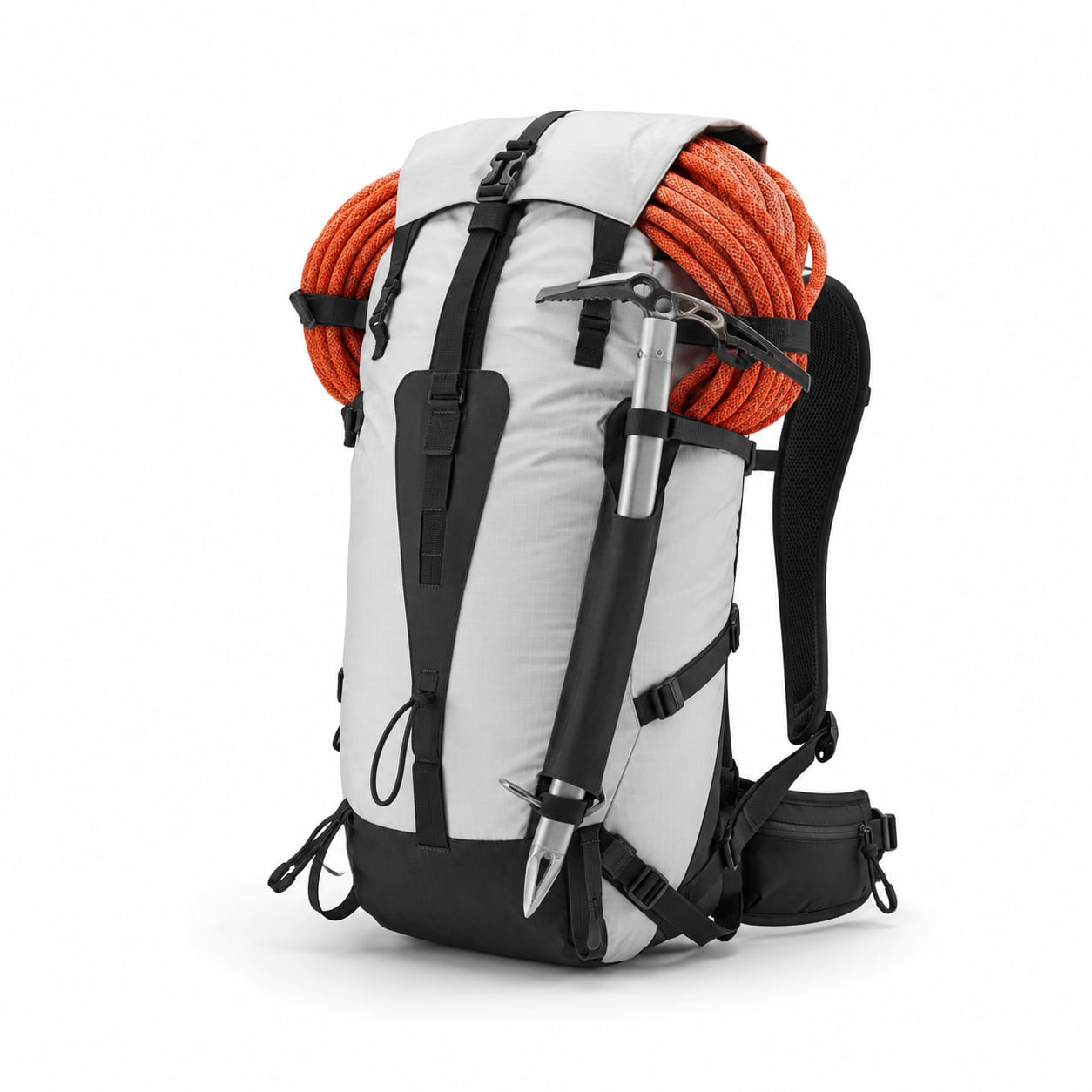
Technical, minimalist packs designed for ski mountaineering objectives with rope carry, ice axe attachments, and alpine features.

Rope carry systemIce axe attachments (reinforced)Gear loops
Freeride Backpack

Freeride Backpack

$100 – $450

common

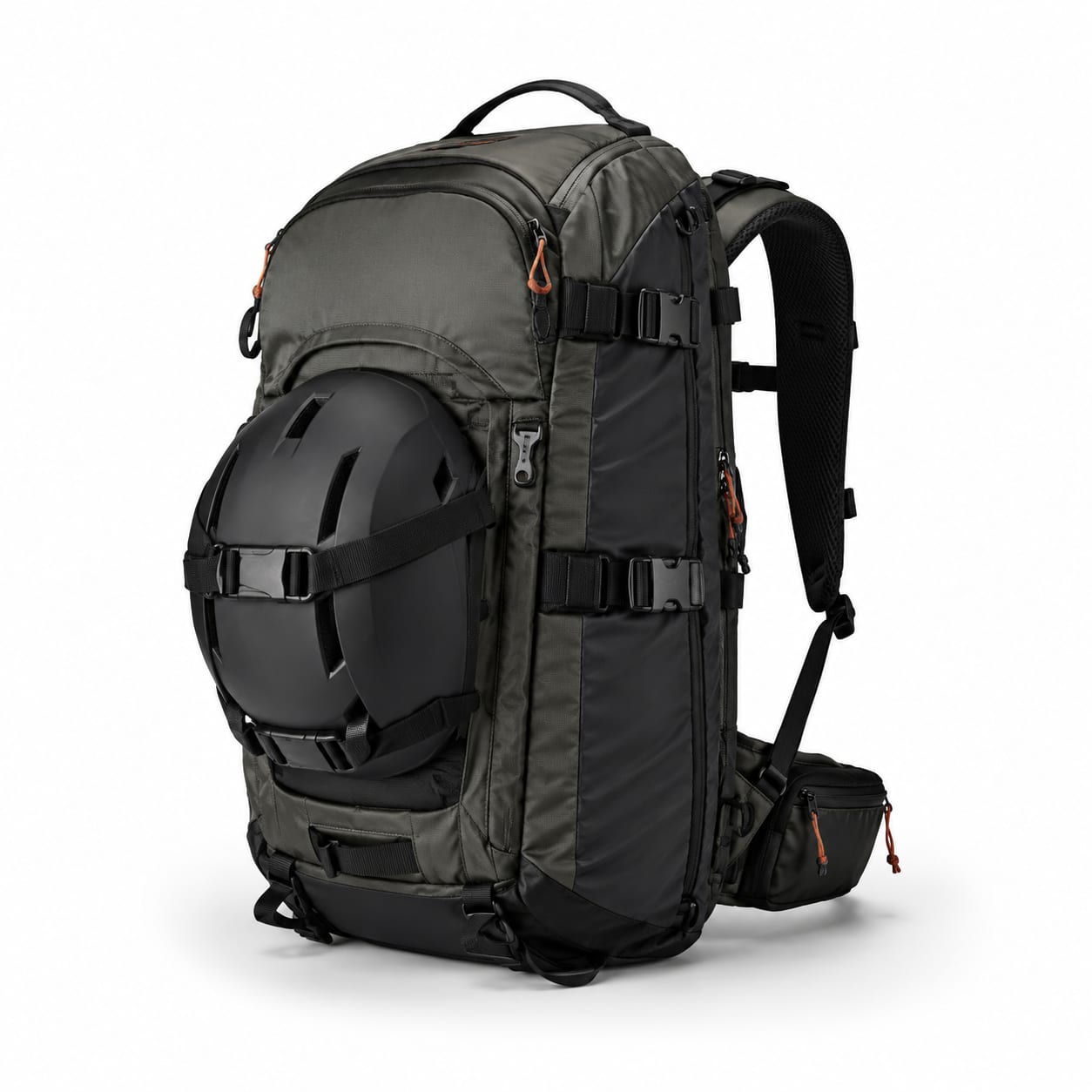
Feature-rich packs (25-40L) designed for big mountain freeride skiing with camera gear options, helmet carry, and aggressive riding stability.

Padded camera compartmentHelmet carry systemBack protection panel
Resort / In-Bounds Daypack

Resort / In-Bounds Daypack

$35 – $120

common

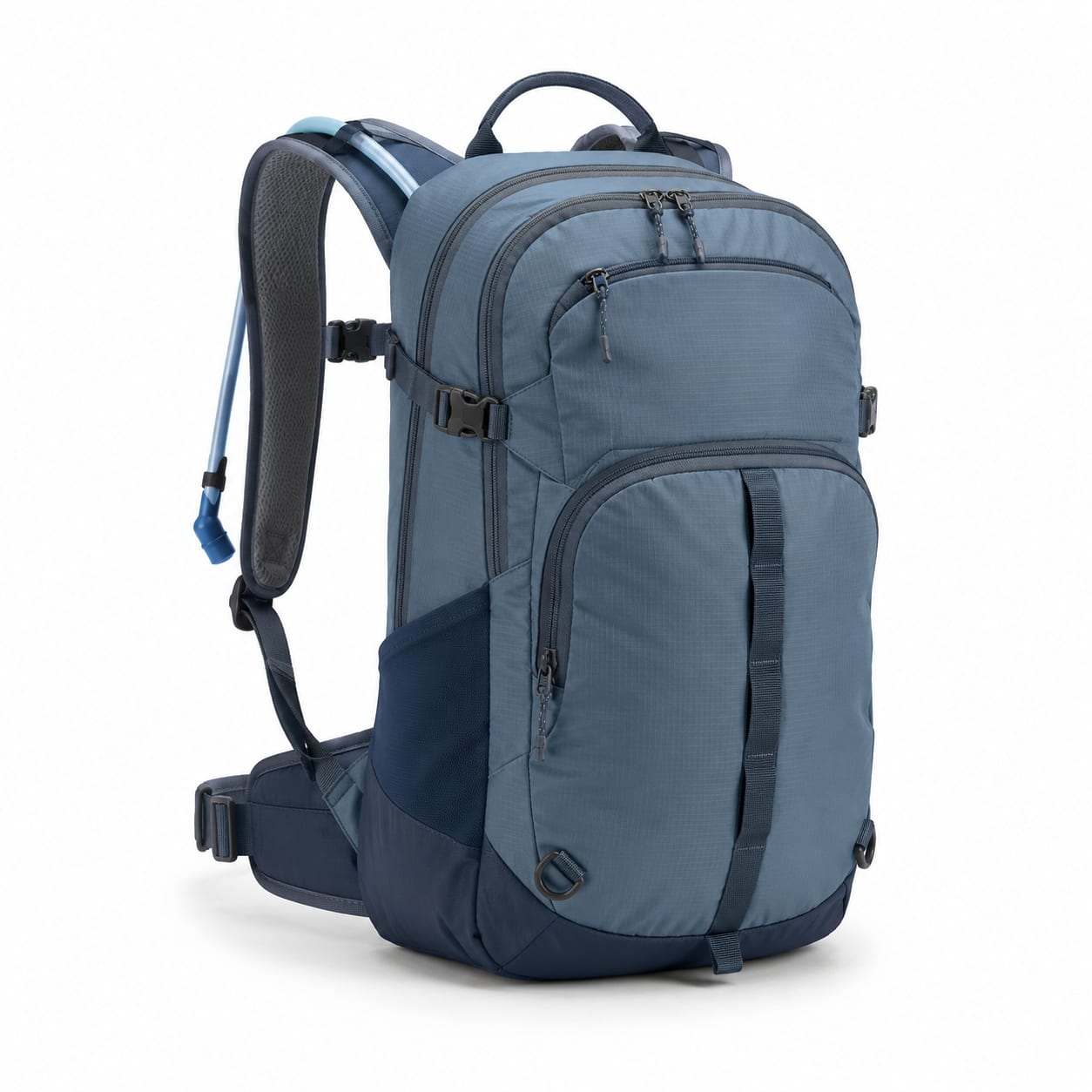
Compact, lightweight packs (10-22L) for carrying essentials during lift-served skiing without backcountry-specific features.

Compact volume (10-22L)Low-profile designInsulated hydration tube
Ski Boot Backpack

Ski Boot Backpack

$40 – $160

common

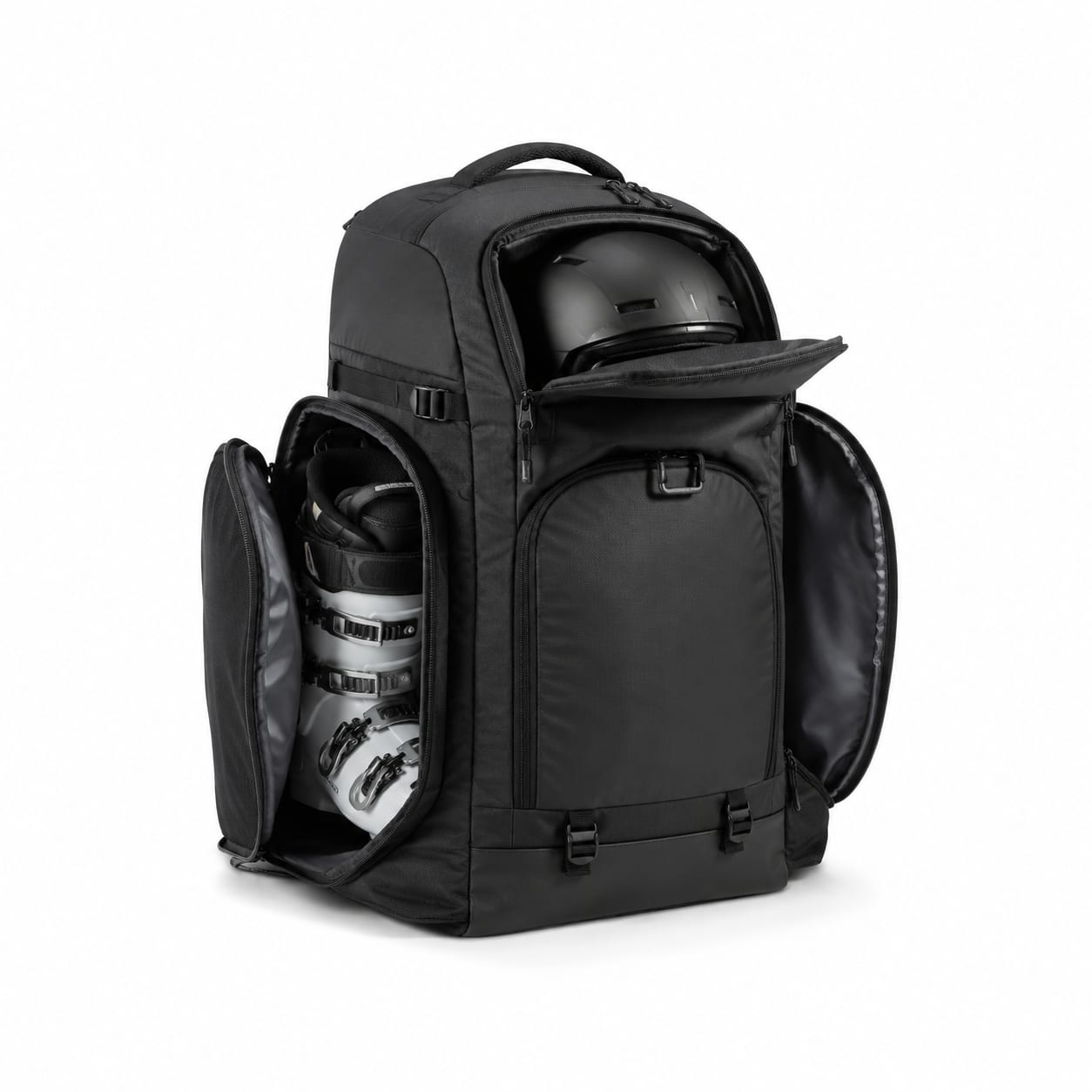
Specialized transport backpacks with dedicated boot compartments and gear organization for carrying ski boots and equipment to the mountain.

Dedicated boot compartmentVentilated boot storageHelmet pocket
Hydration Ski Pack

Hydration Ski Pack

$50 – $160

niche

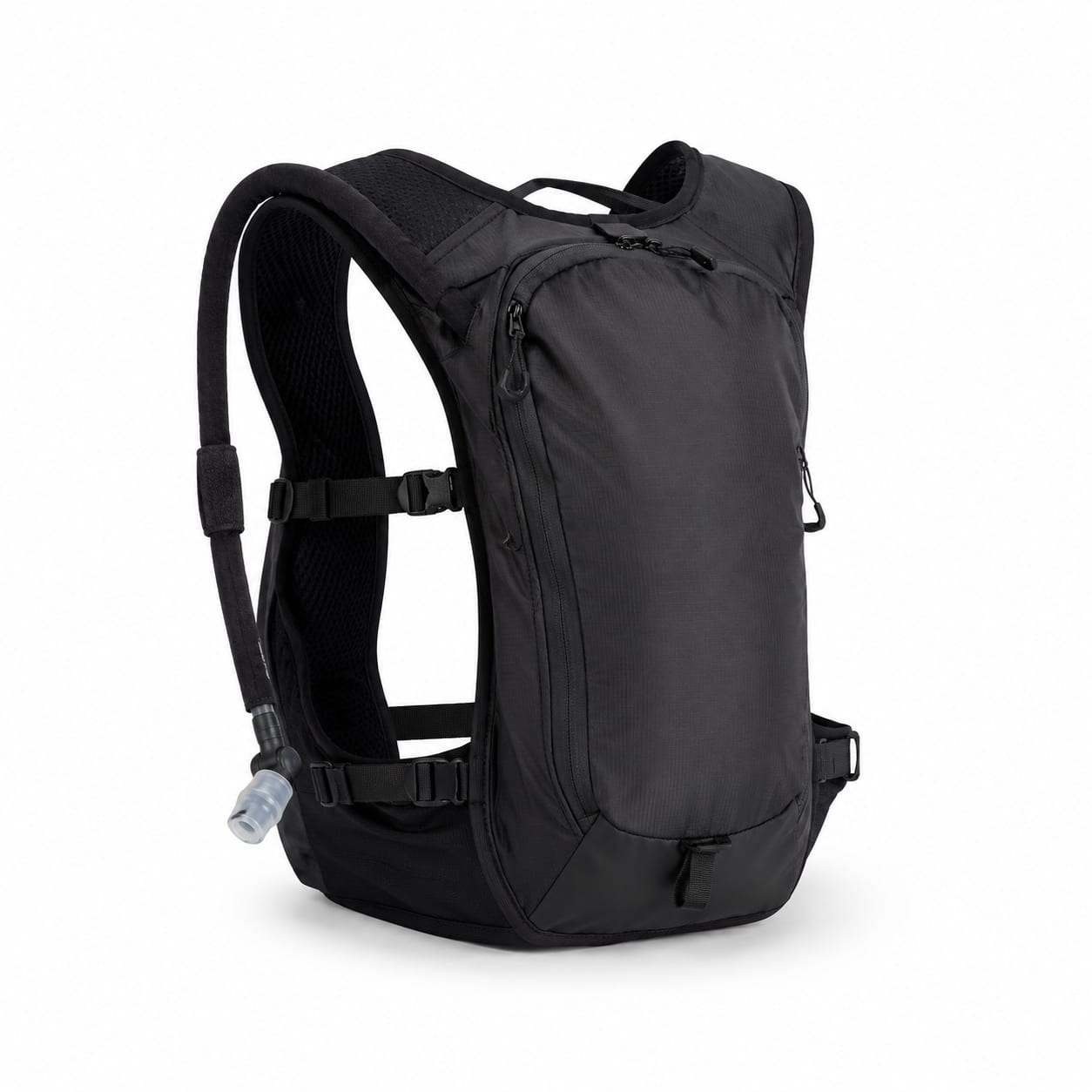
Minimalist, low-profile packs (5-12L) built around hydration systems with insulated delivery tubes for on-snow drinking.

Integrated hydration bladderInsulated tube and bite valve coverUltra-low profile
Multi-Day Touring Pack

Multi-Day Touring Pack

$160 – $380

niche

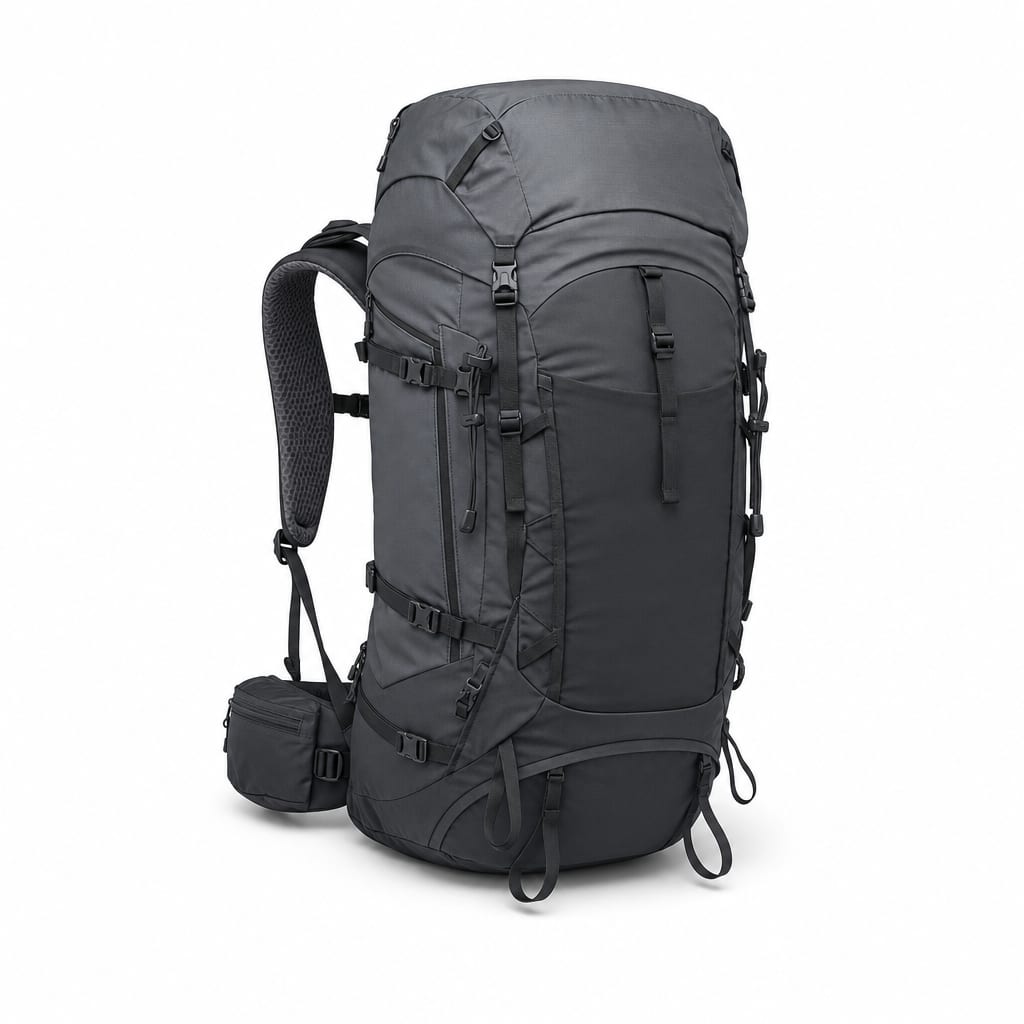
High-volume packs (40-55L) designed for hut-to-hut tours and multi-day backcountry ski trips with extended gear capacity.

High volume (40-55L)Robust suspension systemSleeping bag compartment
Ski Travel Backpack

Ski Travel Backpack

$70 – $280

common

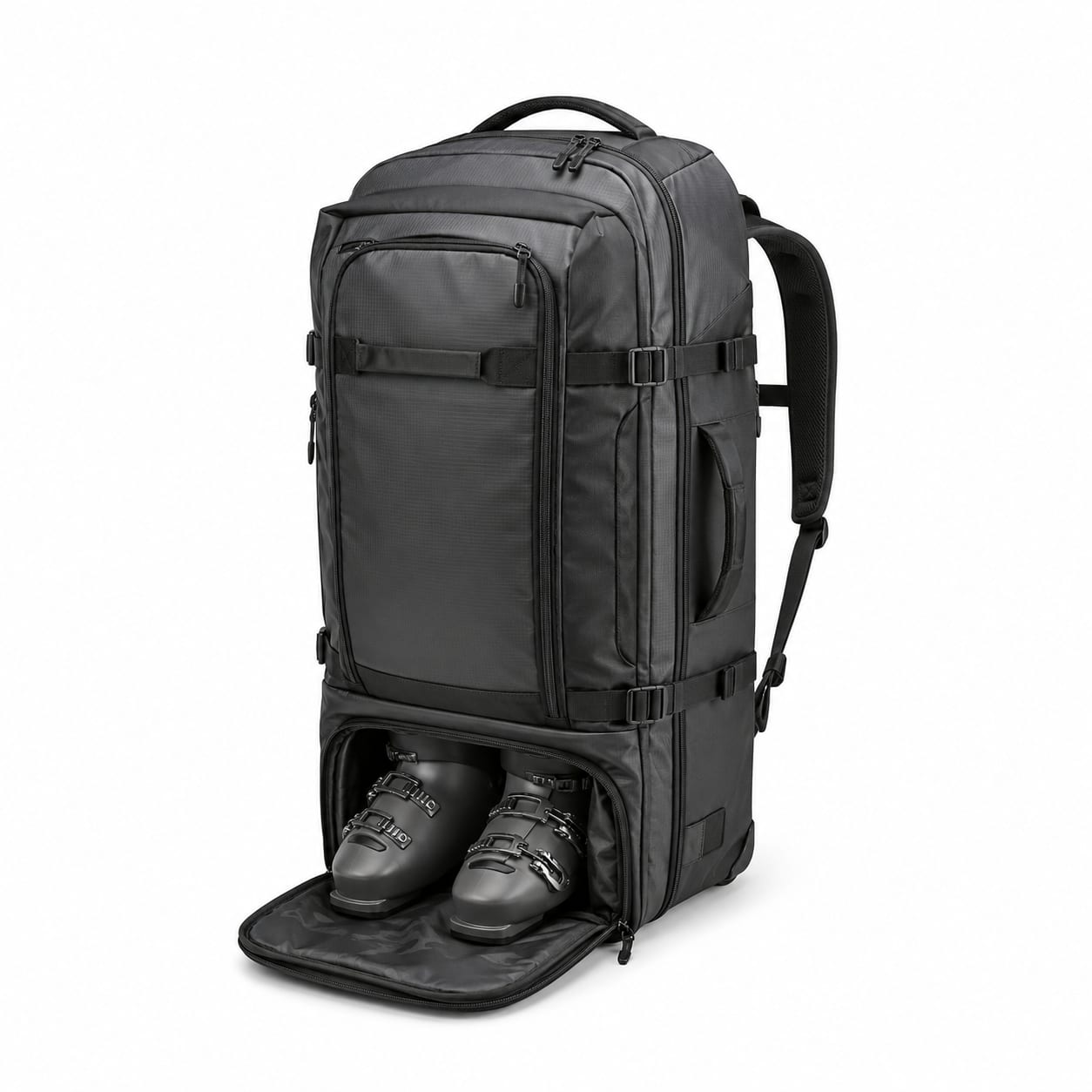
Large-capacity packs or duffel-backpack hybrids designed for transporting ski clothing, boots, and gear on ski trips by air or road.

Large capacity (45-80L)Boot compartmentWet/dry separation