
Ski Balaclava · FAQ
Questions about Breath Box Balaclava
Straight answers on fit, specs, and when this type makes sense — each topic has its own page with links back to the buying guide.
Open Breath Box Balaclava guide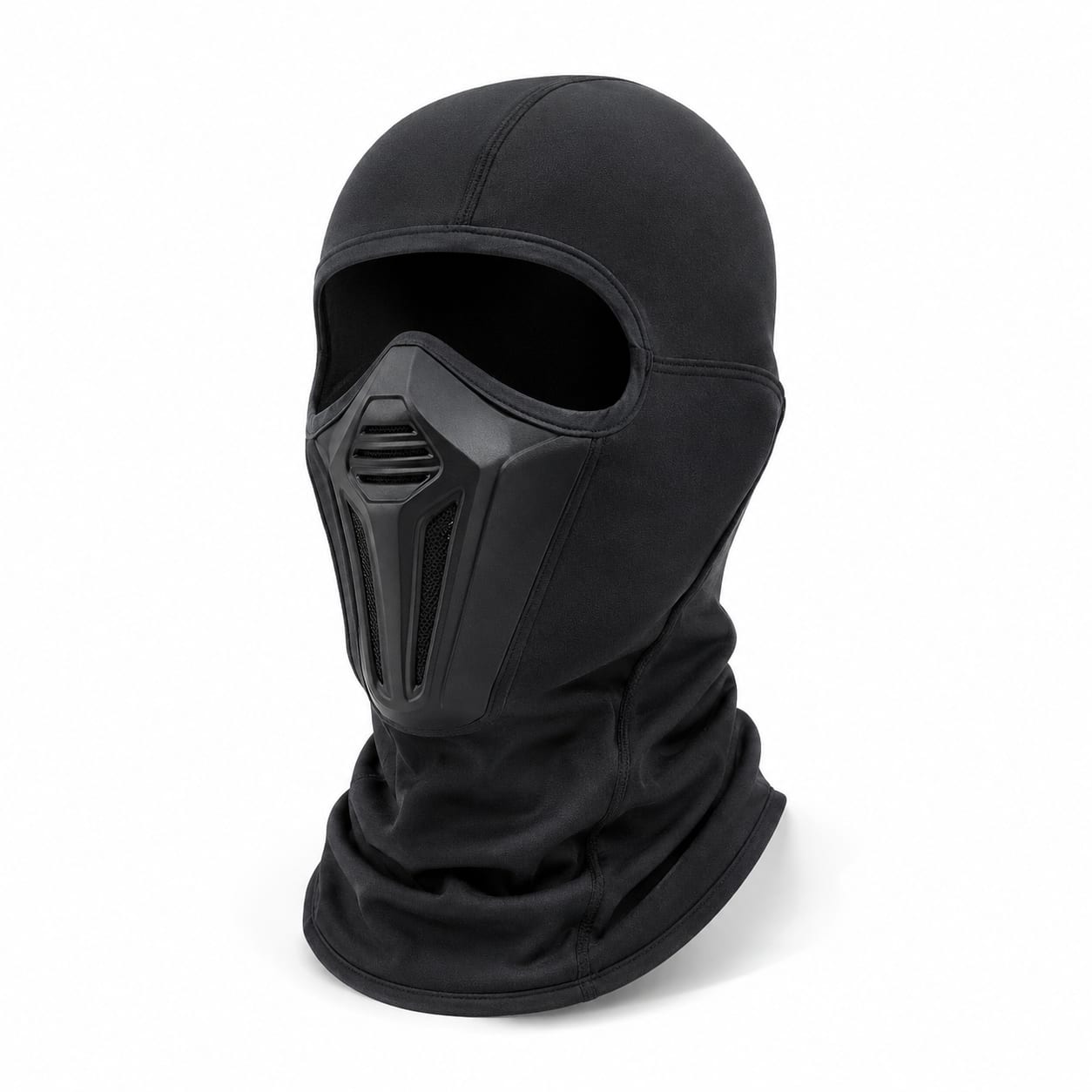
6 topics
Pick a question
Every answer links to the full subcategory guide and related gear types when it helps you decide.
How does a breath box balaclava actually work?
A breath box balaclava has a structured chamber—usually made from molded foam, semi-rigid fabric, or a plastic insert—that surrounds your nose and mouth. When you exhale, the chamber captures your breath and channels it downward through a designed exhaust port at the bottom, away from your goggle lenses. Think of it like a small hood over your nose and mouth that acts as a chimney directing breath downward instead of upward. This mechanical redirection is far more effective than relying on fabric breathability alone.
Read answer →02Will a breath box balaclava completely stop my goggles from fogging?
A properly fitted breath box balaclava will dramatically reduce goggle fogging—most users report near-complete elimination in typical cold conditions. However, no solution is 100% effective in all circumstances. Fogging can still occur from sweat evaporation from your forehead, from moisture entering around the goggle frame during falls, or in extremely humid conditions where ambient moisture condenses on cold lenses. The breath box addresses the primary cause (exhaled breath) very effectively, but secondary moisture sources can still cause occasional fogging.
Read answer →03Is a breath box balaclava comfortable for all-day skiing?
Comfort is subjective and depends on your tolerance for face coverage. The structured chamber does add bulk and a more confined feeling compared to soft balaclavas. Most users adapt within a few days of skiing and find the trade-off worthwhile for fog-free vision. If you're claustrophobic or strongly dislike things covering your nose and mouth, the breath box may feel uncomfortable. Riders who are used to full-face balaclavas generally adjust quickly. It's worth trying one for a full day before deciding.
Read answer →04Can I wear a breath box balaclava with any goggles?
Most breath box balaclavas are designed to work with a wide range of goggle styles, but compatibility is not universal. The top edge of the balaclava needs to tuck under your goggle foam to create a complete seal. Oversized goggles, OTG (over-the-glasses) goggles, and goggles with unusual frame shapes may not interface cleanly with every breath box design. If possible, try the balaclava with your specific goggles before purchasing, or buy from retailers with good return policies.
Read answer →05Do breath box balaclavas work for snowboarders too?
Yes, breath box balaclavas work equally well for snowboarders. Goggle fogging is not discipline-specific—it affects anyone wearing goggles in cold conditions. Snowboarders who sit on cold lifts, ride in powder, or spend time adjusting gear in the cold will benefit just as much as skiers. The only consideration is that some snowboarders prefer more casual styling, and breath box balaclavas tend to have a technical, race-oriented aesthetic.
Read answer →06What happens if the breath chamber doesn't fit my face properly?
If the breath chamber doesn't seal against your face—particularly at the nose bridge or cheekbones—exhaled breath will escape through the gaps and rise toward your goggles, significantly reducing the anti-fog benefit. This is the most common reason breath box balaclavas fail to meet expectations. If you experience this, try a different size or a different brand, as chamber shapes vary. Some models have adjustable nose bridges or flexible chamber edges that can improve the seal for different face shapes.
Read answer →