Coverage Style
Coverage Style
What it means
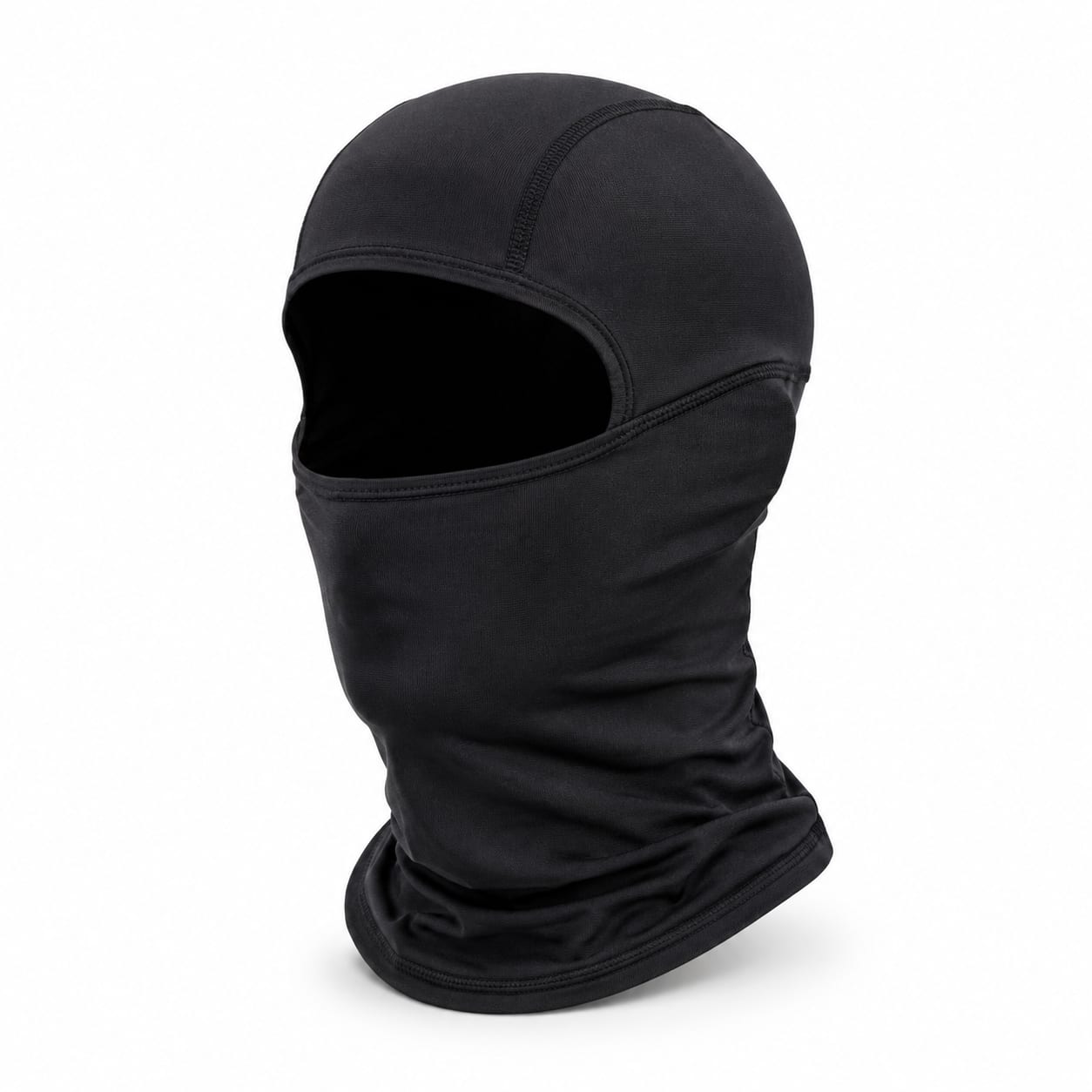
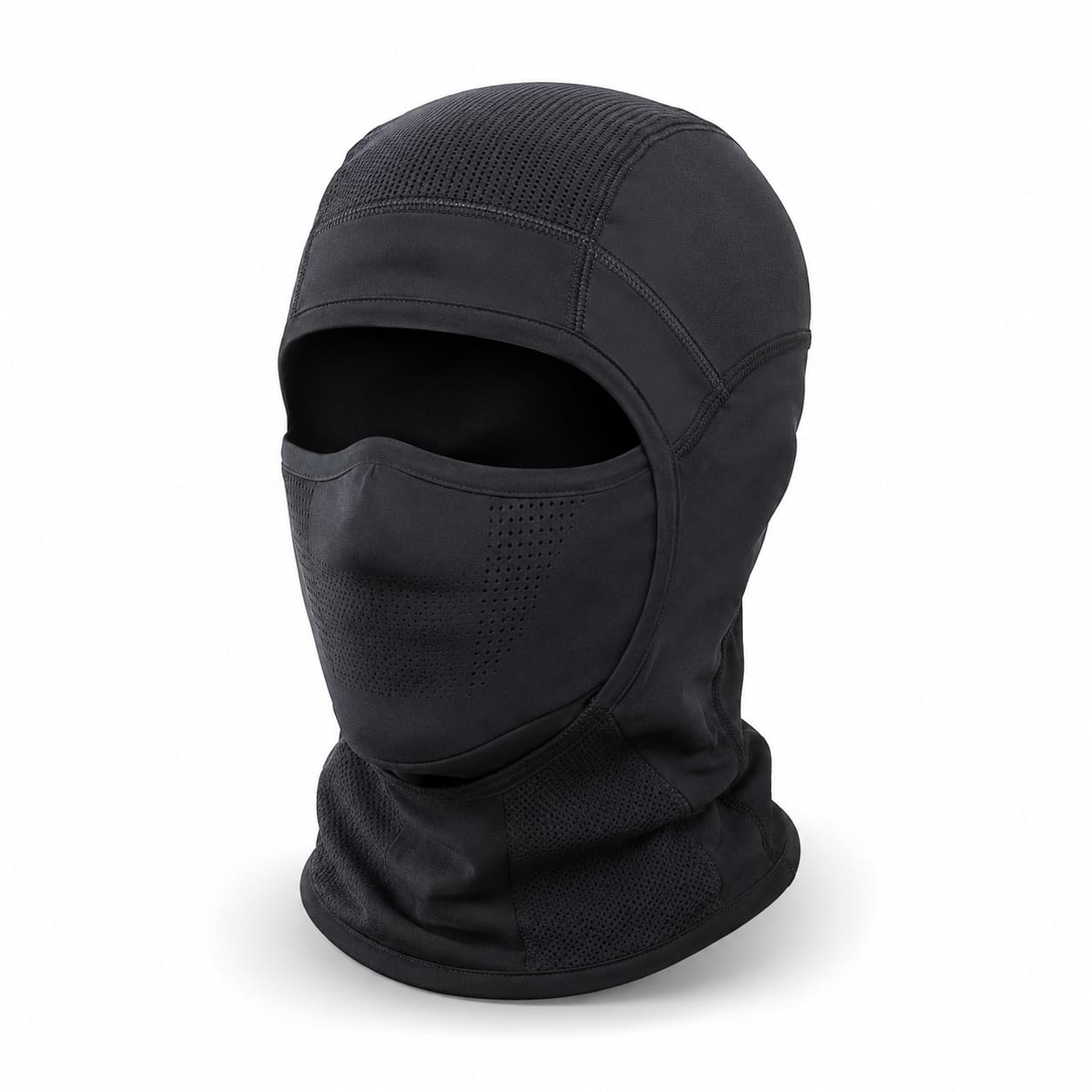
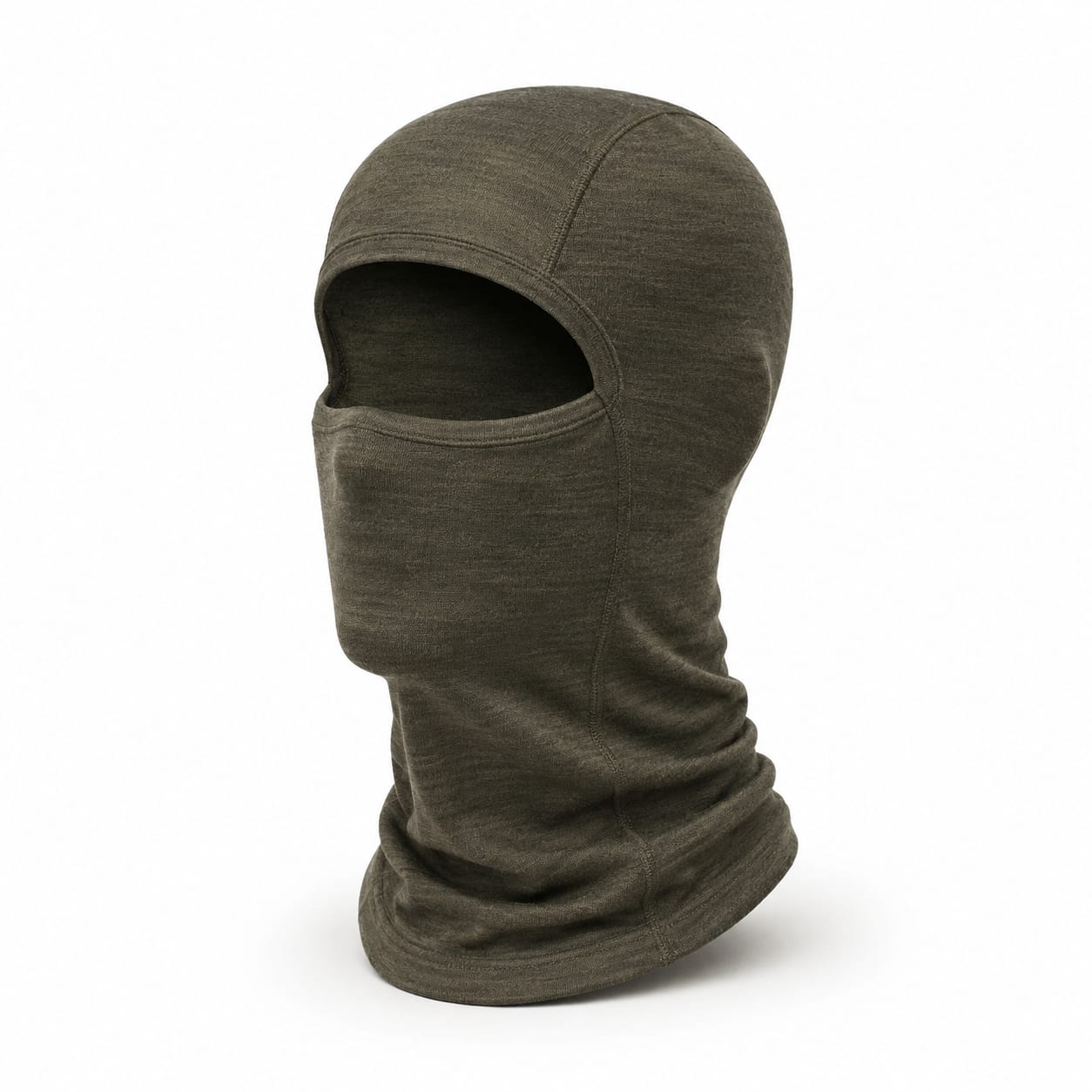
The extent and configuration of face and head coverage provided by the balaclava, determining how much skin is exposed and how the garment interfaces with goggles and helmets.
Typical for this type
Full Face Or Mesh Breath Panel
In practice
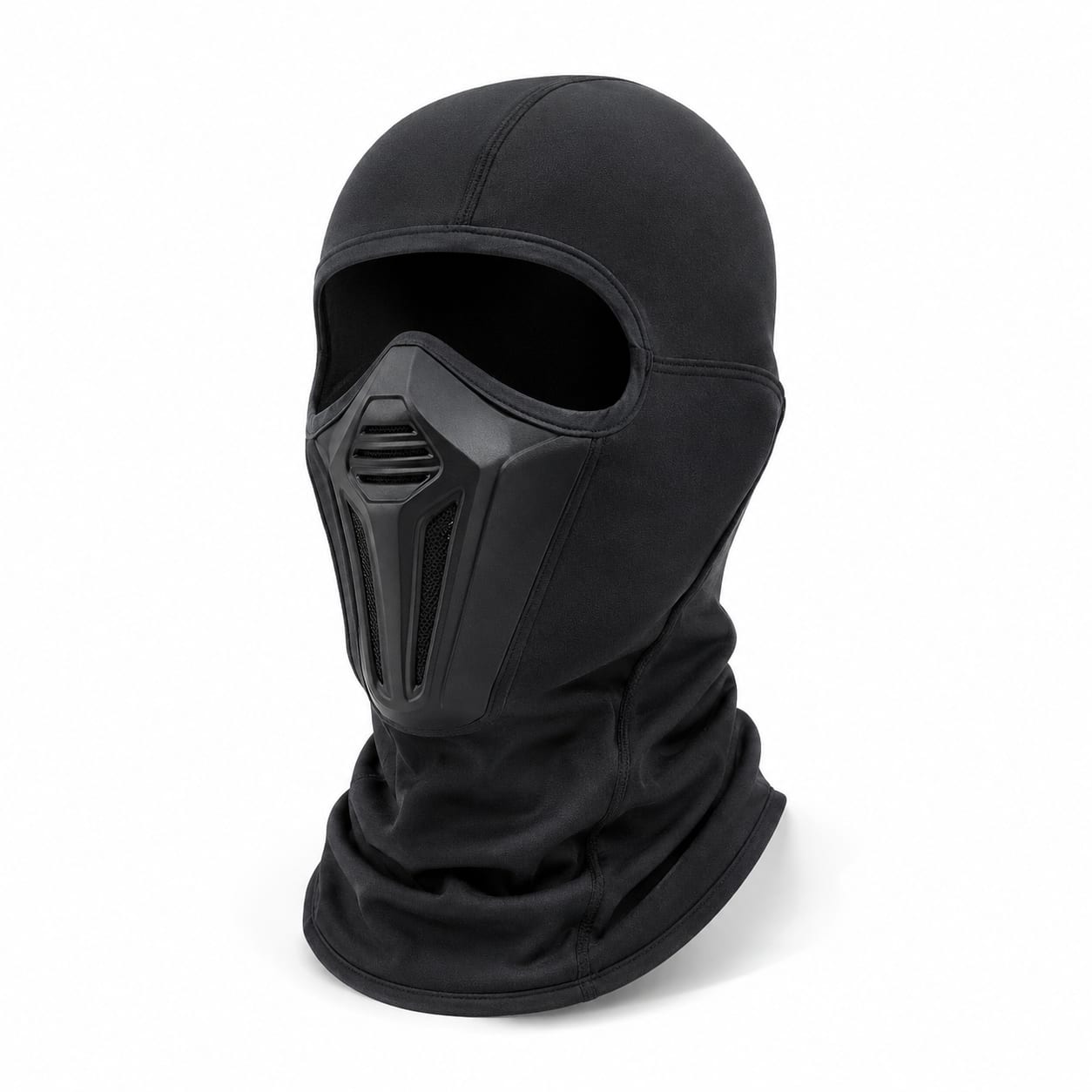
Breath box balaclavas almost universally use full face coverage because the breath chamber requires a complete seal around the nose and mouth to function. The structured panel spans from the nose bridge to below the mouth, and full coverage ensures no breath escapes upward through gaps.
Compared to other types
Unlike convertible or half-face balaclavas that prioritize breathability through reduced coverage, the breath box achieves breathability through directed exhaust while maintaining full coverage for maximum warmth and wind protection.
Why it matters: The breath box design depends on capturing all exhaled air within the chamber. Half-face or open-face designs would allow breath to escape above the chamber, negating the anti-fog benefit entirely.
Primary Fabric Material
Primary Fabric Material
What it means
The main material used in construction, which determines warmth, breathability, moisture management, stretch, and feel against skin.
Typical for this type
Hybrid Multi Zone Or Windstopper Softshell
In practice
Most breath box balaclavas use hybrid multi-zone construction because the design inherently requires different fabric properties in different areas: windproof panels at exposed zones, breathable mesh at the exhaust port, and moisture-wicking fleece against the skin. Windstopper softshell is also common for the main body.
Compared to other types
Standard balaclavas can function well with a single fabric like polyester fleece or merino wool. Breath box designs almost require multi-zone construction, which increases cost but delivers superior zone-specific performance.
Why it matters: The breath chamber's effectiveness depends on matching fabric performance to each zone. A single fabric cannot simultaneously provide the wind protection, breathability, and moisture management that a breath box demands.
What it means
The total weight of the balaclava in grams, affecting packability, layering comfort, and perceived bulk under a helmet.
Typical for this type
70–140g
Most common pick: 90g
In practice
Breath box balaclavas are typically heavier than standard balaclavas due to the structured chamber, additional fabric zones, and often windproof membranes. The breath box insert alone can add 15–30g compared to a similar full-face design without the chamber.
Compared to other types
Expect 20–40g more than a comparable standard full-face balaclava. Lightweight merino or single-layer polyester models can be 50–70g lighter but offer no breath management.
Why it matters: The added weight is the trade-off for the breath-directing function. While heavier than ultralight options, most breath box models remain comfortable under helmets and pack reasonably well.
Wind Resistance
Wind Resistance
What it means
The degree to which the balaclava blocks wind penetration, critical for comfort on exposed chairlifts and high-speed descents.
Typical for this type
Highly Wind Resistant Or Windproof
In practice
Breath box balaclavas typically feature windproof or highly wind-resistant main body panels because they are designed for cold conditions where fogging is a problem—exactly the conditions where wind protection matters most. The exhaust port is the only zone with reduced wind resistance.
Compared to other types
Breath box models tend to have higher wind resistance than standard fleece balaclavas due to their multi-zone construction with windproof panels. The exhaust port is a small compromise but is positioned to minimize wind entry.
Why it matters: Cold wind on exposed lifts contributes to goggle lens cooling, which worsens fogging. A wind-resistant balaclava keeps the face warm and reduces the temperature differential that causes condensation.
Breathability
Breathability
What it means
The ability of the fabric to allow moisture vapor (sweat) to escape, preventing clamminess and reducing goggle fogging.
Typical for this type
Good Or Excellent
In practice
Despite full face coverage, breath box balaclavas achieve good to excellent breathability through the directed exhaust system. The chamber actively moves moist air away from the face and goggles, which is a different mechanism than fabric breathability but achieves a similar result for the wearer.
Compared to other types
Standard full-face balaclavas without breath management often rate moderate in breathability because exhaled moisture has nowhere to go. Breath box designs effectively achieve better moisture management despite similar or lower fabric breathability.
Why it matters: The breath box's primary purpose is managing breath moisture. If the chamber works correctly, moisture is evacuated efficiently even if the surrounding fabric is less breathable. This is why breath box designs can use windproof panels without creating a clammy feeling.
Helmet Compatibility
Helmet Compatibility
What it means
How well the balaclava fits and functions under a ski helmet, including bulk, seam placement, and integration with helmet straps and goggle straps.
Typical for this type
Compatible Or Optimized Helmet Fit
In practice
Most breath box balaclavas are designed to work under ski helmets, though the structured chamber can add slight bulk at the cheeks and temples. Premium models use flat seams and low-profile construction at helmet contact points. The breath box structure itself sits below the helmet line.
Compared to other types
Standard thin balaclavas may achieve optimized helmet fit more easily due to minimal bulk. Breath box designs are compatible but may feel slightly more snug under tight-fitting race helmets.
Why it matters: Since breath box balaclavas are often used in racing and professional contexts, helmet compatibility is a design priority. However, the added structure means fit testing with your specific helmet is more important than with simpler designs.
Goggle Integration
Goggle Integration
What it means
How well the balaclava interfaces with ski goggles, including gap elimination, fogging prevention, and strap compatibility.
Typical for this type
Seamless Integration
In practice
This is the breath box balaclava's defining strength. The breath chamber is specifically engineered to interface with goggle frames, creating a seal that prevents breath from reaching the lens. The top edge of the balaclava is designed to tuck under the goggle foam, eliminating the gap that allows breath to rise.
Compared to other types
Standard balaclavas, even with good integration, still allow some breath to migrate upward through the fabric or around the nose bridge. The breath box's physical chamber provides a mechanical barrier that fabric-only designs cannot match.
Why it matters: Goggle integration is the entire reason the breath box exists. A properly fitted breath box balaclava eliminates the primary pathway for breath to reach goggle lenses, which is far more effective than relying on fabric breathability alone.
Moisture Wicking
Moisture Wicking
What it means
The ability of the fabric to actively pull moisture (sweat and breath condensation) away from the skin surface to the exterior where it can evaporate.
Typical for this type
Active Wicking Or Moderate Wicking
In practice
Quality breath box balaclavas use active wicking fabrics against the skin because the chamber concentrates breath moisture in a small area. Without good wicking, the interior of the chamber can become damp and uncomfortable. Polypropylene and treated polyester are common interior fabrics.
Compared to other types
Breath box designs place higher demands on moisture wicking than standard balaclavas because the chamber concentrates exhaled moisture. A fabric that performs adequately in a standard balaclava may feel damp inside a breath box.
Why it matters: The breath chamber captures a significant volume of moist air. If the interior fabric cannot wick that moisture away, it accumulates inside the chamber, creating a damp microclimate against your face and potentially freezing at the exhaust port in extreme cold.
UV Protection (UPF)
UV Protection (UPF)
What it means
The Ultraviolet Protection Factor rating indicating how effectively the fabric blocks UV radiation, important at high altitude where UV exposure is significantly stronger.
Typical for this type
Upf 30 To 49 Or Upf 50 Plus
In practice
Most breath box balaclavas provide good UV protection (UPF 30–49) as a byproduct of their multi-layer, tightly woven construction. The windproof panels and structured materials naturally block most UV radiation. Some premium models achieve UPF 50+.
Compared to other types
Breath box balaclavas tend to offer better UV protection than thin single-layer designs because their multi-zone construction uses denser fabrics. However, UV protection is rarely a primary design driver for this subcategory.
Why it matters: At high altitude with snow reflection, UV exposure is intense. The full face coverage of a breath box balaclava protects large areas of skin, but the effectiveness depends on the fabric's UPF rating.
What it means
The sizing system and general fit characteristics of the balaclava, affecting comfort, coverage, and compatibility with other gear.
Typical for this type
One Size Or S/M And L/Xl
In practice
Most breath box balaclavas are offered in one size with stretch accommodation, though some premium models come in S/M and L/XL. The structured chamber makes precise fit more important because gaps at the nose bridge or cheeks compromise the breath-directing function.
Compared to other types
Fit accuracy matters more for breath box balaclavas than for standard designs because the chamber must seal against the face. A slightly loose standard balaclava is merely less warm; a slightly loose breath box balaclava may not work at all.
Why it matters: A breath box that doesn't seal properly against your face allows breath to escape upward, defeating its primary purpose. If you have a particularly small or large face, seek out sized options rather than one-size models.
Seam Construction
Seam Construction
What it means
The type and placement of seams in the balaclava, affecting comfort against skin, pressure points under helmets, and durability.
Typical for this type
Flatlock Seams Or Seamless
In practice
Flatlock seams are the most common construction in breath box balaclavas, balancing comfort and durability. The multi-zone construction requires seams where different fabrics meet, making truly seamless designs rare. Premium models use bonded seams at key contact points.
Compared to other types
Standard balaclavas can more easily achieve seamless construction due to simpler single-fabric designs. Breath box models inherently require more seams due to multi-zone construction, making seam quality a more important differentiator.
Why it matters: Seam placement is particularly important in breath box designs because the chamber structure creates additional seams around the nose and mouth. Poorly placed seams in this area can cause irritation during long wear or create leak points in the chamber seal.
Odor Resistance
Odor Resistance
What it means
The fabric's ability to resist developing unpleasant odors over multi-day use, important for ski trips where daily washing isn't possible.
Typical for this type
Antimicrobial Treated Or Natural Odor Resistant
In practice
Most breath box balaclavas use synthetic fabrics with antimicrobial treatments because the breath chamber creates a warm, moist environment that promotes bacterial growth. Merino wool interior linings are available in premium models for natural odor resistance.
Compared to other types
Breath box designs are more prone to odor issues than standard balaclavas due to the moist chamber environment. Antimicrobial treatment or merino wool lining is more of a necessity than a luxury in this subcategory.
Why it matters: The concentrated moisture inside the breath chamber makes odor development faster than in standard balaclavas. Without odor-resistant treatment, a breath box balaclava can develop noticeable smell after a single day of hard use.
Thermal Insulation Class
Thermal Insulation Class
What it means
The warmth category of the balaclava, indicating the temperature range and conditions it is designed to handle comfortably.
Typical for this type
Cold Or Extreme Cold
In practice
Breath box balaclavas are most commonly designed for cold conditions (-15°C to -5°C) because goggle fogging is primarily a cold-weather problem. The full face coverage, wind-resistant panels, and enclosed chamber provide substantial warmth. Extreme cold versions with thicker insulation are available for harsh conditions.
Compared to other types
Breath box balaclavas skew toward the warmer end of the insulation spectrum compared to the overall balaclava market. There are few lightweight or spring-weight breath box models because the design's benefits diminish in mild conditions.
Why it matters: The breath box design is most valuable in cold conditions where the temperature differential between warm breath and cold goggle lenses causes condensation and freezing. In mild conditions, simpler designs suffice.
Nose/Mouth Breath Feature
Nose/Mouth Breath Feature
What it means
Specific design features around the nose and mouth area that manage breath direction and moisture to reduce goggle fogging and improve comfort.
Typical for this type
Directed Exhaust
In practice
This is the defining feature of the breath box subcategory. The structured chamber creates a directed exhaust system that captures exhaled breath and channels it downward through a designed exit port. This is the most effective breath management approach available in balaclava design.
Compared to other types
Mesh breath zones and open nose designs offer some fog reduction but cannot match the mechanical breath redirection of a breath box. The directed exhaust approach is the most effective solution for chronic fogging in cold conditions.
Why it matters: The directed exhaust is what makes a breath box a breath box. Without this feature, it would simply be a full-face balaclava. The effectiveness of the exhaust system directly determines how well the balaclava prevents goggle fogging.
Neck Coverage Length
Neck Coverage Length
What it means
How far down the neck the balaclava extends, affecting how well it seals with your base layer or jacket collar and prevents cold air entry.
Typical for this type
Standard Neck Or Extended Neck
In practice
Breath box balaclavas typically feature standard to extended neck coverage. The logic is consistent: if conditions are cold enough to require a breath box, they're cold enough to need good neck sealing. Extended neck models ensure the balaclava stays tucked into jacket collars during active movement.
Compared to other types
Breath box balaclavas rarely feature short neck designs because their use case demands comprehensive cold-weather protection. Standard and extended neck lengths are the norm, aligning with the cold-condition focus of this subcategory.
Why it matters: A neck gap that lets cold air in can be just as uncomfortable as fogged goggles. Since breath box users are typically in cold conditions, adequate neck coverage is an expected feature.
Stretch / Flexibility
Stretch / Flexibility
What it means
The degree of stretch in the fabric and construction, affecting how the balaclava conforms to different head shapes and moves with the wearer.
Typical for this type
2_way_stretch or 4_way_stretch
In practice
Most breath box balaclavas use 2-way stretch fabrics in the main body, with minimal stretch at the breath chamber itself where structure is needed. The chamber area is typically rigid or semi-rigid by design. 4-way stretch is used in the fabric portions surrounding the chamber for comfort.
Compared to other types
Standard balaclavas can offer 4-way stretch throughout because they have no structural requirements. Breath box designs sacrifice some stretch for the rigid chamber, which is a necessary trade-off for the breath-directing function.
Why it matters: The breath chamber must maintain its shape to function properly, so some areas are deliberately non-stretch. The surrounding fabric needs enough stretch to conform to different face shapes and maintain a seal without gaps.