
Ski Handwear · FAQ
Questions about Ski Mittens
Straight answers on fit, specs, and when this type makes sense — each topic has its own page with links back to the buying guide.
Open Ski Mittens guide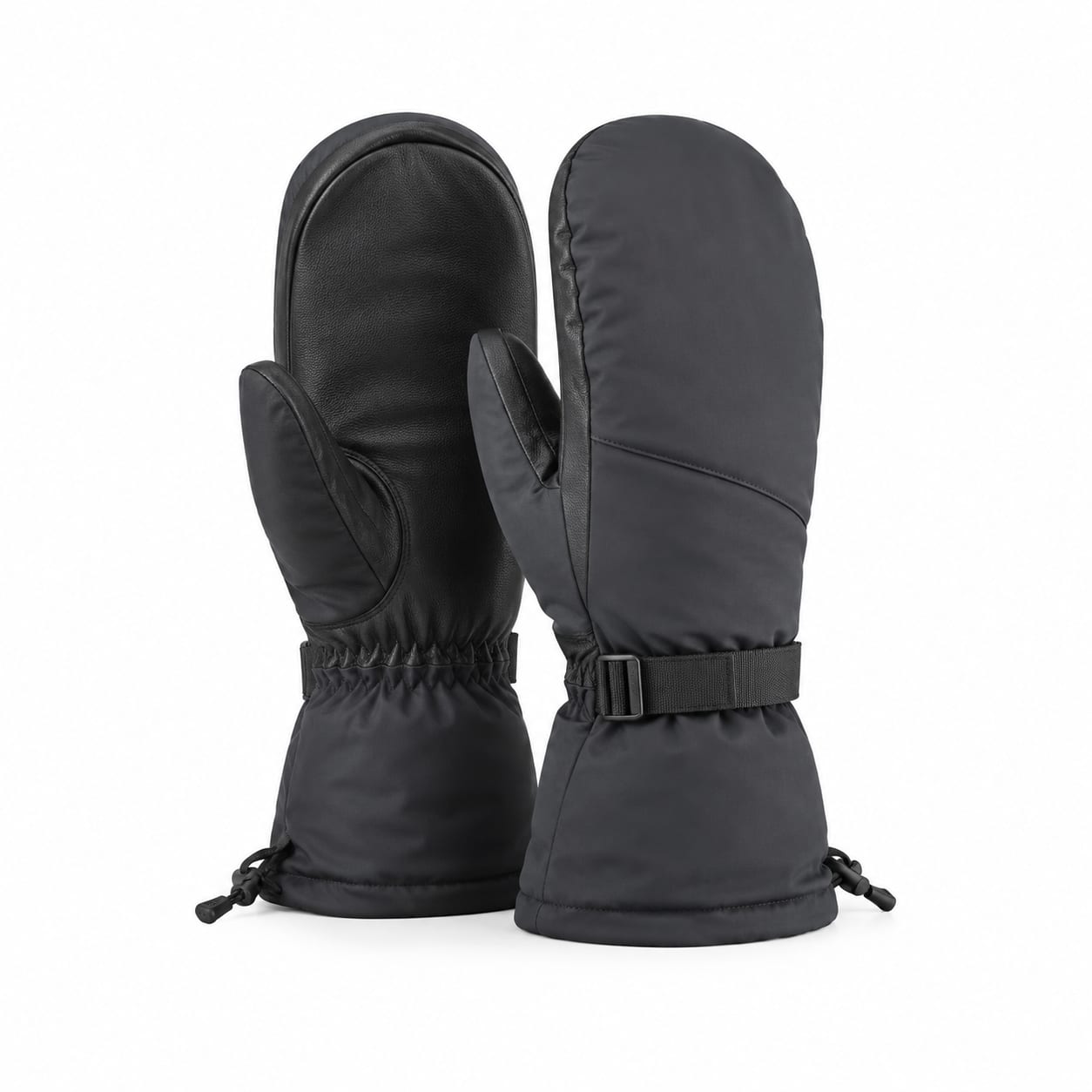
6 topics
Pick a question
Every answer links to the full subcategory guide and related gear types when it helps you decide.
Can you hold ski poles properly with mittens?
Yes, with some adaptation. Mittens grip poles using the thumb crotch and palm squeeze rather than individual finger wrapping. Most riders adapt within a few runs. Leather palms significantly improve grip security. If precise pole control is critical for your skiing, consider 3-finger or trigger mitten designs that separate the index finger for pole grip while retaining most of the mitten's warmth advantage.
Read answer →02Are mittens too warm for typical resort skiing?
It depends on your location, the temperature, and your personal cold tolerance. In interior continental climates (Colorado, Utah, interior BC, northern New England), mittens are appropriate for most winter days. In coastal or mild climates, mittens may be overkill except for the coldest days. Many riders carry both mittens and gloves and choose based on daily conditions. Midweight insulated mittens cover a wider temperature range than heavyweight models.
Read answer →03How do I handle phone use and goggle adjustments with mittens?
Mittens require removal for most fine motor tasks. This is where wrist leashes become essential — they let you slip the mitten off temporarily without risking loss. For phone use, some mittens include conductive thumb material for basic screen taps, but typing and precise gestures require removal. Practice quick goggle adjustments with mittens on; many riders develop a technique using the thumb and palm edge. On cold days, minimize removal time and get tasks done quickly.
Read answer →04Should I get heated mittens or regular insulated mittens?
Try regular insulated mittens first if you are switching from gloves — the warmth improvement is often dramatic enough that heated mittens are unnecessary. Heated mittens are worth the investment if you have chronically cold hands, Raynaud's syndrome, poor circulation, or ski in extreme cold regularly. They are also excellent for ski professionals who spend long days in cold conditions. The combination of mitten design with active heating is the most effective cold-weather handwear solution available.
Read answer →05Why do my mittens get damp inside even when they are waterproof?
Internal dampness is usually caused by sweat, not external moisture. Mittens are so warm that hands sweat during active skiing, and the moisture has limited ventilation to escape. This is why breathability matters in mittens, and why removable liners are valuable — they can be dried separately. Using a moisture-wicking liner glove inside the mitten can also help manage sweat. The dampness becomes a problem when you stop moving and the moisture cools against your skin, which is why proper insulation that retains warmth even when slightly damp (synthetic) is important.
Read answer →06What is the difference between mittens and trigger mittens?
Standard mittens have a single compartment for all four fingers plus a separate thumb. Trigger mittens add an articulated index finger compartment, allowing the index finger to separate from the other three fingers. This provides significantly better pole grip and basic dexterity while retaining most of the mitten's warmth. Trigger mittens are a popular choice for cold-weather skiers who need functional pole grip. The warmth difference between standard and trigger mittens is modest — trigger mittens are slightly cooler because the index finger is isolated, but the grip advantage is substantial.
Read answer →