
Ski Hip Protectors · FAQ
Questions about D3O / Smart Material Hip Protectors
Straight answers on fit, specs, and when this type makes sense — each topic has its own page with links back to the buying guide.
Open D3O / Smart Material Hip Protectors guide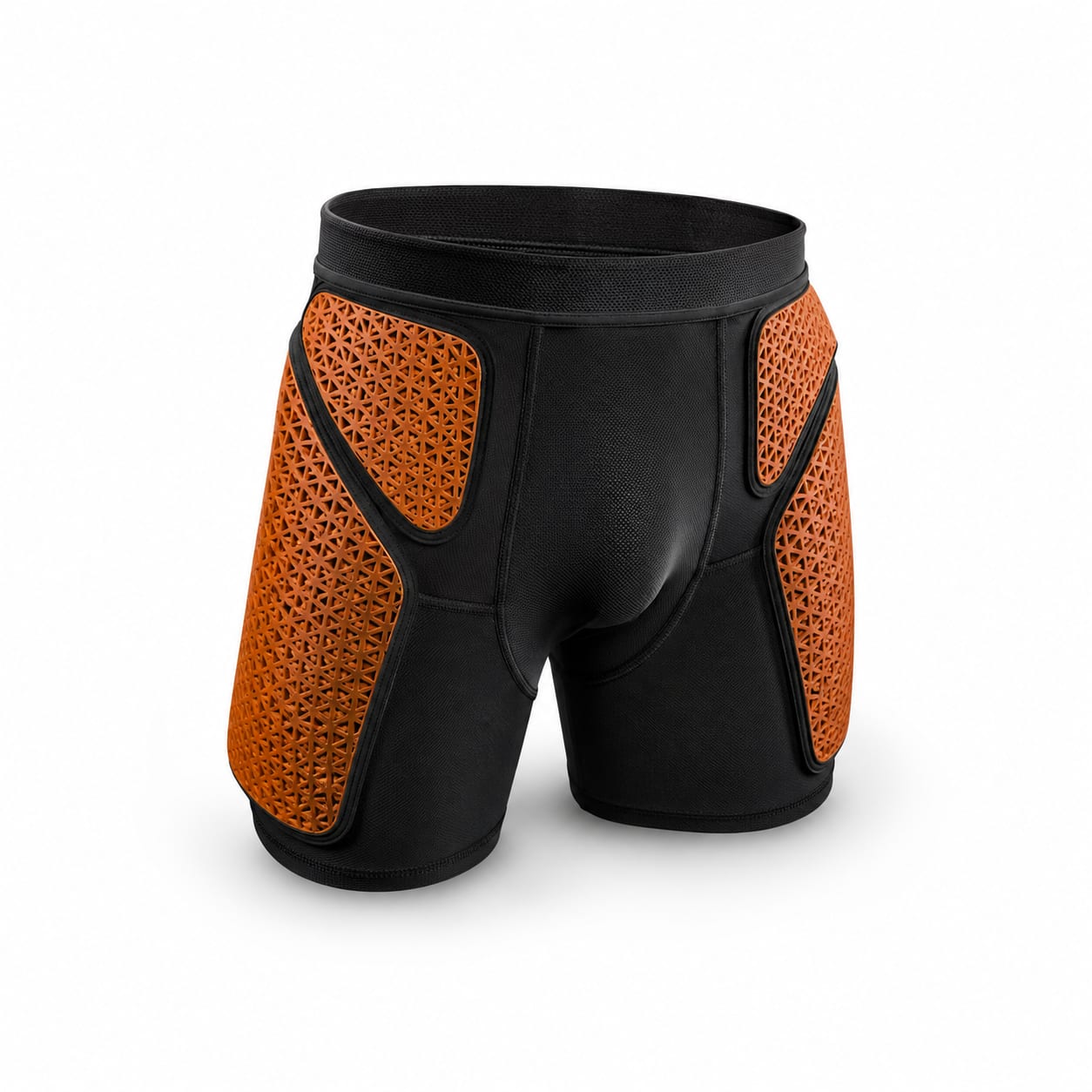
6 topics
Pick a question
Every answer links to the full subcategory guide and related gear types when it helps you decide.
How does D3O actually work to protect my hips in a ski fall?
D3O is a rate-sensitive smart material that behaves differently depending on how quickly force is applied. During normal movement—walking, bending, skiing—the material is soft and flexible, conforming to your body like a thick gel. When you fall and hit your hip, the sudden impact causes the material's molecules to lock together almost instantly (within milliseconds), creating a rigid barrier that absorbs and disperses the impact energy. After the impact, the material returns to its soft state. Think of it like cornstarch and water: slow movements pass through easily, but sudden forces meet solid resistance.
Read answer →02Is D3O really as protective as thicker traditional foam pads?
Yes, and in many cases more so. Independent testing consistently shows that 8-10mm D3O pads achieve the same or better impact absorption as 15-20mm EVA foam pads. This is because D3O's energy absorption is more efficient—it doesn't just compress like regular foam, it actively dissipates energy through its molecular structure change. CE certification testing confirms this: D3O pads regularly achieve Level 1 certification at roughly half the thickness of EVA equivalents. However, for maximum CE Level 2 protection, very thick EVA or hard shell designs may still achieve lower force transmission numbers.
Read answer →03Will D3O hip protectors be visible under my ski pants?
In most cases, no. D3O pads at 8-10mm thickness are virtually invisible under standard ski pants. The soft material conforms to your body rather than creating visible ridges or bulges. Only very tight, thin, or light-colored ski pants might show a slight outline. If discretion is a priority, look for ultra-low-profile D3O models specifically designed to be invisible under clothing. This is one of the primary advantages of D3O over traditional foam or hard shell protectors.
Read answer →04How long do D3O hip protectors last before needing replacement?
With regular ski use (20-40 days per season), expect 2-3 seasons from quality D3O protectors. The smart foam itself is quite durable but can gradually harden or develop compression set over time. The compression short fabric may wear out before the pads. Key signs you need replacement: pads feel permanently stiff instead of soft, visible cracks in the foam, pads no longer conform to your body shape, or the compression short has lost elasticity and allows pads to shift. Always replace after a severe impact event, as the material may be compromised even if it looks fine.
Read answer →05Can I machine wash my D3O hip protector?
The compression short can be machine washed after removing the D3O pads—wash on cold or warm and hang dry. The D3O pads themselves should NEVER be machine washed or exposed to hot water. Hand-wash pads only with mild soap in cool water, rinse thoroughly, and air dry flat at room temperature. Machine washing or hot water can permanently alter the smart foam's rate-sensitive properties, reducing its impact protection. This is the main maintenance difference from EVA foam pads, which are generally more wash-tolerant.
Read answer →06Are D3O hip protectors worth the extra cost compared to regular foam pads?
For most regular skiers, yes. The value proposition of D3O is not just about impact performance—it is about wearability. The best protector is the one you actually wear every time you ski. Many skiers purchase cheaper EVA foam protectors but stop wearing them because they are uncomfortable, bulky, or visible under clothing. D3O's combination of comfort, low profile, and unrestricted mobility means you will wear it consistently, which provides more real-world protection than a cheaper pad sitting in your closet. If you ski more than 10 days per year, the per-day cost difference is minimal, and the comfort benefit is substantial.
Read answer →