
Ski Socks · FAQ
Questions about Heavy Cushion Ski Socks
Straight answers on fit, specs, and when this type makes sense — each topic has its own page with links back to the buying guide.
Open Heavy Cushion Ski Socks guide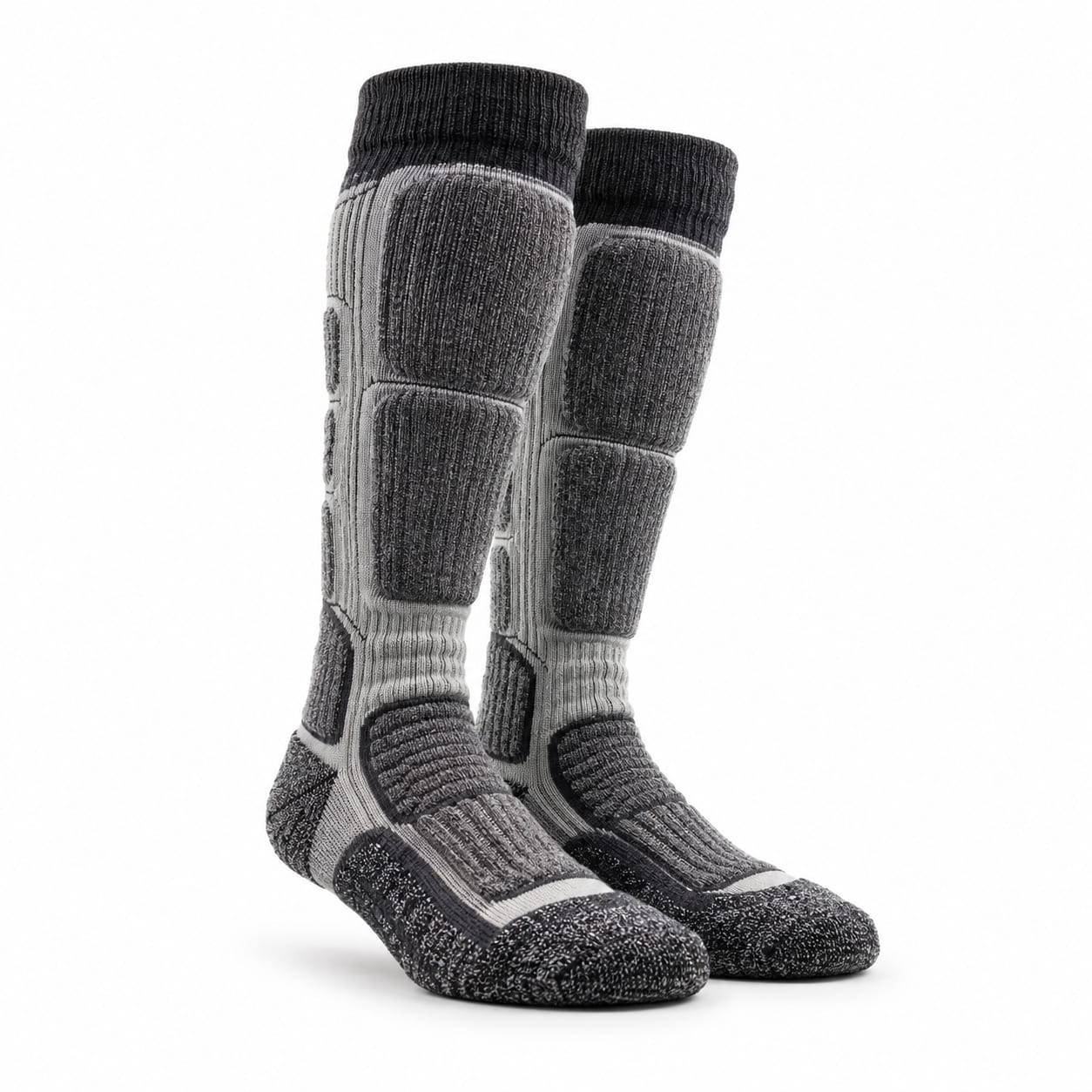
6 topics
Pick a question
Every answer links to the full subcategory guide and related gear types when it helps you decide.
Will heavy cushion ski socks make my feet too sweaty?
They can, especially in moderate temperatures or during high-intensity skiing. The thick construction retains more heat and moisture than thinner options. However, if you choose a merino or merino-blend heavy cushion sock, the wool's natural moisture management will help wick sweat away from your skin. The key is to reserve heavy cushion socks for genuinely cold conditions where the warmth is needed—if temperatures are above 25°F (-4°C), you may be better served by a medium cushion sock.
Read answer →02Can I wear heavy cushion socks to make loose boots fit better?
Yes, this is one of the valid use cases for heavy cushion socks. The extra volume can take up dead space in loose or rental boots, reducing heel lift and improving the overall feel. However, this is a compromise solution, not an ideal one. If your boots are significantly loose, the better fix is proper boot fitting—adding heel lifts, tongue shims, or custom footbeds. Heavy cushion socks can help in the short term but shouldn't replace proper boot fit for regular skiing.
Read answer →03Why do my feet get cold in heavy cushion socks when they're supposed to be the warmest?
The most common reason is that the thick socks are making your boots too tight, restricting circulation to your feet. When blood flow is reduced, your feet get cold regardless of how thick the sock is. Other causes include excessive sweating (the thick sock retains moisture that then cools) and cotton-blend construction (cotton retains moisture and provides poor insulation when damp). Try a thinner sock to improve circulation, ensure your socks are merino-based for moisture management, and make sure your boots aren't buckled too tightly.
Read answer →04Should I wear two pairs of socks for extra warmth in extreme cold?
Absolutely not. Wearing two pairs of socks is one of the most common mistakes in skiing. The double layer creates wrinkles and folds that cause pressure points and blisters, restricts circulation by making the boot too tight, and traps moisture between the layers. One quality heavy cushion merino sock provides better warmth than two pairs of any socks. If your heavy cushion sock isn't warm enough, the solution is better boot insulation or heated insoles, not a second sock layer.
Read answer →05How long do heavy cushion ski socks last compared to thinner socks?
Heavy cushion socks can actually wear out faster than thinner socks in some ways, despite having more material. The thick cushioning is prone to packing out—compressing and losing its loft—especially in high-pressure zones like the shin and heel. This means the cushioning effectiveness diminishes over time even if the sock doesn't develop holes. Expect 40-60 days of skiing before noticeable cushioning loss, compared to 60-80+ days for thinner socks that have less padding to compress. Reinforced zones and quality merino-synthetic blends extend lifespan.
Read answer →06Are heavy cushion socks good for kids?
It depends on the child's situation. Kids in rental boots or who complain of cold feet can benefit from heavy cushion socks. However, children's feet are more sensitive to circulation restriction, and the thick socks can make already-snug junior boots too tight. Kids also generate more heat relative to their size and may overheat. A medium cushion youth-specific sock is often the better default, with heavy cushion reserved for very cold days or specific comfort needs. Always choose youth-sized socks—never put kids in adult socks, which bunch dangerously inside ski boots.
Read answer →