
Snow Jacket · FAQ
Questions about 3-in-1 System Snow Jacket
Straight answers on fit, specs, and when this type makes sense — each topic has its own page with links back to the buying guide.
Open 3-in-1 System Snow Jacket guide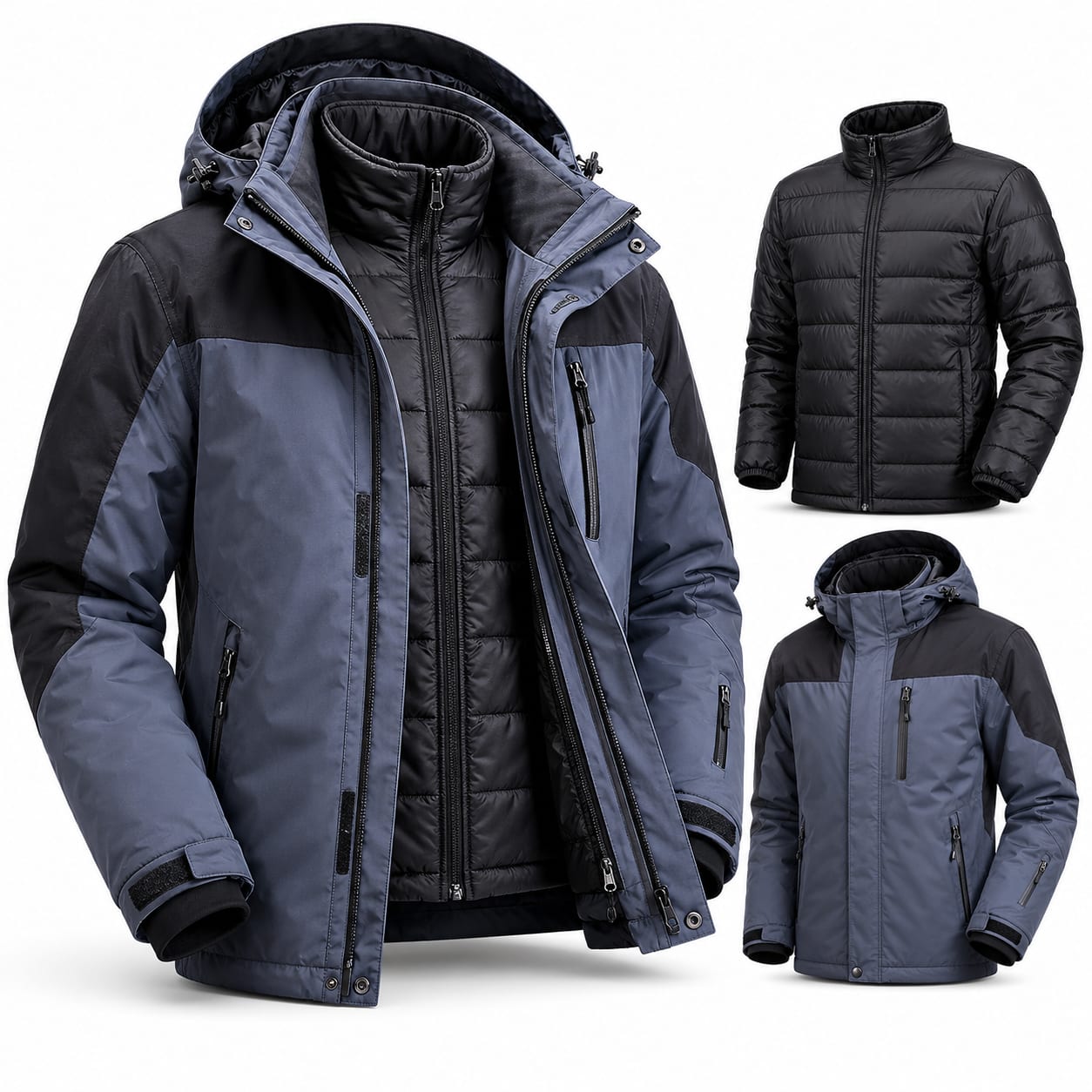
6 topics
Pick a question
Every answer links to the full subcategory guide and related gear types when it helps you decide.
Can I wear the liner from a 3-in-1 jacket with a different shell?
Technically yes, but the liner will not zip into a different shell's interface zipper. You can wear the liner as a mid-layer under any shell, just like you would wear any insulated mid-layer. However, you lose the integrated connection system and may experience fit or bunching issues since the liner was designed to pair specifically with its matching shell. For the best experience, use the liner with its intended shell or as a standalone piece.
Read answer →02Is a 3-in-1 jacket warm enough for very cold days below -15°C (5°F)?
It depends on the liner's insulation weight and your activity level. Most 3-in-1 liners use 60–100g synthetic insulation, which provides moderate warmth. For temperatures below -15°C, you may need to add an extra mid-layer (like a fleece) under the liner, or choose a 3-in-1 system with a heavier insulated liner (100g+). Riders who consistently face extreme cold may be better served by a dedicated heavily insulated jacket with 120–150g+ insulation.
Read answer →03Why does my 3-in-1 jacket feel clammy when I am wearing both layers?
The dual-layer construction reduces effective breathability because moisture vapor must pass through both the liner and the shell membrane. This can cause sweat to accumulate between the layers, especially during high-exertion activities like hiking or warm spring skiing. To mitigate this, open your pit zips early and often, consider removing the liner on warm days, and choose a 3-in-1 with a higher breathability rating on the shell membrane.
Read answer →04Are 3-in-1 jackets good for backcountry touring?
3-in-1 jackets are not ideal for backcountry touring. The combined system is too heavy and not breathable enough for sustained uphill travel. The liner adds warmth that you typically do not need while skinning uphill, and the reduced breathability can lead to dangerous sweat accumulation in cold conditions. For touring, a lightweight, highly breathable shell with a separate, packable mid-layer that you can put on during stops is a much better choice.
Read answer →05What should I look for in the interface zipper on a 3-in-1 jacket?
Look for a smooth-operating, robust zipper with large teeth that are easy to engage with gloves on. The zipper should run the full length of the front closure and ideally connect at the cuffs as well to keep the liner sleeves properly positioned. Two-way zippers allow you to open from the bottom for sitting comfort. Test the zipper in the store—connect and disconnect the layers several times to ensure smooth operation. Avoid jackets with stiff or catch-prone interface zippers, as you will be using this feature frequently.
Read answer →06Can I replace the liner if it wears out before the shell?
Generally no. The interface zipper system is proprietary to each brand and often specific to each model. You cannot buy a replacement liner separately in most cases—the liner and shell are sold as a matched set. If the liner wears out, you can continue using the shell as a standalone jacket, but you will lose the integrated 3-in-1 functionality. This is one of the inherent limitations of the 3-in-1 system compared to building your own layering system from separate pieces.
Read answer →