
Snowboard Bindings · FAQ
Questions about Splitboard Bindings
Straight answers on fit, specs, and when this type makes sense — each topic has its own page with links back to the buying guide.
Open Splitboard Bindings guide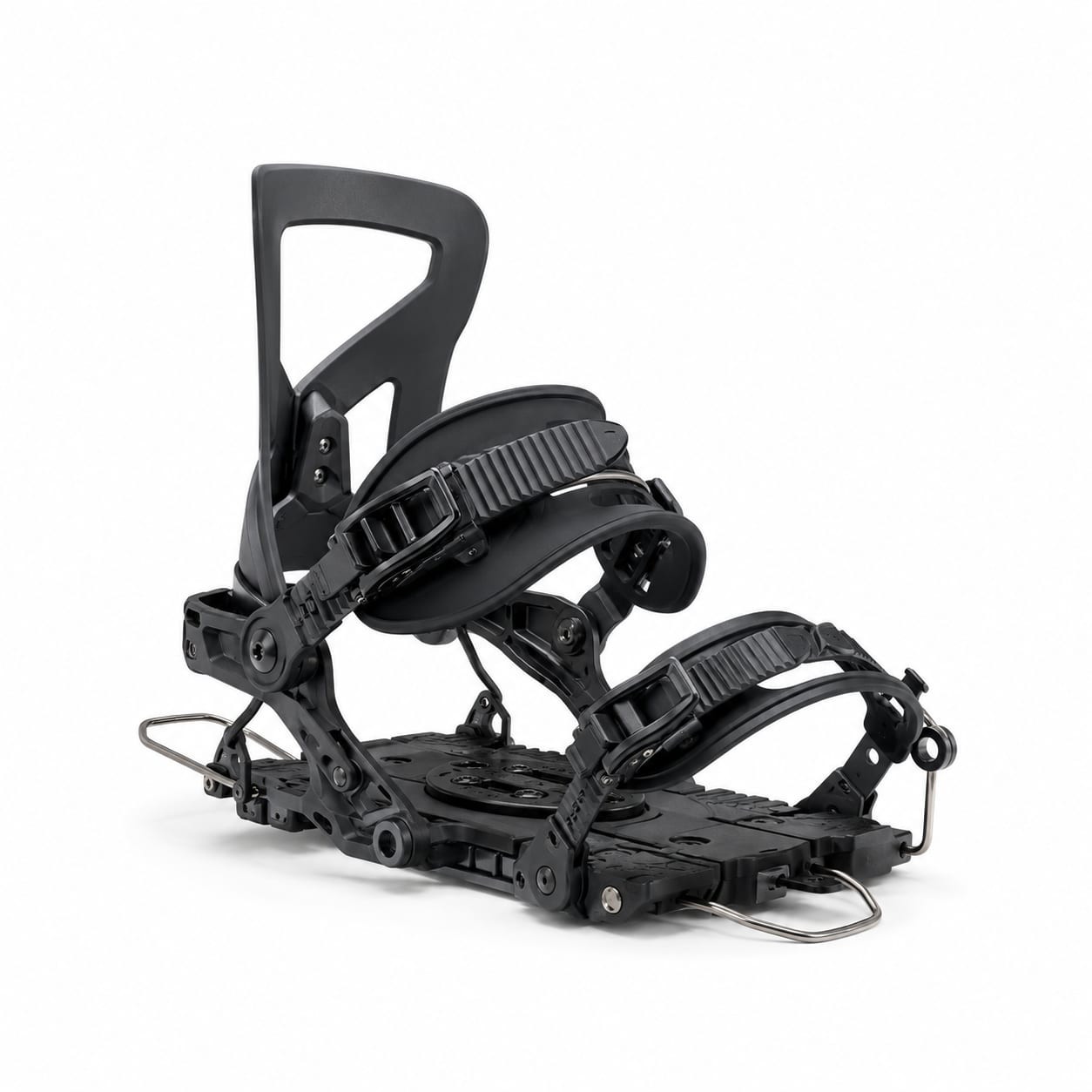
6 topics
Pick a question
Every answer links to the full subcategory guide and related gear types when it helps you decide.
Can I use splitboard bindings on a regular snowboard?
Technically yes, by mounting pucks on a solid board, but it's not recommended. You'd be carrying unnecessary weight (touring mechanism, heel risers) with no benefit. If you occasionally ride resort, it works as a budget option, but dedicated resort bindings will perform better and weigh less.
Read answer →02What's the difference between puck systems and Karakoram?
Puck systems (used by Spark R&D, Burton, Union, and others) use industry-standard sliding pucks mounted to the board—the binding slides onto the pucks and locks in place. Karakoram uses proprietary clips that actively clamp the two board halves together, reducing seam flex for better ride performance. Puck systems are more universal and allow binding swaps between boards; Karakoram offers superior board joining but locks you into their ecosystem.
Read answer →03How much heavier are splitboard bindings compared to regular bindings?
Splitboard bindings typically weigh 200-500g more per pair than comparable resort bindings. The additional weight comes from the touring mechanism, heel risers, pivot hardware, and interface system. For context, a typical resort binding pair weighs 900-1300g, while splitboard bindings range from 1200-1800g per pair.
Read answer →04Do I need special boots for splitboard bindings?
No, splitboard bindings work with standard snowboard boots. However, splitboard-specific boots with walk modes offer significantly better touring comfort—their articulated cuffs allow natural ankle flexion during the touring stride. If you plan to tour regularly, splitboard-specific boots are a worthwhile investment.
Read answer →05How long does it take to transition between tour and ride mode?
With practice, most riders can transition from tour to ride mode (or vice versa) in 1-3 minutes. This includes removing bindings from touring position, joining the board halves, sliding bindings onto ride pucks, and strapping in. Transitions are slower than ski touring (where tech bindings allow near-instant switches) but become quick with practice.
Read answer →06Are splitboard bindings as responsive as regular bindings for riding?
Modern splitboard bindings have largely closed the performance gap with resort bindings. The puck interface adds a small amount of stack height and potential flex, but most riders—especially those who aren't riding at the absolute limit—won't notice a significant difference. Karakoram's active joining system further reduces any performance gap by eliminating seam flex. If you're coming from resort bindings, expect a brief adaptation period but comparable performance within a few runs.
Read answer →