
Snowboard Boots · FAQ
Questions about All-Mountain Snowboard Boots
Straight answers on fit, specs, and when this type makes sense — each topic has its own page with links back to the buying guide.
Open All-Mountain Snowboard Boots guide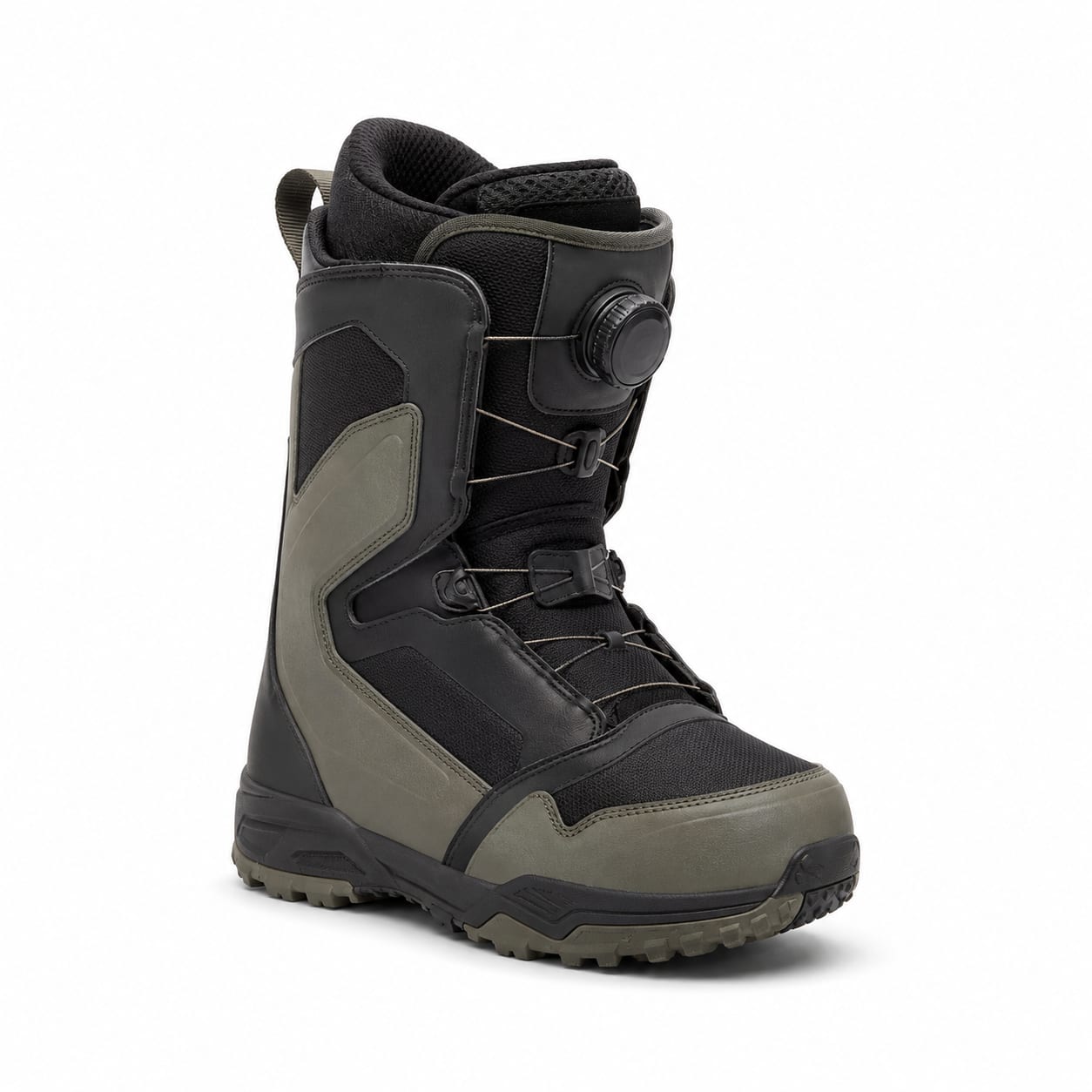
5 topics
Pick a question
Every answer links to the full subcategory guide and related gear types when it helps you decide.
What flex rating is best for all-mountain snowboard boots?
A medium flex (5-6 on a 10 scale) is ideal for all-mountain boots. This provides enough stiffness for responsive carving and stability at speed, while remaining soft enough to absorb bumps and comfortably ride park features. Heavier or more aggressive riders may prefer a medium-stiff (7-8) flex.
Read answer →02Can I ride park in all-mountain boots?
Yes, all-mountain boots are perfectly capable of handling park features, especially jumps and medium-sized side hits. While they lack the extreme softness needed for technical rail tricks and deep presses, their balanced flex makes them great for all-around park laps.
Read answer →03Do I need waterproof membranes in all-mountain boots?
For most resort riders, standard water-resistant boots are sufficient. However, if you frequently ride in deep powder, wet coastal climates, or find your feet getting cold from dampness, upgrading to a boot with a waterproof membrane like Gore-Tex is a worthwhile investment.
Read answer →04How do all-mountain boots handle deep powder?
All-mountain boots handle deep powder well for typical resort riding. Their medium flex allows you to lean into the back foot effectively. However, if you are riding steep, technical backcountry powder lines, you may want the extra response of a dedicated freeride boot.
Read answer →05Are double BOA systems worth it for all-mountain boots?
Double BOA systems are extremely popular in all-mountain boots because they allow you to adjust the lower zone (for heel hold) independently from the upper zone (for calf comfort and flex). This zonal adjustability is highly beneficial when transitioning between different terrains and riding styles throughout the day.
Read answer →