
Snowboard Boots · FAQ
Questions about Alpine/Carving Snowboard Boots
Straight answers on fit, specs, and when this type makes sense — each topic has its own page with links back to the buying guide.
Open Alpine/Carving Snowboard Boots guide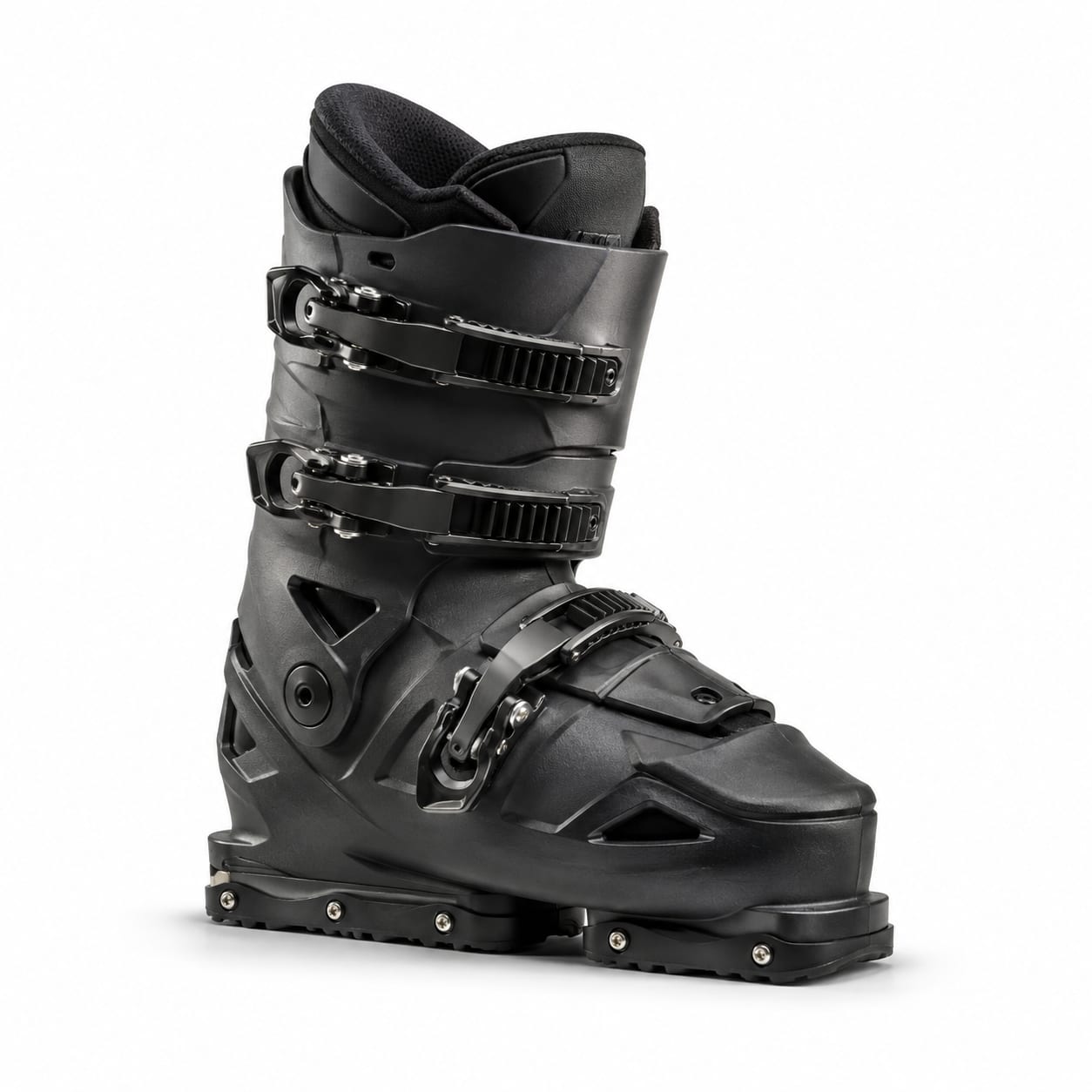
6 topics
Pick a question
Every answer links to the full subcategory guide and related gear types when it helps you decide.
Can I use alpine boots with regular soft bindings?
No. Alpine boots are designed exclusively for use with plate (hard) bindings. They are incompatible with strap bindings, rear-entry bindings, or any soft-binding system. The sole shape, stiffness, and mounting interface are fundamentally different. Using alpine boots requires a complete system including plate bindings and a compatible alpine/carving snowboard.
Read answer →02How different is the riding technique with alpine boots compared to soft boots?
Significantly different. Alpine boots eliminate ankle flexion, so all edge control comes from knee and hip angulation rather than ankle steering. Carves are initiated by rolling the knees and driving the hips into the turn rather than pressing with the feet. The stance is more aggressive with deeper knee bend. Most riders need 3–5 days to adapt, and taking a lesson from a hardboot-certified instructor is highly recommended to avoid developing poor technique.
Read answer →03Are alpine boots good for beginners who want to learn carving quickly?
Generally no. While alpine boots make carving easier once you have the technique, beginners lack the foundational skills to benefit from the precision. The stiff boots can actually hinder learning because they don't allow the ankle mobility that helps beginners find balance and recover from mistakes. Learn to carve on soft boots first, then transition to alpine equipment when you've developed solid technique and a genuine need for more edge performance.
Read answer →04Why are alpine boots so much more expensive than regular snowboard boots?
Alpine boots are produced in much smaller volumes than soft boots, which increases per-unit manufacturing costs. The rigid shell construction requires more expensive materials (injected TPU, composite reinforcements) and more complex manufacturing processes. Additionally, the market is smaller with fewer competing brands, reducing price pressure. The specialized closure systems, premium liners, and lower production runs all contribute to higher retail prices.
Read answer →05Can I use alpine boots for backcountry or splitboarding?
Traditional alpine boots are not suitable for backcountry use—they lack walk mode and are uncomfortable for long approaches. However, some modern alpine boots now include walk/hike mechanisms designed for riders who tour to access carving terrain. If you want to splitboard with hardboot performance, look specifically at models with walk mode. Keep in mind that these hybrid models are still less efficient for touring than dedicated splitboard boots.
Read answer →06How long do alpine boots last compared to soft boots?
Alpine boots typically outlast soft boots by a significant margin. The rigid TPU shell resists the deformation and breakdown that soft boot shells experience. A well-maintained pair of alpine boots can last 150–200+ days of riding, compared to 80–120 days for soft boots. The liner may pack out before the shell wears out, but replacement liners (such as Intuition alpine liners) can extend the boot's life considerably. The primary failure points are buckle mechanisms and liner wear, both of which are replaceable.
Read answer →