Stiffness / Flex
Flex Rating
What it means
How resistant the boot is to forward flexion. Softer boots allow more ankle mobility and are forgiving; stiffer boots deliver precise power transfer and edge control.
Typical for this type
Stiff (9–10)
Most common pick: Stiff
In practice
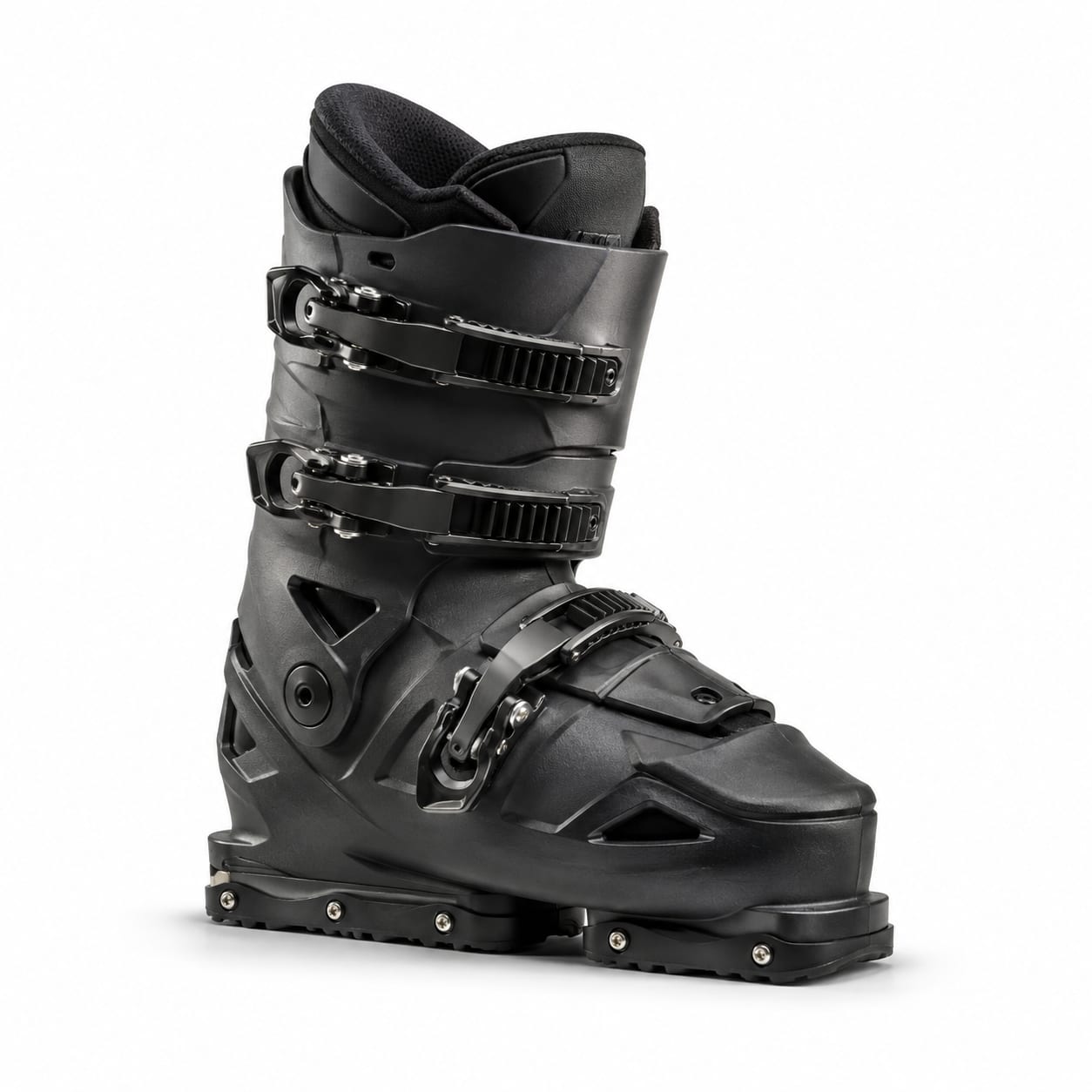
Alpine/carving boots are the stiffest boots in snowboarding, with flex ratings at the very top of the scale. The shell is designed to resist forward flexion almost entirely, ensuring that rider input goes directly to the edge rather than being absorbed by boot deformation.
Compared to other types
Significantly stiffer than all-mountain boots (medium 5–6) and even freeride boots (medium-stiff 7–8). Alpine boots have virtually no forward flex, whereas even the stiffest soft boots allow some ankle articulation.
Why it matters: Maximum stiffness is non-negotiable for high-speed carving and racing. Any unwanted flex at speed results in edge disengagement and loss of control. The rigid connection between rider and board is what enables the extreme edge angles characteristic of alpine carving.
Lacing System
Lacing System
What it means
The mechanism used to tighten and secure the boot. Affects speed, adjustability, reliability, and how evenly pressure is distributed across the foot.
Typical for this type
Double BOA Or Micro-Adjustable Buckles
Most common pick: Boa Double
In practice
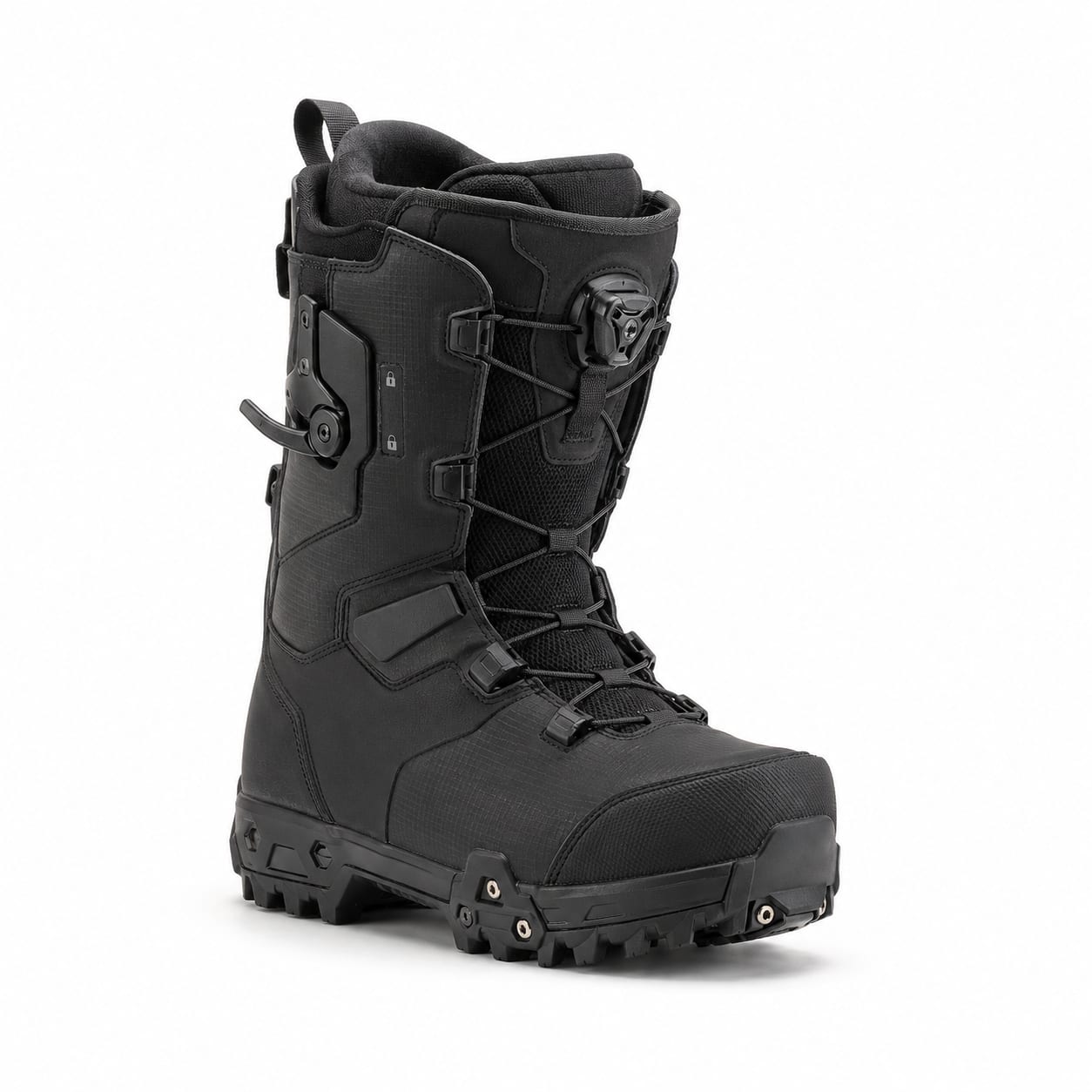
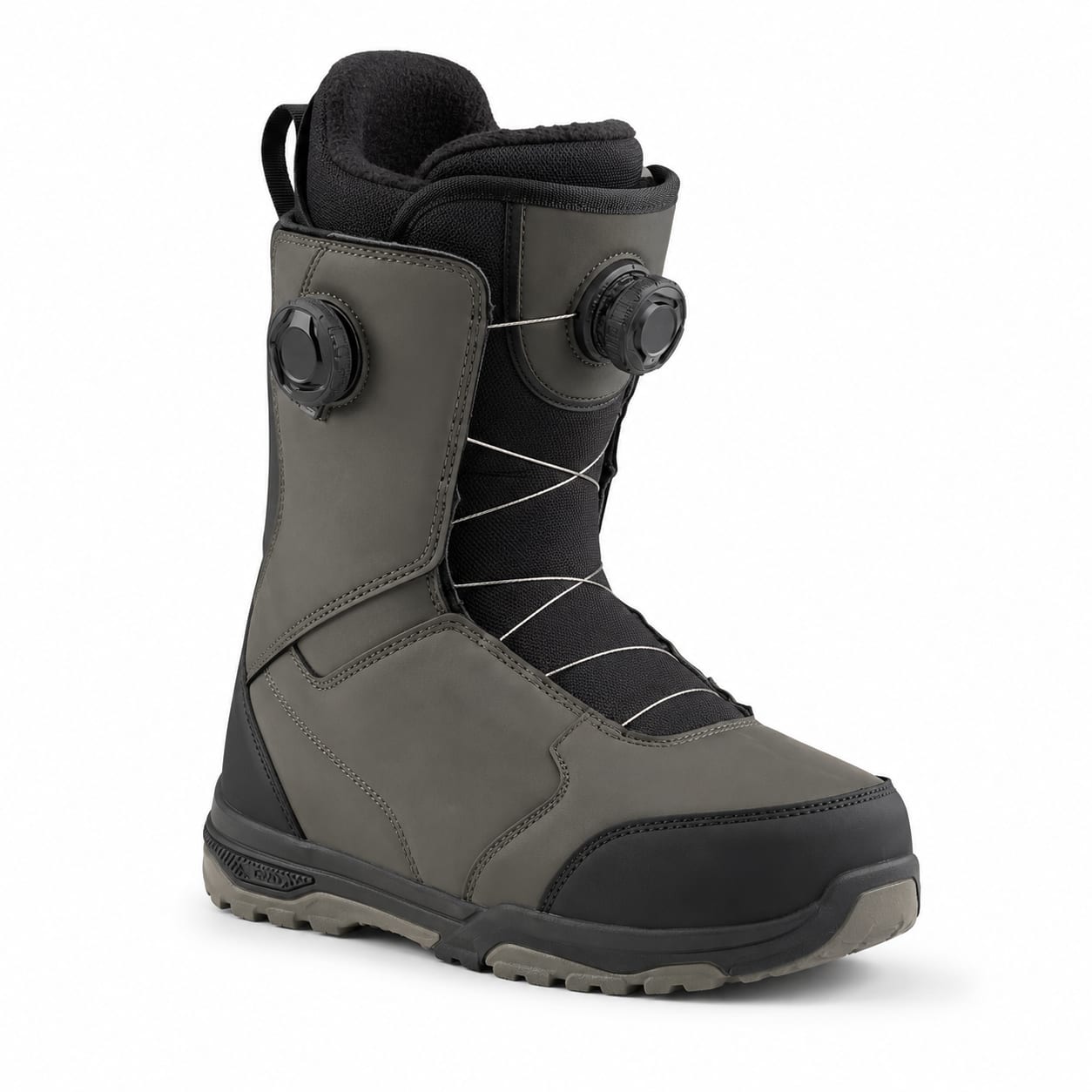
Alpine boots commonly use micro-adjustable buckle systems (similar to ski boots) or double BOA configurations. Buckles allow precise, incremental tension adjustment across zones, which is critical for the exact fit required in carving. Some modern models use double BOA for convenience while maintaining zonal control.
Compared to other types
Unlike freestyle and all-mountain boots where traditional laces and single BOA are common, alpine boots prioritize mechanical closure systems (buckles or multi-zone BOA) that can apply and maintain higher tension with minimal effort.
Why it matters: In alpine carving, even minor heel lift or foot movement inside the boot degrades edge control. The closure system must provide uniform, high-pressure clamping that remains consistent throughout the run without slipping.
What it means
The internal volume and width of the boot shell, determining how snugly the boot fits across the forefoot and midfoot. Measured by the 'last'—the foot mold the boot is built around.
Typical for this type
Narrow to Standard
Most common pick: Narrow
In practice
Alpine boots tend toward narrower lasts because a tight, precise fit is essential for eliminating internal movement. The foot must be held firmly with no gaps, particularly in the heel and midfoot, to ensure direct power transfer.
Compared to other types
More likely to be narrow than all-mountain or freestyle boots, which often offer standard or wide options. Riders with wide feet may struggle to find comfortable alpine boots and should seek brands that offer wider shell options (e.g., some UPZ models).
Why it matters: Any space between the foot and the liner/shell creates a delay in power transfer and reduces edge control precision. In racing, milliseconds of response time matter. A narrow last ensures the boot functions as a rigid extension of the rider's leg.
Boot Size (Mondo)
Mondo Size
What it means
The length of the boot's internal footbed measured in centimeters (Mondo point sizing). This is the most accurate sizing standard for snowboard boots.
Typical for this type
21–31.5 cm (precise Mondo measurement critical)
Most common pick: Varies By Rider
In practice
Mondo sizing is especially critical for alpine boots because the fit must be exact. The liner should be very snug with toes just touching the front when standing; when flexed into the aggressive forward lean position, toes should pull back slightly. Pack-out is less than soft boots but still occurs.
Compared to other types
Sizing precision matters more in alpine boots than any other subcategory. While a slightly loose all-mountain boot is merely suboptimal, a loose alpine boot can be dangerous at the speeds and edge angles these boots are designed for.
Why it matters: An alpine boot that is even half a size too large will have noticeable performance degradation. The precision these boots are designed to deliver is completely undermined by a sloppy fit. Professional fitting is strongly recommended.
What it means
The internal boot structure that provides cushioning, insulation, and fit. Liner type affects heat retention, moldability, and long-term fit quality.
Typical for this type
Intuition Foam Liner Or Heat-Moldable Liner
Most common pick: Intuition
In practice
High-end alpine boots almost universally feature Intuition or equivalent premium heat-moldable liners. The dense foam provides a custom fit that resists pack-out over time, maintaining the precise fit required for carving performance throughout the boot's life.
Compared to other types
Alpine boots almost never use basic removable or integrated liners. The performance requirements demand premium liner materials. Intuition liners are more common here than in freestyle or entry-level all-mountain boots.
Why it matters: The liner is the primary interface between the rider's foot and the rigid shell. A premium, heat-molded liner fills all voids, eliminates pressure points, and ensures consistent power transfer. Liner degradation directly reduces carving performance.
Heel Hold / Heel Lock
Heel Hold Technology
What it means
Design features that prevent the heel from lifting inside the boot during turns. Heel lift reduces edge control and causes fatigue. Includes internal harness systems, ankle pockets, and liner construction.
Typical for this type
Internal Ankle Harness Or Contoured Heel Pocket With J-Bars
Most common pick: Internal Harness
In practice
Alpine boots employ the most aggressive heel hold systems available. Internal ankle harnesses are common, and the rigid shell itself acts as a heel lock mechanism. Combined with heat-molded liners that cup the heel anatomically, heel lift is effectively eliminated.
Compared to other types
Far superior heel hold compared to all other subcategories. The combination of rigid shell, internal harness, and precise liner molding creates a heel lock that soft boots cannot match regardless of their heel hold features.
Why it matters: In extreme carving, the rider's body weight and centrifugal force place enormous stress on the heel-ankle connection. Even 2mm of heel lift during a high-angle carve can cause the edge to release unexpectedly. Heel hold in alpine boots is a safety-critical feature, not just a comfort concern.
Outsole / Traction
Outsole Type
What it means
The bottom of the boot that contacts the ground when walking and the binding baseplate when riding. Affects grip, cushioning, durability, and weight.
Typical for this type
Rubber Lugged Or Vibram Outsole
Most common pick: Rubber Lugged
In practice
Alpine boots typically feature rubber lugged outsoles or Vibram soles designed for traction on icy surfaces and durability. Carvers often need to walk on steep, icy starting ramps or hike to race courses, making grip essential.
Compared to other types
Unlike freestyle boots that may use low-profile soles for board feel, alpine boots prioritize traction and binding interface quality. Vibram outsoles are more common in this category than in freestyle or all-mountain boots.
Why it matters: The outsole must provide reliable traction on icy surfaces at race venues and carving events. Additionally, the sole must maintain precise contact with the plate binding for consistent power transfer—worn soles degrade binding interface quality.
Insulation / Warmth
Insulation Rating
What it means
How effectively the boot retains heat. Determined by liner material, insulation type, and shell construction. Critical for riders in cold climates or with poor circulation.
Typical for this type
Standard to Heavy Insulation
Most common pick: Standard
In practice
Alpine boots typically feature standard insulation, though the rigid shell provides some additional wind protection compared to soft boots. The aggressive forward lean and tight fit can reduce circulation somewhat, so riders in cold climates may prefer heavier insulation or add boot heaters.
Compared to other types
Similar to freeride boots in insulation needs. The rigid shell provides better wind protection than soft boots but can reduce circulation more than softer constructions, making insulation choice more nuanced.
Why it matters: Cold feet reduce sensitivity and reaction time, which is particularly problematic in racing and high-speed carving where precise edge control depends on feel. However, overly warm boots cause sweating, which then leads to cold feet—a careful balance is needed.
Walk Mode / Touring
Walk Mode
What it means
A mechanism that unlocks the boot's upper cuff from the lower shell, allowing a natural walking stride for touring and splitboarding. Sometimes called 'ride/hike mode' or 'touring mode'.
Typical for this type
No (True For Pure Alpine); Yes (For Alpine-Touring Hybrids)
Most common pick: False
In practice
Traditional alpine/carving boots do not have walk mode. However, some modern models designed for alpine touring or splitboard carving have introduced walk/hike mechanisms. Pure racing and carving boots remain fixed for maximum downhill performance.
Compared to other types
Less common than in freeride and splitboard-specific boots. The alpine community has been slower to adopt walk mode due to the performance compromises involved, though this is changing with improved designs.
Why it matters: Walk mode adds weight, complexity, and a potential failure point—all undesirable in pure carving applications. However, riders who tour to access carving terrain may benefit from the growing number of walk-mode-equipped alpine boots.
Weight (per boot)
Boot Weight
What it means
The weight of a single boot, typically measured in grams or pounds. Lighter boots reduce fatigue but may sacrifice durability and dampening.
Typical for this type
1100–1400g per boot (size 9)
Most common pick: 1200g
In practice
Alpine boots are among the heaviest snowboard boots due to their rigid shell construction, robust closure systems, and reinforced components. The weight is a trade-off for the structural integrity needed to resist flex under extreme carving forces.
Compared to other types
Significantly heavier than freestyle boots (700–900g) and moderately heavier than most freeride boots (1000–1200g). The rigid shell construction is the primary weight contributor.
Why it matters: Weight is less of a concern in alpine carving than in freestyle because riders are not doing spins or hikes. However, very heavy boots contribute to fatigue during long race days or extended carving sessions. The weight is generally accepted as necessary for performance.
Footbed / Insole
Footbed / Insole
What it means
The removable insole inside the liner that provides arch support, cushioning, and alignment. Stock footbeds are often minimal; many riders upgrade to aftermarket options.
Typical for this type
Custom / Aftermarket Footbed (Strongly Recommended)
Most common pick: Custom Aftermarket
In practice
Alpine boot performance benefits enormously from custom or aftermarket footbeds. The precise alignment and support provided by a quality footbed improves edge control, reduces fatigue, and ensures the foot is optimally positioned within the rigid shell. Many serious alpine riders consider custom footbeds mandatory.
Compared to other types
While aftermarket footbeds benefit all boot types, they are considered essential in alpine boots rather than optional. The performance difference is more noticeable and impactful than in softer boot categories.
Why it matters: In a rigid shell with minimal internal give, any foot misalignment is amplified. A custom footbed ensures the foot is properly supported and aligned, maximizing the power transfer that alpine boots are designed to deliver. This is arguably more important in alpine boots than any other category.
Shell Construction
Shell Construction
What it means
The outer boot's material and build method. Affects durability, weight, water resistance, and how the boot flexes over time.
Typical for this type
Injected TPU / Polyurethane Or Composite / Multi-Material
Most common pick: Injected Tpu
In practice
Alpine boots use injected TPU or advanced composite shell constructions to achieve the necessary rigidity. TPU provides consistent flex that doesn't change with temperature—critical for maintaining predictable performance in varying conditions. Composite shells may zone stiffness for targeted support.
Compared to other types
Alpine boots never use synthetic leather shells, which are too soft and temperature-sensitive. The shell construction is fundamentally different from soft boots, more closely resembling ski boot construction with snowboard-specific geometry.
Why it matters: Shell rigidity is the foundation of alpine boot performance. The shell must not flex under the extreme forces of high-speed carving. TPU maintains consistent stiffness from sub-zero temperatures to warmer spring conditions, ensuring predictable behavior.
Impact Protection / Dampening
Impact Absorption
What it means
The boot's ability to absorb shock from flat landings, choppy terrain, and drops. Determined by midsole material, heel cushioning technology, and liner density.
Typical for this type
Standard Dampening
In practice
Alpine boots prioritize power transfer over impact absorption. The rigid shell transmits terrain feedback directly to the rider, which is desirable for edge feel but provides minimal cushioning on choppy terrain. Standard EVA midsole dampening is typical.
Compared to other types
Less impact absorption than freestyle boots with enhanced protection, and less than most freeride boots. The rigid shell that makes alpine boots so precise also makes them the harshest riding in terms of terrain feedback.
Why it matters: Carvers primarily ride groomed terrain where impact absorption is less critical. However, the lack of cushioning means rough or rutted terrain is punishing. Riders with knee or back issues should be aware that alpine boots transmit more vibration than soft boots.
Optimized Riding Style
Riding Style
What it means
The primary riding discipline the boot is designed for. While any boot can be used anywhere, boots optimized for a specific style will perform best in that context.
Typical for this type
Freeride / Big Mountain (Specifically Alpine Racing And Carving)
Most common pick: Freeride
In practice
Alpine boots are purpose-built for freeride carving and racing disciplines. They are the only appropriate boot choice for slalom, giant slalom, and extreme carving on alpine/carving boards with plate bindings. Some riders also use them for boardercross.
Compared to other types
The most riding-style-specific boot category. While all-mountain boots can handle multiple disciplines adequately, alpine boots excel at one thing—carving—and are poor at everything else.
Why it matters: Using alpine boots for any other riding style is impractical and potentially frustrating. These boots are incompatible with freestyle riding, deep powder surfing, and casual cruising. They are a dedicated tool for a specific discipline.
Waterproofing / Weather Resistance
Waterproofing
What it means
How well the boot prevents water and snow from penetrating to the foot and liner. Determined by shell treatment, seam sealing, and internal waterproof membranes.
Typical for this type
Waterproof Membrane Or Fully Sealed
Most common pick: Waterproof Membrane
In practice
The rigid shell construction of alpine boots naturally provides better water resistance than soft boots, but the seams and liner interfaces can still allow moisture ingress. Quality alpine boots include waterproof membranes for reliable protection during long days on snow.
Compared to other types
The rigid shell provides a natural waterproofing advantage over soft boots, but the closure system interfaces (buckles, BOA ports) can be entry points for moisture. Premium alpine boots address this with sealed construction.
Why it matters: Racers and carvers spend long hours on snow, often in varied weather conditions during competition days. Wet feet reduce comfort, warmth, and focus—all critical for peak performance. The investment in alpine equipment warrants proper weather protection.
Forward Lean Angle
Forward Lean
What it means
The angle the boot's upper cuff is tilted forward relative to vertical. Affects default riding stance, knee bend, and how aggressively the rider is positioned over the board.
Typical for this type
15–25 degrees
Most common pick: 18
In practice
Alpine boots feature aggressive forward lean angles, typically 15–25 degrees, which positions the rider in an athletic, knees-bent stance optimized for driving the board through carves. Many alpine boots offer adjustable forward lean to fine-tune the riding position.
Compared to other types
Significantly more forward lean than freestyle boots (8–14°) and moderately more than freeride boots (12–18°). The aggressive lean is a defining characteristic that contributes to the distinctive riding posture of alpine carvers.
Why it matters: Forward lean is critical in alpine carving because it pre-loads the rider into the aggressive stance needed for high-angle carves. More lean facilitates deeper knee angulation and better edge engagement. Adjustable lean allows riders to tune their stance for different disciplines (slalom vs. giant slalom).