
Snowboard Boots · FAQ
Questions about Freestyle Snowboard Boots
Straight answers on fit, specs, and when this type makes sense — each topic has its own page with links back to the buying guide.
Open Freestyle Snowboard Boots guide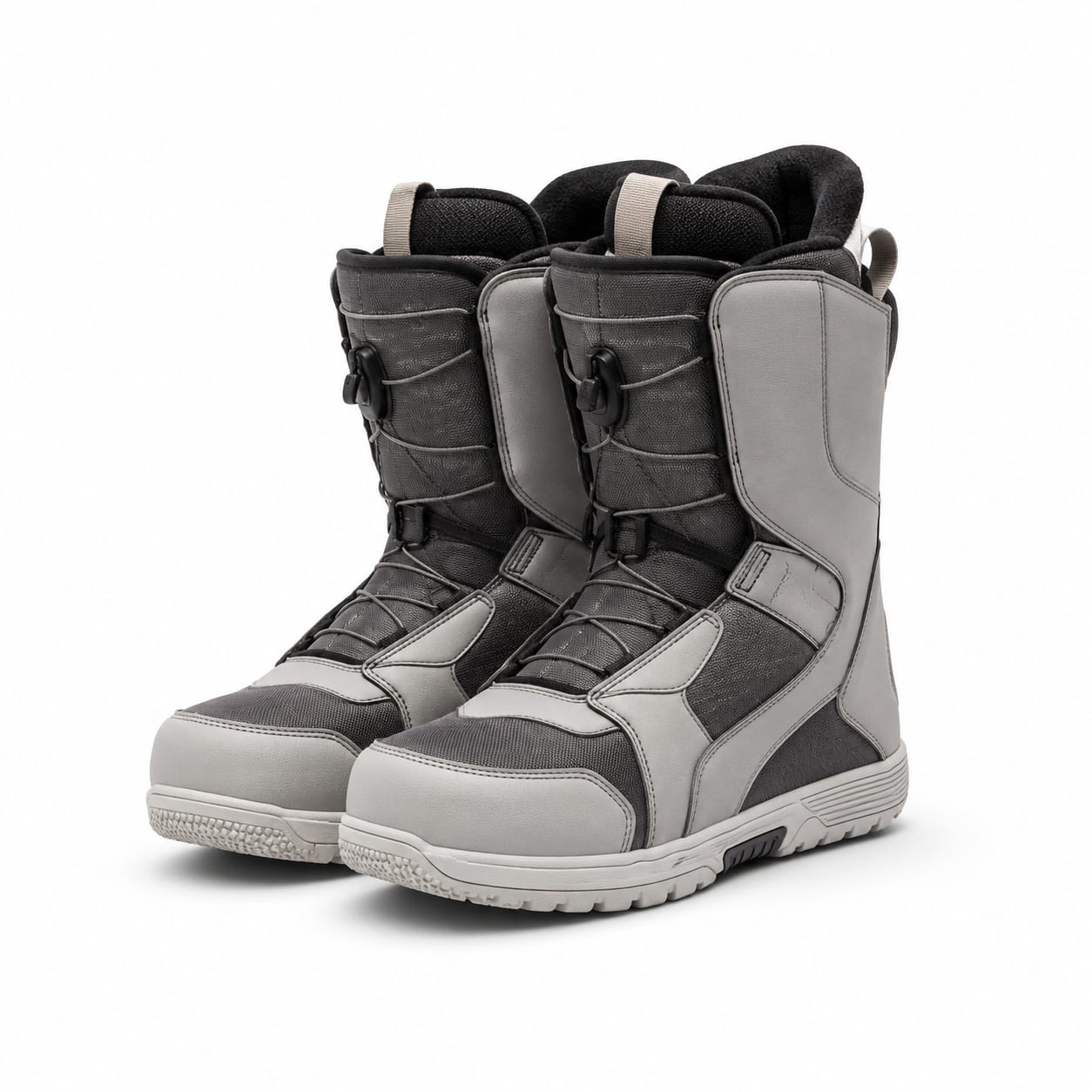
6 topics
Pick a question
Every answer links to the full subcategory guide and related gear types when it helps you decide.
Can I use freestyle boots for all-mountain riding?
Yes, with caveats. Freestyle boots work fine for casual all-mountain cruising, soft snow, and mellow groomers. They struggle on steep, firm terrain where you need precise edge control, and at high speeds where their soft flex feels unstable. If you ride 50% park and 50% all-mountain, a medium-soft freestyle boot (flex 4–5) is a good compromise. If you charge hard outside the park, consider an all-mountain boot instead.
Read answer →02How long do freestyle boots last compared to stiffer boots?
Freestyle boots typically have a shorter lifespan than stiffer boots due to softer materials that pack out faster. Heavy park riders (50+ days/season) often replace freestyle boots every 1–2 seasons, while casual riders may get 3–4 seasons. The primary failure point is liner pack-out (loss of heel hold and support), not shell damage. Impact absorption also degrades with use. If your boots feel sloppy or landings start hurting more, it is time to replace them regardless of external condition.
Read answer →03Should I get traditional laces or BOA for freestyle boots?
It depends on your preference. Traditional laces offer the best zonal adjustability—critical for dialing in the right ankle flex for your riding style. Many park pros prefer laces for this reason. Double BOA is faster and more convenient, letting you adjust tension between laps without removing gloves. Hybrid systems (BOA upper, lace lower) are increasingly popular and may offer the best compromise. If you adjust your boots frequently, laces or hybrid win. If you set it and forget it, BOA is more convenient.
Read answer →04Do I really need enhanced impact absorption, or is standard dampening enough?
If you regularly hit jumps larger than 20 feet or ride features with flat landings, enhanced impact absorption is worth it. It reduces heel bruises, knee pain, and long-term joint wear. If you mostly ride small park features, jib, or cruise, standard dampening is sufficient. The difference becomes most apparent late in the day when fatigue accumulates—enhanced absorption lets you ride longer with less pain.
Read answer →05Why do my freestyle boots feel too soft after a few weeks?
This is pack-out—soft boot materials compress with use, and freestyle boots pack out more than stiffer models. This is normal and expected, which is why you should size freestyle boots snugly (toes brushing the front when standing straight). If the boots feel too soft or sloppy after pack-out, you may have started with a size too large. Heel lift is the key indicator—if your heel rises more than 3–5mm when flexing forward, the fit has degraded too far.
Read answer →06Are freestyle boots good for beginners who don't ride park?
Yes, with some nuance. Soft-flex freestyle boots are forgiving and comfortable, making them a reasonable choice for beginners regardless of discipline. The soft flex makes it harder to catch an edge and allows more natural movement while learning. However, if a beginner knows they want to progress toward freeride or aggressive all-mountain riding, starting with a medium-flex all-mountain boot avoids the need to buy new boots after the first season.
Read answer →