
Snowboard · FAQ
Questions about Race / Alpine Snowboard
Straight answers on fit, specs, and when this type makes sense — each topic has its own page with links back to the buying guide.
Open Race / Alpine Snowboard guide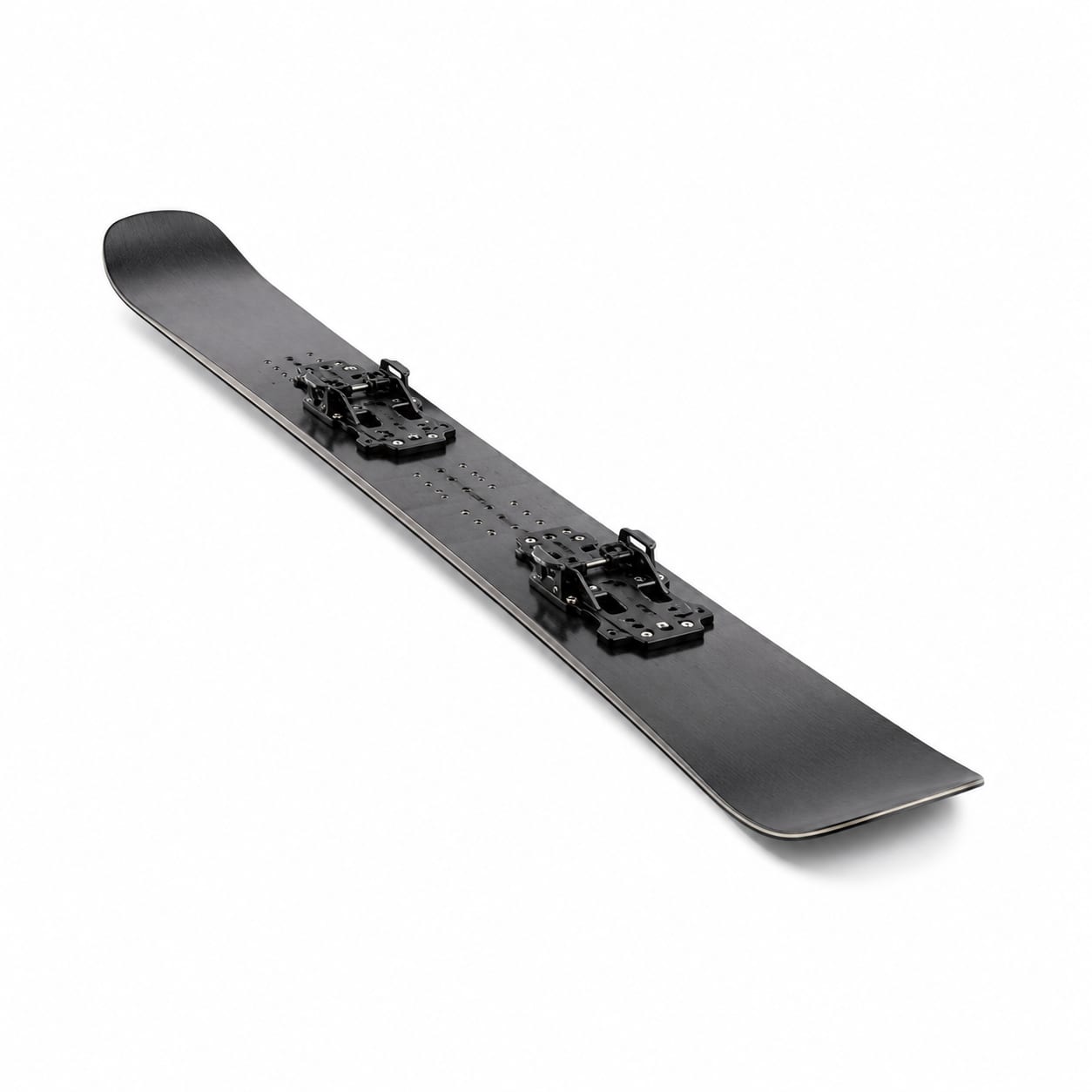
6 topics
Pick a question
Every answer links to the full subcategory guide and related gear types when it helps you decide.
Can I ride a race board with soft boots and regular bindings?
Technically yes, but you'll sacrifice a significant portion of the board's performance. Soft boots lack the lateral stiffness needed to drive a race board's edge into hard snow at high angles. You'll get a stiffer, more carvy ride than an all-mountain board, but you won't experience the deep, locked-in carves that make race boards special. If you're not ready for hard boots, consider an alpine carving board with medium-stiff flex instead.
Read answer →02What's the difference between a slalom board and a GS board?
Slalom boards are shorter (155–163cm) with tighter sidecut radii (6–8m) for quick, snappy turns in rapid succession. GS boards are longer (163–175cm) with larger sidecut radii (8.5–11m) for longer, faster, more sweeping turns. GS boards are faster and more stable; slalom boards are quicker and more responsive. For recreational alpine carving, a GS-style board is more common because it's more forgiving and versatile at recreational speeds.
Read answer →03Are race boards dangerous for intermediate riders?
Yes, genuinely so. The extreme stiffness means intermediate riders often cannot properly initiate turns, leading to caught edges and high-speed falls. The narrow width and aggressive response amplify any technical error. An intermediate rider on a race board is like a student driver in a Formula 1 car—the machine's capabilities far exceed the rider's ability to control them. Build your carving skills on a stiff all-mountain board first.
Read answer →04Do I need a race board to carve well?
Absolutely not. Many all-mountain boards with camber profiles and medium-stiff flex carve beautifully. Boards like the Burton Custom Camber, Jones Flagship, or Rossi One LF deliver satisfying carves on groomers with far more versatility. Race boards are for riders who want the absolute maximum in edge hold and carving performance and are willing to accept the significant compromises that come with it.
Read answer →05How do I know if I'm ready for a race board?
You're likely ready if: you can consistently carve clean lines without skidding on firm groomers, you're comfortable at speeds above 50 km/h, you find your current board's edge hold limiting on hardpack, and you're willing to invest in hard boots and plate bindings. If any of these aren't true, you'll progress faster and enjoy riding more on a carving-oriented all-mountain board.
Read answer →06Why are race boards so expensive?
Race boards use premium materials (carbon, titanal, sintered high-density bases) and specialized construction techniques that are costly. More significantly, the market is small—production runs are limited, so economies of scale that reduce costs for all-mountain boards don't apply. You're paying for both performance materials and the reality of niche manufacturing. Used race boards from competitive riders offer excellent value.
Read answer →