
Cycling Shoes · FAQ
Questions about Road Cycling Shoes
Straight answers on fit, specs, and when this type makes sense — each topic has its own page with links back to the buying guide.
Open Road Cycling Shoes guide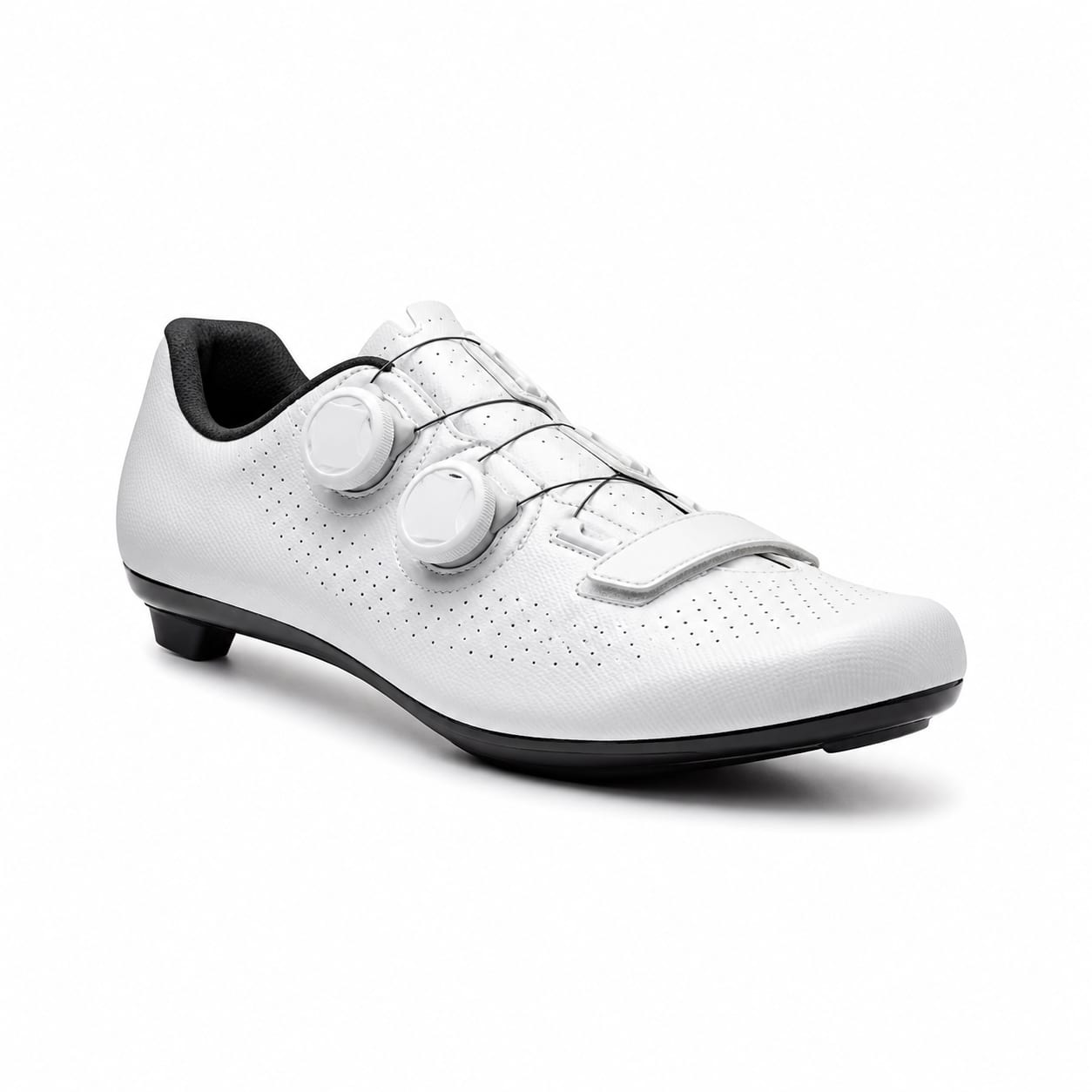
6 topics
Pick a question
Every answer links to the full subcategory guide and related gear types when it helps you decide.
How do road cycling shoes differ from mountain bike shoes?
Road shoes have smooth, ultra-stiff soles with exposed 3-bolt cleats for maximum power transfer but zero walkability. Mountain bike shoes have recessed 2-bolt cleats with tread for off-bike traction, making them walkable but slightly less efficient for pure road pedaling. Road shoes are lighter and stiffer; MTB shoes are more practical for any riding that involves walking.
Read answer →02Do I really need carbon soles, or are nylon soles good enough?
Nylon soles are perfectly adequate for recreational riders and those who ride at moderate intensities. Carbon soles become worthwhile when you're riding at higher power outputs, racing, or doing long rides where efficiency matters. The stiffness difference is noticeable during sprints and hard climbing. If budget is a concern, carbon-reinforced nylon offers a good middle ground with most of the stiffness benefits at lower cost.
Read answer →03How should road cycling shoes fit?
Road shoes should fit snugly without pressure points. Your toes should barely touch the front of the shoe when standing, with no pinching or squeezing across the forefoot. The heel should be locked in place with no lift when you pull up. There should be even pressure across the top of your foot from the closure system. Remember that feet swell during riding, so a shoe that feels perfect in the shop may feel tight after an hour—err slightly toward more room if between sizes.
Read answer →04Can I walk in road cycling shoes?
Technically yes, but it's awkward and not recommended. The exposed cleat clicks on hard surfaces, provides no traction, and wears rapidly. Walking on smooth floors is slippery and potentially dangerous. For cafe stops, you can carefully tiptoe, but road shoes are genuinely designed for on-bike use only. If you need to walk during rides, consider gravel shoes with recessed cleats instead.
Read answer →05What's the difference between single and dual BOA dials?
Single-dial shoes tighten the entire foot zone with one adjustment, which works well for riders with average foot shapes. Dual-dial shoes separate forefoot and midfoot/heel tension into independent zones, allowing you to customize fit more precisely—looser in the forefoot for comfort, tighter at the heel for security. Dual dials are especially beneficial for riders with narrow heels, high insteps, or feet that swell during rides.
Read answer →06How long do road cycling shoes last?
Quality road shoes typically last 2-4 seasons or 10,000-20,000 miles depending on riding frequency and conditions. Upright uppers and carbon soles are very durable; the most common wear points are closure systems (BOA dials, straps), heel pads, and insoles. Cleats are consumables that need replacement every 3,000-5,000 miles. Replace shoes when the upper stretches beyond useful retention, the sole develops play, or closure systems fail.
Read answer →