Kitvore.com

Kitvore.com

Specs that matter. Gear that fits.

Cycling Shoes · Subcategory

Road Cycling Shoes

Ultra-stiff, lightweight shoes optimized for maximum power transfer and pedaling efficiency on paved surfaces.

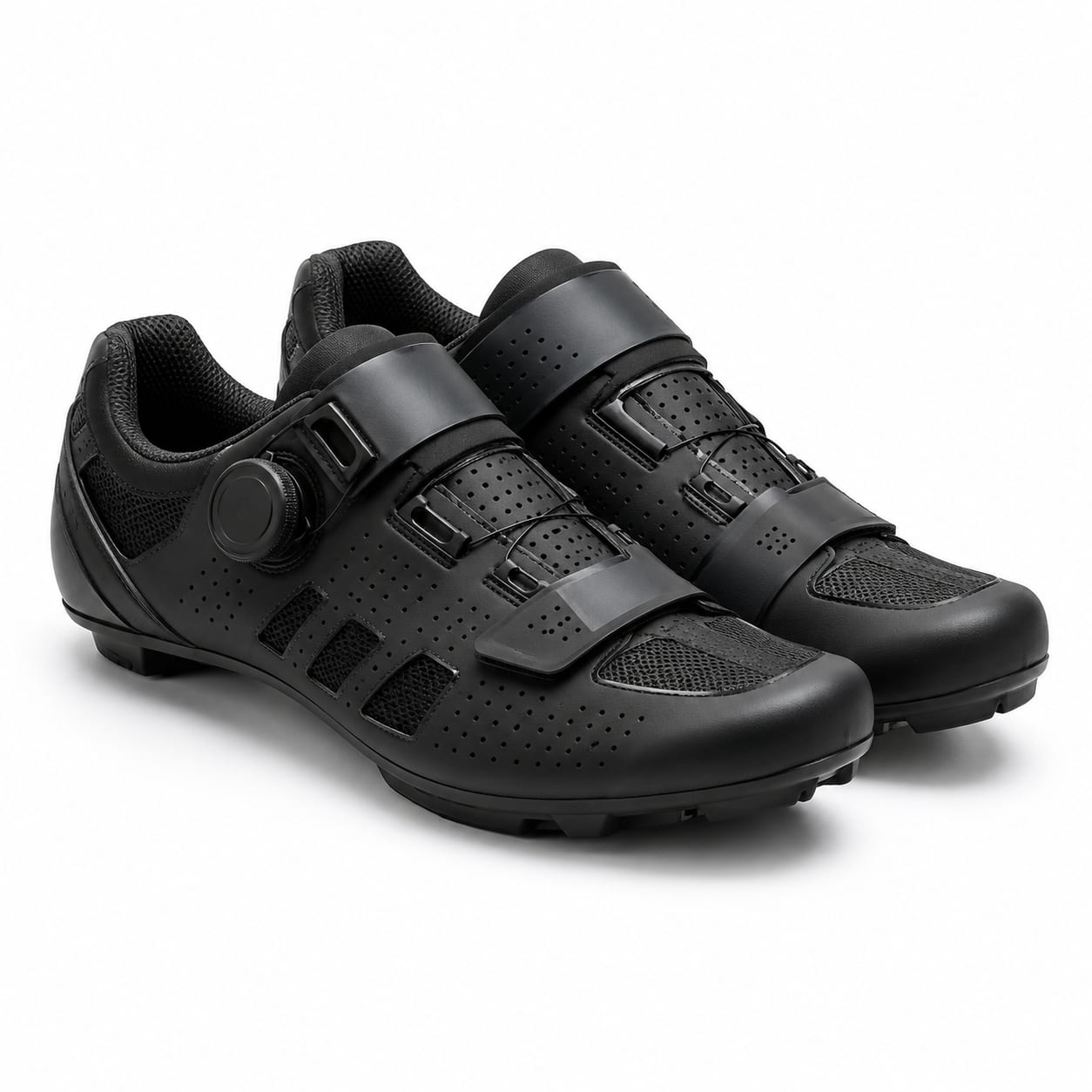
Road cycling shoes are purpose-built for on-bike performance, featuring rigid soles—often full carbon—that minimize energy loss between your foot and the pedal. With smooth outsoles, 3-bolt cleat compatibility, and sleek uppers, they prioritize power transfer, aerodynamics, and weight savings over walkability. Whether you're racing criteriums, climbing alpine cols, or hammering group rides, road shoes are the foundation of an efficient pedal stroke.

$80 – $550mid tierintermediateadvancedexpert

Best known for

Maximum power transfer via ultra-stiff solesLightest weight among all cycling shoe categoriesSleek, aerodynamic uppers with minimal bulk3-bolt cleat compatibility for large, stable pedal platformsPrecise closure systems for on-the-fly fit adjustment
Road Cycling Shoes

Guide

Detailed overview

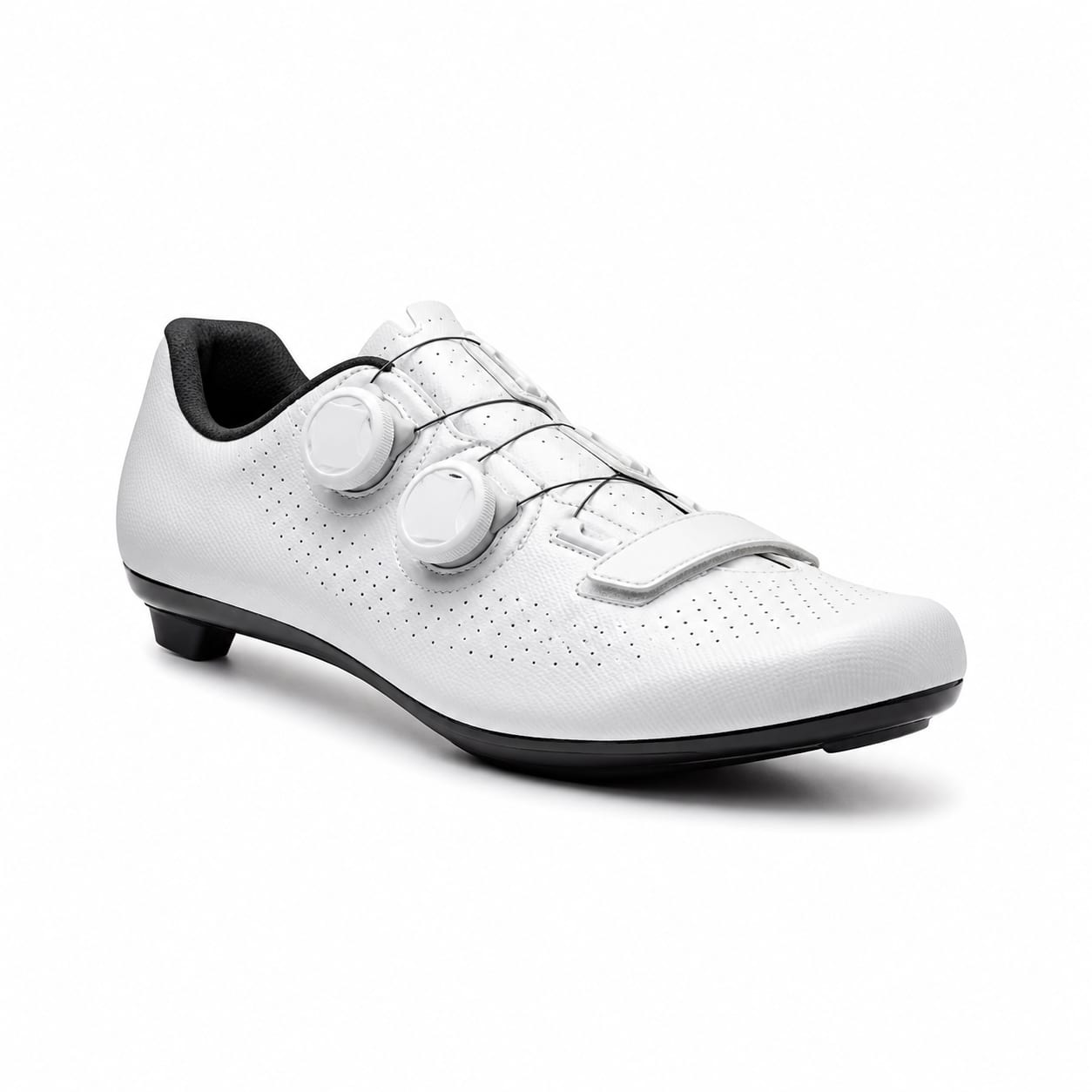
Road cycling shoes are the most specialized footwear in cycling, designed with a singular focus: transmitting every watt of power from your legs to the drivetrain with minimal loss. They achieve this through extremely rigid soles—typically full carbon fiber at the high end—that resist flex under even the hardest sprinting efforts. The uppers are streamlined and snug, using materials like microfiber, synthetic leather, or engineered mesh to wrap the foot securely without excess bulk. Closure is almost always dial-based (BOA or ATOP) for micro-adjustable precision while riding. Road shoes use the 3-bolt cleat standard (SPD-SL, LOOK Keo, Speedplay), which provides a large, stable interface with the pedal but leaves the cleat exposed and protruding—making walking difficult and awkward. There is no tread, no recessed cleat area, and no compromise for off-bike use. This purity of purpose makes road shoes the unequivocal choice for road racing, time trialing, fast group rides, and any riding where efficiency is the top priority.

Road cycling shoes represent the pinnacle of pedaling efficiency in cycling footwear. Their defining characteristic is sole stiffness: a quality road shoe resists flex so completely that virtually all of your muscular effort reaches the pedals. This is achieved through carbon fiber construction in premium models, or carbon-reinforced nylon composites at more accessible price points. The difference between a nylon-soled entry-level road shoe and a full-carbon race shoe is immediately perceptible—sprints feel snappier, climbs feel easier, and your foot feels planted and stable even at high cadences.

The upper construction of road shoes has evolved significantly in recent years. Traditional synthetic leather has given way to engineered microfibers and knit materials that offer better breathability, reduced weight, and more uniform pressure distribution. Closure systems have largely transitioned from velcro straps and ratchet buckles to BOA dials, which allow riders to fine-tune fit with millimeter precision while riding. Dual-dial configurations separate forefoot and midfoot/heel tension, enabling a truly customized wrap that accommodates different foot shapes and volumes.

Fit is arguably the most critical factor when choosing road shoes, more so than sole material or weight. A shoe that is too narrow causes numbness and hot spots within an hour; one that is too wide allows foot slippage that wastes energy and causes blisters. Road shoes tend to run narrower than other categories, with Italian brands like Sidi and Fizik favoring particularly slim lasts. Shimano and Lake offer broader width options, including wide and extra-wide variants. Because feet swell during exercise, a shoe that feels perfect in the shop may feel tight after 90 minutes of hard riding—always err slightly toward more volume if between sizes.

The trade-off for all this on-bike optimization is walkability: road shoes are essentially unwalkable. The exposed 3-bolt cleat clicks and slips on hard surfaces, and walking any distance damages the cleat and risks injury. Cafe stops require careful tiptoeing, and any ride involving hike-a-bike sections is out of the question. For riders who value off-bike mobility, gravel or commuter shoes may be more appropriate. But for pure road riding—especially racing and fast group rides—nothing matches the efficiency and connection of a dedicated road shoe.

Quick facts

Primary purpose
Maximizing power transfer and efficiency for road riding and racing
Popular brands
S-WorksSidiShimanoFizikBontragerGiro
Typical terrain
paved roadssmooth surfaces

What makes it different

Smooth, protruding sole with no recess for cleat makes walking difficult but maximizes stiffness and pedal contact area

Recommended ranges

How this type usually specs out

Each spec is explained in plain language, then we show what buyers usually look for on this type.

Discipline / Shoe Type

Shoe Type

What it means

The intended riding discipline and design philosophy of the shoe, which determines sole stiffness, tread, cleat mounting, and overall construction.

Typical for this type

Road

In practice

Road cycling shoes are defined by their road-specific design: ultra-stiff sole, smooth bottom, 3-bolt cleat mount, and minimal tread. This is the defining dimension for the subcategory.

Compared to other types

Unlike MTB shoes with recessed cleats and tread, gravel shoes with versatile 2-bolt compatibility, or commuter shoes with sneaker-like soles, road shoes are unapologetically optimized for pedaling efficiency on paved surfaces only.

Why it matters: Shoe type determines the fundamental design philosophy, cleat standard, sole construction, and intended use. Road shoes sacrifice all walkability for maximum on-bike performance.

Cleat Compatibility

Cleat Compatibility

What it means

The bolt pattern on the shoe sole that determines which cleat and pedal systems can be mounted. This is the most fundamental compatibility requirement.

Typical for this type

3_bolt, 4_bolt_speedplay (for Speedplay users)

In practice

Road shoes universally feature the 3-bolt drill pattern compatible with Shimano SPD-SL, LOOK Keo, and Speedplay (with adapter plate). Some models offer a 4-bolt Speedplay direct-mount option for lower stack height.

Compared to other types

MTB and gravel shoes use 2-bolt patterns for recessed, walkable cleats. Road shoes' external 3-bolt cleats offer superior stability and power transfer but make walking impractical.

Why it matters: Cleat compatibility must match your pedal system. The 3-bolt standard provides a large, stable pedal interface that distributes pressure across a wider area, reducing hot spots during long rides.

Sole Material

Sole Material

What it means

The primary material of the shoe sole, which determines stiffness, weight, durability, and price. Stiffer soles transfer more power but reduce walkability and comfort.

Typical for this type

Carbon Reinforced to Full Carbon

In practice

Full carbon soles are standard on mid-to-high-end road shoes, offering maximum stiffness and minimum weight. Carbon-reinforced nylon soles appear on entry-to-mid-level models, providing good stiffness at lower cost.

Compared to other types

Road shoes exclusively use carbon or carbon-reinforced nylon soles, unlike MTB shoes which may use rubber outsoles, or commuter shoes with flexible EVA foam. This reflects road riding's priority on power transfer over walkability.

Why it matters: Sole material directly determines power transfer efficiency. Full carbon soles are approximately 30-50% stiffer than nylon composites, meaning less energy is lost to sole flex during hard pedaling efforts.

Sole Stiffness Index

Stiffness Index

What it means

A manufacturer-assigned or comparative rating of how resistant the sole is to flex under pedaling load. Higher numbers indicate stiffer soles that transfer more power.

Typical for this type

8–14

Most common pick: 10

In practice

Road shoes typically range from stiffness index 8 (performance/sport level) to 14 (pro/ultra-stiff race level). Most competitive road riders prefer 10-12, balancing stiffness with some compliance for comfort on long rides.

Compared to other types

Road shoes have the highest stiffness indices of any cycling shoe category. MTB XC shoes typically range 6-10, trail shoes 4-8, and commuter shoes 2-5. The stiffness gap is one of the key performance differentiators.

Why it matters: Higher stiffness translates to better power transfer, but extremely stiff soles can cause hot spots and foot fatigue on long rides. Most riders benefit from stiffness index 8-12 rather than maximum stiffness.

Closure System

Closure System

What it means

The mechanism used to secure the shoe to the foot, affecting fit precision, adjustability, speed of entry/exit, and reliability.

Typical for this type

Boa Dial (Single Or Dual), With Boa Dial + Velcro Strap Combinations

In practice

BOA dials are the dominant closure system on road shoes, found on nearly all mid-to-high-end models. Dual-dial configurations allow independent adjustment of forefoot and midfoot/heel zones. Entry-level models may use velcro straps or ratchet buckles.

Compared to other types

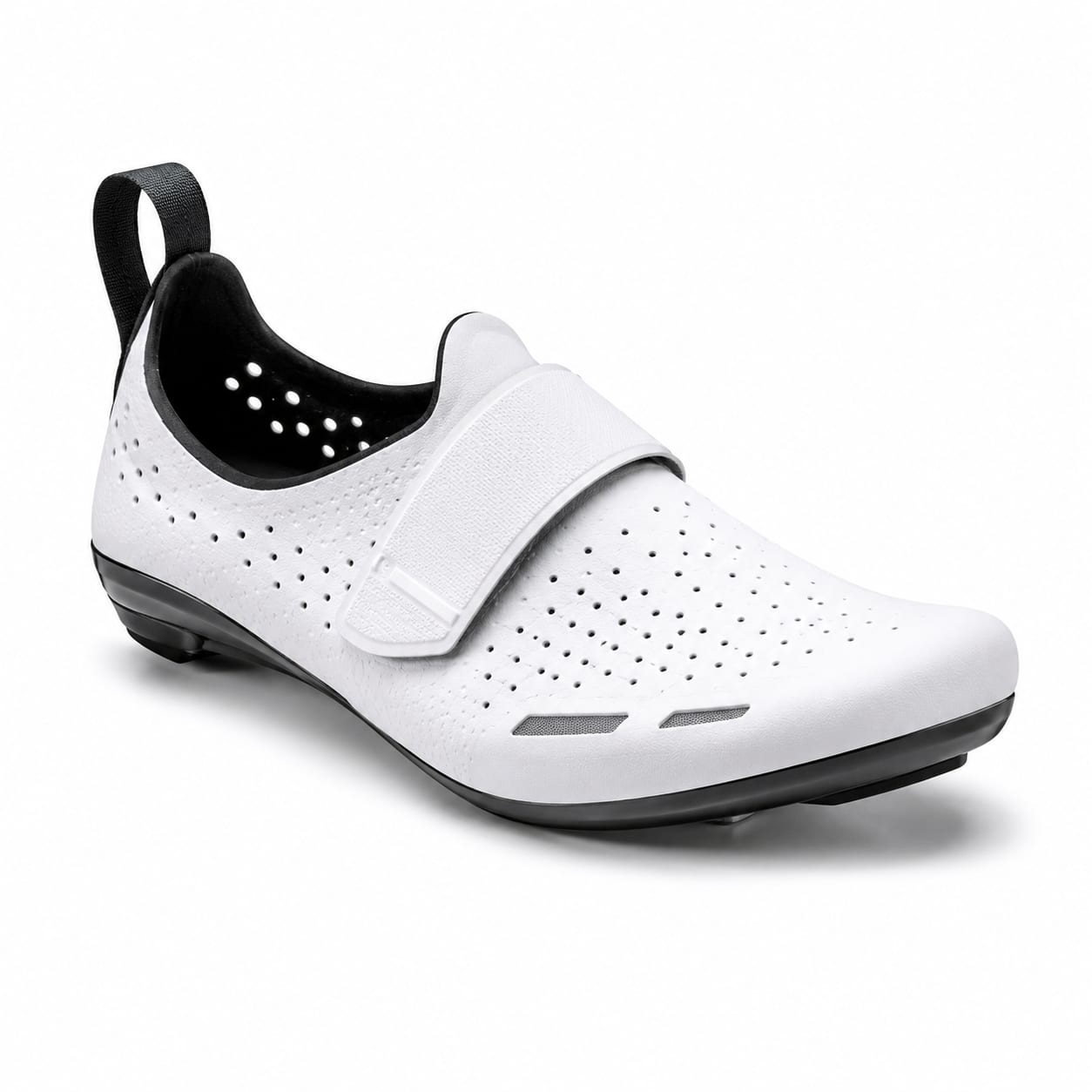
Road shoes almost universally feature BOA dials at performance price points, while MTB and gravel shoes more commonly use laces or single-dial + velcro combinations. Triathlon shoes use single velcro straps for fastest transitions.

Why it matters: BOA dials provide micro-adjustable, on-the-fly tension changes—critical during long rides when feet swell or when adjusting for climbing vs. sprinting. Dual dials offer the most precise fit customization.

Weight per Pair

Weight (Pair)

What it means

The total weight of both shoes, typically measured in grams. Lighter shoes reduce rotational mass and can improve acceleration and climbing.

Typical for this type

400–650g per pair

Most common pick: 500g

In practice

Race-level road shoes typically weigh 400-500g per pair, with ultra-light models approaching 350g. Performance models range 500-600g, and entry-level shoes 550-650g. Weight savings come from carbon soles, minimal uppers, and streamlined closures.

Compared to other types

Road shoes are the lightest cycling shoe category. MTB XC shoes typically weigh 600-750g, trail shoes 750-1000g, and commuter shoes 700-1200g. The weight advantage comes from eliminating tread, recessed cleat hardware, and protective features.

Why it matters: Lighter shoes reduce rotational mass, which affects acceleration and climbing. However, weight differences of 50-100g between models are less impactful than fit and stiffness for most riders.

Upper Material

Upper Material

What it means

The primary material of the shoe upper, affecting breathability, durability, water resistance, stretch, and overall comfort.

Typical for this type

Microfiber, Synthetic Leather, Mesh Knit (For Hot Weather)

In practice

Microfiber uppers dominate mid-to-high-end road shoes, offering excellent breathability, shape retention, and a supple feel. Synthetic leather is common on entry-level models. Mesh/knit uppers are available for maximum ventilation in hot conditions.

Compared to other types

Road shoes prioritize lightweight, breathable uppers without protective features. MTB shoes may use reinforced synthetic leather for abrasion resistance, and commuter/gravel shoes may feature GORE-TEX membranes for weather protection.

Why it matters: Upper material affects breathability, durability, stretch, and how the shoe conforms to your foot over time. Microfiber provides the best balance of performance characteristics for road riding.

Width / Fit Profile

Width / Fit Profile

What it means

The volume and width of the shoe last (foot mold), which determines how the shoe accommodates different foot shapes. Critical for comfort and preventing numbness.

Typical for this type

Narrow to Wide (Brand-Dependent)

Most common pick: Standard

In practice

Road shoes are available in narrow, standard, and wide fits, though selection varies significantly by brand. Italian brands (Sidi, Fizik) tend toward narrower lasts, while Shimano and Lake offer the widest range of width options including extra-wide.

Compared to other types

Road shoes tend to run narrower than MTB or commuter shoes, reflecting their racing heritage and the desire for a snug, performance-oriented fit. This makes width selection especially critical for road shoes.

Why it matters: Incorrect width is the #1 cause of foot numbness and discomfort in road shoes. Feet swell during riding, so a shoe that fits in the shop may become too tight after an hour. When in doubt, go wider rather than longer.

Ventilation Level

Ventilation

What it means

The degree of airflow through the shoe upper and sole, affecting temperature regulation, moisture management, and comfort in different weather conditions.

Typical for this type

Moderate to High

In practice

Most road shoes feature moderate ventilation with mesh panels or perforations in the upper and sometimes sole vents. High-ventilation models with extensive mesh are available for hot climates, while minimal-ventilation versions suit cooler conditions.

Compared to other types

Road shoes typically offer more ventilation than MTB shoes (which need to block debris) and commuter shoes (which prioritize weather protection). Many road riders use overshoes to add warmth in winter rather than buying separate winter shoes.

Why it matters: Road riding generates significant foot heat, especially during hard efforts. Adequate ventilation prevents overheating and sweating, which causes discomfort and can lead to blisters. However, highly ventilated shoes are cold in winter and let in rain.

Heel Retention System

Heel Retention

What it means

Design features in the heel cup that prevent heel lift during the upstroke, ensuring efficient power transfer and stable foot positioning.

Typical for this type

Reinforced Heel to Adjustable Heel

In practice

Mid-to-high-end road shoes feature reinforced or rigid heel cups for secure heel hold. Premium models may offer adjustable heel retention systems or integrated heel dials for riders with narrow heels who experience heel lift.

Compared to other types

Road shoes place greater emphasis on heel retention than MTB or commuter shoes because road riding involves continuous pedaling with frequent high-power efforts where heel stability is critical.

Why it matters: Heel lift during the upstroke wastes energy and causes irritation. Secure heel retention ensures efficient power transfer throughout the entire pedal stroke, especially during high-cadence climbing and sprinting.

Sole Stack Height

Stack Height

What it means

The distance from the pedal axle to the bottom of the foot, determined by sole thickness and cleat design. Lower stack height improves pedaling efficiency and cornering clearance.

Typical for this type

7–11mm

Most common pick: 8.5mm

In practice

Road shoes typically have stack heights of 7-11mm, with race-oriented models at the lower end. Full carbon soles enable thinner construction. Speedplay direct-mount (4-bolt) configurations achieve the lowest stack heights around 5-7mm.

Compared to other types

Road shoes have the lowest stack heights of any cycling shoe category. MTB shoes range 10-15mm due to tread, and commuter shoes can exceed 15mm. The low stack is a direct benefit of eliminating walkability features.

Why it matters: Lower stack height brings the foot closer to the pedal axle, improving pedaling stability and efficiency. It also provides slightly more cornering clearance when pedaling through turns.

Included Insole / Footbed

Insole Type

What it means

The type and quality of the footbed included with the shoe, which affects arch support, comfort, and the ability to customize fit.

Typical for this type

Contoured Ergonomic to Interchangeable Arch

In practice

Mid-range road shoes include contoured ergonomic insoles with basic arch support. Premium models often feature interchangeable arch inserts (low, medium, high) for customizable support. Entry-level shoes come with basic flat insoles.

Compared to other types

Road shoes benefit more from quality insoles than other categories because of the long hours spent pedaling continuously. The rigid sole amplifies any pressure point, making insole quality more noticeable.

Why it matters: Arch support directly affects comfort and power transfer on long rides. Inadequate support leads to foot fatigue, hot spots, and numbness. Aftermarket insoles (Specialized Body Geometry, Superfeet) are a popular upgrade for shoes with basic insoles.

Toe Box Shape

Toe Box Shape

What it means

The shape and volume of the front of the shoe where the toes sit, affecting comfort, toe splay, and prevention of numbness or bunions.

Typical for this type

Rounded Standard to Wide Anatomical (For Comfort On Long Rides)

In practice

Road shoes are available in pointed/tapered, rounded/standard, and wide/anatomical toe box shapes. Italian brands tend toward pointed shapes for a sleek look, while comfort-oriented models feature wider, more anatomical shapes that allow natural toe splay.

Compared to other types

Road shoes historically featured the narrowest, most pointed toe boxes of any cycling shoe category, though this is changing as brands recognize the comfort and performance benefits of allowing natural toe splay.

Why it matters: Toe box shape is critical for preventing numbness and hot spots on long rides. Feet swell during exercise, and a toe box that feels adequate at rest may become restrictive after 2+ hours of riding. Wide anatomical shapes prevent these issues.

Ankle Coverage

Ankle Coverage

What it means

How high the shoe extends above the ankle bone, affecting protection, support, weather resistance, and range of motion.

Typical for this type

Low Cut

In practice

All road cycling shoes feature low-cut construction ending below the ankle bone. This maximizes ankle mobility for pedaling and minimizes weight. There are no mid-ankle or high-ankle road shoes.

Compared to other types

Unlike MTB trail/enduro shoes that may feature mid-ankle coverage for protection from pedal strikes and debris, road shoes have no need for ankle protection and prioritize mobility instead.

Why it matters: Low-cut construction allows unrestricted ankle movement through the full pedaling motion. Any restriction at the ankle would impede the fluid circular motion required for efficient road pedaling.

Walkability Rating

Walkability

What it means

How easily and comfortably you can walk in the shoes off the bike, determined by sole flexibility, tread pattern, and cleat recess.

Typical for this type

None

In practice

Road shoes are not walkable. The smooth carbon sole with exposed 3-bolt cleat provides no traction, and walking damages the cleat, risks slipping, and feels extremely awkward. Road shoes are designed exclusively for on-bike use.

Compared to other types

Road shoes are the only cycling shoe category with essentially zero walkability. Even XC race MTB shoes offer limited walkability via recessed cleats. This is the starkest differentiator between road and all other shoe categories.

Why it matters: This is the fundamental trade-off of road shoes. If you need to walk during your rides—whether for cafe stops, nature breaks, or commute transitions—road shoes will be a constant frustration. Riders who frequently walk should consider gravel or commuter alternatives.

Heat Moldable Upper/Sole

Heat Moldable

What it means

Whether the shoe upper, sole, or both can be heat-molded to customize the fit to the rider's foot shape.

Typical for this type

True (For Riders With Hard-To-Fit Feet)

Most common pick: False

In practice

Most road shoes are not heat moldable, but select brands (Bont, Shimano S-Phyre, Lake) offer heat-moldable uppers and/or soles that can be customized to foot shape through a heating and forming process.

Compared to other types

Heat moldability is more common in road shoes than in other categories, reflecting the importance of precise fit for long-distance road riding and the willingness of road riders to invest in performance-enhancing features.

Why it matters: Heat moldability can resolve fit issues that no off-the-shelf shoe can address, particularly for riders with bunions, asymmetric feet, or unusual arch shapes. It provides a semi-custom fit at a fraction of the cost of truly custom shoes.

Gender-Specific Design

Gender Design

What it means

Whether the shoe is built on a gender-specific last, which accounts for typical differences in foot shape, volume, and proportions.

Typical for this type

Mens, Womens (Match to Foot Shape)

In practice

Road shoes are available in men's, women's, and unisex designs. Women's-specific models feature narrower heels, lower overall volume, and proportionally different toe boxes. Many brands offer their full range in both men's and women's versions.

Compared to other types

Road shoes have the widest selection of women's-specific models among performance cycling shoe categories, though availability still lags behind men's. Some brands like Shimano and Specialized offer extensive women's road shoe lines.

Why it matters: Women's-specific lasts address the typical female foot shape, which has a narrower heel relative to forefoot width. Women who wear unisex or men's shoes often experience heel slip, which wastes energy and causes discomfort.

Evaluation

Strengths and trade-offs

Pros

What this type does best

Maximum Power Transfer

Critical

Ultra-stiff carbon soles ensure virtually all pedaling force reaches the pedals, with minimal energy lost to sole flex. This is the primary performance advantage of road shoes over all other categories.

Lightest Weight

High

Road shoes are the lightest cycling shoes available, with race models under 500g per pair. Reduced rotational mass improves acceleration and climbing performance.

Precise Fit Adjustment

High

BOA dial closure systems allow micro-adjustments while riding, enabling you to fine-tune fit as feet swell or conditions change. Dual-dial setups offer independent forefoot and heel zone control.

Superior Pedal Interface Stability

High

The 3-bolt cleat platform provides a large, stable contact area between shoe and pedal, reducing lateral movement and improving pedaling confidence during sprints and high-power efforts.

Aerodynamic Design

Medium

Sleek, low-profile uppers and smooth soles minimize aerodynamic drag. At racing speeds, this contributes to measurable time savings, especially in time trials and breakaways.

Low Stack Height

Medium

Thin carbon soles position the foot closer to the pedal axle than any other shoe type, improving pedaling stability and mechanical efficiency throughout the stroke.

Wide Range of Performance Options

Medium

The road shoe market offers the broadest selection of models, widths, and price points of any cycling shoe category, making it easier to find the perfect match for your feet and budget.

Cons

Trade-offs to be aware of

Essentially Unwalkable

Significant

The exposed 3-bolt cleat and smooth carbon sole make walking slippery, awkward, and damaging to cleats. Even short walks to cafe stops require careful tiptoeing. This is the most significant practical limitation.

Can Cause Foot Discomfort on Long Rides

Moderate

Extremely stiff soles can create pressure points and hot spots, especially for riders with high arches or wide feet. The rigid platform doesn't accommodate natural foot movement, which some riders find fatiguing over 4+ hour rides.

Narrow Fit Options Common

Moderate

Many road shoe models, particularly from Italian brands, run narrow. Riders with wide feet may struggle to find comfortable options, and wide-fit models are often limited in selection and colorways.

High Cost for Premium Models

Moderate

Full carbon road shoes with dual BOA dials typically cost $250-$450, with top-tier models exceeding $500. The performance gains over mid-range options are diminishing for non-racers.

Poor Weather Versatility

Minor

Ventilated road shoes are cold in winter and offer no water protection. Riders in variable climates need overshoes or a separate pair of less-ventilated or waterproof shoes for cold/wet conditions.

Cleat Wear from Walking

Minor

Any walking in road shoes rapidly wears the exposed cleat, which is a consumable that costs $20-40 to replace. Frequent cafe stop walkers will replace cleats multiple times per season.

Best for

Surfaces & terrain

Paved roadsSmooth tarmacRolling hillsMountain passesTime trial courses

Riding conditions

Dry roadsTemperate to warm weatherCompetitionLong distance road rides

Skill level

IntermediateAdvancedExpertProfessional

Riding discipline

Road racingCriterium racingTime trialingFast group ridesCentury ridingHill climbingInterval training

Rider profile

Competitive road racersPerformance-focused club ridersStrava segment huntersCentury and gran fondo participantsCyclists who never unclip during ridesRiders prioritizing watts and efficiency above all else

Not ideal for

Reasons

Zero walkability makes any off-bike activity difficult and damages cleatsStiff soles are overkill for casual riding speeds where power transfer is less criticalExposed cleats are hazardous on slippery surfaces like tile, marble, and wet floorsPremium pricing is hard to justify for riders who don't benefit from maximum efficiencyDelicate uppers and carbon soles are vulnerable to damage from off-road terrain and impacts

Surfaces & terrain

Gravel roadsDirt pathsMuddy trailsTechnical off-road terrain

Skill level

Beginners who frequently stop and walk

Riding discipline

BikepackingCycle touringGravel racingCommuting with walkingCasual recreational riding

Compare

How it stacks up

This page

Road Cycling Shoes

Superior power transfer from stiffer soles, lighter weight, lower stack height, and more aerodynamic design. Road shoes are noticeably faster for pure road riding.

Alternative

Gravel Cycling Shoes

Gravel shoes offer walkability via recessed 2-bolt cleats, moderate tread for off-bike traction, and versatility for mixed-terrain riding. They handle hike-a-bike sections and cafe stops comfortably.

Bottom line

Choose road shoes if you ride exclusively on paved surfaces and never need to walk. Choose gravel shoes if your riding includes dirt roads, hike-a-bike sections, or frequent off-bike stops.

This page

Road Cycling Shoes

Significantly stiffer soles for better power transfer, lighter weight, lower stack height, and larger pedal contact area for stability. Road shoes are measurably more efficient for paved riding.

Alternative

Mountain Bike Shoes (XC)

MTB shoes offer recessed cleats for walkability, tread for traction off-bike, and mud-shedding pedal designs. They're more practical for any riding that involves dismounting.

Bottom line

Choose road shoes for dedicated road riding. Choose MTB shoes if you value the ability to walk comfortably, ride in muddy conditions, or want a single shoe for road and trail use.

This page

Road Cycling Shoes

More precise fit from dual-dial or multi-strap closure systems, wider range of fit options, and often better ventilation for long rides. Road shoes provide superior comfort for rides over 2 hours.

Alternative

Triathlon Cycling Shoes

Triathlon shoes feature quick-entry design with heel loops, single wide straps, and pull tabs for lightning-fast T1/T2 transitions. They're optimized for barefoot riding and rapid on/off.

Bottom line

Choose road shoes for standard road riding and racing. Choose triathlon shoes only if you compete in triathlons and need fast transitions. Some triathletes use road shoes for training and tri shoes only for racing.

This page

Road Cycling Shoes

Dramatically better power transfer, lighter weight, and more secure fit for sustained pedaling. Road shoes make every commute faster and more efficient for the same effort.

Alternative

Commuter Cycling Shoes

Commuter shoes look like regular sneakers, walk comfortably all day, work with recessed cleats, and don't announce you as a cyclist at the office. They're practical for multi-modal commuting.

Bottom line

Choose road shoes only if your commute is pure cycling with no walking at either end. Choose commuter shoes for any commute involving walking, office wear, or public transit connections.

Shopping

Buying tips

  • 1

    Prioritize fit above all else—a perfectly fitting nylon-soled shoe will always outperform an ill-fitting carbon shoe. Try multiple brands as last shapes vary dramatically.

  • 2

    Size road shoes in the afternoon or after activity when feet are at their largest. Feet swell during riding, and a morning fitting may result in shoes that are too tight on the road.

  • 3

    If you're between sizes, go slightly larger rather than smaller. You can add a thicker insole or wear thicker socks to take up volume, but you can't make a too-short shoe longer.

  • 4

    Budget for quality insoles separately—many stock insoles are inadequate. Aftermarket options like Specialized Body Geometry or Superfeet can transform shoe comfort for $30-50.

  • 5

    Consider dual-dial closure if you have the budget. The ability to independently adjust forefoot and heel tension eliminates the compromise of single-dial systems and is especially valuable for riders with narrow heels or high insteps.

  • 6

    If you have wide feet, focus your search on Shimano and Lake, which offer the widest range of width options. Avoid Italian brands like Sidi and Fizik unless you have narrow feet.

  • 7

    Don't over-invest in stiffness unless you race or ride at high intensity. A stiffness index of 8-10 provides excellent power transfer for most riders while remaining more comfortable on long rides than ultra-stiff pro-level soles.

  • 8

    Check cleat compatibility before purchasing—confirm your pedal system (SPD-SL, LOOK Keo, Speedplay) and ensure the shoe supports it. Speedplay users should verify whether an adapter plate is included.

  • 9

    Buy from retailers with generous return policies, and test shoes on a stationary trainer if possible before committing. Fit issues that aren't apparent in the shop often appear after 30 minutes of pedaling.

Care

Maintenance notes

  • Wipe down uppers after every ride with a damp cloth to remove sweat and road grime. Salt from sweat degrades synthetic materials and stitching over time.
  • Replace cleats proactively every 3,000-5,000 miles or when you notice play between cleat and pedal. Worn cleats cause unpredictable release and reduced power transfer.
  • Tighten cleat bolts every few weeks as they can loosen from vibration. Apply a small amount of thread-locking compound to prevent persistent loosening.
  • Allow wet shoes to air dry at room temperature—never use direct heat sources like radiators or hair dryers, which can warp carbon soles and damage upper materials.
  • Stuff wet shoes with newspaper to absorb moisture and maintain shape. Replace the newspaper after a few hours if saturated.
  • Inspect BOA dials and laces periodically for wear or fraying. BOA offers free replacement dials on their website if they fail—don't replace the entire shoe for a broken dial.
  • Check heel pad wear on models with replaceable heel pads. Worn heel pads reduce traction during dismounts and can damage the sole structure.
  • Store shoes with cleat covers on to protect cleat engagement surfaces and prevent accidental damage when not riding.

Progression

Skill development path

Road cycling shoes benefit riders at every level, but their advantages become more pronounced as power output and ride duration increase. Beginners may not notice the difference between road shoes and other categories until they develop a smooth, consistent pedal stroke and begin riding at moderate intensities (15+ mph average). Intermediate riders will appreciate the power transfer and fit precision during group rides and climbing. Advanced and expert riders will feel every watt saved by stiff soles and secure heel retention during intervals, sprints, and races. The key progression is learning to dial in fit—understanding how closure tension affects comfort over 2-4 hour rides, when to adjust during a ride, and how insole selection impacts long-distance comfort. Riders new to clipless pedals should practice clipping in and out in a safe area before hitting the road, as the 3-bolt road cleat has a more defined engagement than 2-bolt MTB systems.

FAQ

Common questions

Each question has a dedicated page with a full answer and links to the buying guide.

How do road cycling shoes differ from mountain bike shoes?

Road shoes have smooth, ultra-stiff soles with exposed 3-bolt cleats for maximum power transfer but zero walkability. Mountain bike shoes have recessed 2-bolt cleats with tread for off-bike traction, making them walkable but slightly less efficient for pure road pedaling. Road shoes are lighter and stiffer; MTB shoes are more practical for any riding that involves walking.

Do I really need carbon soles, or are nylon soles good enough?

Nylon soles are perfectly adequate for recreational riders and those who ride at moderate intensities. Carbon soles become worthwhile when you're riding at higher power outputs, racing, or doing long rides where efficiency matters. The stiffness difference is noticeable during sprints and hard climbing. If budget is a concern, carbon-reinforced nylon offers a good middle ground with most of the stiffness benefits at lower cost.

How should road cycling shoes fit?

Road shoes should fit snugly without pressure points. Your toes should barely touch the front of the shoe when standing, with no pinching or squeezing across the forefoot. The heel should be locked in place with no lift when you pull up. There should be even pressure across the top of your foot from the closure system. Remember that feet swell during riding, so a shoe that feels perfect in the shop may feel tight after an hour—err slightly toward more room if between sizes.

Can I walk in road cycling shoes?

Technically yes, but it's awkward and not recommended. The exposed cleat clicks on hard surfaces, provides no traction, and wears rapidly. Walking on smooth floors is slippery and potentially dangerous. For cafe stops, you can carefully tiptoe, but road shoes are genuinely designed for on-bike use only. If you need to walk during rides, consider gravel shoes with recessed cleats instead.