
Mountain Bike · FAQ
Questions about Cross-Country (XC) Mountain Bike
Straight answers on fit, specs, and when this type makes sense — each topic has its own page with links back to the buying guide.
Open Cross-Country (XC) Mountain Bike guide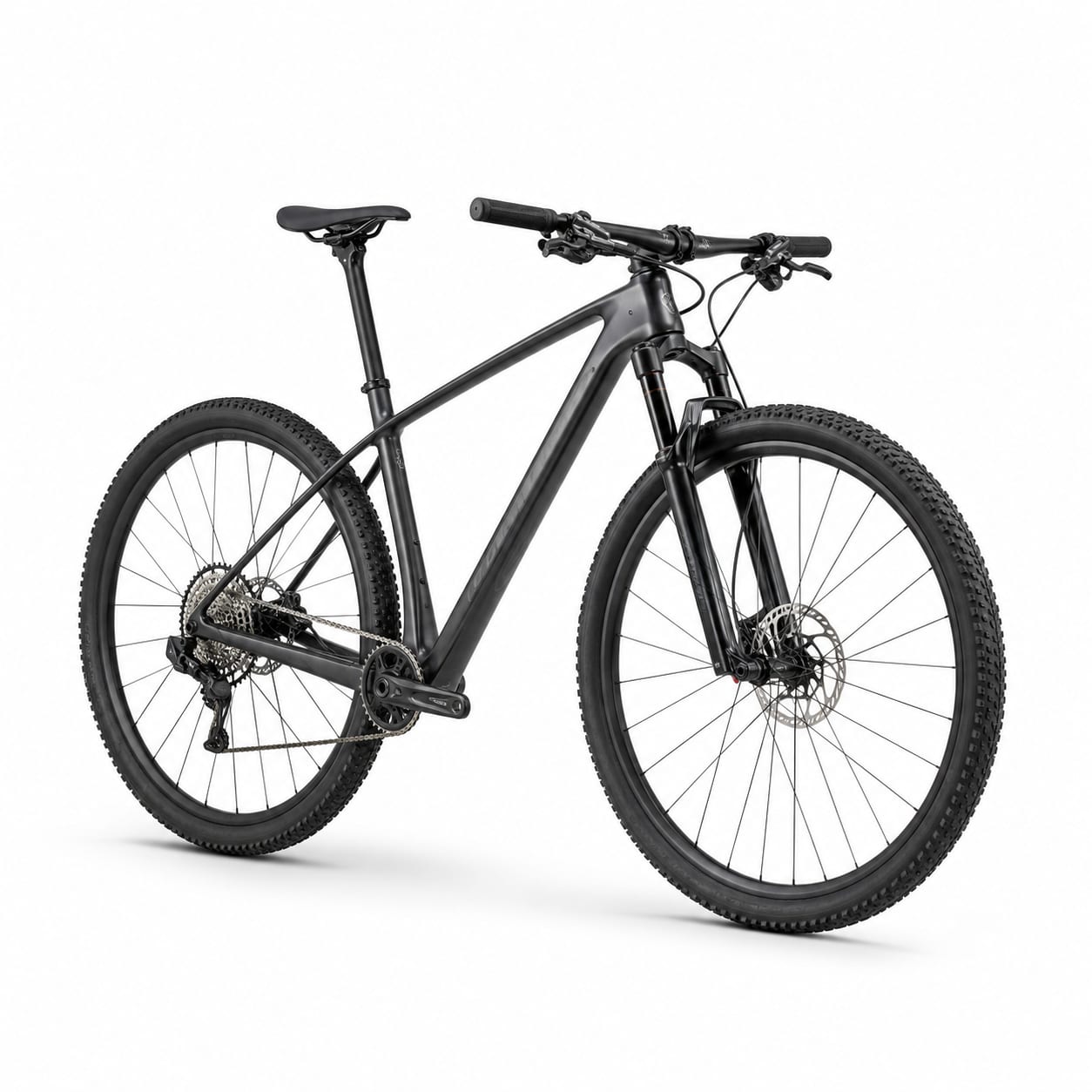
6 topics
Pick a question
Every answer links to the full subcategory guide and related gear types when it helps you decide.
Should I buy a hardtail or full-suspension XC bike?
It depends on your budget, terrain, and priorities. Hardtails are lighter, simpler, lower-maintenance, and less expensive—ideal for smoother trails, budget-conscious riders, and those who value pedaling efficiency above all. Full-suspension XC bikes provide better traction, comfort, and control on rough terrain, and modern designs minimize the efficiency penalty. If your trails are rocky or rooty, or you plan to race, full-suspension is worth the investment. For smooth trails and fitness riding, a hardtail is an excellent choice.
Read answer →02Is 100mm or 120mm travel better for an XC bike?
120mm is the better choice for most riders. The extra 20mm of travel adds noticeable descending capability and comfort on rough terrain with minimal weight penalty (typically 100-200g). 100mm is preferred by pure racers on smooth courses where every gram counts and the steeper geometry from a shorter fork provides sharper handling. If you ride varied terrain with any technical descents, 120mm is the more versatile and confidence-inspiring option.
Read answer →03Can I ride an XC bike on technical trails and bike parks?
XC bikes can handle moderate technical terrain, but they are not designed for aggressive trail riding, jumps, or bike park features. The short travel, steep geometry, and lightweight components are not suited to sustained rough terrain, drops, or high-speed impacts. You can ride green and some blue bike park trails, but you'll be significantly slower and less confident than on a trail or enduro bike. Riding an XC bike beyond its design limits also increases the risk of component damage and rider injury.
Read answer →04How much should I spend on an XC mountain bike?
For a capable entry-level hardtail, budget $800-1,500. For a mid-range hardtail or entry-level full-suspension, expect $1,500-3,000. For a solid full-suspension XC bike with quality components, plan for $3,000-5,000. Race-ready carbon full-suspension bikes start around $5,000 and can exceed $10,000. The sweet spot for most riders is $2,500-4,500, which buys a reliable, capable bike with modern geometry and quality components.
Read answer →05Are XC bikes good for beginners?
Yes, particularly hardtails. They are the most affordable entry point to mountain biking, teach good bike handling skills (because there's no suspension to mask mistakes), and are efficient enough to build fitness. However, beginners riding technical terrain may find XC bikes intimidating on descents. If your local trails are steep and rough, a trail bike may be more confidence-inspiring despite the higher cost. For most beginners on moderate terrain, an XC hardtail is an excellent starting point.
Read answer →06Can I convert my XC bike into a trail bike?
Only to a limited extent. You can install a longer-travel fork (check frame manufacturer's maximum), wider tires (if frame clearance allows), and 4-piston brakes. However, the frame geometry—head angle, reach, chainstay length—cannot be changed, and these are the primary factors that differentiate XC from trail bikes. A 120mm XC bike with upgraded components is more capable than stock but still won't match a proper trail bike's descending performance. If you consistently want more capability, it's better to sell the XC bike and buy a trail bike.
Read answer →