Bike Category / Discipline
Mountain Bike Category
What it means
The primary riding discipline the mountain bike is designed for, which dictates frame geometry, suspension travel, and component selection.
Typical for this type
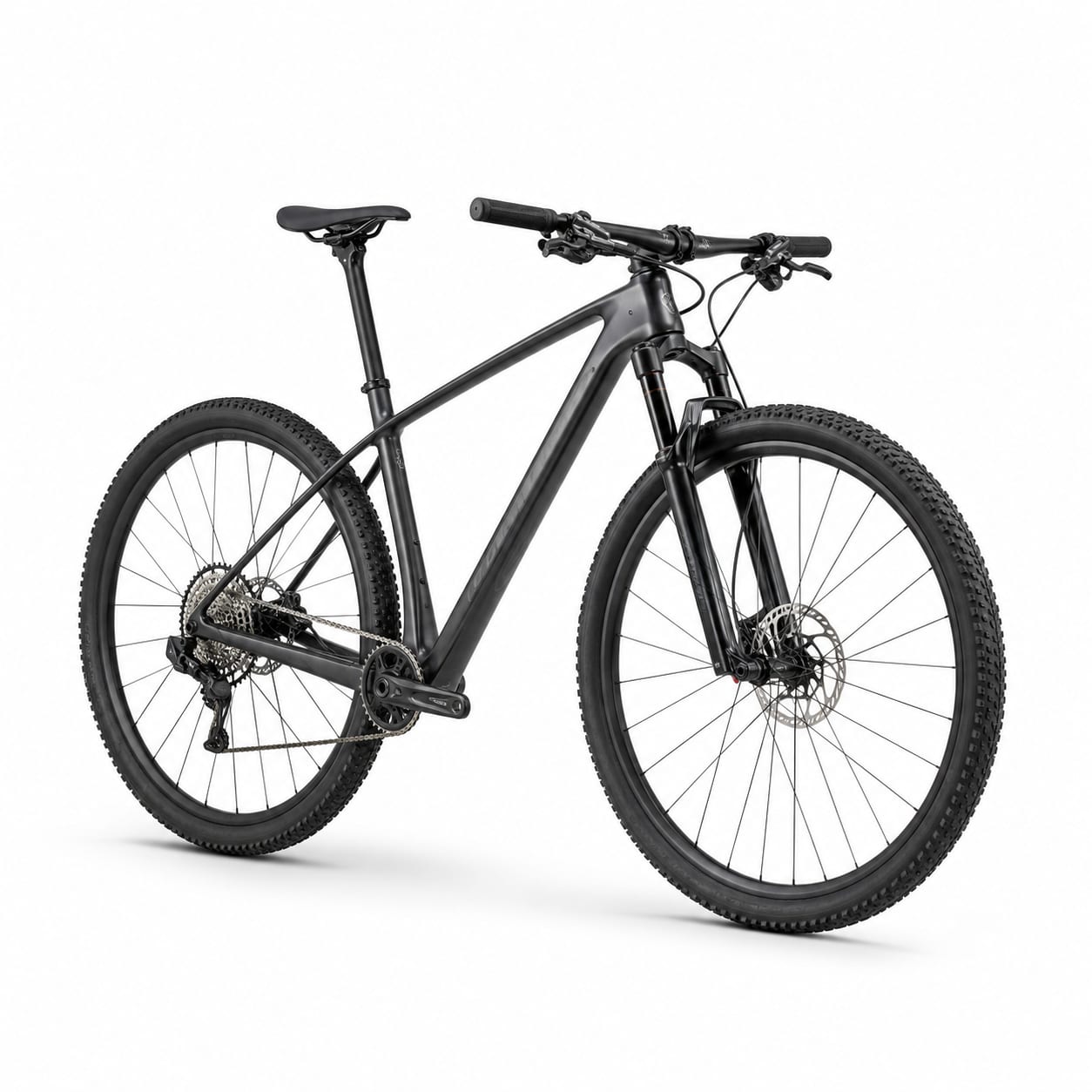
Cross Country
In practice
XC bikes are defined by their cross-country discipline focus, with geometry, travel, and component choices all optimized for racing and fast trail riding on varied but not extreme terrain.
Compared to other types
XC bikes have significantly less travel, steeper geometry, and lighter builds than trail, enduro, or downhill bikes. They are the fastest category on climbs and rolling terrain but the least capable on steep, technical descents.
Why it matters: This categorization determines the fundamental design philosophy of the bike—prioritizing climbing efficiency, acceleration, and rolling speed over descending capability and terrain absorption.
Suspension Type
Suspension Type
What it means
Whether the bike has front suspension only (hardtail) or both front and rear suspension (full suspension), fundamentally affecting comfort, traction, and efficiency.
Typical for this type
Hardtail For Budget And Simplicity; Full Suspension For Rough Terrain And Racing
Most common pick: Hardtail Or Full Suspension
In practice
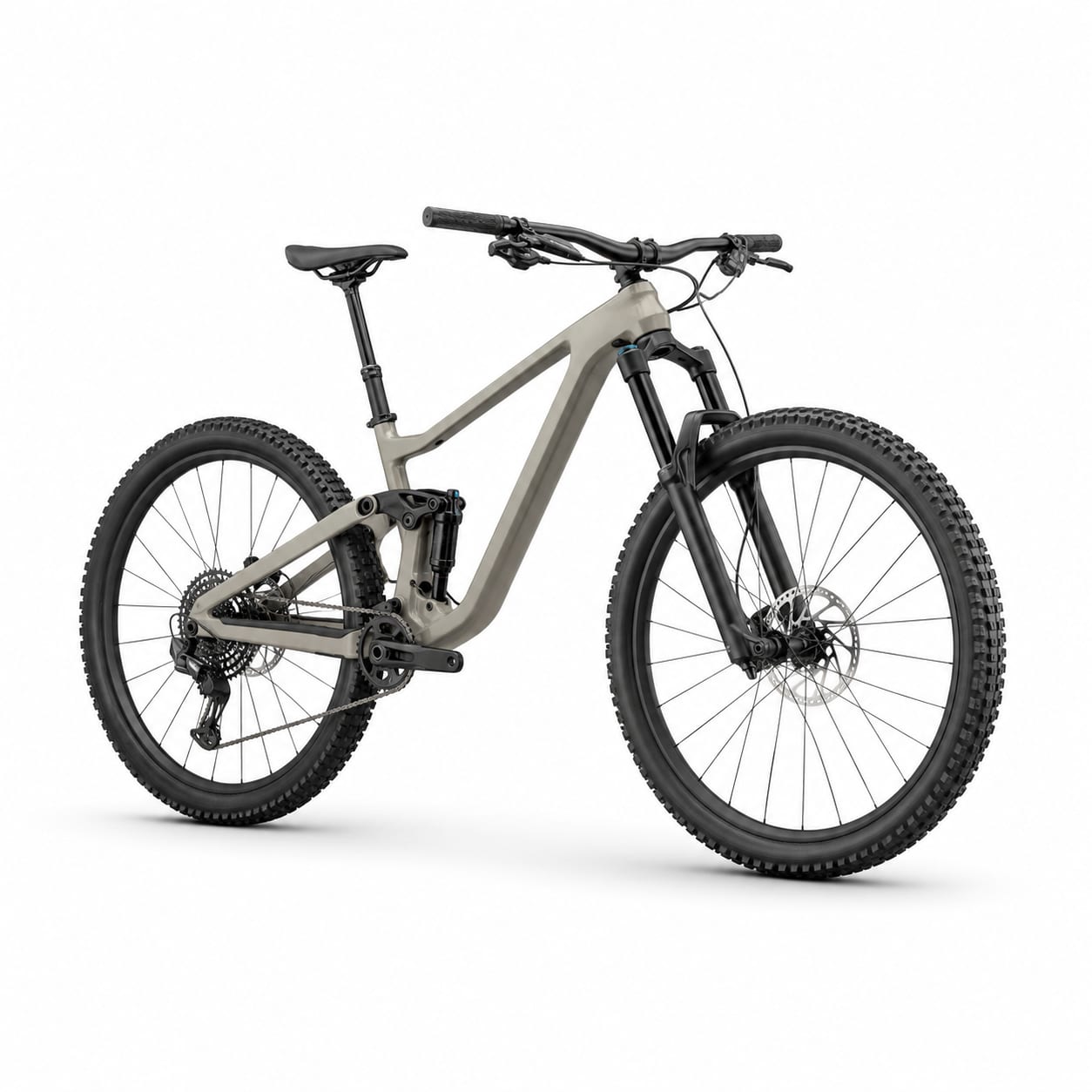
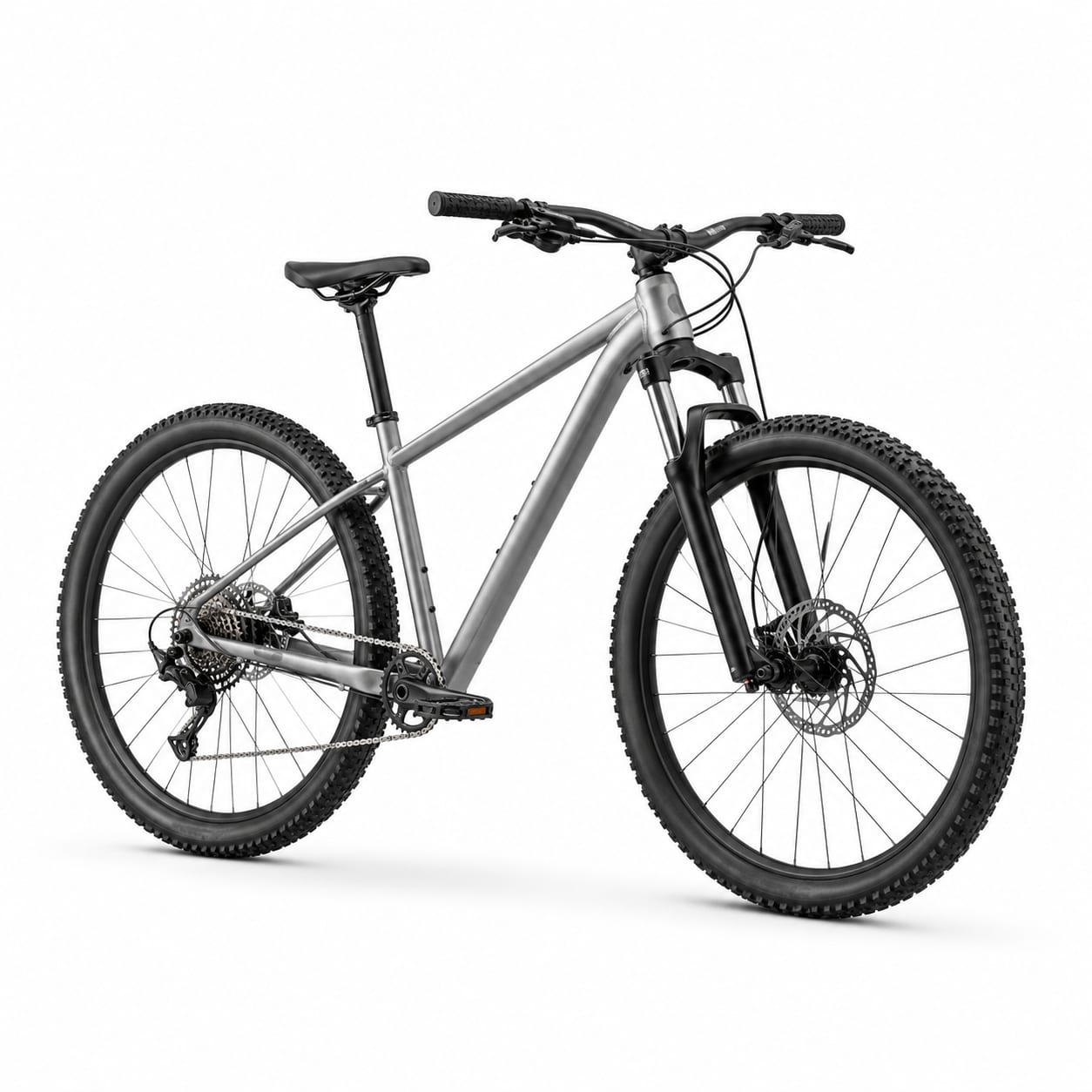
XC bikes are available in both hardtail and full-suspension configurations. Hardtails dominate entry-level and mid-range price points, while full-suspension is standard at the elite racing level. Both remain competitive in XC racing formats.
Compared to other types
XC is the only mountain bike category where hardtails remain widely competitive and popular. Trail, enduro, and downhill bikes are exclusively full-suspension designs.
Why it matters: The choice between hardtail and full suspension significantly affects weight, cost, climbing efficiency on smooth terrain, and capability on rough terrain. Hardtails are simpler and lighter; full-suspension bikes maintain speed through rough sections.
Front Travel
Front Suspension Travel
What it means
The maximum distance the front suspension fork can compress, measured in millimeters. Determines the size of obstacles the bike can absorb and influences frame geometry.
Typical for this type
100mm for pure racing, 120mm for all-around XC/trail versatility
Most common pick: 100-120mm
In practice
XC bikes typically feature 100mm of front travel on race-oriented models and 120mm on more versatile XC/trail crossover bikes. Some marathon and stage race bikes use 100mm forks for weight savings and steeper geometry.
Compared to other types
XC bikes have the shortest front travel of any mountain bike category. Trail bikes run 130-150mm, enduro 150-170mm, and downhill 180-200mm. The shorter travel keeps XC bikes light and efficient but limits capability on rough terrain.
Why it matters: Front travel determines the size of obstacles the bike can comfortably absorb and influences the head tube angle. 100mm is sufficient for smooth to moderate terrain; 120mm adds capability on rougher descents without significant weight penalty.
Rear Travel
Rear Suspension Travel
What it means
The maximum distance the rear wheel can move vertically on full suspension bikes, measured in millimeters. Works in conjunction with front travel to absorb impacts.
Typical for this type
100mm for racing, 120mm for comfort and capability on full-suspension models
Most common pick: 100-120mm
In practice
Full-suspension XC bikes typically match rear travel to front travel at 100-120mm. The rear travel is designed to provide just enough absorption for rough terrain without adding unnecessary weight or pedaling inefficiency.
Compared to other types
XC rear travel (100-120mm) is roughly half of what enduro bikes (150-170mm) offer and far less than downhill (180-210mm). The minimal travel reflects the XC priority on climbing and pedaling efficiency.
Why it matters: Rear travel on XC bikes is minimal by mountain bike standards, prioritizing pedaling efficiency and low weight. Even 100mm of well-tuned rear suspension provides significant comfort and traction benefits over a hardtail on rough terrain.
What it means
The nominal diameter of the wheel/rim, which affects rollover ability, acceleration, handling precision, and tire volume availability.
Typical for this type
29" for most riders and terrain; 27.5" only for very small frames or specific rider preference
In practice
29" wheels dominate the XC category for their superior rollover capability, momentum retention, and larger contact patch—all advantages for covering ground efficiently. Nearly all modern XC frames are designed for 29" wheels exclusively.
Compared to other types
XC is the most 29"-dominated category. Trail and enduro bikes increasingly use mullet setups, while 27.5" survives primarily in smaller frame sizes and playful/trail categories. XC bikes almost universally use 29".
Why it matters: The 29" wheel's larger diameter rolls over obstacles more easily, maintains speed better on rough terrain, and provides a larger tire contact patch for traction. These benefits directly align with XC priorities of speed and efficiency.
Frame Material
Frame Material
What it means
The primary material used in the main triangle and frame construction, affecting weight, ride quality, durability, and cost.
Typical for this type
Carbon Fiber For Racing And Weight Savings; Aluminum For Best Value
Most common pick: Carbon Fiber (High-End), Aluminum (Mid-Range)
In practice
Carbon fiber is the dominant frame material in XC racing due to its superior strength-to-weight ratio and ability to tune compliance. Aluminum remains the value leader and is common in entry-level to mid-range XC bikes. Steel and titanium appear in niche hardtail builds.
Compared to other types
XC bikes have the highest proportion of carbon fiber frames due to the category's weight sensitivity. Trail and enduro bikes use more aluminum due to durability concerns and lower weight priority. Steel and titanium are more common in hardtail trail and bikepacking builds.
Why it matters: Frame material significantly affects weight, ride quality, and cost. In XC where weight is a primary concern, carbon fiber offers the best performance but at a premium price. Aluminum provides excellent performance at a more accessible price point.
Head Tube Angle
Head Tube Angle
What it means
The angle of the head tube relative to the ground, measured in degrees. A primary determinant of steering speed and high-speed stability. Slacker angles (lower numbers) provide more stability at speed.
Typical for this type
67-68° for modern XC capability; 68-69° for traditional race feel
Most common pick: 67-68.5°
In practice
Modern XC bikes have adopted slacker head angles (67-68.5°) compared to older designs (69-71°), improving descending stability while maintaining acceptable climbing steering precision. The trend toward slacker angles reflects the increasingly technical nature of XC courses.
Compared to other types
XC head angles (67-68.5°) are significantly steeper than trail (65-67.5°), enduro (63.5-65.5°), and downhill (62-64°). This makes XC bikes feel more responsive at low speeds but less stable on steep, rough descents.
Why it matters: Head tube angle is the primary determinant of steering feel and high-speed stability. Steeper angles provide quicker, more responsive steering for tight singletrack; slacker angles add confidence on descents. The modern XC range balances both needs.
What it means
The horizontal distance from the center of the bottom bracket to the top of the head tube, measured in millimeters. The most important sizing metric for modern mountain bikes as it determines the rider's fore-aft position while standing.
Typical for this type
Size-Appropriate: S (410-425mm), M (435-455mm), L (460-480mm), XL (485-510mm)
Most common pick: 435-480mm (size M-XL)
In practice
XC bikes follow modern mountain bike sizing trends with longer reach values than legacy sizing would suggest. Longer reach provides stability at speed and room to move on the bike during descents, while still allowing an efficient climbing position.
Compared to other types
XC reach values are similar to trail bikes but slightly shorter than enduro bikes, which prioritize descending stability. XC bikes may run slightly shorter stems (50-70mm) to maintain responsive steering with their longer reach.
Why it matters: Reach is the most important sizing metric for modern mountain bikes. It determines the rider's fore-aft position while standing and affects both climbing weight distribution and descending stability. Proper reach is essential for bike control.
What it means
The vertical distance from the center of the bottom bracket to the top of the head tube, measured in millimeters. Determines how tall the front end feels and affects rider position between seated and standing.
Typical for this type
580-620mm for most riders; lower for aggressive race position, Higher For Comfort
Most common pick: 580-620mm (size M-XL)
In practice
XC bikes tend to have lower stack heights than other categories, enabling a more aerodynamic and powerful pedaling position. The lower front end positions the rider more aggressively over the bike for efficient climbing.
Compared to other types
XC bikes have lower stack heights than trail and enduro bikes, reflecting the priority on an efficient pedaling position. Trail and enduro bikes have taller front ends for descending confidence and comfort.
Why it matters: Stack height determines how upright or aggressive the riding position feels. Lower stack enables a more aerodynamic, powerful pedaling position but requires more flexibility. Higher stack provides comfort and easier front wheel lifting on climbs.
Chainstay Length
Chainstay Length
What it means
The distance from the center of the bottom bracket to the center of the rear axle, measured in millimeters. Affects how easily the bike manuals, wheelies, and navigates tight turns.
Typical for this type
430-440mm for balanced XC performance
Most common pick: 430-445mm
In practice
XC chainstays are moderately short, balancing climbing traction with enough stability for high-speed descending. Some XC race bikes use slightly longer chainstays for improved climbing weight distribution on steep ascents.
Compared to other types
XC chainstays (430-445mm) are similar to trail bikes but slightly longer than some playful trail bikes (415-430mm). Enduro and downhill bikes may have longer chainstays for high-speed stability.
Why it matters: Chainstay length affects the bike's willingness to manual and wheelie (shorter) versus stability at speed and climbing traction (longer). XC bikes prioritize a balance that supports both efficient climbing and confident descending.
Drivetrain Speed
Drivetrain Speed
What it means
The number of rear sprockets in the cassette, which determines the number of gear ratios available and the size range of the cassette.
Typical for this type
12-speed (standard on all modern XC bikes)
In practice
12-speed drivetrains with wide-range cassettes (10-52T or 10-51T) are standard on modern XC bikes. The 1x configuration simplifies shifting, reduces weight, and eliminates dropped chains—critical for racing reliability.
Compared to other types
12-speed is universal across all modern mountain bike categories. XC bikes may use slightly smaller chainrings (30-34T) compared to trail/enduro (28-32T) to optimize top-end speed for racing.
Why it matters: 12-speed provides the widest gear range with a single chainring, offering both the low gears for steep climbs and high gears for fast descents. The tight gear steps allow optimal cadence selection during racing.
What it means
The type of braking system, specifically the actuation method and rotor standard, which determines stopping power, modulation, and maintenance requirements.
Typical for this type
2-piston hydraulic for XC racing; 4-piston for heavier riders or aggressive XC/trail use
Most common pick: Hydraulic Disc (2-Piston)
In practice
2-piston hydraulic disc brakes are standard on XC bikes, providing adequate stopping power with minimal weight. 4-piston calipers are increasingly common on trail-oriented XC bikes and for heavier riders who need more power.
Compared to other types
XC bikes are the only category where 2-piston brakes remain standard. Trail, enduro, and downhill bikes universally use 4-piston calipers for the additional power needed on steep, sustained descents.
Why it matters: Brake type affects stopping power, modulation, and weight. 2-piston brakes are sufficient for the moderate terrain and lighter bike/rider weights typical of XC riding. They offer excellent modulation for precise speed control on technical climbs and descents.
Brake Rotor Size
Brake Rotor Size
What it means
The diameter of the brake rotors in millimeters. Larger rotors provide more stopping power and better heat dissipation, critical for sustained descents.
Typical for this type
160/180mm for XC racing; 180/180mm for heavier riders or more aggressive terrain
Most common pick: 160mm rear / 180mm front
In practice
XC bikes typically run 160mm rear and 180mm front rotors as a standard configuration. This provides adequate stopping power and heat management for the terrain XC bikes are designed for while minimizing weight.
Compared to other types
XC bikes use the smallest rotors of any mountain bike category. Trail bikes typically run 180/180mm, enduro 200/180mm, and downhill 200-220mm. The smaller XC rotors save weight but have less heat capacity for sustained braking.
Why it matters: Rotor size directly affects braking power and heat dissipation. For XC riding on moderate terrain with lighter bikes, 160/180mm is sufficient. Upsizing to 180mm front and rear is a cost-effective upgrade for heavier riders or those riding steeper terrain.
What it means
The nominal width of the tires mounted on the bike, measured in inches. Affects traction, rolling resistance, bump absorption, and frame clearance requirements.
Typical for this type
2.0-2.25" for racing; 2.25-2.4" for all-around XC/trail use
Most common pick: 2.1-2.3"
In practice
XC tires are the narrowest in the mountain bike spectrum, prioritizing low rolling resistance and weight over maximum traction and bump absorption. Many riders run a slightly wider front tire (2.25-2.35") for cornering grip with a narrower rear (2.0-2.2") for rolling speed.
Compared to other types
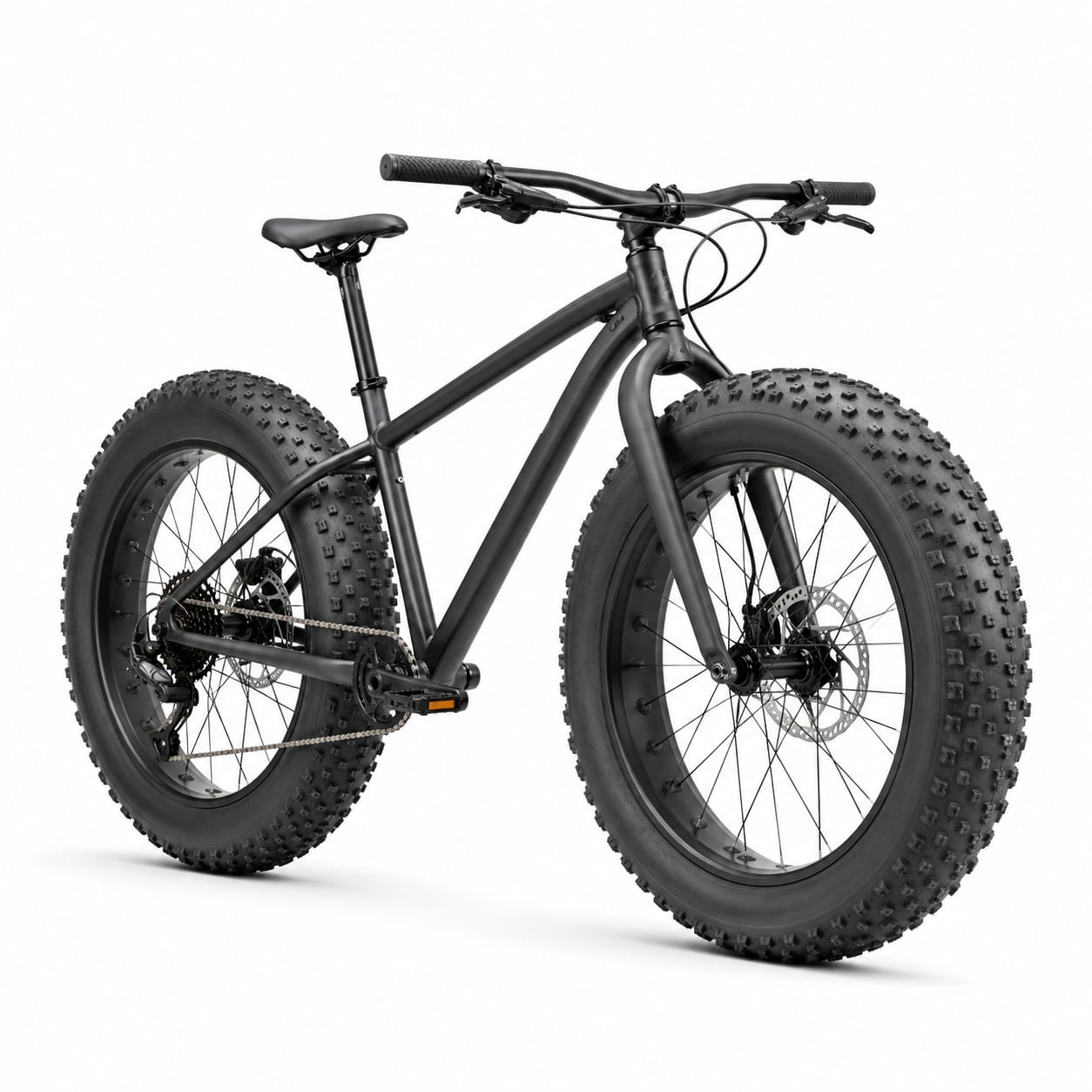
XC tires (2.0-2.3") are significantly narrower than trail (2.3-2.5"), enduro (2.4-2.6"), and fat bikes (3.7"+). The narrower tires are a key contributor to XC bikes' speed advantage on rolling terrain.
Why it matters: Tire width affects the balance between rolling resistance, traction, and bump absorption. Narrower tires accelerate faster and roll more efficiently on hardpack; wider tires provide more grip and comfort on loose or rough terrain.
Dropper Post Travel
Dropper Post Travel
What it means
The maximum distance the dropper seatpost can drop the saddle, measured in millimeters. More travel allows the saddle to get further out of the way for descending.
Typical for this type
Maximum Travel That Fits The Frame; 100-125mm (S/M), 125-150mm (M/L), 150-170mm (L/XL)
Most common pick: 100-150mm
In practice
Dropper posts are now standard on nearly all XC bikes, even at the World Cup level. Travel ranges from 100mm on small frames to 150mm+ on large frames. The trend is toward maximizing dropper travel for better descending body position.
Compared to other types
XC bikes have shorter dropper travel than trail (125-170mm) and enduro (150-210mm) bikes, partly due to steeper seat tube angles and longer seat tube extensions. The XC priority on climbing position can limit maximum insertion depth.
Why it matters: A dropper post allows the saddle to drop out of the way for descending, improving body position, bike control, and confidence. Even XC riders benefit significantly from dropper posts on technical descents and steep terrain.
Weight
Complete Bike Weight
What it means
The total weight of the complete bicycle without pedals, measured in kilograms or pounds. Affects acceleration, climbing speed, and maneuverability.
Typical for this type
9-10.5kg for race builds; 10.5-12kg for alloy all-around builds
Most common pick: 10-11.5kg (22-25 lbs)
In practice
XC bikes are the lightest mountain bikes, with elite race builds approaching the UCI minimum weight of 9.76kg (21.5 lbs). Aluminum builds typically weigh 11-12kg. Weight savings come from carbon frames, lightweight suspension, and race-oriented components.
Compared to other types
XC bikes (9-12kg) are significantly lighter than trail (12-14kg), enduro (13-15.5kg), and downhill (15-18kg) bikes. The weight advantage is a primary benefit of the XC category and directly contributes to climbing and acceleration performance.
Why it matters: Weight directly affects climbing speed and acceleration—the two metrics most important to XC riders. Every kilogram saved translates to faster times on climbs and quicker acceleration out of corners. However, weight should not come at the expense of reliability.
Effective Seat Tube Angle
Effective Seat Tube Angle
What it means
The angle of the seat tube relative to the ground, measured in degrees at saddle height. Affects climbing position and pedaling efficiency. Steeper angles position the rider more directly over the bottom bracket.
Typical for this type
75-77° for optimal climbing position; steeper angles (76°+) benefit steep climbs
In practice
Modern XC bikes feature steep seat tube angles (75-77°) that position the rider directly over the bottom bracket for efficient power transfer on climbs. This is a significant improvement over older designs with slacker angles that left riders behind the pedals on steep ascents.
Compared to other types
XC seat angles (75-77°) are among the steepest in mountain biking, reflecting the category's climbing focus. Trail bikes run similar angles (75-77°), while enduro bikes may be slightly slacker (74-76°). Downhill bikes have the slackest seat angles as climbing position is irrelevant.
Why it matters: Seat tube angle directly affects climbing efficiency and comfort. Steeper angles keep weight forward on steep climbs, preventing the front wheel from lifting and maintaining traction. This is especially important for XC riders who spend significant time climbing.