
Mountain Bike · FAQ
Questions about Downhill Mountain Bike
Straight answers on fit, specs, and when this type makes sense — each topic has its own page with links back to the buying guide.
Open Downhill Mountain Bike guide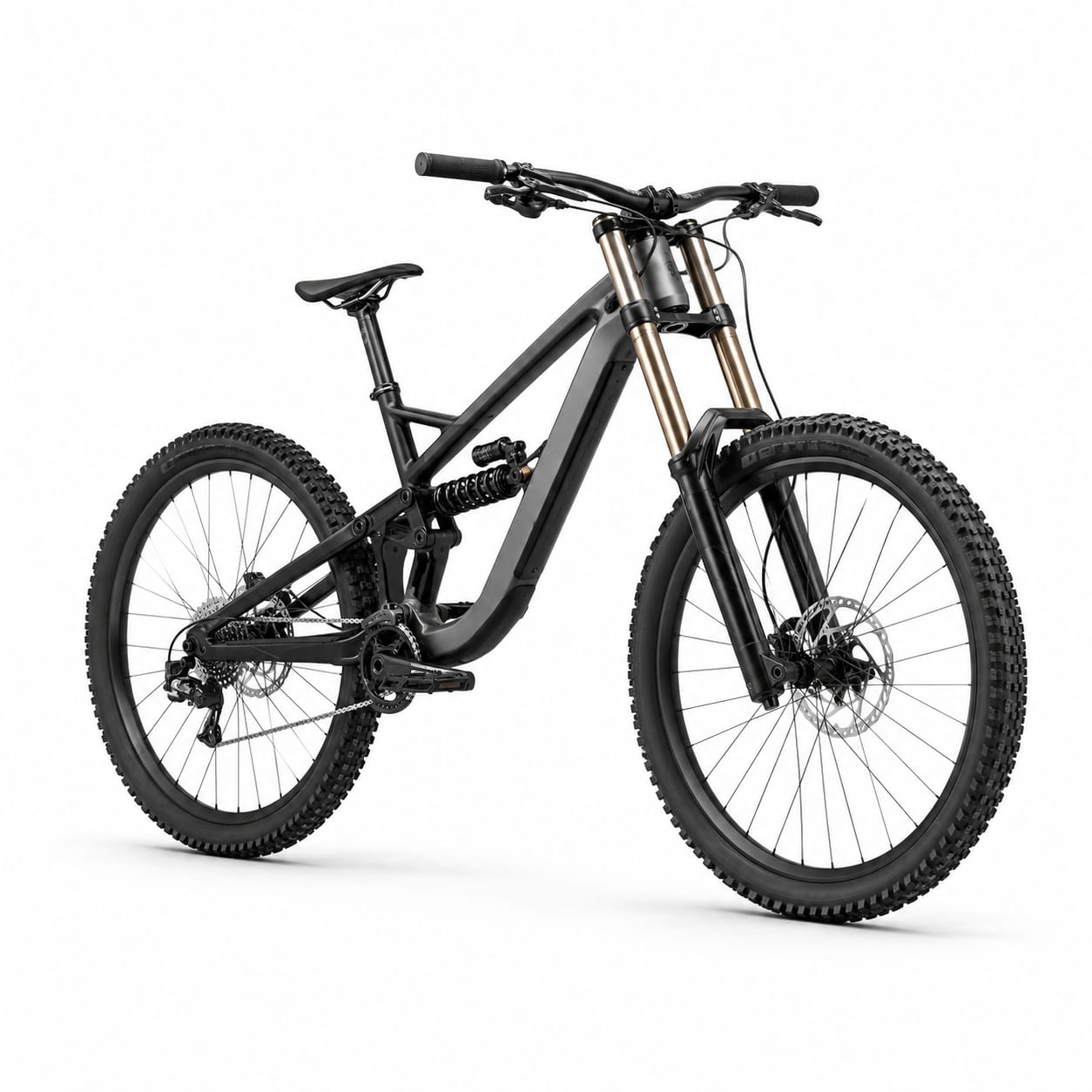
6 topics
Pick a question
Every answer links to the full subcategory guide and related gear types when it helps you decide.
Can I ride a downhill bike on regular trails?
Technically yes, but it will be miserable. DH bikes are too heavy, too slack, and have too limited a gear range for climbing or flat terrain. On rolling singletrack, a DH bike feels sluggish, unresponsive, and frustrating. If you want to ride varied trails that include climbing, an enduro or trail bike is the right choice. A DH bike should be reserved for lift-served, shuttle-accessed, or hike-a-bike downhill terrain.
Read answer →02Do I need a downhill bike for bike park riding?
Not necessarily. Most bike parks have trails that are perfectly rideable on a modern enduro bike with 160–170mm of travel. However, if you ride the steepest, roughest trails in the park regularly, or if you are racing downhill, a DH bike provides meaningful advantages in capability, confidence, and durability. Many bike parks rent DH bikes, which is a great way to try before you buy.
Read answer →03Why do downhill bikes use dual-crown forks?
Dual-crown forks clamp the steerer tube at both the top and bottom of the head tube, dramatically increasing torsional and fore-aft stiffness. This is critical for DH because the extreme loads of high-speed rough terrain can cause single-crown forks to flex, reducing steering precision. Dual-crown forks also allow 200mm of travel while maintaining chassis stiffness. The trade-off is weight, cost, and a taller front end.
Read answer →04What is the difference between a downhill bike and an enduro bike?
The main differences are suspension travel (DH: 200mm vs enduro: 150–170mm), fork type (DH: dual-crown vs enduro: single-crown), geometry (DH: slacker at 62–64° head angle vs enduro: 63.5–65.5°), weight (DH: 15–18kg vs enduro: 13–15.5kg), and drivetrain (DH: often 7-speed vs enduro: 12-speed). The critical functional difference is that enduro bikes can climb while DH bikes cannot. An enduro bike descends 85–90% as well as a DH bike but can also ride back to the top.
Read answer →05How much does a downhill bike cost?
Entry-level DH bikes start around $3,000–$4,000, mid-range models are $4,500–$7,000, and high-end race-ready bikes range from $7,000 to over $12,000. Used DH bikes can be found for $1,500–$4,000 depending on age and condition. Factor in ongoing maintenance costs of $500–$1,500 per year for suspension service, brake pads, tires, and drivetrain wear.
Read answer →06Can I convert my enduro bike into a downhill bike?
Not really. While you can make an enduro bike more DH-capable with longer fork travel (check frame warranty), bigger rotors, and DH tires, the fundamental geometry and frame design cannot be changed. An enduro bike with modifications will still have steeper geometry, less travel, and a different suspension kinematic than a purpose-built DH bike. If you are serious about DH riding, get a proper DH bike.
Read answer →