Kitvore.com

Kitvore.com

Specs that matter. Gear that fits.

Mountain Bike · Subcategory

Downhill Mountain Bike

Purpose-built gravity machines designed exclusively for descending the steepest, roughest terrain at maximum speed.

Downhill mountain bikes are the heavy artillery of the MTB world — featuring 200mm of suspension travel front and rear, ultra-slack geometry, and burly components built to survive repeated high-speed impacts. These bikes are made for bike parks, lift-served resorts, and World Cup downhill tracks where the only way is down. They climb poorly or not at all, but nothing descends faster or more confidently.

$2500 – $12000premium tieradvancedexpert

Best known for

Maximum suspension travel (200mm front/rear)Ultra-slack head tube angles for high-speed stabilityDual-crown forks for supreme stiffness and controlPurpose-built gravity racing and bike park ridingSurviving massive drops, rock gardens, and high-speed chatter
Downhill Mountain Bike

Guide

Detailed overview

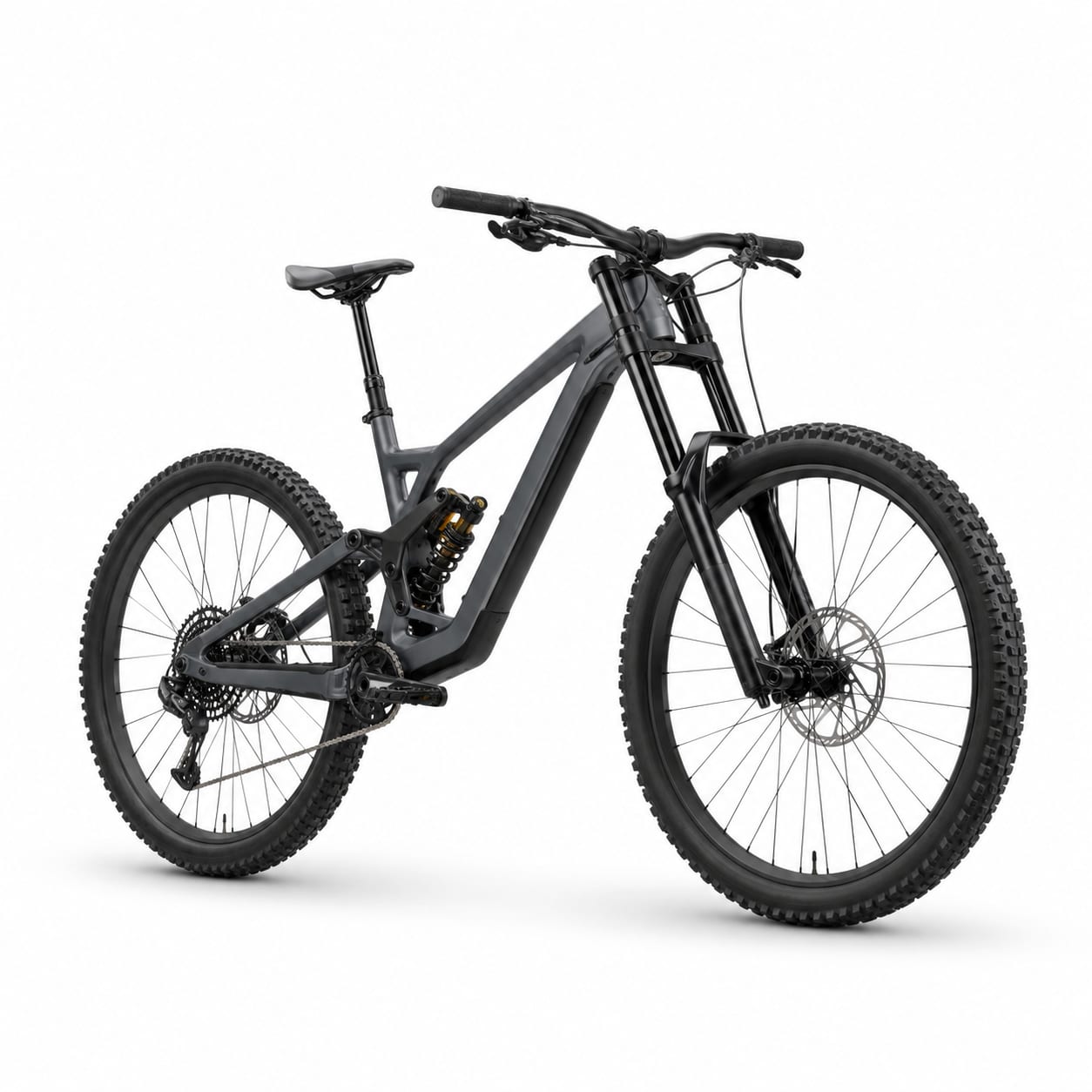
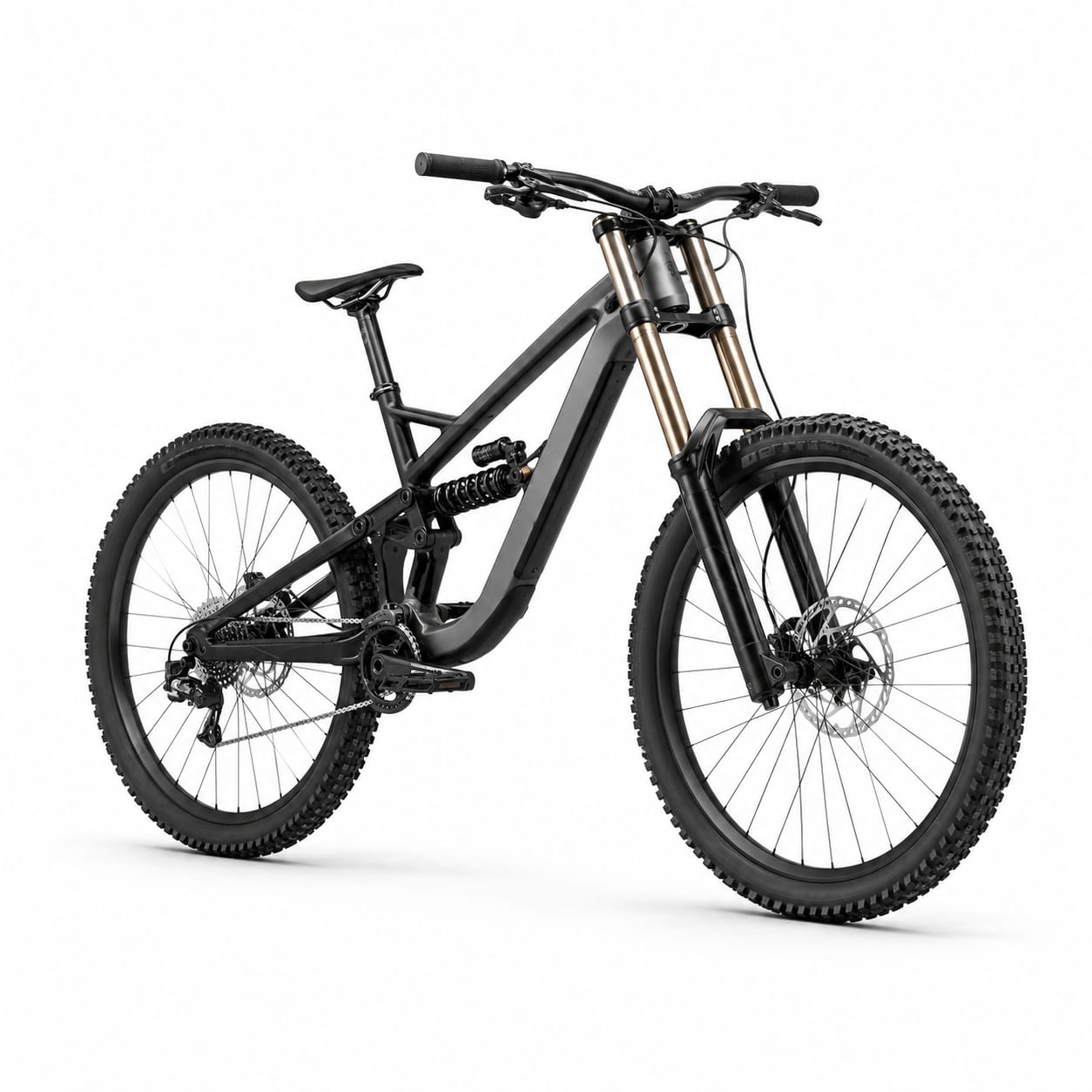
Downhill mountain bikes represent the pinnacle of descending-focused bicycle engineering. With approximately 200mm of suspension travel at both ends, these machines are designed to absorb impacts that would destroy lesser bikes. The geometry is radically different from trail or enduro bikes — head tube angles as slack as 62°, long wheelbases, and low bottom brackets create a platform that is remarkably stable at speed but ponderous on flat ground. A defining feature is the dual-crown fork, which clamps the steerer tube at both the top and bottom of the head tube, providing unmatched stiffness and precise steering under extreme loads. Downhill bikes exclusively use 7-speed or modified drivetrains with a limited gear range since climbing is not part of the design brief. Brakes are always 4-piston hydraulic calipers with 200–220mm rotors to manage the enormous heat generated during sustained steep descents. Frame materials are typically aluminum or carbon fiber, with both prioritizing strength and stiffness over weight savings. Complete bikes generally weigh between 15–18kg, making them the heaviest category in mountain biking. Modern downhill bikes have embraced mixed wheel (mullet) setups with a 29" front wheel for rollover capability and a 27.5" rear for agility, though full 27.5" and full 29" options exist. These bikes are not designed for pedaling uphill — riders typically rely on chairlifts, shuttle vehicles, or hike-a-bike to access descents.

Downhill mountain biking emerged as a distinct discipline in the early 1990s, evolving from repurposed cross-country bikes into the purpose-built gravity machines we see today. The sport's progression has been driven by World Cup racing, where courses feature vertical drops, root-laden steeps, rock gardens the size of small cars, and speeds exceeding 60 km/h. Downhill bikes are the direct technological beneficiaries of this racing crucible — every design decision prioritizes descending performance above all else.

The heart of a downhill bike is its suspension system. With 200mm of travel front and rear, these bikes can absorb impacts that would buck a rider off any other platform. The dual-crown fork is a hallmark feature, using two crown assemblies to clamp the stanchions, dramatically increasing fore-aft and torsional stiffness compared to single-crown designs. Rear suspension linkages are engineered to be progressive, meaning they become harder to compress deeper in the stroke, preventing bottom-outs on the largest impacts. Popular designs include virtual pivot point (VPP), DW-Link, and four-bar systems, each with distinct kinematic characteristics that riders can feel on the trail.

Geometry is where downhill bikes diverge most dramatically from other categories. Head tube angles between 62–64° create a front end that feels almost disconnected from the trail at low speeds but becomes magically stable when velocities increase. Reach numbers have grown significantly in recent years, with large frames now exceeding 490mm, allowing riders to stay centered on steep terrain without feeling like they are going over the bars. Chainstay lengths tend to be longer (445–460mm) than trail bikes, contributing to high-speed stability at the cost of some playfulness. Bottom bracket heights are kept low to lower the center of gravity, though this requires careful management of pedal strikes on rough terrain.

Component selection on downhill bikes reflects the extreme demands of the discipline. Wheels are built with heavy-duty rims laced to high-engagement hubs, often using 28–32 spokes with straight-pull designs for durability. Tires are typically 2.4–2.6" wide with aggressive, tall-knob tread patterns and reinforced casings rated for tubeless use at lower pressures. Drivetrains are simplified — most modern DH bikes use a 7-speed system with a close-ratio cassette (e.g., 10–24T) and a single chainring (32–36T), since the only pedaling occurs on flat transitions between steep sections. Brakes are non-negotiable: 4-piston calipers with 200–220mm rotors provide the sustained stopping power needed for steep, long descents where brake fade can have serious consequences.

For prospective buyers, it is essential to understand that a downhill bike is a specialist tool. If your riding involves any significant climbing, even short punchy ups between descents, an enduro bike will serve you far better. Downhill bikes excel in bike parks with lift access, shuttle runs where a vehicle delivers you to the top, and dedicated downhill race courses. They are also surprisingly capable learning tools for developing descending skills — the massive suspension travel and stable geometry provide a forgiving platform that allows riders to push their limits with confidence. However, the cost of ownership is significant: these bikes are expensive to purchase, expensive to maintain (suspension service intervals are frequent), and require access to appropriate terrain to justify their existence in your quiver.

Quick facts

Primary purpose
Downhill racing and lift-accessed gravity riding on the most technical terrain
Popular brands
Santa CruzTrekSpecializedCommencalGTIntense
Typical terrain
bike parksdownhill race trackssteep technical descentsrock gardensjump lines

What makes it different

Maximum suspension travel of any MTB; dual crown fork for stiffness and control; not designed for climbing; heaviest MTB subcategory (34-40 lbs)

Recommended ranges

How this type usually specs out

Each spec is explained in plain language, then we show what buyers usually look for on this type.

Bike Category / Discipline

Mountain Bike Category

What it means

The primary riding discipline the mountain bike is designed for, which dictates frame geometry, suspension travel, and component selection.

Typical for this type

Downhill

In practice

Downhill bikes are exclusively classified in the DH category. They are purpose-built for descending and do not cross over into other categories.

Compared to other types

Unlike trail or enduro bikes that attempt to balance climbing and descending, DH bikes sacrifice all climbing ability for maximum descending performance. They are the least versatile category but the most capable on steep, rough descents.

Why it matters: This classification dictates every design parameter — from suspension travel to geometry to component selection. A DH category bike is fundamentally different from trail or enduro bikes in ways that cannot be modified or adapted.

Suspension Type

Suspension Type

What it means

Whether the bike has front suspension only (hardtail) or both front and rear suspension (full suspension), fundamentally affecting comfort, traction, and efficiency.

Typical for this type

Full Suspension

In practice

All downhill mountain bikes are full suspension. There are no production hardtail downhill bikes — the rear suspension is essential for absorbing the massive impacts encountered in DH riding.

Compared to other types

While some XC and trail bikes are available as hardtails, DH bikes are exclusively full suspension. The rear travel (180–210mm) is significantly more than any other category, and the linkage designs are specifically optimized for descending rather than pedaling efficiency.

Why it matters: Rear suspension on a DH bike provides critical traction, impact absorption, and rider comfort on terrain that would be unrideable on a hardtail. The rear linkage also allows for progressive spring rates that resist bottom-outs on large impacts.

Front Travel

Front Suspension Travel

What it means

The maximum distance the front suspension fork can compress, measured in millimeters. Determines the size of obstacles the bike can absorb and influences frame geometry.

Typical for this type

180–200mm

In practice

Downhill bikes use 200mm front travel as the standard, with some older or budget models at 180mm. The dual-crown fork design enables this travel while maintaining chassis stiffness.

Compared to other types

DH front travel (180–200mm) significantly exceeds enduro (150–170mm), trail (130–150mm), and XC (100–120mm). This extra travel is what allows DH bikes to handle terrain that would overwhelm shorter-travel bikes.

Why it matters: 200mm of front travel allows the bike to absorb repeated large impacts (drops, rock gardens, flat landings) without bottoming harshly. The dual-crown construction ensures the fork remains torsionally stiff despite the long travel, maintaining precise steering under load.

Rear Travel

Rear Suspension Travel

What it means

The maximum distance the rear wheel can move vertically on full suspension bikes, measured in millimeters. Works in conjunction with front travel to absorb impacts.

Typical for this type

190–210mm

Most common pick: 200mm

In practice

Rear travel on DH bikes is typically 200mm, matching or slightly exceeding front travel. Some models run 190mm or 210mm depending on the linkage design and shock stroke.

Compared to other types

DH rear travel (190–210mm) is substantially more than enduro (150–170mm), trail (120–140mm), and XC (100–120mm). The linkage designs are also more progressive, prioritizing big-hit performance over pedaling platform efficiency.

Why it matters: Balanced front and rear travel ensures consistent handling through rough terrain. The rear suspension's progressive rate is critical for absorbing big hits without harsh bottom-outs while maintaining traction on braking bumps and chatter.

Wheel Size

Wheel Size

What it means

The nominal diameter of the wheel/rim, which affects rollover ability, acceleration, handling precision, and tire volume availability.

Typical for this type

Mullet Or 27.5

In practice

Modern DH bikes increasingly use mullet (29" front / 27.5" rear) setups. Full 27.5" remains common, especially for smaller riders. Full 29" DH bikes exist but are less prevalent due to rear wheel clearance and chainstay length challenges.

Compared to other types

DH bikes were the last to adopt 29" wheels due to the extreme terrain and need for rear wheel clearance. Trail and enduro bikes have largely moved to 29" or mullet, while DH bikes still have significant 27.5" and mullet representation. The mullet setup is arguably most beneficial in DH where front rollover and rear agility are both critical.

Why it matters: The 29" front wheel provides superior rollover capability through rock gardens and square-edge hits at speed, while the 27.5" rear allows shorter chainstays, better mud clearance, and more agile rear-end handling. This combination is particularly effective for DH racing.

Frame Material

Frame Material

What it means

The primary material used in the main triangle and frame construction, affecting weight, ride quality, durability, and cost.

Typical for this type

Aluminum Or Carbon Fiber

In practice

Aluminum is the most common frame material for DH bikes due to its excellent strength-to-weight ratio, impact resistance, and lower cost. Carbon fiber is available on high-end models and offers weight savings with tuned stiffness, but at significantly higher cost.

Compared to other types

Steel and titanium are essentially nonexistent in DH frames due to weight and design constraints. Aluminum dominates DH more than other categories because the strength and durability requirements are paramount, and the weight penalty of aluminum is less significant on a bike that already weighs 15–18kg.

Why it matters: DH frames endure extreme stresses — high-speed impacts, crashes, and repeated loading. Aluminum handles these demands well and is more forgiving in crashes. Carbon fiber can be engineered for specific stiffness characteristics and lower weight, but damage assessment after crashes is more difficult.

Head Tube Angle

Head Tube Angle

What it means

The angle of the head tube relative to the ground, measured in degrees. A primary determinant of steering speed and high-speed stability. Slacker angles (lower numbers) provide more stability at speed.

Typical for this type

62–64°

Most common pick: 63°

In practice

DH bikes feature the slackest head tube angles in mountain biking, typically 62–64°. This ultra-slack geometry provides maximum stability at high speeds and on steep descents where the front wheel is well ahead of the rider's weight.

Compared to other types

DH head angles (62–64°) are significantly slacker than enduro (63.5–65.5°), trail (65–67.5°), and XC (67–69°). This makes DH bikes feel sluggish and unresponsive on flat ground but supremely confident on steep, fast descents.

Why it matters: A slack head angle slows steering response, which prevents twitchiness at speed and keeps the front wheel tracking straight through rough terrain. On steep descents, the slack angle keeps the rider's weight behind the front axle, reducing the risk of going over the bars.

Reach

Reach

What it means

The horizontal distance from the center of the bottom bracket to the top of the head tube, measured in millimeters. The most important sizing metric for modern mountain bikes as it determines the rider's fore-aft position while standing.

Typical for this type

460–510mm (size dependent)

Most common pick: 475mm

In practice

DH bikes have long reach values to provide room for the rider to move on the bike during steep descents. Typical ranges: S (440–455mm), M (460–475mm), L (480–495mm), XL (500–515mm).

Compared to other types

DH reach values are comparable to enduro bikes and longer than trail and XC bikes in the same nominal size. This reflects the priority of descending stability over climbing agility. The standing-only riding position of DH means reach is even more critical than on bikes where seated fit matters.

Why it matters: Long reach allows riders to stay centered on steep terrain without feeling like they are going over the front. It provides space to weight the front wheel in corners and shift back for steep drops. Too short a reach makes the bike feel cramped and unstable at speed.

Stack

Stack Height

What it means

The vertical distance from the center of the bottom bracket to the top of the head tube, measured in millimeters. Determines how tall the front end feels and affects rider position between seated and standing.

Typical for this type

620–660mm

Most common pick: 640mm

In practice

DH bikes have relatively high stack heights due to the long-travel dual-crown fork and slack head angle. This positions the handlebars higher, which helps keep the rider's weight back on steep descents.

Compared to other types

DH stack heights are generally higher than trail and enduro bikes due to the dual-crown fork and longer travel. This is beneficial for the descending position but contributes to the bike feeling tall and unwieldy on flat ground.

Why it matters: Higher stack makes it easier to get behind the rear wheel on steep terrain and reduces the need to bend the elbows excessively. The dual-crown fork inherently adds stack height compared to single-crown designs. Riders cannot add spacers under dual-crown stems as easily as single-crown.

Chainstay Length

Chainstay Length

What it means

The distance from the center of the bottom bracket to the center of the rear axle, measured in millimeters. Affects how easily the bike manuals, wheelies, and navigates tight turns.

Typical for this type

440–460mm

Most common pick: 450mm

In practice

DH bikes tend to have longer chainstays than other categories, typically 440–460mm. This contributes to high-speed stability and helps maintain traction on steep, rough descents.

Compared to other types

DH chainstays (440–460mm) are longer than trail (430–445mm) and enduro (435–450mm) bikes. This reflects the priority of stability over agility. Short chainstays that make trail bikes playful would make a DH bike nervous at high speeds.

Why it matters: Longer chainstays increase the wheelbase and provide more stability at speed. They also help keep the rider's weight balanced between both wheels during steep descents. The trade-off is reduced playfulness and harder manual/wheelie initiation, which matters less in DH than stability.

Drivetrain Speed

Drivetrain Speed

What it means

The number of rear sprockets in the cassette, which determines the number of gear ratios available and the size range of the cassette.

Typical for this type

7-speed DH specific or 12-speed

Most common pick: 7-speed (DH specific)

In practice

Many DH bikes use purpose-built 7-speed drivetrains (e.g., SRAM X01 DH) with a close-ratio cassette (10–24T) and a 32–36T chainring. Some models use standard 12-speed systems for wider gear range on flatter transitions.

Compared to other types

DH is the only category that commonly uses 7-speed drivetrains. All other categories use 11 or 12-speed systems with wide-range cassettes. The limited gear range is acceptable because DH bikes are not designed for climbing — the gears only need to cover sprinting and flat pedaling.

Why it matters: DH-specific 7-speed systems use a shorter derailleur cage that is less likely to get damaged by rocks and impacts, and the close-ratio cassette provides consistent gear steps for maintaining cadence on varied terrain. The smaller cassette also provides better ground clearance for the derailleur.

Brake Type

Brake Type

What it means

The type of braking system, specifically the actuation method and rotor standard, which determines stopping power, modulation, and maintenance requirements.

Typical for this type

Hydraulic Disc 4p (Mandatory)

In practice

All DH bikes use 4-piston hydraulic disc brakes exclusively. The sustained braking forces on steep, long descents require maximum power and heat dissipation that 2-piston calipers cannot provide.

Compared to other types

DH bikes universally require 4-piston brakes, while XC and some trail bikes can use 2-piston calipers. The braking demands of DH are fundamentally different — sustained high-speed descents generate far more heat than the shorter descents encountered in other disciplines.

Why it matters: 4-piston calipers provide the stopping power needed for steep descents where speeds are high and traction is limited. They also manage heat far better than 2-piston designs, reducing the risk of brake fade on long, steep tracks. This is a safety-critical component on DH bikes.

Brake Rotor Size

Brake Rotor Size

What it means

The diameter of the brake rotors in millimeters. Larger rotors provide more stopping power and better heat dissipation, critical for sustained descents.

Typical for this type

200–220mm front / 200mm rear

Most common pick: 200mm front / 200mm rear

In practice

DH bikes typically use 200mm or 203mm rotors front and rear. Some riders and racers opt for 220mm front rotors for maximum power and heat management, especially on long, steep tracks or for heavier riders.

Compared to other types

DH bikes use the largest rotors of any MTB category. XC bikes commonly use 160–180mm, trail 180mm, and enduro 200mm front/180mm rear. The 220mm front rotor option is essentially exclusive to DH due to the extreme demands.

Why it matters: Large rotors provide more braking power through increased leverage and better heat dissipation through greater surface area. On DH tracks, brakes can reach extreme temperatures — larger rotors reduce the risk of brake fade, which can be dangerous at high speeds.

Tire Width

Tire Width

What it means

The nominal width of the tires mounted on the bike, measured in inches. Affects traction, rolling resistance, bump absorption, and frame clearance requirements.

Typical for this type

2.4–2.6"

Most common pick: 2.5"

In practice

DH bikes use wide tires (2.4–2.6") with aggressive tread patterns and reinforced casings. The extra width provides maximum traction, impact absorption, and flat protection on rough terrain at high speeds.

Compared to other types

DH tire widths (2.4–2.6") are similar to enduro but with heavier casings. XC bikes use 2.0–2.3" tires, and trail bikes 2.3–2.5". DH tires prioritize durability and grip over rolling resistance and weight, which is the opposite priority of XC.

Why it matters: Wide DH tires with reinforced casings (e.g., Schwalbe SuperGravity, Maxxis DoubleDown) resist pinch flats and sidewall cuts from rocks at speed. The larger air volume absorbs impacts and allows lower pressures for maximum grip. Narrower, lighter tires would not survive DH riding conditions.

Dropper Post Travel

Dropper Post Travel

What it means

The maximum distance the dropper seatpost can drop the saddle, measured in millimeters. More travel allows the saddle to get further out of the way for descending.

Typical for this type

150–200mm

Most common pick: 170mm

In practice

Modern DH bikes increasingly include dropper posts with 150–200mm travel. Some DH bikes still use fixed posts at a low height, but droppers are becoming standard for their versatility in adjusting saddle height for different sections of track.

Compared to other types

DH bikes historically did not use dropper posts, but this has changed. The travel needed (150–200mm) is at the upper end of what's available, similar to large enduro bikes. The seat tube angle on DH bikes is steep enough that a dropper is useful for the occasional flat or uphill transition.

Why it matters: A dropper post on a DH bike allows the saddle to be fully lowered for steep descents and technical sections, then raised for flat pedaling transitions. The long travel droppers (170–200mm) ensure the saddle gets completely out of the way for unrestricted body movement.

Weight

Complete Bike Weight

What it means

The total weight of the complete bicycle without pedals, measured in kilograms or pounds. Affects acceleration, climbing speed, and maneuverability.

Typical for this type

15–18kg

Most common pick: 16.5kg

In practice

DH bikes are the heaviest mountain bikes, typically weighing 15–18kg. The heavy-duty frame, dual-crown fork, large rotors, reinforced wheels, and burly components all contribute to the weight. UCI minimum weight for DH racing is approximately 14.5kg.

Compared to other types

DH bikes (15–18kg) are significantly heavier than enduro (13–15.5kg), trail (12–14kg), and XC (9–11kg). The weight is a direct result of the strength and durability requirements. Unlike other categories, DH riders rarely obsess over weight — reliability and performance matter more.

Why it matters: Weight matters less for DH than other disciplines because gravity does the work. However, lighter bikes are easier to maneuver in the air and change direction quickly. Excessive weight can make the bike feel sluggish in tight sections and increase fatigue during race runs.

Effective Seat Tube Angle

Effective Seat Tube Angle

What it means

The angle of the seat tube relative to the ground, measured in degrees at saddle height. Affects climbing position and pedaling efficiency. Steeper angles position the rider more directly over the bottom bracket.

Typical for this type

76–79°

Most common pick: 77°

In practice

DH bikes feature steep seat tube angles (76–79°) that position the rider directly over the bottom bracket. This is primarily for the occasional flat or uphill transition pedaling, not for sustained climbing.

Compared to other types

DH seat tube angles (76–79°) are among the steepest in mountain biking, similar to modern enduro bikes. This reflects the trend toward steeper angles across all categories for better pedaling position. However, the steep angle on DH bikes serves a different primary purpose — keeping the saddle out of the way during descending.

Why it matters: While DH bikes are not designed for climbing, steep seat angles help when pedaling flat sections between descents. The steep angle also keeps the saddle from interfering with the rider's movement when lowered, as it positions the seat further forward and out of the way.

Evaluation

Strengths and trade-offs

Pros

What this type does best

Unmatched descending capability

Critical

With 200mm of travel, ultra-slack geometry, and purpose-built components, nothing descends steep, rough terrain faster or more confidently than a DH bike. It absorbs impacts that would overwhelm any other category.

Incredible high-speed stability

Critical

The slack head angle, long wheelbase, and low center of gravity create a platform that feels glued to the ground at speed. Riders can straight-line rough sections that would require careful line choice on shorter-travel bikes.

Forgiving platform for skill development

High

The massive suspension travel and stable geometry make DH bikes surprisingly forgiving when learning to ride steep, rough terrain. Mistakes that would crash a rider on a trail bike are often absorbed by the suspension.

Durability under extreme conditions

High

Every component is selected for strength and reliability under extreme loads. DH bikes are built to survive repeated high-speed impacts, crashes, and the sustained punishment of bike park riding day after day.

Maximum braking power

High

4-piston calipers with 200–220mm rotors provide exceptional stopping power and heat management. This inspires confidence on the steepest, longest descents and reduces the risk of brake fade.

Confidence-inspiring on the gnarliest terrain

Medium

The combination of massive travel, stable geometry, and burly components gives riders the confidence to push their limits on terrain that would be intimidating on any other bike. This psychological benefit is real and measurable in faster, smoother runs.

Cons

Trade-offs to be aware of

Cannot climb effectively

Significant

DH bikes are not designed for climbing. The slack head angle, heavy weight, limited gear range, and dual-crown fork make ascending impractical. Riders must rely on lifts, shuttles, or hiking to access descents.

Very heavy

Moderate

At 15–18kg, DH bikes are the heaviest mountain bikes. This makes them difficult to maneuver in tight terrain, lift onto car racks, transport, and handle in the air compared to lighter bikes.

Expensive to purchase and maintain

Significant

DH bikes are costly (typically $3,000–$12,000+) and have high maintenance costs. Suspension service intervals are frequent due to the extreme loads, and replacement parts (tires, brake pads, drivetrain components) wear quickly.

Terrible on flat or rolling terrain

Moderate

The slack geometry, heavy weight, and limited gear range make DH bikes miserable on flat ground. Pedaling efficiency is poor, and the bike feels sluggish and unresponsive on anything that is not a steep descent.

Limited versatility

Moderate

A DH bike is a specialist tool that excels at one thing. It cannot serve as an all-around mountain bike for trail riding, bikepacking, or any discipline that involves climbing or covering distance efficiently.

Requires specific terrain access

Significant

To justify owning a DH bike, you need regular access to bike parks, shuttle roads, or downhill-specific trails. Without lift-served or shuttle-accessed terrain, the bike cannot be used as intended.

Best for

Surfaces & terrain

Bike parks with lift accessSteep, rough downhill tracksRock gardens and high-speed chunderLarge drops and jumps (10ft+)Shuttle-accessed downhill trails

Riding conditions

Dry, loose over hardRough and rockySteep technical descentsHigh-speed open sectionsWet and muddy (with appropriate tires)

Skill level

Intermediate (for skill development in controlled environments)AdvancedExpertProfessional/Racer

Riding discipline

Downhill racingBike park ridingGravity-focused freerideShuttle runs

Rider profile

Dedicated downhill racersBike park season pass holdersRiders with shuttle vehicles and riding groupsGravity-focused riders who live near bike parksRiders wanting to push their descending limits safely

Not ideal for

Reasons

Cannot climb — requires lift, shuttle, or hike-a-bike access to descentsToo heavy and sluggish for any riding that involves pedaling distanceOverkill for terrain that does not feature steep, rough descentsHigh cost of ownership cannot be justified without regular access to appropriate terrainLimited gear range makes any pedaling on flat ground frustrating

Surfaces & terrain

Flat or rolling singletrackLong climbsSmooth flow trails without steep sectionsCross-country routesPaved roads and bike paths

Skill level

Beginner (bike is too capable and heavy for developing fundamental skills on easy terrain)

Riding discipline

Cross-country ridingAll-day trail ridesBikepackingEndurance ridingCasual recreational riding

Compare

How it stacks up

This page

Downhill Mountain Bike

Significantly more suspension travel (200mm vs 150–170mm), dual-crown fork for superior stiffness, slacker geometry for maximum high-speed stability, and purpose-built components that survive extreme abuse. A DH bike descends steep, rough terrain faster and more confidently than any enduro bike.

Alternative

Enduro / All-Mountain

Enduro bikes can actually climb, making them versatile for self-powered riding. They are lighter, more maneuverable, and can handle a full day of varied trail riding. An enduro bike can descend 90% of what a DH bike can while also being able to ride back up.

Bottom line

Choose a DH bike only if you have regular access to lift-served or shuttle terrain and descending performance is your absolute priority. For riders who pedal to the top or ride varied terrain, an enduro bike is the far more practical choice.

This page

Downhill Mountain Bike

Massively more capable on steep, rough descents. The DH bike's suspension, geometry, and components provide a level of descending performance and confidence that no trail bike can match on extreme terrain.

Alternative

Trail Mountain Bike

Trail bikes are far more versatile — they climb efficiently, handle varied terrain well, are lighter, less expensive, and suitable for all-day rides. A trail bike can handle 80% of what most riders encounter, including moderate technical descents.

Bottom line

A DH bike is not a substitute for a trail bike. If you can only own one bike and ride varied terrain, a trail bike is the clear choice. A DH bike is a quiver addition for riders who already have a trail or enduro bike and want a dedicated gravity machine.

This page

Downhill Mountain Bike

The DH bike offers dramatically more suspension, stronger components, and far more capability on steep, rough descents. It can handle terrain that would be dangerous or impossible on an XC bike.

Alternative

Cross-Country (XC) Mountain Bike

XC bikes are lightweight, efficient climbers, and fast on rolling terrain. They are suitable for racing, fitness riding, and covering long distances. An XC bike weighs nearly half what a DH bike weighs and can actually be pedaled uphill.

Bottom line

These categories serve completely different purposes and are not directly comparable. XC is for going fast on rolling terrain and climbing; DH is for going fast down steep, rough terrain. Choose based entirely on the terrain you ride.

This page

Downhill Mountain Bike

Far more capable on steep, technical descents with proper suspension and geometry. DH bikes are faster, more controlled, and more confidence-inspiring on downhill terrain than fat bikes, which lack the suspension and geometry for aggressive descending.

Alternative

Fat Bike

Fat bikes can ride on snow, sand, and ultra-loose surfaces where a DH bike would sink or lose all traction. They are also more versatile for general riding and can handle a wider variety of conditions and terrain types.

Bottom line

Choose a DH bike for gravity-focused riding on mountain terrain. Choose a fat bike for snow, sand, or expedition riding. These categories serve completely different purposes with minimal overlap.

Shopping

Buying tips

  • 1

    Ensure you have regular access to appropriate terrain (bike parks, shuttle roads) before purchasing — a DH bike without lift-served or shuttle-accessed trails is an expensive paperweight.

  • 2

    Consider buying used for your first DH bike. The high cost of new DH bikes and the fact that they take abuse means the used market has good options. Inspect suspension service history and frame integrity carefully.

  • 3

    Budget for ongoing maintenance costs. DH bikes require frequent suspension services (every 50–125 hours), brake pad replacements, and tire changes. Annual maintenance can easily cost $500–$1,500 depending on riding frequency.

  • 4

    Size up rather than down if between sizes. DH bikes benefit from longer reach for stability at speed, and you will spend 100% of your riding time standing, so the extra room is valuable.

  • 5

    Prioritize suspension quality over frame material. A well-tuned suspension on an aluminum frame will outperform a poorly set up suspension on a carbon frame. Focus your budget on the fork and shock.

  • 6

    Check rotor size and brake compatibility before purchasing. DH bikes should have at least 200mm rotors front and rear. If the bike comes with smaller rotors, budget for an immediate upgrade.

  • 7

    Consider a mullet wheel setup if available. The 29" front / 27.5" rear combination provides the best balance of front rollover capability and rear agility for most DH riders.

  • 8

    If you also ride trail or enduro, consider whether a DH bike is truly necessary. A modern enduro bike with 160–170mm travel can handle most bike park terrain and still climb. Only commit to a DH bike if you are racing or riding extreme terrain regularly.

Care

Maintenance notes

  • Service the fork and shock every 50–75 hours of riding. DH suspension works harder than any other category and degrades faster. Neglecting service leads to damper failure and costly rebuilds.
  • Check and replace brake fluid regularly. DH brakes generate extreme heat — old or contaminated fluid reduces boiling point and increases fade risk. Bleed brakes every 3–6 months depending on riding frequency.
  • Monitor brake pad wear closely. DH riding consumes brake pads much faster than other disciplines. Check pad thickness before every ride and replace when friction material is below 1mm.
  • Inspect the frame and linkage bearings regularly. The extreme loads of DH riding can cause bearing wear, pivot bolt loosening, and frame cracks. Check pivot bolts for proper torque monthly and replace linkage bearings annually or as needed.
  • Replace tires before they are fully worn. DH tires with worn tread or damaged casings are dangerous at speed. Rotate front to rear when the rear wears out, and replace both when tread depth is significantly reduced.
  • Check wheel true and spoke tension frequently. DH impacts can knock wheels out of true and loosen spokes. A wheel that is significantly out of true or has loose spokes should be trued and tensioned before the next ride.
  • Keep the drivetrain clean and lubricated. While DH drivetrains are simpler than other categories, they are exposed to mud, dust, and impacts. A clean, lubricated chain and derailleur shift more reliably and last longer.
  • After any significant crash, thoroughly inspect the frame for cracks (especially around welds and pivot points), check fork stanchions for scoring, and verify that all bolts are properly torqued before riding again.

Progression

Skill development path

Downhill riding progression typically starts with bike park green and blue trails on a DH bike, where the forgiving suspension helps build confidence. Riders learn to stay centered and relaxed, letting the bike absorb terrain rather than fighting it. As skills develop, riders progress to steeper, rougher trails with larger features — learning to read terrain, choose lines, and carry speed through technical sections. Advanced riders work on race-line efficiency, jumping technique, and high-speed cornering. Expert and professional riders focus on marginal gains — suspension tuning, line choice optimization, and mental preparation for race runs. The DH bike itself is a tool that enables this progression — its capability grows with the rider, and it will never be the limiting factor in performance. Many riders find that skills developed on a DH bike transfer to enduro and trail bikes, making them faster and more confident on all terrain.

FAQ

Common questions

Each question has a dedicated page with a full answer and links to the buying guide.

Can I ride a downhill bike on regular trails?

Technically yes, but it will be miserable. DH bikes are too heavy, too slack, and have too limited a gear range for climbing or flat terrain. On rolling singletrack, a DH bike feels sluggish, unresponsive, and frustrating. If you want to ride varied trails that include climbing, an enduro or trail bike is the right choice. A DH bike should be reserved for lift-served, shuttle-accessed, or hike-a-bike downhill terrain.

Do I need a downhill bike for bike park riding?

Not necessarily. Most bike parks have trails that are perfectly rideable on a modern enduro bike with 160–170mm of travel. However, if you ride the steepest, roughest trails in the park regularly, or if you are racing downhill, a DH bike provides meaningful advantages in capability, confidence, and durability. Many bike parks rent DH bikes, which is a great way to try before you buy.

Why do downhill bikes use dual-crown forks?

Dual-crown forks clamp the steerer tube at both the top and bottom of the head tube, dramatically increasing torsional and fore-aft stiffness. This is critical for DH because the extreme loads of high-speed rough terrain can cause single-crown forks to flex, reducing steering precision. Dual-crown forks also allow 200mm of travel while maintaining chassis stiffness. The trade-off is weight, cost, and a taller front end.

What is the difference between a downhill bike and an enduro bike?

The main differences are suspension travel (DH: 200mm vs enduro: 150–170mm), fork type (DH: dual-crown vs enduro: single-crown), geometry (DH: slacker at 62–64° head angle vs enduro: 63.5–65.5°), weight (DH: 15–18kg vs enduro: 13–15.5kg), and drivetrain (DH: often 7-speed vs enduro: 12-speed). The critical functional difference is that enduro bikes can climb while DH bikes cannot. An enduro bike descends 85–90% as well as a DH bike but can also ride back to the top.