
Mountain Bike · FAQ
Questions about Fat Bike
Straight answers on fit, specs, and when this type makes sense — each topic has its own page with links back to the buying guide.
Open Fat Bike guide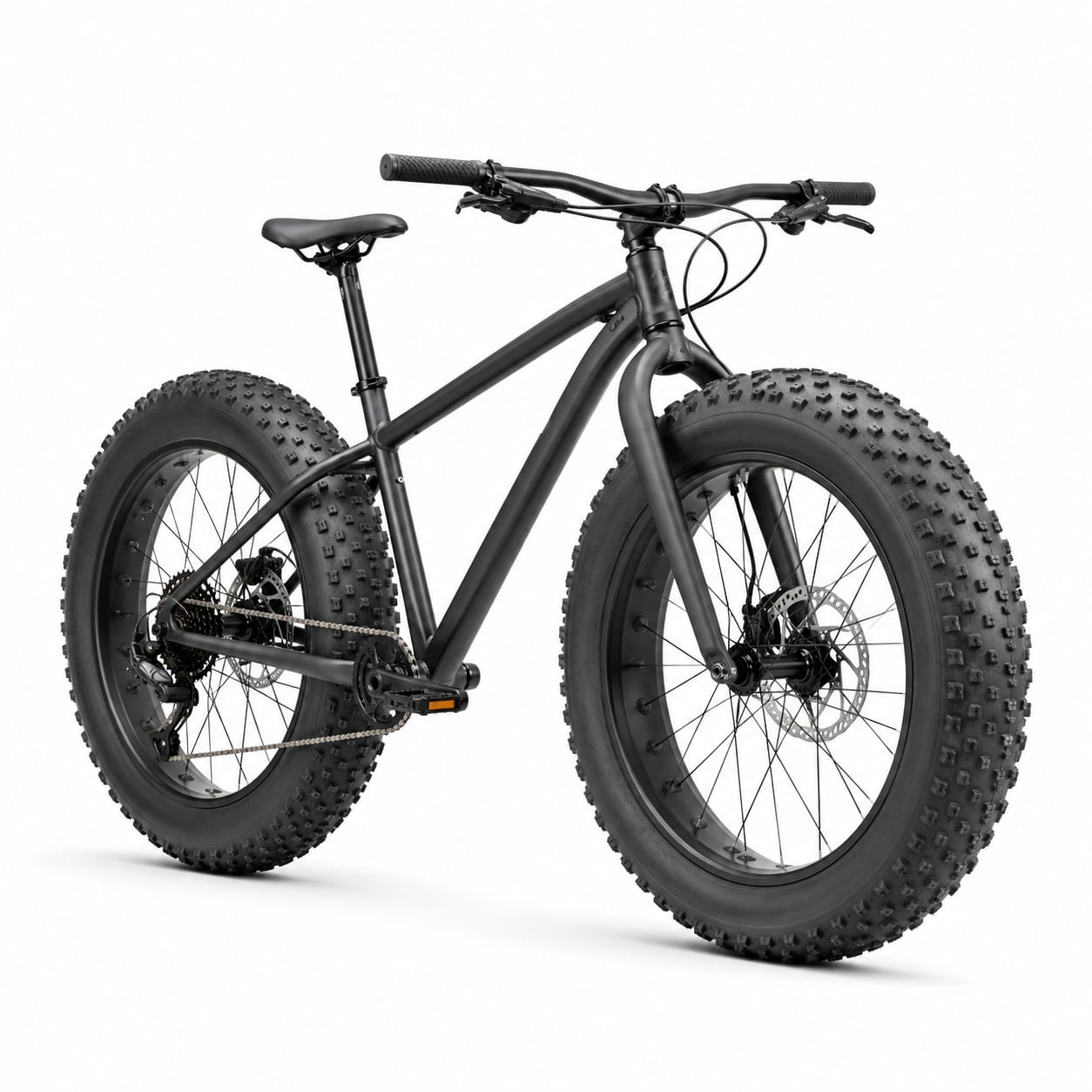
6 topics
Pick a question
Every answer links to the full subcategory guide and related gear types when it helps you decide.
What tire pressure should I run on my fat bike?
Tire pressure depends on terrain, rider weight, and tire width. General starting points: packed snow 6–10 PSI, deep powder 4–7 PSI, sand 5–8 PSI, hardpack/trail 10–15 PSI. Heavier riders need slightly more pressure. The goal is the lowest pressure that doesn't feel squirmy or cause rim strikes. A low-pressure gauge (0–15 PSI) is essential—standard pumps are wildly inaccurate at these pressures. Adjust in 0.5 PSI increments; you'll feel the difference.
Read answer →02Can I ride my fat bike on regular mountain bike trails in summer?
Yes, but it won't be as fun or fast as a standard mountain bike. Many fat bike owners swap to 27.5" plus-size wheels and tires (2.8–3.0") for summer riding, which transforms the bike into a capable trail hardtail. If you keep the fat tires on, expect slower climbing, higher effort on flats, and less precise handling. The traction is excellent though, making fat bikes surprisingly capable on loose, rocky summer trails.
Read answer →03Do I need a suspension fork on a fat bike?
It depends on your riding. For casual snow riding on groomed trails at moderate speeds, a rigid fork is fine—the tire volume absorbs small bumps. For aggressive riding on rough frozen ground, washboard snow trails, rocky terrain, or bikepacking with a loaded bike, a suspension fork (RockShox Bluto or Manitou Mastodon) significantly improves control and comfort. If budget allows, a suspension fork is worth having.
Read answer →04Are fat bikes good for beginners?
Fat bikes can be excellent for beginners because they're extremely stable, forgiving, and confidence-inspiring. The massive traction means fewer slip-outs, and the stable geometry reduces the likelihood of low-speed falls. However, they're heavy and require more effort to pedal, which can be discouraging for unfit beginners. They're best for beginners who specifically want to ride in snow or sand, or who prioritize stability over speed.
Read answer →05What's the difference between 3.8", 4.0", 4.6", and 5.0" fat tires?
Tire width directly affects flotation and rolling resistance. 3.8" is the minimum for fat bike classification—lighter and faster but less flotation, often accepted on groomed trails with width limits. 4.0" is the most popular all-around size, balancing flotation and rolling resistance. 4.6" provides noticeably more flotation for deeper snow and softer sand but is heavier and slower. 5.0" is for maximum flotation in the deepest conditions but is heavy, expensive, and may exceed trail width limits. Most riders are best served by 4.0".
Read answer →06Can I use a fat bike for bikepacking?
Fat bikes are outstanding bikepacking platforms, especially for off-trail routes through sand, snow, or remote terrain. Many models come with multiple bottle cage mounts, rack mounts, and frame bag compatibility. The stable handling and comfortable position are ideal for long days in the saddle. Key considerations: the heavy bike plus gear will be slow on firm surfaces, and fat-specific spare parts may be unavailable in remote areas. For established gravel routes, a gravel or plus bike may be more efficient.
Read answer →