Kitvore.com

Kitvore.com

Specs that matter. Gear that fits.

Mountain Bike · Subcategory

Fat Bike

Ultra-wide-tired mountain bikes built to float over snow, sand, and soft terrain where other bikes sink.

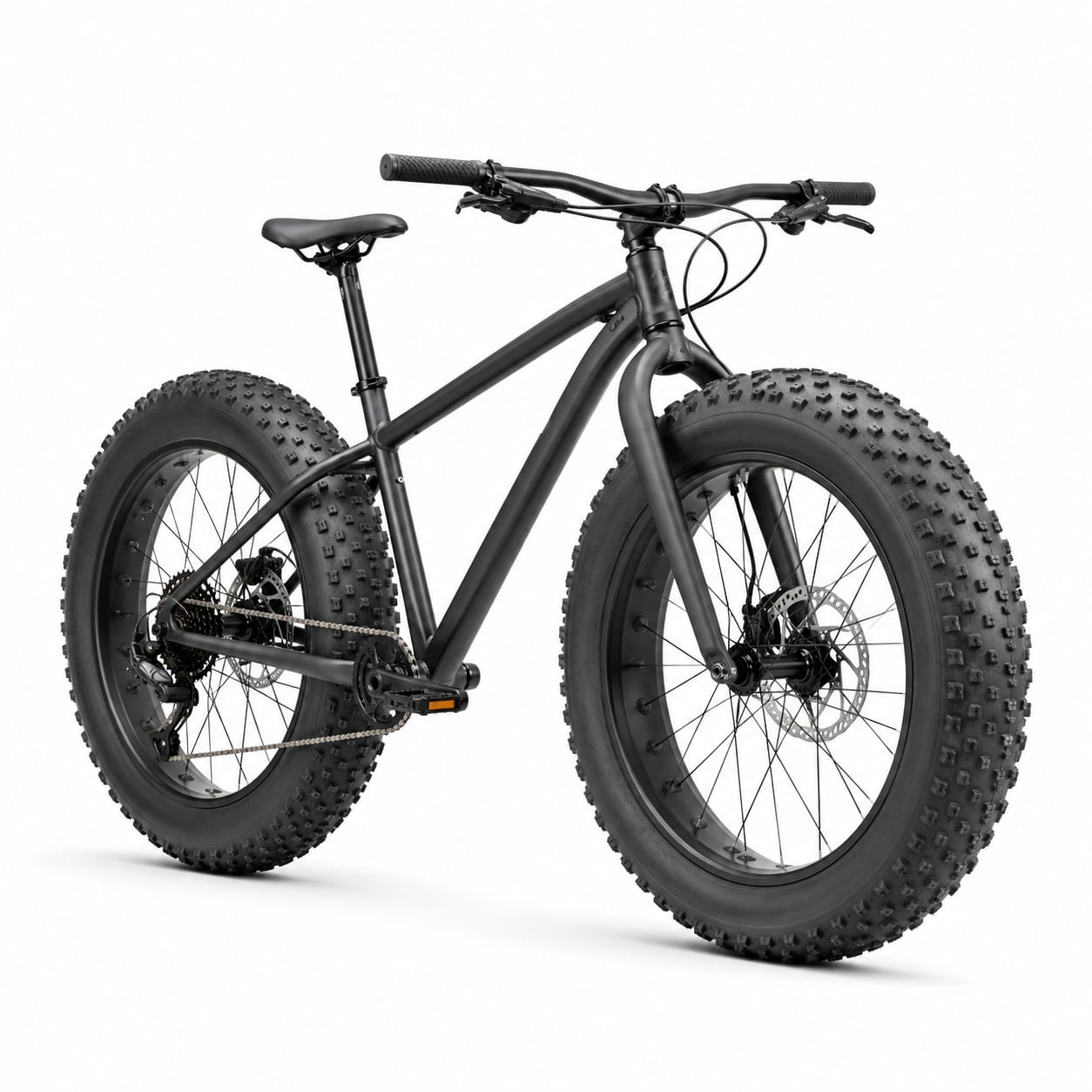
Fat bikes are defined by their massive 3.7"–5.0" tires run at ultra-low pressures, providing unmatched flotation and traction on surfaces that would bog down any other mountain bike. Originally designed for snow riding, they've expanded into sand, mud, bikepacking, and even trail riding for riders who prioritize grip and stability above all else. While heavy and slow on hardpack, nothing else can go where a fat bike can.

$600 – $6000mid tierbeginnerintermediate

Best known for

Riding on snow and packed trails in winterFloating over sand dunes and beachesBikepacking through remote, soft-terrain environmentsExtreme traction and stability at any speedYear-round riding when trails are unrideable on standard bikes
Fat Bike

Guide

Detailed overview

Fat bikes are a specialized mountain bike subcategory characterized by tires measuring 3.7 inches or wider, mounted on correspondingly wide rims (typically 65–100mm). These enormous tires are run at very low pressures—often 5–15 PSI—allowing them to deform and create a massive contact patch with the ground. This provides flotation on soft surfaces like snow, sand, and mud, and extraordinary grip on virtually any terrain. The frames are built with widened fork legs, chainstays, and seatstays to accommodate the tire dimensions, and most fat bikes use a hardtail configuration, though a few full-suspension models exist. Drivetrains are universally 1x setups to avoid front derailleur clearance issues with the rear tire and chainstay width. Fat bikes have carved out a passionate niche among riders in snowy climates, coastal areas, and bikepackers who venture off-trail into terrain where standard mountain bikes simply cannot travel.

Fat bikes emerged in the early 2000s from the creative fringes of the cycling world, with builders in Alaska and the American Midwest experimenting with ever-wider tires to extend the riding season through deep snow. What began as a niche solution for winter commuting and subarctic racing has evolved into a recognized mountain bike subcategory with major manufacturer support from brands like Specialized, Trek, Salsa, and Surly. The defining feature—tire width of 3.7 inches or greater—is not merely about size but about the physics of flotation and contact patch. At pressures as low as 5 PSI, a fat tire can spread across 6+ inches of ground surface, distributing rider weight over an area that keeps the bike atop soft snow or sand rather than punching through.

The riding experience on a fat bike is unlike any other mountain bike. The massive tires provide a natural suspension effect, absorbing small bumps and chatter through tire deformation alone. This is why many fat bikes are rigid or have modest suspension travel—the tires do much of the work. Cornering grip is extraordinary, with the wide contact patch allowing confident lean angles on loose surfaces. However, this same tire volume creates significant rolling resistance on hard surfaces, and the weight of the wheels and tires makes acceleration noticeably sluggish compared to trail or XC bikes. Riders accustomed to snappy, responsive handling will find fat bikes feel ponderous on hardpack.

Modern fat bikes have benefited greatly from drivetrain and component evolution. The universal adoption of 1x drivetrains solved the front derailleur clearance problem that plagued early designs. Wide-range cassettes (10-51T or 10-52T) provide the low gears needed to turn massive tires through soft resistance. Tubeless-ready rims and tires have allowed riders to drop pressures even further without pinch flat risk. Some models now feature carbon fiber frames and forks that shave significant weight, though complete bikes still typically weigh 14–17 kg. A growing number of fat bikes accept plus-size tires (2.8–3.0") on narrower rims, making them more versatile for trail riding in non-snow conditions.

Fat bike geometry has matured from early cruiser-like angles to more capable trail-oriented numbers. Current models typically feature head tube angles around 68–70 degrees, moderate reach values, and chainstays that are necessarily longer (445–460mm) to fit the rear tire. The long chainstays contribute to the fat bike's trademark stability but reduce playfulness. Dropper posts are increasingly common, and many riders consider them essential for any technical descending. Brake rotors of 180mm front and rear are typical, with some riders upgrading to 200mm front rotors for loaded bikepacking descents.

The fat bike community is one of the most passionate in cycling. Winter fat bike races and festivals have grown significantly, with events like the Fat Bike Birkie, Arrowhead 135, and Snow Bike Festival drawing riders from around the world. Bikepacking has become a major use case, with fat bikes enabling routes across deserts, tundra, and seasonal ice roads that were previously impossible on two wheels. For riders in northern climates, a fat bike can transform months of off-season frustration into prime riding time, making it not just a specialty toy but a practical investment in year-round cycling enjoyment.

Quick facts

Primary purpose
Riding on sand, snow, and soft terrain where standard MTB tires cannot maintain traction
Popular brands
SurlySalsaTrekSpecializedFramedBorealis
Typical terrain
snowsandmudloose gravelfrozen lakes

What makes it different

Widest tires of any bicycle category; flotation capability on snow and sand; natural suspension from tire volume; distinctive appearance and ride feel

Recommended ranges

How this type usually specs out

Each spec is explained in plain language, then we show what buyers usually look for on this type.

Bike Category / Discipline

Mountain Bike Category

What it means

The primary riding discipline the mountain bike is designed for, which dictates frame geometry, suspension travel, and component selection.

Typical for this type

Fat Bike

In practice

Fat bikes are their own distinct mountain bike category, defined by tire width of 3.7" or greater and designed primarily for soft-surface flotation.

Compared to other types

Unlike XC, trail, enduro, or DH bikes which are optimized for varying degrees of technical terrain on firm surfaces, fat bikes are uniquely designed for soft-surface travel where flotation is the primary requirement.

Why it matters: This classification dictates the entire frame architecture, component selection, and intended use case. Fat bike frames are purpose-built with widened stays and fork to accommodate massive tires.

Suspension Type

Suspension Type

What it means

Whether the bike has front suspension only (hardtail) or both front and rear suspension (full suspension), fundamentally affecting comfort, traction, and efficiency.

Typical for this type

Hardtail (Most Common), Full Suspension (Emerging Options)

In practice

The vast majority of fat bikes are hardtails. The massive tire volume at low pressures provides significant natural suspension, reducing the need for rear suspension. A few full-suspension fat bikes exist (e.g., Salsa Bucksaw, RSD Mayor) but remain uncommon.

Compared to other types

Most other MTB subcategories offer both hardtail and full-suspension options in roughly equal measure. Fat bikes skew heavily hardtail because the tires provide inherent damping and because rear suspension linkages add complexity and weight to an already heavy platform.

Why it matters: Hardtail simplicity keeps weight and maintenance manageable on bikes that are already heavy. The tire deformation provides 30–50mm of effective 'suspension' on small bumps.

Front Travel

Front Suspension Travel

What it means

The maximum distance the front suspension fork can compress, measured in millimeters. Determines the size of obstacles the bike can absorb and influences frame geometry.

Typical for this type

0mm (rigid fork) – 120mm

Most common pick: 100mm

In practice

Many fat bikes use rigid forks, relying entirely on tire volume for bump absorption. Suspension fork options are limited—RockShox Bluto (100–120mm) and Manitou Mastodon (100–120mm) are the primary choices. 100mm is the most common suspension travel.

Compared to other types

Fat bikes use less front travel than trail (130–150mm) or enduro (150–170mm) bikes. The massive tire volume compensates for lower suspension travel on small to medium bumps, but cannot match a proper suspension fork on repeated large impacts.

Why it matters: A suspension fork significantly improves control on rough, frozen terrain and washboard snow trails. However, rigid forks are lighter, simpler, and sufficient for many snow and sand conditions where speeds are low.

Rear Travel

Rear Suspension Travel

What it means

The maximum distance the rear wheel can move vertically on full suspension bikes, measured in millimeters. Works in conjunction with front travel to absorb impacts.

Typical for this type

0mm (hardtail, standard); 100–120mm (rare full-suspension models)

Most common pick: 0mm (hardtail)

In practice

Most fat bikes are hardtails with no rear travel. The few full-suspension fat bikes that exist typically offer 100–120mm of rear travel. Full-suspension fat bikes are rare and tend to be heavier and more expensive.

Compared to other types

All other MTB subcategories have widely available full-suspension options with rear travel ranging from 100mm (XC) to 210mm (DH). Fat bikes are the only category where hardtail is the dominant configuration.

Why it matters: Rear suspension adds significant weight and complexity to an already heavy bike. For most fat bike use cases (snow, sand, moderate speeds), the tire volume provides adequate rear-end compliance.

Wheel Size

Wheel Size

What it means

The nominal diameter of the wheel/rim, which affects rollover ability, acceleration, handling precision, and tire volume availability.

Typical for this type

26" fat (most common), 27.5" fat (emerging)

Most common pick: 26" (fat-specific)

In practice

Fat bikes predominantly use 26" rims with extra-wide profiles (65–100mm). Some newer models use 27.5" diameter rims. The 26" size allows maximum tire volume within reasonable frame dimensions. Many fat bikes can also accept 27.5" plus-size tires (2.8–3.0") on narrower rims for summer/trail use.

Compared to other types

Fat bikes use unique 26" or 27.5" fat-specific wheel standards that are incompatible with standard mountain bike wheels. Other categories use 27.5", 29", or mullet setups with much narrower rims and tires.

Why it matters: The 26" diameter with wide rims maximizes tire volume for flotation. The ability to swap to 27.5" plus wheels adds versatility for non-snow riding. Standard 27.5" or 29" mountain bike wheels and tires will not fit fat bike frames.

Frame Material

Frame Material

What it means

The primary material used in the main triangle and frame construction, affecting weight, ride quality, durability, and cost.

Typical for this type

Aluminum (Most Common), Steel (Popular For Bikepacking), Carbon Fiber (High-End)

In practice

Aluminum is the most common fat bike frame material, offering a good balance of weight, cost, and durability. Steel is popular among bikepackers for its ride quality and repairability. Carbon fiber is available on high-end models (e.g., Specialized Fatboy, Trek Farley) for significant weight savings.

Compared to other types

Aluminum dominates across all categories, but steel has a higher representation in fat bikes than in trail or enduro due to the bikepacking and adventure orientation of many fat bike riders. Carbon is less common in fat bikes than in XC or trail due to the smaller market and higher cost relative to the bike's intended use.

Why it matters: Given that fat bikes are inherently heavy due to tires and rims, frame material choice has a meaningful impact on the complete bike weight. Carbon can save 500–800g versus aluminum, which is noticeable on a 15+ kg bike.

Head Tube Angle

Head Tube Angle

What it means

The angle of the head tube relative to the ground, measured in degrees. A primary determinant of steering speed and high-speed stability. Slacker angles (lower numbers) provide more stability at speed.

Typical for this type

67.5° – 70°

Most common pick: 68.5°

In practice

Fat bikes typically have moderately slack head tube angles, balancing stability for soft-surface riding with reasonable steering response. Modern fat bikes have trended slightly slacker for better descending control on snow trails.

Compared to other types

Fat bike head angles are similar to trail bikes (65–67.5°) but slightly steeper, reflecting lower average speeds and less aggressive descending. They are much slacker than XC bikes (67–69°) and significantly steeper than enduro (63.5–65.5°) or downhill (62–64°).

Why it matters: A moderately slack head angle provides stability on unpredictable soft surfaces and moderate descents, while remaining steep enough for manageable steering at the low speeds typical of snow and sand riding.

Reach

Reach

What it means

The horizontal distance from the center of the bottom bracket to the top of the head tube, measured in millimeters. The most important sizing metric for modern mountain bikes as it determines the rider's fore-aft position while standing.

Typical for this type

420mm (S) – 490mm (XL)

Most common pick: 450mm (medium)

In practice

Fat bike reach values are similar to trail bikes, providing a balanced rider position for both climbing in soft conditions and descending. Modern fat bikes have adopted longer reach values for improved stability.

Compared to other types

Fat bike reach values are comparable to trail bikes and slightly shorter than enduro bikes. They are longer than older XC race geometry but similar to modern XC/trail numbers.

Why it matters: Adequate reach allows the rider to shift weight effectively on soft surfaces—pressing forward for climbing traction and moving back for descending control. Too short a reach makes the bike feel cramped when standing.

Stack

Stack Height

What it means

The vertical distance from the center of the bottom bracket to the top of the head tube, measured in millimeters. Determines how tall the front end feels and affects rider position between seated and standing.

Typical for this type

590mm (S) – 650mm (XL)

Most common pick: 620mm (medium)

In practice

Fat bikes tend to have moderately tall stack heights, providing a comfortable upright position suitable for long days in the saddle and bikepacking. The tall front end also helps with front wheel flotation by keeping weight off the front tire.

Compared to other types

Fat bike stack heights are similar to trail bikes and taller than XC race bikes. They are typically lower than enduro or DH bikes, which have very tall front ends for steep descent control.

Why it matters: A higher stack reduces fatigue on long rides and makes it easier to keep the front end light in soft conditions. Bikepackers particularly benefit from the comfortable position.

Chainstay Length

Chainstay Length

What it means

The distance from the center of the bottom bracket to the center of the rear axle, measured in millimeters. Affects how easily the bike manuals, wheelies, and navigates tight turns.

Typical for this type

445mm – 465mm

Most common pick: 455mm

In practice

Fat bikes have necessarily long chainstays to accommodate the wide rear tire and maintain adequate clearance with the chainrings and seat tube. Shorter chainstays would cause tire-to-chainstay and tire-to-chain interference.

Compared to other types

Fat bike chainstays are significantly longer than all other categories: XC (420–435mm), trail (430–445mm), enduro (430–445mm), DH (440–455mm). The extra length is entirely due to tire clearance requirements.

Why it matters: The long chainstays contribute to the fat bike's stable, planted feel but reduce maneuverability and make manualing or wheelie-ing more difficult. This is an engineering constraint, not a design choice.

Drivetrain Speed

Drivetrain Speed

What it means

The number of rear sprockets in the cassette, which determines the number of gear ratios available and the size range of the cassette.

Typical for this type

12-speed (preferred), 11-speed (budget/older models)

Most common pick: 12_speed

In practice

Modern fat bikes almost universally use 1x12 drivetrains with wide-range cassettes (10-51T or 10-52T). The 1x configuration is essential because front derailleurs cannot clear the wide rear tire and chainstay. 11-speed is found on budget and older models.

Compared to other types

Drivetrain speed is consistent with modern trail and enduro bikes. Fat bikes benefit even more from wide-range cassettes than other categories due to the high rolling resistance of fat tires in soft conditions.

Why it matters: The widest possible gear range is critical for fat bikes because turning massive tires through soft resistance requires very low climbing gears. A 30T chainring with 10-52T cassette provides a bail-out gear for deep snow and sand climbs.

Brake Type

Brake Type

What it means

The type of braking system, specifically the actuation method and rotor standard, which determines stopping power, modulation, and maintenance requirements.

Typical for this type

Hydraulic Disc 2p (Standard), Hydraulic Disc 4p (Preferred For Loaded/Bikepacking)

In practice

Most fat bikes come with 2-piston hydraulic disc brakes, which are adequate for the moderate speeds typical of snow and sand riding. 4-piston brakes are recommended for loaded bikepacking, steep snow descents, and heavier riders.

Compared to other types

Fat bikes typically come with less powerful brakes than trail or enduro bikes, reflecting their lower speed use case. However, the heavy rotating mass means brake upgrades are more impactful than on lighter bikes.

Why it matters: While fat bikes don't reach the speeds of enduro or DH bikes, stopping a heavy bike with massive rotating mass (wheels + tires) requires more braking force than the weight alone would suggest. Upgrading to 4-piston calipers is a worthwhile improvement for aggressive riding.

Brake Rotor Size

Brake Rotor Size

What it means

The diameter of the brake rotors in millimeters. Larger rotors provide more stopping power and better heat dissipation, critical for sustained descents.

Typical for this type

180mm front/160mm rear (minimum), 200mm front/180mm rear (preferred for bikepacking/aggressive riding)

Most common pick: 180mm front / 180mm rear

In practice

180mm rotors front and rear are the most common stock configuration. Given the heavy rotating mass of fat bike wheels, many riders upgrade to 200mm front rotors for improved stopping power and heat management on long descents.

Compared to other types

Fat bikes typically use larger rotors than XC bikes (160mm) and similar sizes to trail bikes. Bikepacking-oriented fat bikes benefit from enduro-sized rotors (200mm front) despite lower speeds, due to the total system weight.

Why it matters: The combination of heavy bike weight, heavy rotating mass, and potential for loaded bikepacking means fat bikes benefit from larger rotors more than lighter mountain bikes. Rotor upsizing is one of the most cost-effective fat bike upgrades.

Tire Width

Tire Width

What it means

The nominal width of the tires mounted on the bike, measured in inches. Affects traction, rolling resistance, bump absorption, and frame clearance requirements.

Typical for this type

3.7" (minimum for fat bike classification) – 5.0" (maximum flotation)

Most common pick: 4.0" – 4.6"

In practice

Tire width is the defining dimension of a fat bike. 4.0" is the most common width, offering a good balance of flotation and rolling resistance. 4.6"–5.0" tires provide maximum flotation for deep snow and soft sand. 3.7"–3.8" tires are lighter and faster but sacrifice some flotation.

Compared to other types

Fat bike tires (3.7–5.0") are dramatically wider than all other categories: XC (2.0–2.3"), trail (2.3–2.5"), enduro (2.4–2.6"), plus bikes (2.8–3.0"). This is the single largest differentiator between fat bikes and all other mountain bike types.

Why it matters: Tire width directly determines flotation capability—the primary purpose of a fat bike. Wider tires at lower pressures create larger contact patches and distribute weight over more surface area. Even half an inch of additional width makes a noticeable difference in deep snow.

Dropper Post Travel

Dropper Post Travel

What it means

The maximum distance the dropper seatpost can drop the saddle, measured in millimeters. More travel allows the saddle to get further out of the way for descending.

Typical for this type

100mm (S/M) – 170mm (L/XL), Or None (Rigid Post On Budget Models)

Most common pick: 125mm

In practice

Dropper posts are increasingly common on fat bikes but are not yet universal. Many budget and bikepacking-oriented models still come with rigid posts. 125mm travel is typical for medium frames. The oversized seat tubes on some fat bikes may limit dropper post options.

Compared to other types

Fat bikes are less likely to come with dropper posts than trail or enduro bikes, where they are essentially universal. The slower speeds and bikepacking use cases of fat bikes mean some riders prefer rigid posts, but this is changing as fat bikes are ridden more aggressively.

Why it matters: A dropper post significantly improves control on technical snow descents and side-hill traverses where body English is critical. For bikepacking, a rigid post with a clamp-on bag is often preferred, though some frame bags eliminate this conflict.

Weight

Complete Bike Weight

What it means

The total weight of the complete bicycle without pedals, measured in kilograms or pounds. Affects acceleration, climbing speed, and maneuverability.

Typical for this type

13.5 kg (high-end carbon) – 17 kg (steel bikepacking build)

Most common pick: 15.5 kg

In practice

Fat bikes are among the heaviest mountain bikes due to the massive tires, wide rims, and reinforced frames. Aluminum hardtails typically weigh 14.5–16 kg. Carbon models can reach 13.5 kg. Steel bikepacking builds with racks and bags can exceed 17 kg.

Compared to other types

Fat bikes are heavier than all other categories except downhill bikes: XC (9–11 kg), trail (12–14 kg), enduro (13–15.5 kg), DH (15–18 kg). The weight penalty comes primarily from tires, tubes (if not tubeless), and rims.

Why it matters: Weight is the fat bike's primary disadvantage. The heavy wheels and tires create significant rotating mass that makes acceleration sluggish and climbing demanding. Every kilogram saved is noticeable, especially on the wheels.

Effective Seat Tube Angle

Effective Seat Tube Angle

What it means

The angle of the seat tube relative to the ground, measured in degrees at saddle height. Affects climbing position and pedaling efficiency. Steeper angles position the rider more directly over the bottom bracket.

Typical for this type

74° – 77°

Most common pick: 75.5°

In practice

Fat bikes typically have moderately steep seat tube angles to position the rider over the bottom bracket for efficient climbing in soft conditions. Steeper angles help maintain front wheel traction on steep snow climbs by keeping weight forward.

Compared to other types

Fat bike seat tube angles are similar to modern trail bikes (75–77°) and steeper than older mountain bike geometries. They are not as steep as the most aggressive modern trail/enduro bikes (76–78°) but steeper than traditional XC bikes (73–75°).

Why it matters: Climbing in soft conditions requires consistent weight on the rear wheel for traction while maintaining enough forward weight to keep the front wheel tracking. The seat tube angle directly affects this balance when seated.

Evaluation

Strengths and trade-offs

Pros

What this type does best

Unmatched soft-surface capability

Critical

Fat bikes can ride on deep snow, sand, mud, and loose surfaces where any other mountain bike would be unrideable. The massive contact patch at low pressures provides flotation that no other bike category can achieve.

Extraordinary traction in all conditions

Critical

The enormous tire contact patch provides grip levels that exceed any other mountain bike type. On loose over hard, wet roots, icy trails, and soft soil, fat bikes maintain traction where standard tires spin or slide.

Natural suspension from tire volume

High

Running 3.7–5.0" tires at 5–15 PSI provides significant bump absorption through tire deformation alone, reducing or eliminating the need for suspension on many terrain types.

Year-round riding enablement

High

For riders in snowy climates, a fat bike transforms 4–5 months of off-season into rideable time. It's the only bicycle that can reliably ride on packed snow trails and frozen lakes.

Excellent bikepacking platform

High

The stable handling, comfortable position, and ability to travel off-trail make fat bikes ideal for bikepacking through remote terrain. Many models have numerous cage and rack mounts for expedition setups.

Confidence-inspiring stability

Medium

The wide tires and long wheelbase create a very stable platform that feels planted and secure at all speeds. This makes fat bikes approachable for beginners and reassuring for experts in challenging conditions.

Low-speed technical capability

Medium

The massive traction allows fat bikes to crawl over obstacles at walking speed that would require momentum on a standard bike. This makes technical climbing in loose conditions surprisingly capable.

Versatility with wheel swaps

Medium

Many fat bike frames can accept 27.5" plus-size wheels and tires (2.8–3.0"), effectively transforming the bike into a capable trail bike for summer riding on a single frame.

Cons

Trade-offs to be aware of

Heavy and slow on hard surfaces

Significant

Fat bikes weigh 14–17 kg and the massive tire contact patch creates high rolling resistance on pavement and hardpack. They are significantly slower than any other mountain bike category on firm terrain.

Sluggish acceleration and climbing

Significant

The heavy rotating mass of fat tires and wide rims makes acceleration feel labored. Climbing on hardpack surfaces requires noticeably more effort than on a standard mountain bike due to weight and rolling resistance.

Limited suspension options

Moderate

Suspension fork choices for fat bikes are extremely limited (essentially RockShox Bluto and Manitou Mastodon). Full-suspension fat bike options are rare and expensive. Most riders must rely on tire volume for bump absorption.

High component wear and cost

Moderate

Fat bike-specific tires, rims, tubes, and forks are more expensive and less available than standard mountain bike components. Drivetrain components wear faster due to the high torque loads from turning massive tires through resistance.

Narrow trail compatibility

Moderate

The 4.0–5.0" tire width exceeds the maximum width allowed on many groomed fat bike trails (typically 3.8" limit). Some trail networks ban fat bikes with tires wider than 3.8" to prevent trail damage.

Vague handling at speed

Minor

The massive tires and long chainstays create a less precise handling feel compared to trail or enduro bikes. Quick direction changes and tight switchbacks require more effort and planning.

Best for

Surfaces & terrain

Packed snow trailsDeep powder snow (with proper technique)Sandy beaches and desert tracksMuddy bogs and soft loamFrozen lakes and riversOff-trail backcountry routes

Riding conditions

Snow and iceDeep sandMud and bogLoose gravel and screeWet and slippery roots

Skill level

Beginner (stable and forgiving)Intermediate (exploring soft terrain)Advanced (winter racing, expedition bikepacking)

Riding discipline

Winter trail ridingBikepacking and expedition touringBeach and coastal ridingAdventure explorationCasual all-terrain cruising

Rider profile

Northern climate riders seeking year-round cyclingBikepackers venturing off established trailsCoastal and desert riders on sandy terrainAdventure cyclists exploring remote routesRiders who prioritize traction and stability above speedBeginners who value confidence-inspiring handling

Not ideal for

Reasons

Excessive weight and rolling resistance make fat bikes uncompetitive on firm surfacesLimited suspension travel reduces capability on rough, high-speed descentsVague handling and long chainstays reduce playfulness and precisionFat bike-specific components are expensive and less availableMany trail systems restrict tire width, limiting where you can ride

Surfaces & terrain

Smooth hardpack and flow trailsPaved roads and bike pathsSteep technical rock gardensJump lines and bike parksTight twisty singletrack

Skill level

Riders focused on speed and racing (unless specifically fat bike racing)Experienced riders seeking precise, responsive handling

Riding discipline

XC racingEnduro racingDirt jumpingPump trackHigh-speed descending

Compare

How it stacks up

This page

Fat Bike

Massively superior traction and flotation on snow, sand, and soft surfaces. Can ride terrain that is completely impassable on a trail bike. More stable and confidence-inspiring for beginners in loose conditions.

Alternative

Trail Bike (Hardtail)

Significantly lighter (12–14 kg vs 14–17 kg), faster acceleration, lower rolling resistance on hard surfaces, much wider component availability, and more suspension options. Far more capable on technical terrain with proper suspension.

Bottom line

Choose a fat bike if you regularly ride on snow, sand, or soft surfaces, or if winter riding is a priority. Choose a trail hardtail if you ride primarily on firm trails and want a more versatile, faster, and lighter bike.

This page

Fat Bike

Wider tires (3.7–5.0" vs 2.8–3.0") provide significantly more flotation in deep snow and sand. Fat bikes are purpose-built for soft surfaces while plus bikes are trail bikes with wider tires.

Alternative

Plus Bike

Plus bikes are lighter, faster, have proper suspension, and handle much more like standard trail bikes. They provide some of the traction benefits of fat tires without the weight and sluggishness. More versatile for general trail riding.

Bottom line

Choose a fat bike for dedicated snow and sand riding where maximum flotation is needed. Choose a plus bike if you want enhanced traction on trail rides with occasional soft-surface encounters. Many fat bike frames accept plus-size wheels for the best of both.

This page

Fat Bike

Fat bike tires provide flotation on surfaces where full-suspension trail bikes cannot ride at all. Lower purchase price for equivalent component level. Simpler maintenance with fewer pivots and bearings.

Alternative

Trail Bike (Full Suspension)

Full-suspension trail bikes offer dramatically better comfort, control, and speed on rough terrain. They are lighter, faster climbing, more capable descending, and have vastly more suspension performance. The standard choice for 95% of mountain biking.

Bottom line

Choose a fat bike specifically for soft-surface riding or as a second bike for winter. Choose a full-suspension trail bike as your primary mountain bike for general trail riding. They serve fundamentally different purposes.

This page

Fat Bike

Fat bikes can traverse terrain that would destroy a gravel bike—deep snow, sand, mud, and rocky off-trail routes. Much more stable and confident on technical terrain. Flat bar provides better control in challenging conditions.

Alternative

Gravel / Adventure Bike

Gravel bikes are dramatically faster on roads and smooth gravel, lighter, more efficient for long distances on firm surfaces, and have drop bars for multiple hand positions. Better for mixed-surface touring that includes significant pavement.

Bottom line

Choose a fat bike for off-trail adventure and soft-surface expeditions. Choose a gravel bike for mixed-surface riding that includes significant road and gravel. For bikepacking, the choice depends on terrain: fat bike for soft/remote, gravel for established routes.

Shopping

Buying tips

  • 1

    Prioritize frame compatibility with both fat and plus-size wheels. Many modern fat bike frames accept 27.5" plus wheels, giving you a capable trail bike for summer and a fat bike for winter on one frame.

  • 2

    Go tubeless immediately. Tubeless setup allows you to run the lowest possible pressures (5–10 PSI) without pinch flats, which is essential for maximizing flotation and traction. The weight savings from removing tubes is also significant on already-heavy wheels.

  • 3

    Budget for a dropper post if your bike doesn't come with one. Technical snow and sand riding requires frequent weight shifts that are much easier with a dropper. Ensure the post fits your frame's seat tube diameter and insertion depth.

  • 4

    Consider starting with 4.0" tires rather than 4.6–5.0". The 4.0" width provides excellent flotation for most snow conditions while being lighter and faster-rolling than wider options. You can always go wider later if needed.

  • 5

    Check local trail regulations before purchasing. Some groomed fat bike trail networks restrict tire widths to 3.8" maximum to prevent trail damage. If your local trails have this rule, a 3.8" tire bike is your best option.

  • 6

    Don't overlook the fork. A rigid fork is fine for casual snow riding, but a suspension fork (RockShox Bluto or Manitou Mastodon) dramatically improves control on rough, frozen terrain and is worth the investment if you ride aggressively.

  • 7

    Size up on brake rotors. The heavy rotating mass of fat bike wheels benefits greatly from 200mm front / 180mm rear rotors, especially for loaded bikepacking. This is a cheap and impactful upgrade.

  • 8

    Consider buying a complete bike rather than building up. Fat bike-specific components (hubs, rims, tires, forks) are expensive individually, and complete bikes often represent better value due to OEM pricing.

Care

Maintenance notes

  • Sealant refresh is critical: The large tire volume means more sealant is needed (4–6 oz per tire) and it dries out faster. Check and refresh sealant every 2–3 months, more frequently in dry climates.
  • Monitor tire pressure before every ride: Fat bike performance is extremely pressure-sensitive. A 1 PSI change is noticeable. Use a low-pressure gauge (0–15 PSI) as standard pumps and gauges are inaccurate at these pressures.
  • Drivetrain wears faster: The high torque loads from turning massive tires through resistance accelerate chain and cassette wear. Check chain stretch monthly and replace before it damages the cassette.
  • Hub bearing maintenance: Fat bike hubs have wider flange spacing and larger bearings that are more exposed to moisture. Service hub bearings at least annually, more often if riding in wet snow or salt.
  • Suspension fork service: If you have a Bluto or Mastodon, follow the manufacturer's service intervals strictly. Cold-weather riding with temperature changes can affect damper performance and seal life.
  • Frame clearance checks: Regularly inspect the clearance between tires and frame/fork, especially if running tubeless at very low pressures. Tire growth at low pressures can cause rubbing on stays under load.
  • Corrosion prevention: If riding in salty coastal or road-salt conditions, wash the bike after every ride and apply corrosion inhibitor to bolts, chain, and bare metal surfaces. Salt accelerates wear dramatically.

Progression

Skill development path

Fat bike riding has a unique skill progression that differs from standard mountain biking. Beginners should start on firm, flat snow or sand to get accustomed to the heavy, stable feel and the way fat tires respond to steering inputs at low pressures. Key early skills include understanding tire pressure tuning (lower pressure = more traction and flotation but more rolling resistance), learning to read snow consistency (powder vs packed vs crust), and mastering the seated climbing technique that keeps weight on the rear tire for traction. Intermediate riders progress to riding ungroomed trails, navigating variable snow conditions (crust breakthrough, slush, ice), and learning to handle the bike on side-hill traverses where the wide tires can feel tippy. Advanced skills include riding deep powder (requiring momentum and line choice), technical winter descending on frozen ground, and expedition bikepacking through remote terrain. Fat bike racing requires specific fitness for the high power output needed to overcome rolling resistance, and skills for racing in cold conditions including gear management and nutrition in sub-freezing temperatures.

FAQ

Common questions

Each question has a dedicated page with a full answer and links to the buying guide.

What tire pressure should I run on my fat bike?

Tire pressure depends on terrain, rider weight, and tire width. General starting points: packed snow 6–10 PSI, deep powder 4–7 PSI, sand 5–8 PSI, hardpack/trail 10–15 PSI. Heavier riders need slightly more pressure. The goal is the lowest pressure that doesn't feel squirmy or cause rim strikes. A low-pressure gauge (0–15 PSI) is essential—standard pumps are wildly inaccurate at these pressures. Adjust in 0.5 PSI increments; you'll feel the difference.

Can I ride my fat bike on regular mountain bike trails in summer?

Yes, but it won't be as fun or fast as a standard mountain bike. Many fat bike owners swap to 27.5" plus-size wheels and tires (2.8–3.0") for summer riding, which transforms the bike into a capable trail hardtail. If you keep the fat tires on, expect slower climbing, higher effort on flats, and less precise handling. The traction is excellent though, making fat bikes surprisingly capable on loose, rocky summer trails.

Do I need a suspension fork on a fat bike?

It depends on your riding. For casual snow riding on groomed trails at moderate speeds, a rigid fork is fine—the tire volume absorbs small bumps. For aggressive riding on rough frozen ground, washboard snow trails, rocky terrain, or bikepacking with a loaded bike, a suspension fork (RockShox Bluto or Manitou Mastodon) significantly improves control and comfort. If budget allows, a suspension fork is worth having.

Are fat bikes good for beginners?

Fat bikes can be excellent for beginners because they're extremely stable, forgiving, and confidence-inspiring. The massive traction means fewer slip-outs, and the stable geometry reduces the likelihood of low-speed falls. However, they're heavy and require more effort to pedal, which can be discouraging for unfit beginners. They're best for beginners who specifically want to ride in snow or sand, or who prioritize stability over speed.